Artwork
Courtiers' Escapades, Page from an Unidentified Narrative Series
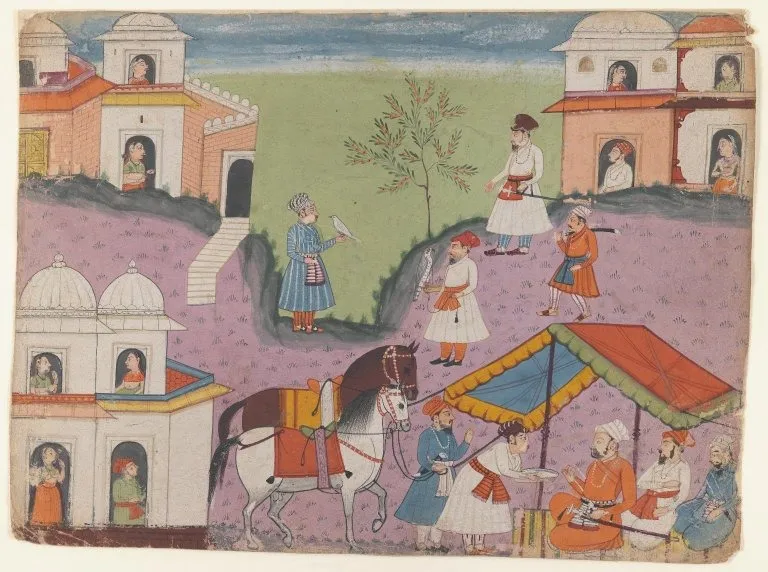
Courtiers' Escapades, Page from an Unidentified Narrative Series is an unspecified painting by the Flemish Baroque painting artist Unknown. It dates from 1670 and is held in the collection of the Brooklyn Museum. This painted page belongs to an unnamed series of narrative illustrations, likely created for a manuscript or album.
About this work
Overview
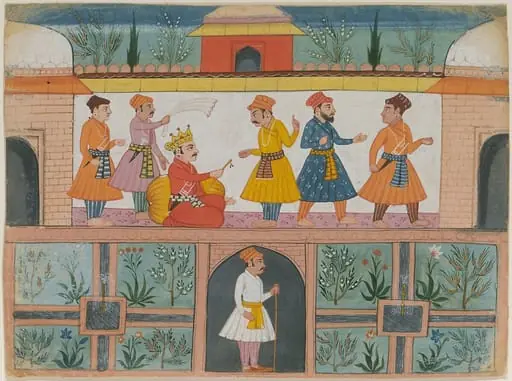
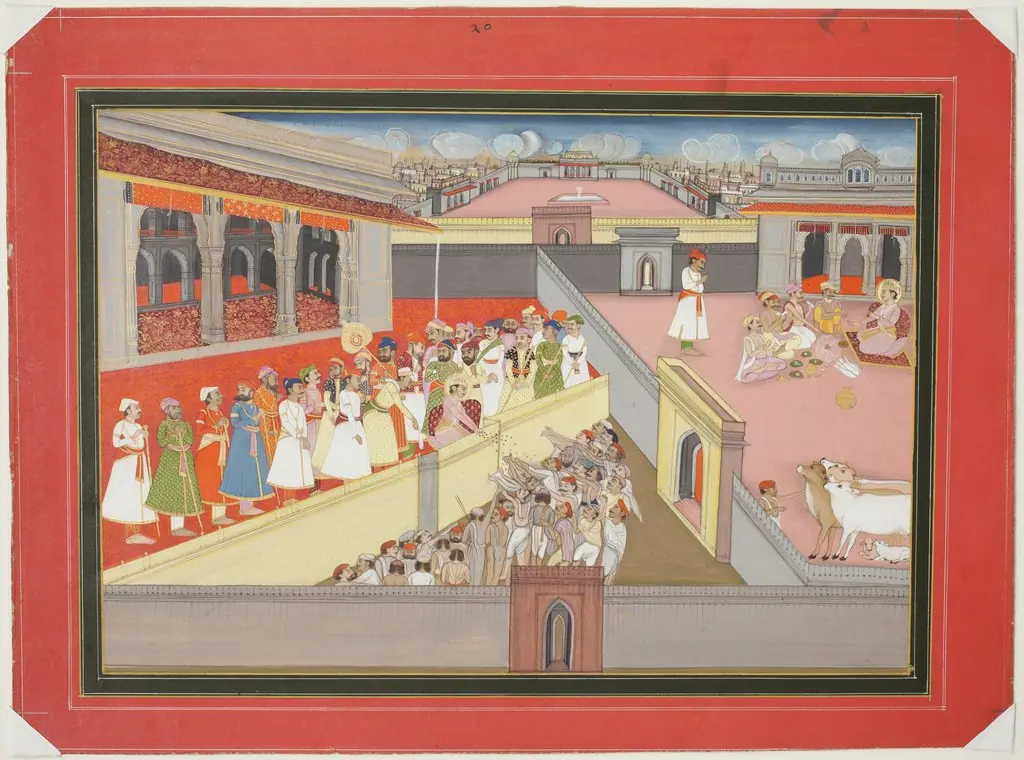
This painted page belongs to an unnamed series of narrative illustrations, likely created for a manuscript or album. It depicts a scene of courtly life, focusing on figures engaged in informal, possibly playful interactions. The work is executed in a detailed, miniature style typical of South Asian or Persianate traditions, emphasizing intricate patterns and delicate brushwork over spatial depth.
Subject & Meaning
The scene conveys the refined, intimate world of the court, where personal relationships and subtle gestures carried social weight.
The figures appear to be nobles or attendants in a garden or palace setting, involved in activities that suggest leisure or social ritual—conversing, gesturing, or exchanging objects. The scene conveys the refined, intimate world of the court, where personal relationships and subtle gestures carried social weight. No clear narrative climax is evident, implying this is one moment within a larger, now-lost story.
Technique & Style
The painting uses fine brushwork to render textiles, facial features, and architectural details with precision. Pigments are applied in flat, luminous layers, with gold leaf possibly used for accents. Perspective is stylized; figures are scaled by status rather than spatial position. The composition is tightly framed, encouraging close viewing and emphasizing ornamentation over realism.
History & Provenance
The origin of the series remains unidentified, with no documented patron, artist, or date. It likely originated in a royal atelier in India or Persia during the 16th to 18th centuries. The page may have been separated from its original manuscript over time, possibly through colonial-era dispersal or private collection practices. Its current context lacks definitive archival ties.
Context
Such pages were often produced for elite patrons who valued illustrated storytelling as a form of cultural refinement. They reflected courtly ideals of elegance, restraint, and aesthetic discipline. Similar imagery appears in Mughal, Deccani, and Persian manuscripts, where secular scenes coexisted with religious or epic themes, revealing a broader interest in daily courtly life.
Legacy
Though unattributed and detached from its original sequence, this page contributes to the understanding of how narrative art functioned in pre-modern courts. Its survival as a standalone fragment underscores the fragility of manuscript culture and the role of collecting in reshaping historical artifacts. It remains a quiet testament to the visual language of aristocratic leisure.
Artist & collection

 Domestic Scene
 Giacomo and Cardinal Marco, investing Andrea, Abbot of San Zeno, with his Benefice
 The Nymph of Fontainebleau
 Portrait of a Woman
 Madonna and Child with Saints in the Enclosed Garden
 Venus and Minerva
 Family Group of Four on Sofa
 Wall painting from Room H of the Villa of P. Fannius Synistor at Boscoreale
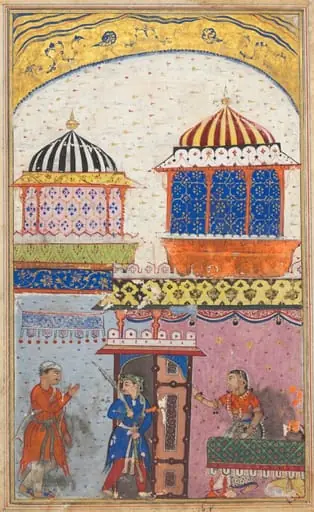 A woman asks her lover to leave her house, brandishing his sword and feigning rage in order to deceive her husband who has just arrived, from a Tuti-nama (Tales of a Parrot): Eighth Night
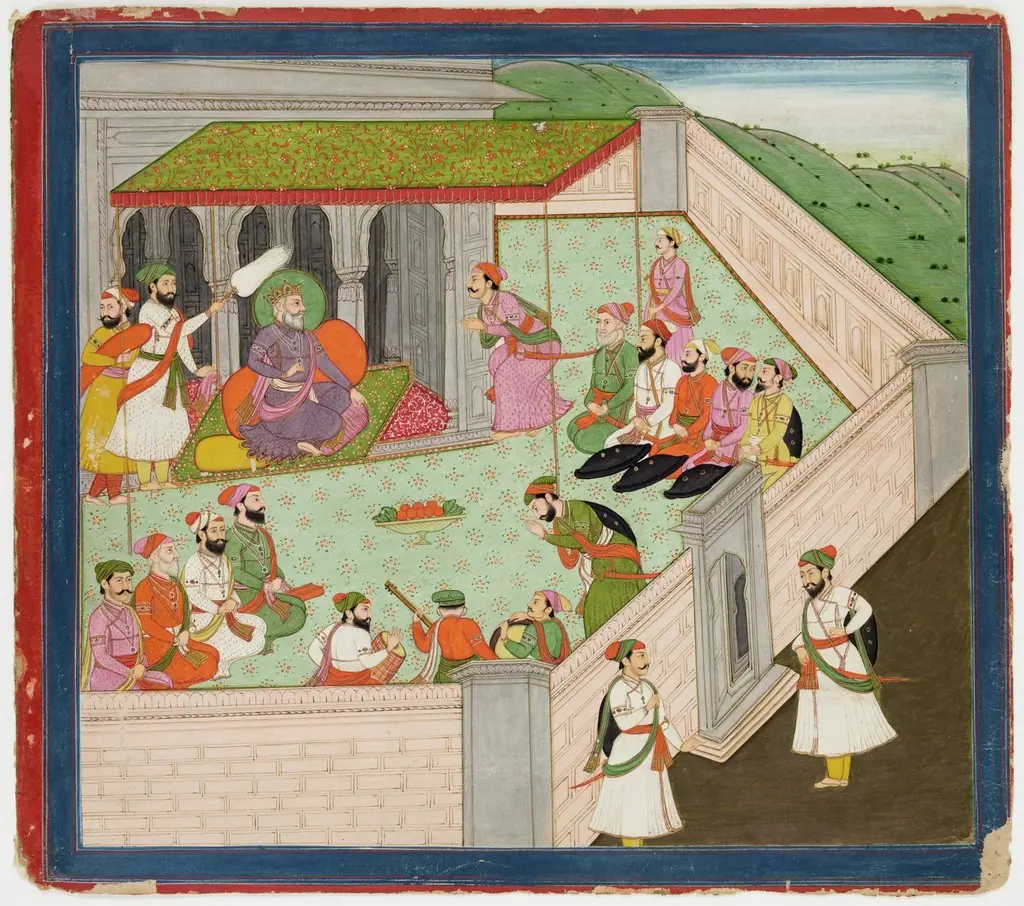 Illustrations to Life of Dhurva Maharaj: #1 Durbar of King Uttan Pad
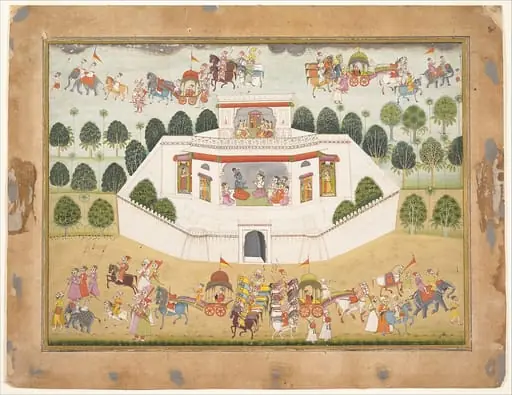 Untitled
 Untitled
 The handmaiden appeals for justice and the prince is taken to the execution site for the fourth time, from a Tuti-nama (Tales of a Parrot): Eighth Night
 Untitled
 Kamakandala dies on hearing the news of Madhava’s death, folio 19 from a Madhavanala-Kamakandala of Alam
 Untitled
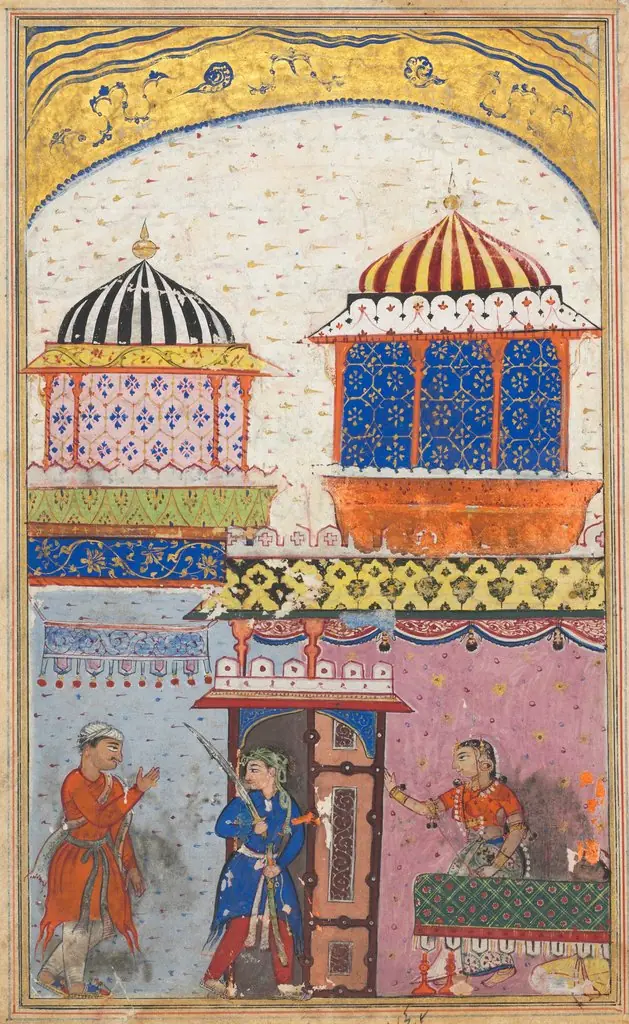 A woman asks her lover to leave her house, brandishing his sword and feigning rage in order to deceive her husband who has just arrived, from a Tuti-nama (Tales of a Parrot): Eighth Night
 Rama and Sita
 Rao Chhattar Sal
 Court Scene