Artwork
Untitled
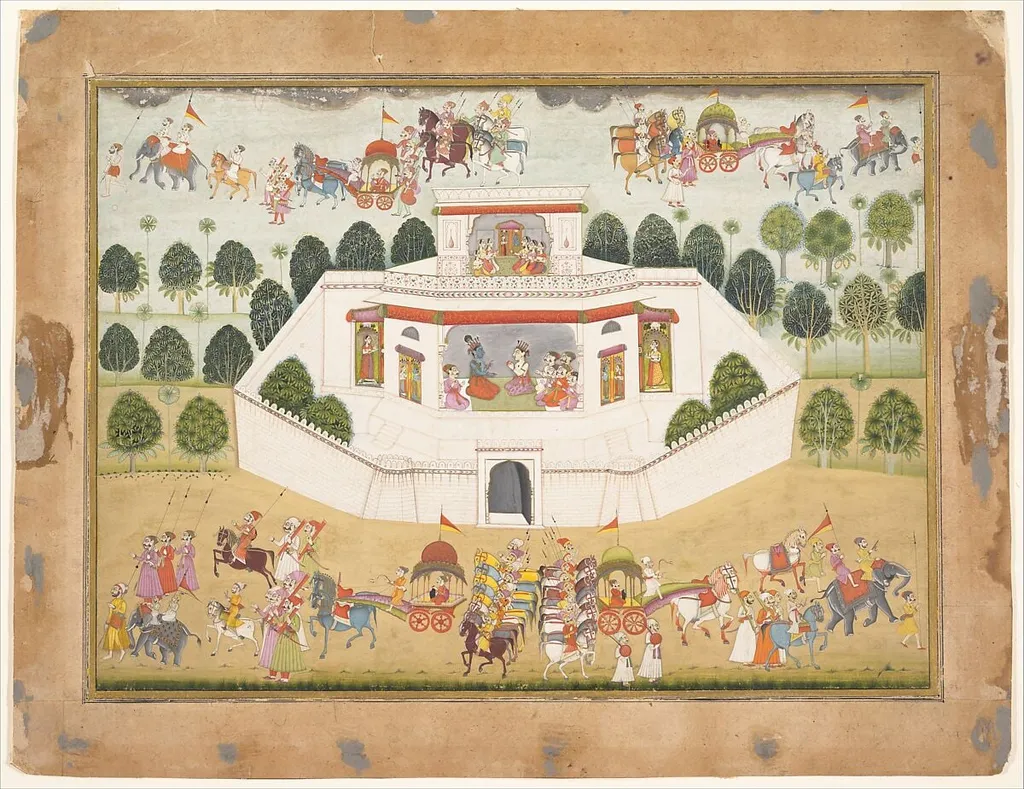
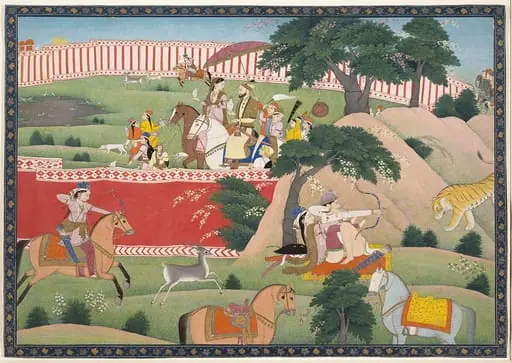
Untitled is a watercolor painting. It dates from 1700 and is held in the collection of the Metropolitan Museum of Art.
About this work
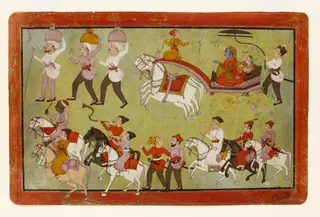
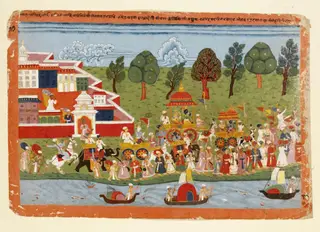
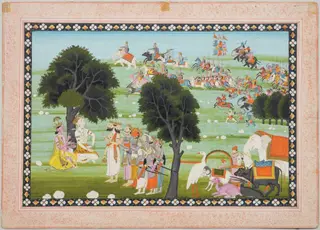
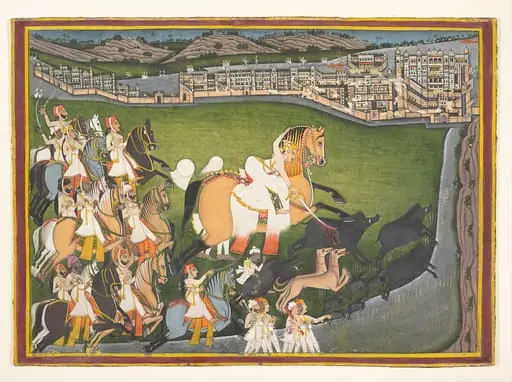
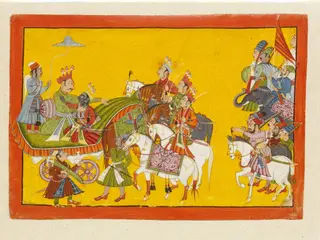
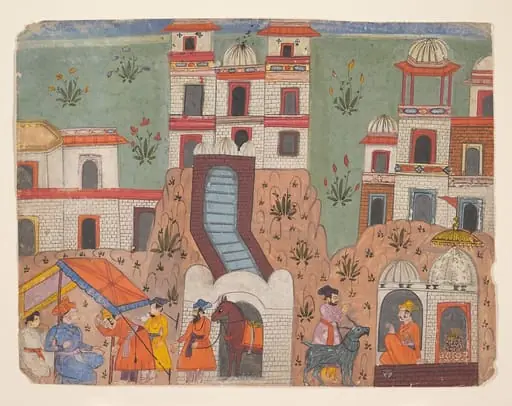
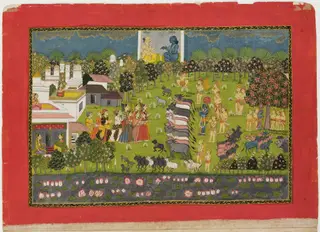
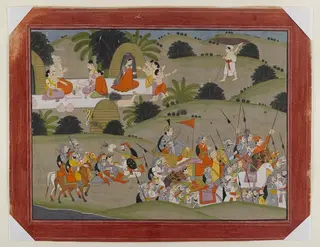
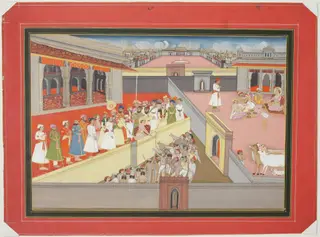
Blue-skinned Krishna rides a white horse past flag-bearing elephants while nobles in gold-trimmed robes watch from a palace balcony. The painter is unknown, but the fine layering of light through thin paint shows real skill. Made in India around 1700, likely for a royal family who wanted Krishna's stories told.
Subject & Meaning
The work depicts a mythological scene centered on the Hindu deity Krishna, set within a palace environment in Rajasthan, India.
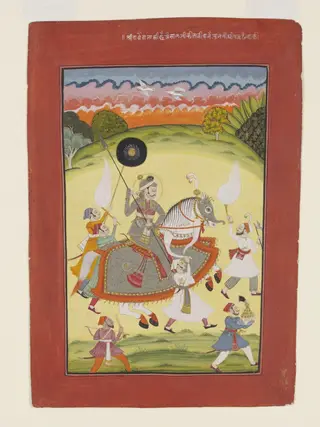
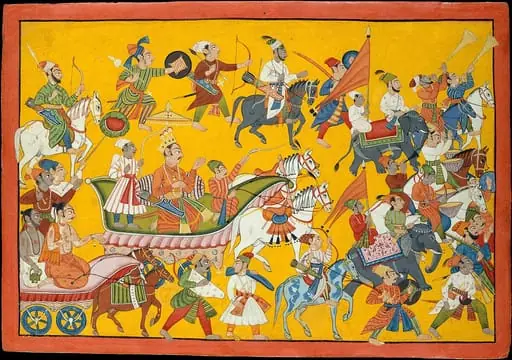
The work depicts a mythological scene centered on the Hindu deity Krishna, set within a palace environment in Rajasthan, India. The composition features Krishna alongside key iconographic elements including an elephant, a horse, and a carriage, illustrating themes of equestrianism and royal procession. These figures collectively represent a narrative moment from Hindu mythology, emphasizing the divine status of Krishna through his association with regal transport and animals.
Created around 1700, the painting utilizes ink and opaque watercolor to render this mythological tableau, reflecting regional artistic traditions that visualize sacred stories through detailed depictions of deities and their symbolic entourages.
Technique & Style
The work is painted in ink heightened with opaque watercolor on paper, a technique characteristic of eighteenth-century Rajasthani manuscript and album painting. Compositional handling features a continuous narrative spread across a horizontally oriented field, with Krishna at center seated in a carriage drawn by an elephant while a horseman moves beside it. Stylistic traits include flat color fields, delicate linework defining figures and architecture, and a refined palette dominated by earth tones and subtle washes.
The palette’s restraint and the linear precision suggest workshop practice rather than spontaneous execution, aligning with contemporaneous Mewar or Marwar ateliers.
History & Provenance
The work is dated to circa 1700 and attributed to an anonymous painter active in Rajasthan, India. Its early history is undocumented, but by the early twenty-first century it entered the collection of the Metropolitan Museum of Art, New York, where it remains housed. The painting’s subject, Krishna, an elephant-borne carriage, and equestrian figures, suggests a courtly context in Rajasthan during the late seventeenth or early eighteenth century.
Context
An unsigned 1700 ink and opaque watercolor on paper, classified as a mythological painting, depicts Krishna in a carriage accompanied by an elephant and horse; the work originates from Rajasthan, India, and is held by the Metropolitan Museum of Art, which documents its inception in 1700 and its status as a product of the region’s early 18th‑century artistic production. Although contemporary critical reception is undocumented, the painting’s inclusion in a major museum collection and its attribution to the Rajasthani school have been noted by scholars studying Indian miniature traditions, positioning it within the broader trajectory of mythological subjects in South Asian art.
Overview
This untitled Indian painting, created around 1700 with ink and opaque watercolor on paper, depicts a lively scene centered on the deity Krishna. Though the artist remains unknown, the work was likely commissioned by a royal family to illustrate narratives associated with Krishna. Its intricate details and vibrant composition reflect the artistic traditions of the period, offering a glimpse into devotional and courtly art.
Artist & collection