Artwork
Shakti Enthroned
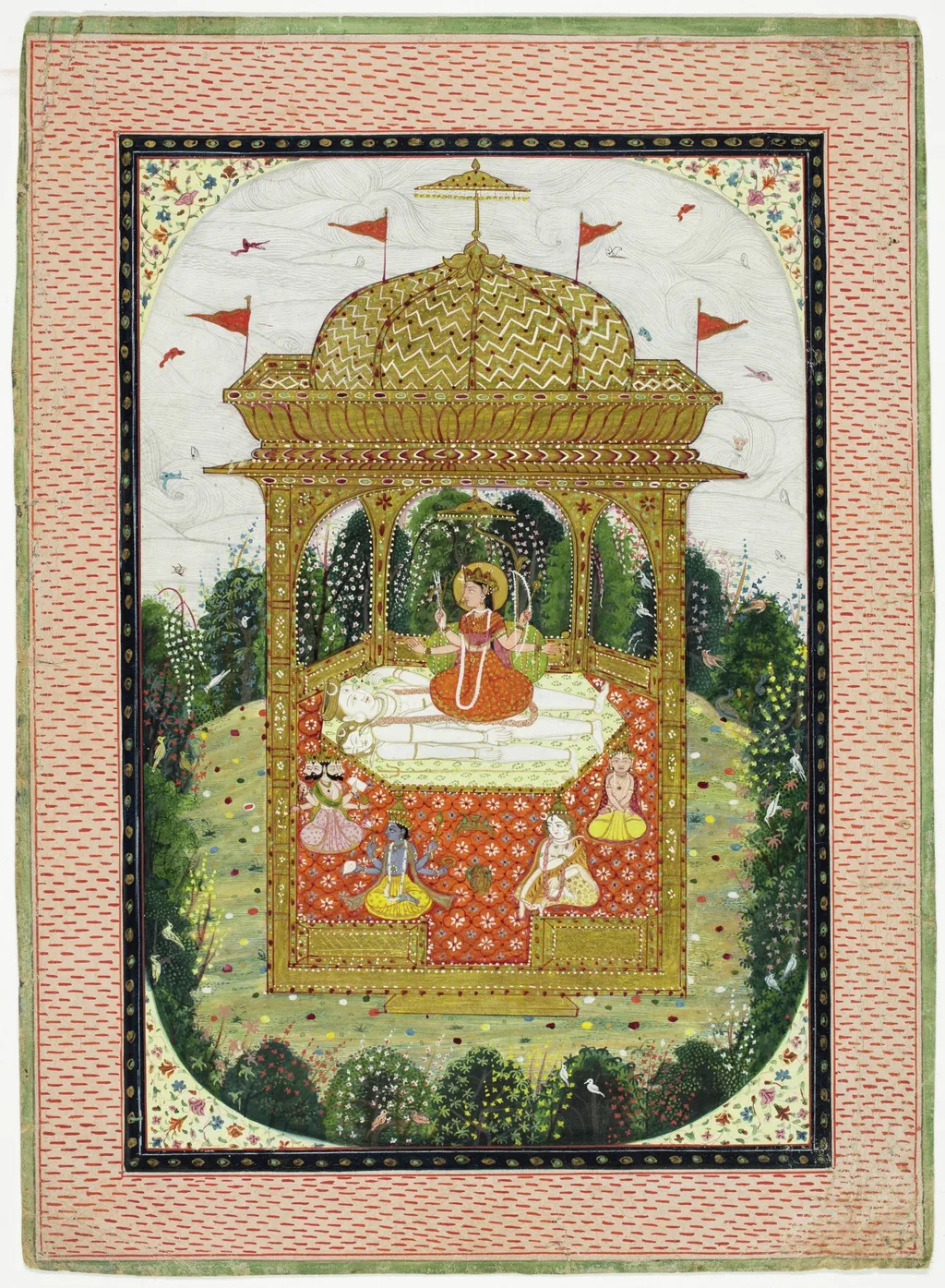
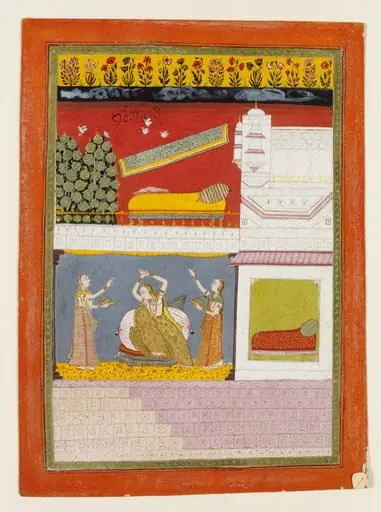
Shakti Enthroned is an unspecified painting by Unknown. It is held in the collection of the Detroit Institute of Arts. This painting portrays the Hindu goddess Shakti seated upon an ornate throne within a vibrant garden setting.
About this work
Overview
This painting portrays the Hindu goddess Shakti seated upon an ornate throne within a vibrant garden setting. Her regal posture, radiant halo, and elaborate attire signal her divine status. The composition balances natural elements—flora, birds, and sky—with the structured grandeur of her seat and garments, creating a harmonious fusion of the sacred and the earthly.
Subject & Meaning
Shakti, the embodiment of divine feminine power, is depicted here as a sovereign figure wielding a bow and arrow—symbols of focused energy and protective force. Her red attire and golden crown reflect both royalty and spiritual vitality. The surrounding garden, rich with life and bloom, alludes to creation and abundance, reinforcing her role as the source of cosmic energy and fertility.
Technique & Style
The artist employs fine brushwork to render intricate patterns on the throne and textile, while delicate shading defines the folds of the gown and the texture of foliage. Birds in flight are rendered with light, fluid strokes, contrasting the solidity of the throne. The color palette—deep reds, golds, and muted greens—enhances the divine atmosphere without overwhelming the composition’s clarity.
History & Provenance
The painting’s origins are not fully documented, but its stylistic elements align with late 19th- to early 20th-century Indian devotional art, particularly from regions where Pahari or Company school traditions influenced religious imagery. It likely originated as a private commission for worship or domestic veneration, though its specific provenance remains untraced.
Context
During the colonial period, Indian artists often blended traditional iconography with emerging naturalistic techniques under European influence. This work reflects that transition: Shakti’s portrayal retains symbolic purity while incorporating detailed botanical and atmospheric elements more typical of Western realism, catering to both devotional and aesthetic expectations of the time.
Legacy
Though not widely exhibited or cataloged, the painting contributes to a broader corpus of modern devotional art that reimagined ancient deities with renewed visual precision. It stands as a quiet testament to the persistence of Hindu iconographic traditions amid shifting artistic currents, preserving spiritual narratives through meticulous craftsmanship.
Artist & collection

 Domestic Scene
 Giacomo and Cardinal Marco, investing Andrea, Abbot of San Zeno, with his Benefice
 The Nymph of Fontainebleau
 Portrait of a Woman
 Madonna and Child with Saints in the Enclosed Garden
 Venus and Minerva
 Family Group of Four on Sofa
 Wall painting from Room H of the Villa of P. Fannius Synistor at Boscoreale
 Dipak ragini
 Gujari ragini
 Raga Hindola
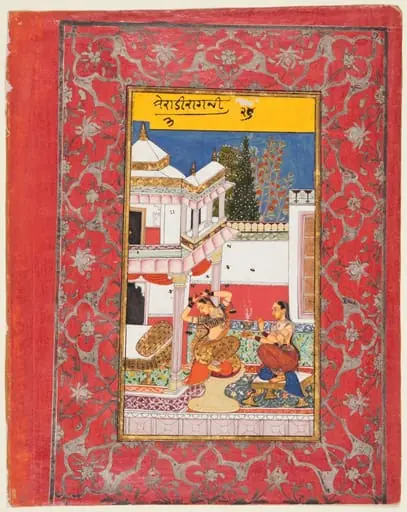 Woman Longing for Her Lover: Verati Ragini of Dipak, from a Ragamala
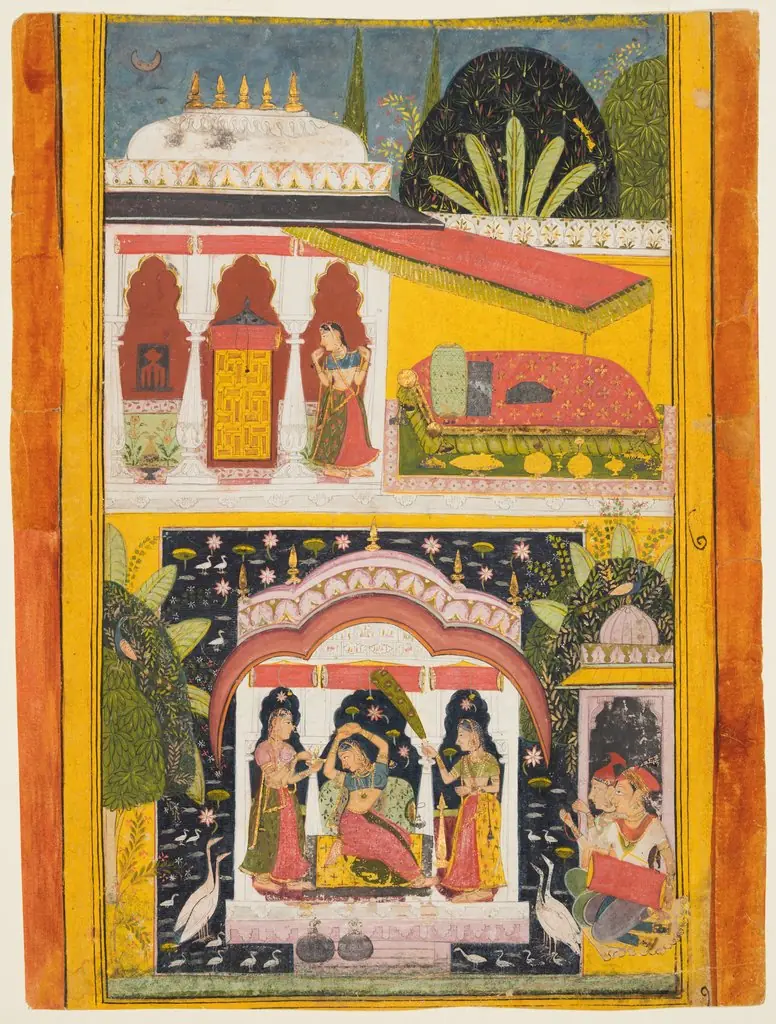
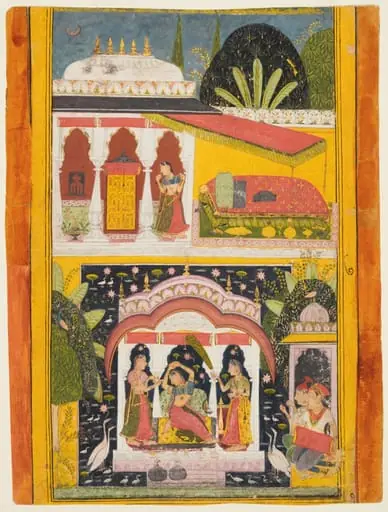 A Royal Woman in a Pavilion: Desavarari Ragini of Dipak, from a Ragamala
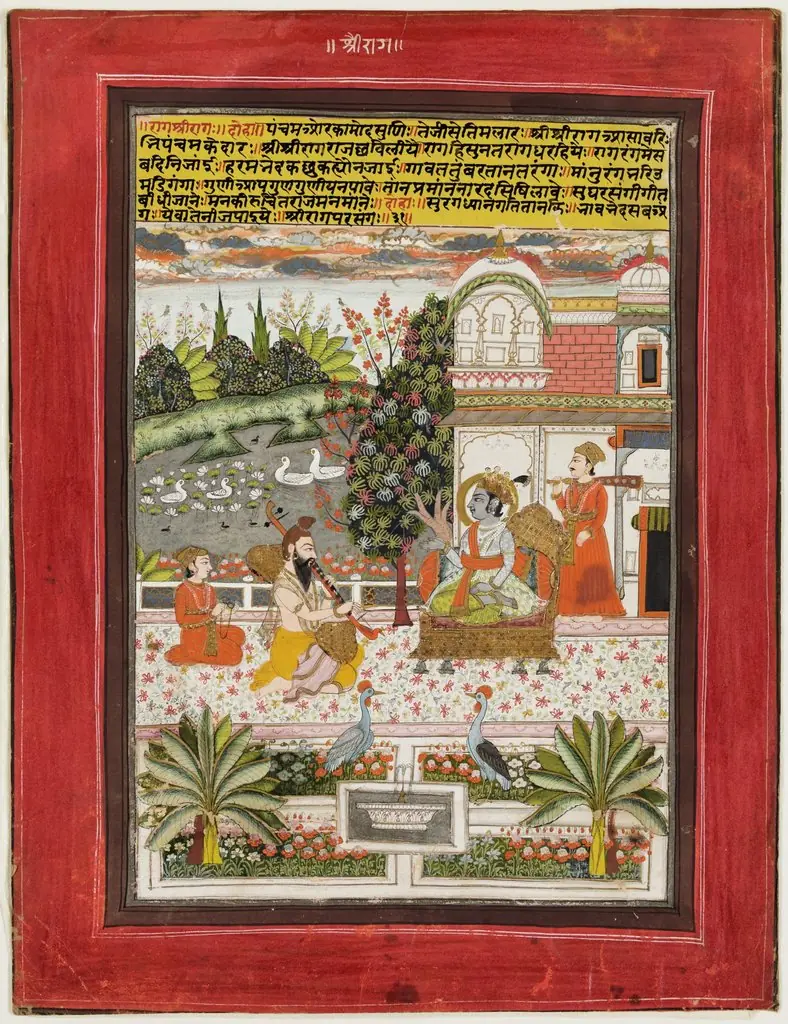 Krishna with Guru in Palace Scene
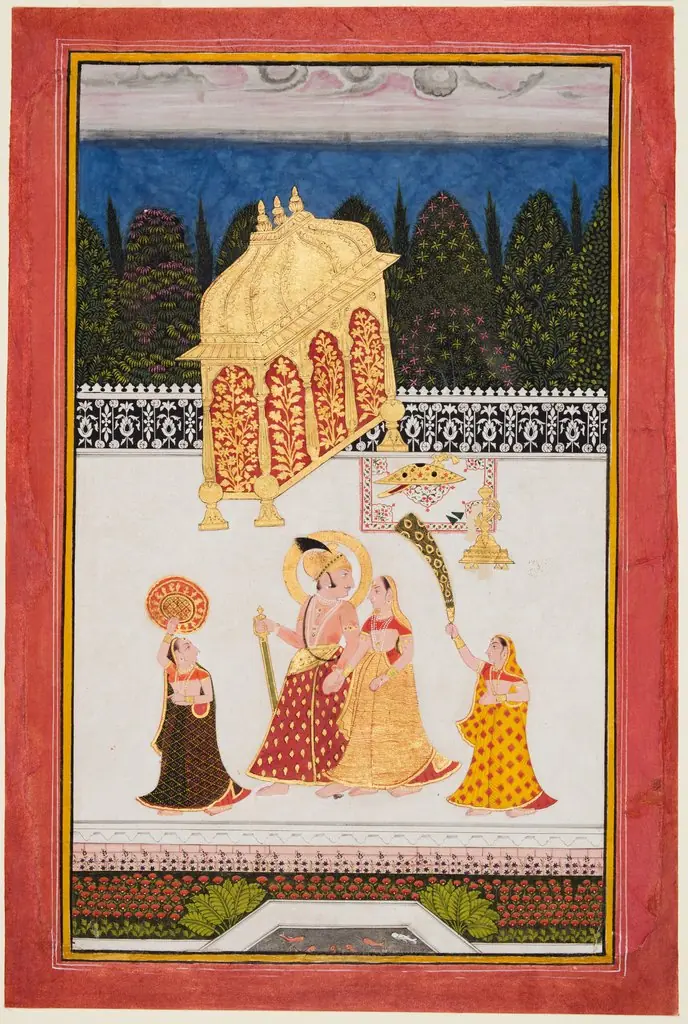 Maharana Ari Singh II of Mewar (r. 1761–73) with His Consort on a Terrace
 Vilavali Ragini
 Maharaja Ajit Singh of Jodhpur
 A Royal Woman in a Pavilion: Desavarari Ragini of Dipak, from a Ragamala
 Princess and attendant in trompe l’oeil window
 Varara Ragini