Artwork
Princess and attendant in trompe l’oeil window
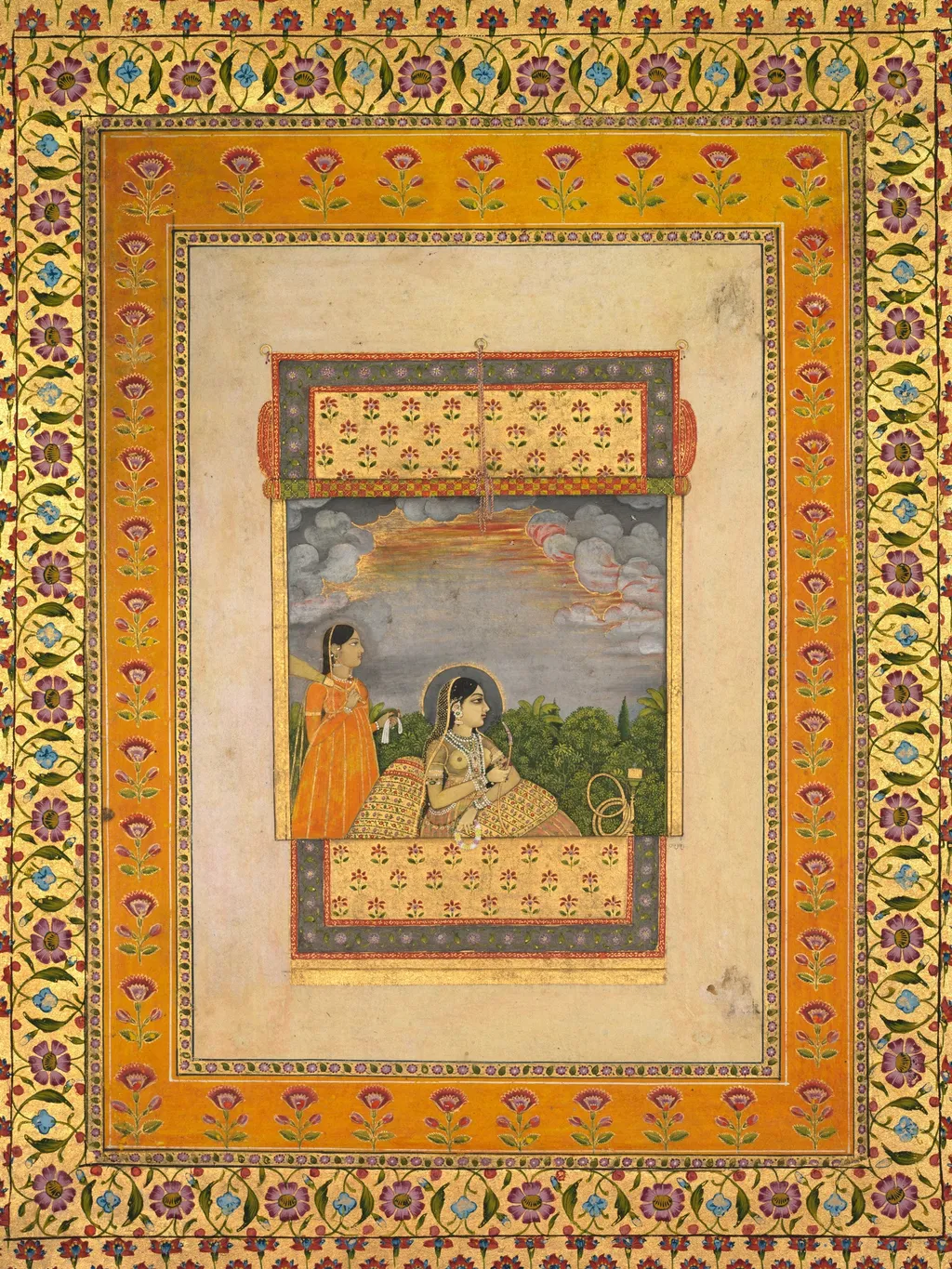
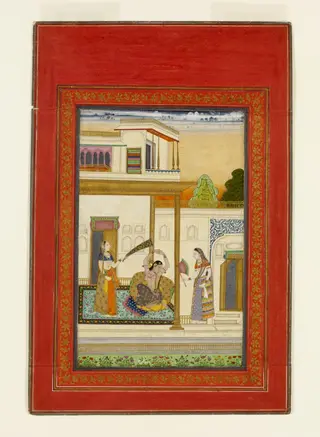
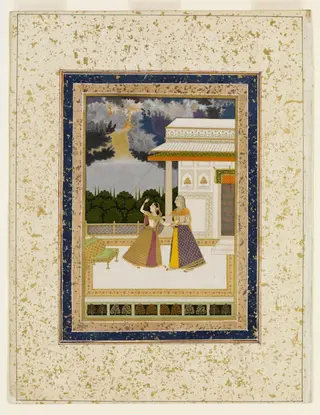
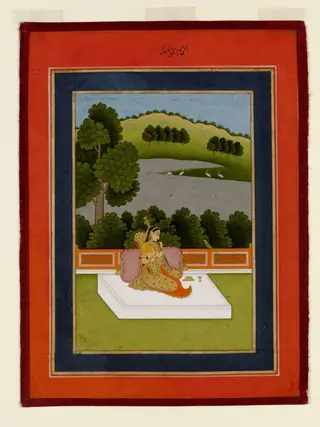
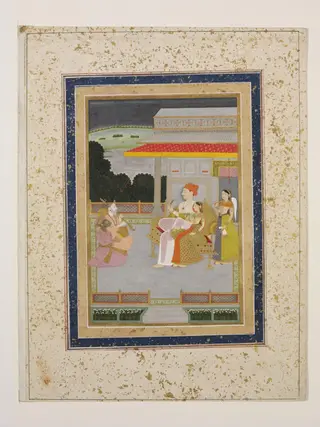
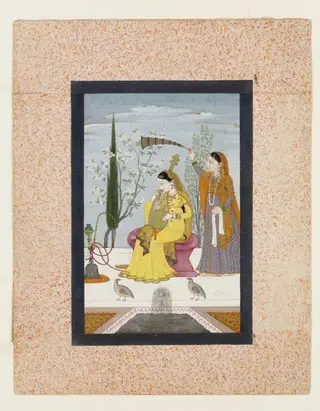
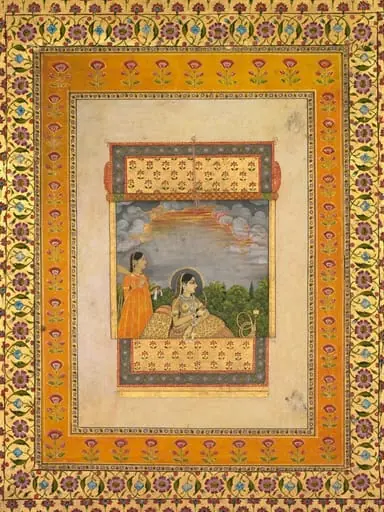
Princess and attendant in trompe l’oeil window is an unspecified painting. It dates from 1765 and is held in the collection of the Cleveland Museum of Art. The work depicts two women positioned within a painted window frame, one seated and the other standing behind her.
About this work
Technique & Style
The work is classified as a painting created in 1765, attributed to the Indian artist Aqil Khan, who was active during the mid-eighteenth century.
The work is classified as a painting created in 1765, attributed to the Indian artist Aqil Khan, who was active during the mid-eighteenth century. The title describes a trompe l'oeil window, indicating a formal stylistic quality where the composition employs illusionistic techniques to simulate a three-dimensional opening or frame within the two-dimensional surface. This approach suggests a deliberate handling of perspective and depth to engage the viewer through visual deception.
The specific materials, support structure, and current physical condition of the artwork are not detailed in the available records.
History & Provenance
Created in 1765, this painting is attributed to the Indian artist Aqil Khan, who was active during the mid-18th century. The work entered the collection of the Cleveland Museum of Art, where it is held under the accession number 1955.297. While some records list the creator as unknown, specific cataloging identifies Khan as the artist responsible for this depiction of a princess and attendant within a trompe l'oeil window setting.
Context
The painting is situated within mid-18th century European artistic practice, particularly the popularity of trompe l’oeil illusionistic effects that simulated architectural elements within pictorial space. It forms part of a broader corpus of works attributed to Indian painter Aqil Khan, whose activity is documented in collections such as the Cleveland Museum of Art. The work’s date of 1765 aligns with the period of the artist’s documented output, situating it at the intersection of European decorative trends and colonial artistic exchange.
Overview
The work depicts two women positioned within a painted window frame, one seated and the other standing behind her. Both figures are dressed in warm-toned garments of yellow, orange and green, set against a softly rendered cloudy sky. The composition creates an illusion of depth, suggesting a view through an architectural opening.
Subject & Meaning
The seated figure appears to be a princess, indicated by her elaborate attire and poised demeanor, while the standing figure serves as an attendant, her posture attentive. The juxtaposition of the two women within a faux window may allude to themes of observation, status, and the interplay between public display and private presence.
Artist & collection