Artwork
A Royal Woman in a Pavilion: Desavarari Ragini of Dipak, from a Ragamala
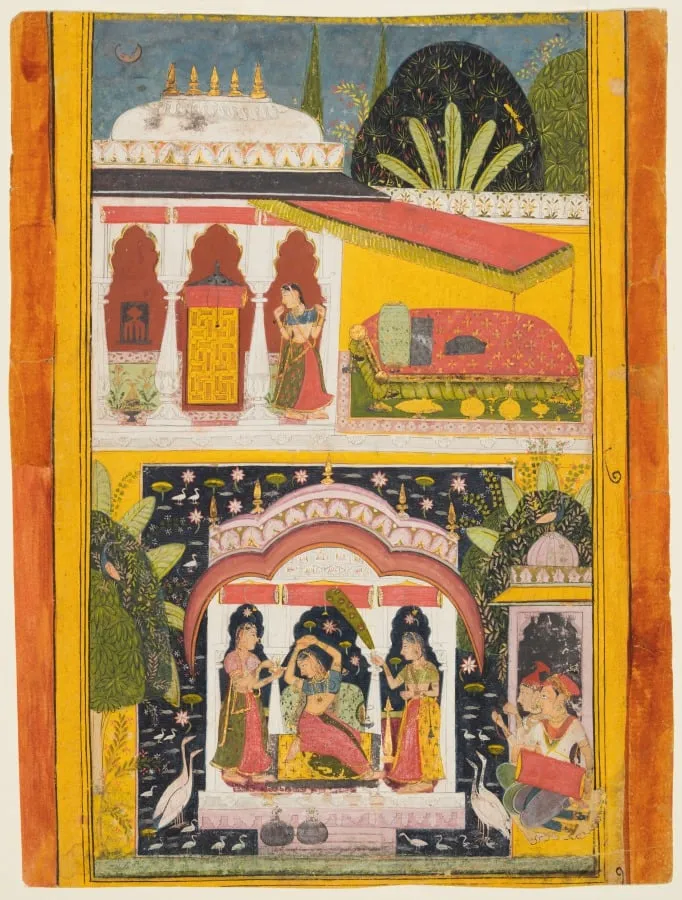
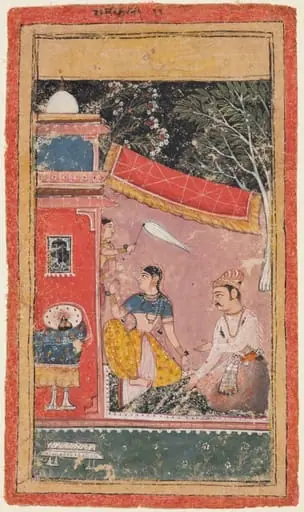
A Royal Woman in a Pavilion: Desavarari Ragini of Dipak, from a Ragamala is an unspecified painting by the Baroque artist Unknown. It dates from 1695 and is held in the collection of the Cleveland Museum of Art. The painting portrays a lavish interior of a royal women's quarters, extending over two levels.
- Accession no.
- 2018.138
- Credit line
- Purchase and partial gift from the Catherine and Ralph Benkaim Collection; Severance and Greta Millikin Purchase Fund
About this work
Overview
The painting portrays a lavish interior of a royal women's quarters, extending over two levels. A woman in a richly colored sari sits beneath a canopy on a terrace that overlooks a lotus‑filled pool and a small pleasure pavilion. Attendants fan her, while musicians below play drums and cymbals, creating a scene of courtly leisure.
Subject & Meaning
The central figure is a royal woman, identified by the peacock‑feather whisk held by an attendant, a traditional symbol of aristocratic status. The composition juxtaposes the private, elevated space of the woman with the open, watery landscape below, suggesting a harmonious balance between seclusion and the natural world often associated with courtly refinement.
Technique & Style
Executed in vivid jewel tones, the work employs a two‑plane perspective that separates the terrace from the pool and pavilion. Fine brushwork delineates the intricate drapery of the sari and the delicate foliage of the lotus, while the musical figures are rendered with rhythmic gestures that echo the accompanying raga theme.
Context
This piece belongs to a Ragamala series, a visual counterpart to Indian musical modes where each painting illustrates a specific raga’s associated time, season, and emotional tone. Such series served both as artistic expression and as pedagogical tools for understanding the nuanced moods of Indian classical music.
History & Provenance
The artist’s identity remains unknown, as the work bears no signature. It is linked stylistically to the Rajput kingdom of Mewar, a region known for its courtly paintings that often featured elaborate interiors and musical subjects.
Artist & collection









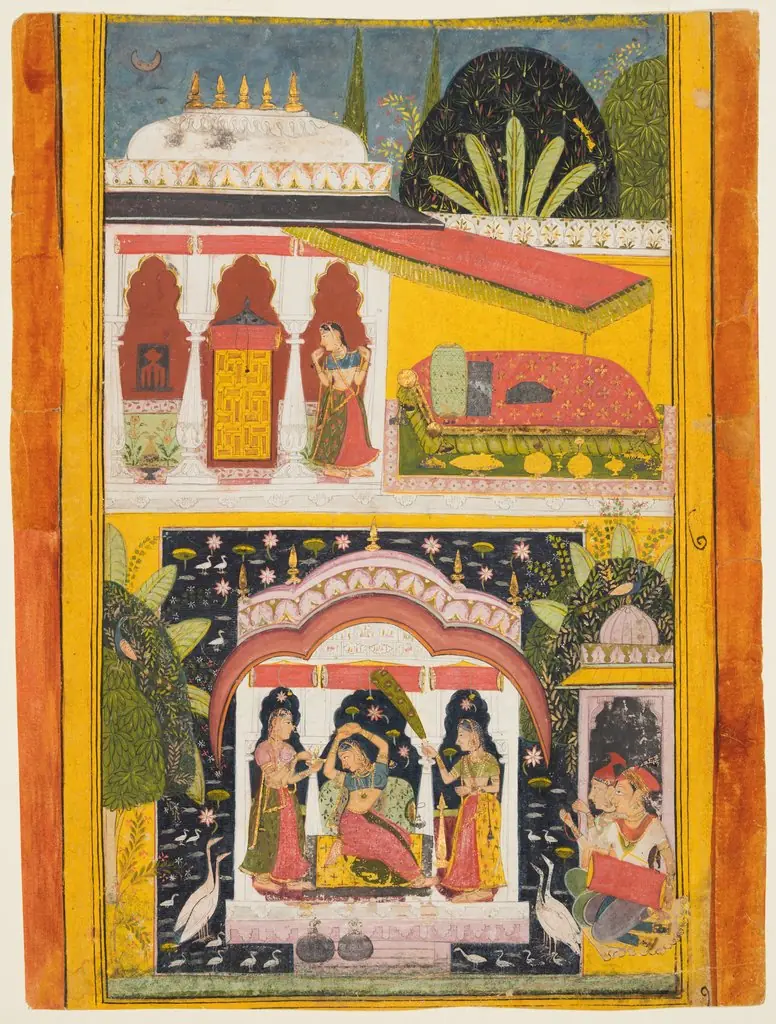
- A Royal Woman in a Pavilion: Desavarari Ragini of Dipak, from a Ragamala
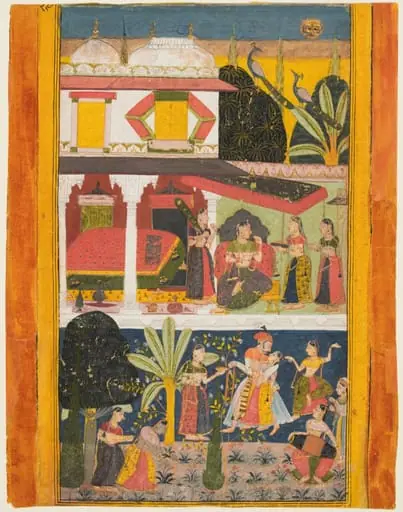 A Heroine and Her Paramour: Malavi Ragini, from a Ragamala
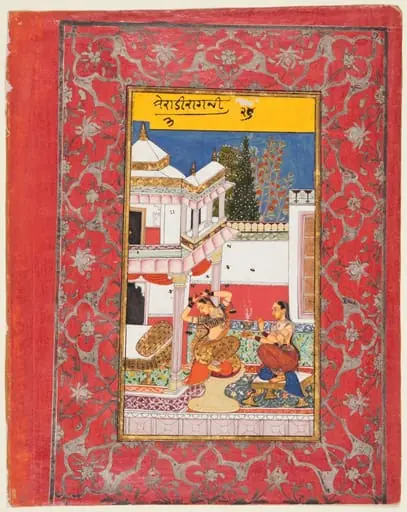 Woman Longing for Her Lover: Verati Ragini of Dipak, from a Ragamala
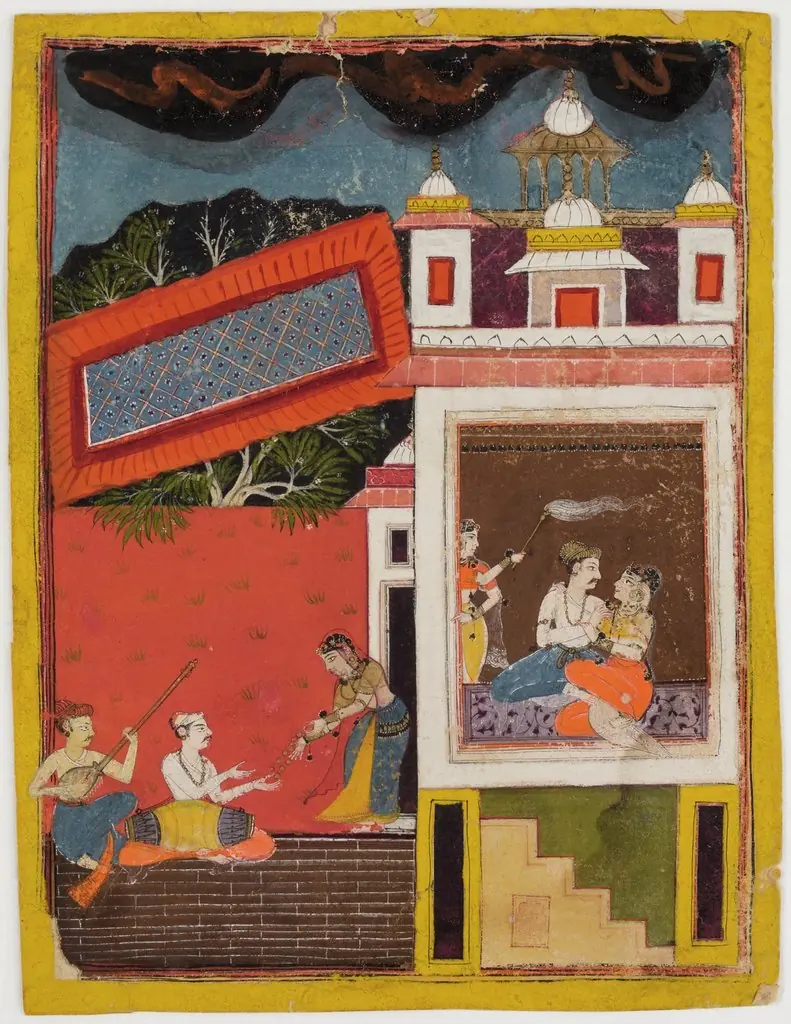 Prince and Lady in Palace Scene with Musicians
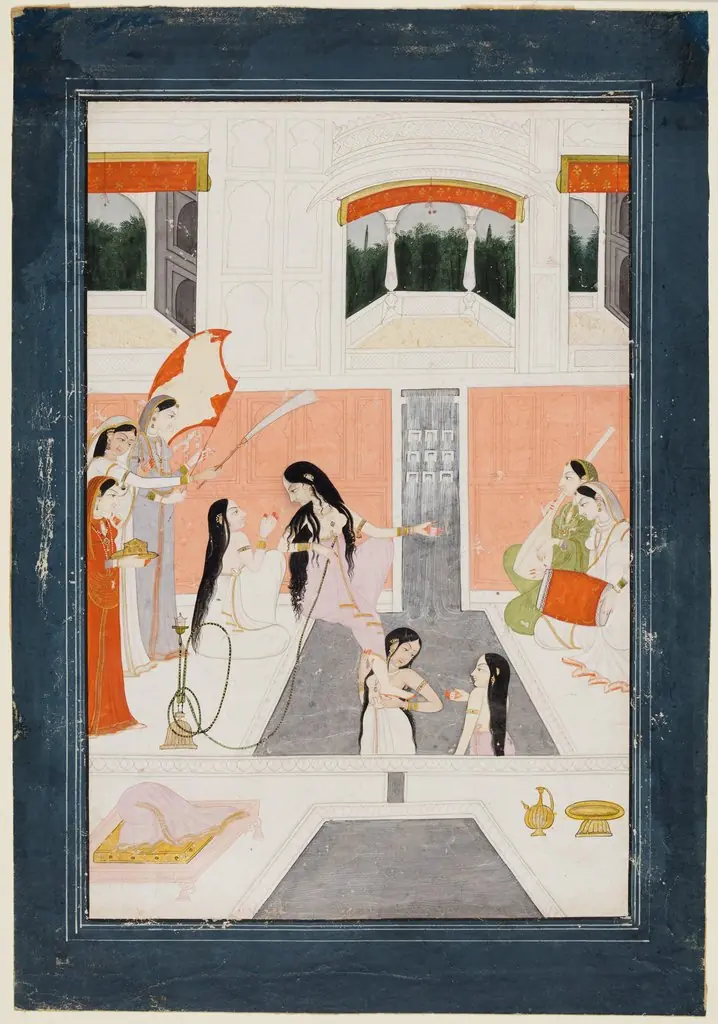 Palace Women Enjoy Music by the Side of a Water Cascade
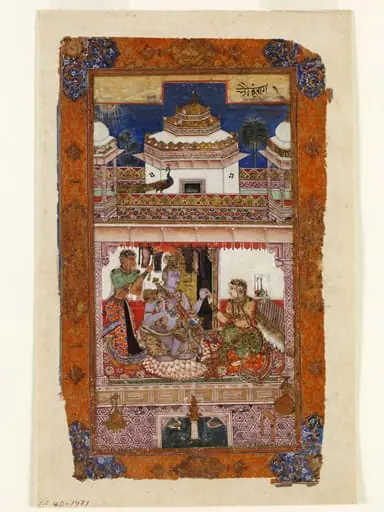 Bhairava Raga
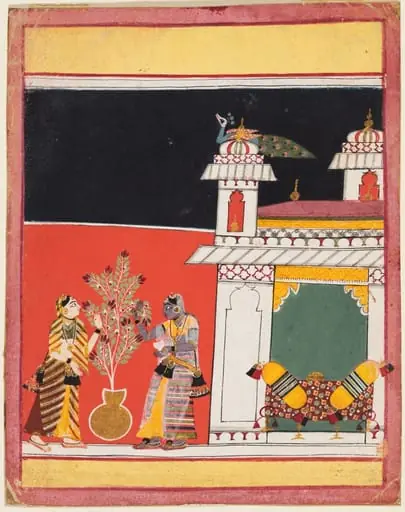 Two Women Pluck Flowers on a Terrace: Gunakali Ragini, from a Ragamala
 Lovers on a Terrace: Ramakali Ragini of Hindol, from a Bundi Ragamala