Artwork
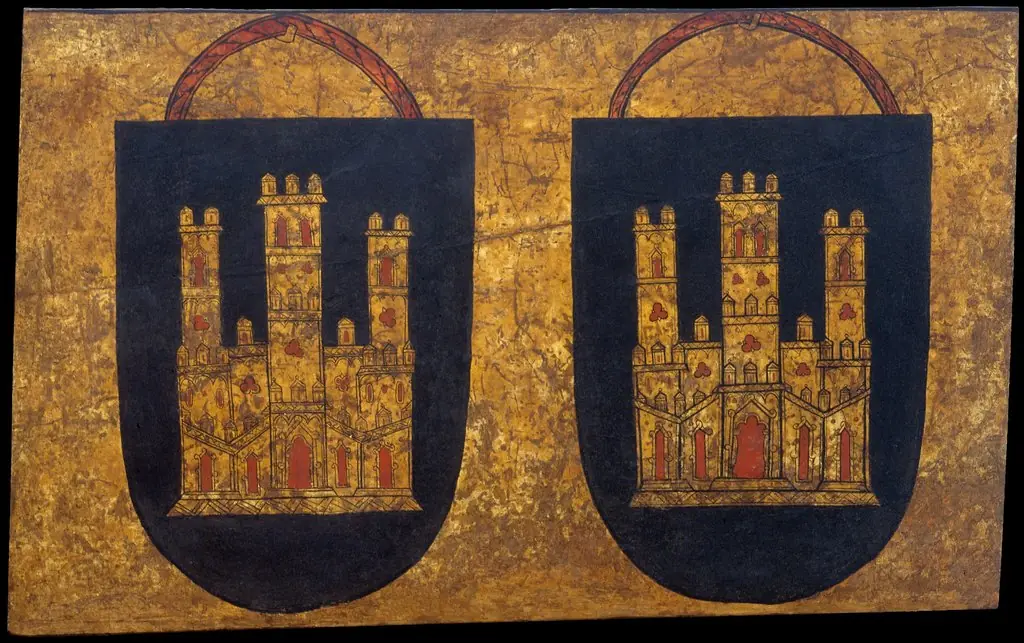
Two coats of arms with three-towered castles
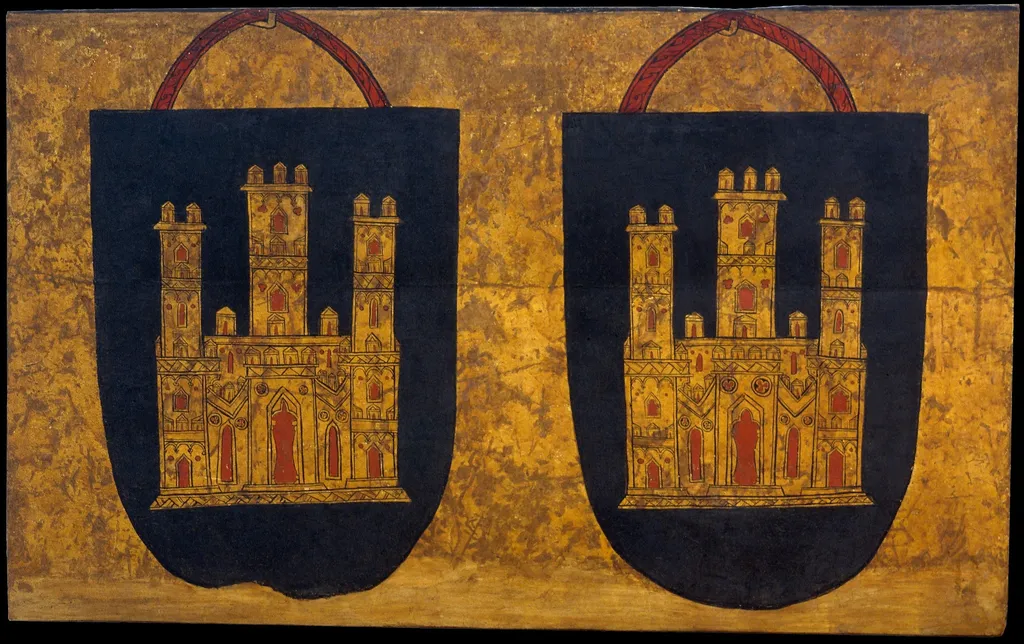
Two coats of arms with three-towered castles is an unspecified painting by the Byzantine icon painting artist Unknown. It dates from 1298 and is held in the collection of the Museu Nacional d'Art de Catalunya. The work titled *Two coats of arms with three‑towered castles* is a painted panel dated to 1295.
About this work
This painting is titled Two coats of arms with three-towered castles.
It was created in 1295, a long time ago.
The Museu Nacional d'Art de Catalunya holds this work, which gives us a clue about its significance.
We don't know much about the artist, but the year it was made is interesting because it's really old.
Check out the Museu Nacional d'Art de Catalunya.
Overview
The work titled *Two coats of arms with three‑towered castles* is a painted panel dated to 1295. It consists of two heraldic shields, each bearing a three‑towered castle motif, rendered in the medieval style of the late thirteenth century. The piece is part of the collection of the Museu Nacional d’Art de Catalunya in Barcelona, where it is displayed among other early Iberian artworks.
Subject & Meaning
The composition presents two heraldic devices, each featuring a stylised castle with three towers, a common symbol of fortification and noble authority in medieval Europe. The paired shields likely represent the arms of two allied families or territories, emphasizing a relationship of mutual recognition or alliance through shared iconography.
Technique & Style
Executed as a painted panel, the work employs the flat, linear rendering typical of late‑medieval heraldic art. The colors are applied in broad, opaque washes, with limited shading, focusing on clear identification of the symbols rather than naturalistic detail. The composition adheres to the conventions of contemporary armorial illustration.
History & Provenance
Created in 1295, the panel’s early provenance is undocumented, and the artist remains unknown. It entered the Museu Nacional d’Art de Catalunya’s holdings in the twentieth century, where it was catalogued as an example of early Catalan heraldic painting, contributing to the museum’s representation of medieval visual culture.
Context
During the late thirteenth century, heraldic panels were used to display lineage, alliances, and territorial claims, often in diplomatic or ceremonial settings. The three‑towered castle motif reflects the importance of fortified structures in the political landscape of the Crown of Aragon and surrounding regions, where such imagery signified power and protection.
Artist & collection

 Domestic Scene
 Giacomo and Cardinal Marco, investing Andrea, Abbot of San Zeno, with his Benefice
 The Nymph of Fontainebleau
 Portrait of a Woman
 Madonna and Child with Saints in the Enclosed Garden
 Venus and Minerva
 Family Group of Four on Sofa
 Wall painting from Room H of the Villa of P. Fannius Synistor at Boscoreale
 Coffered ceiling panel with a fight between a Christian knight and a Muslim
 Blazonul funerar al contelul Miklós Wass din Țaga
 Coat of Arms of Adriana Perez
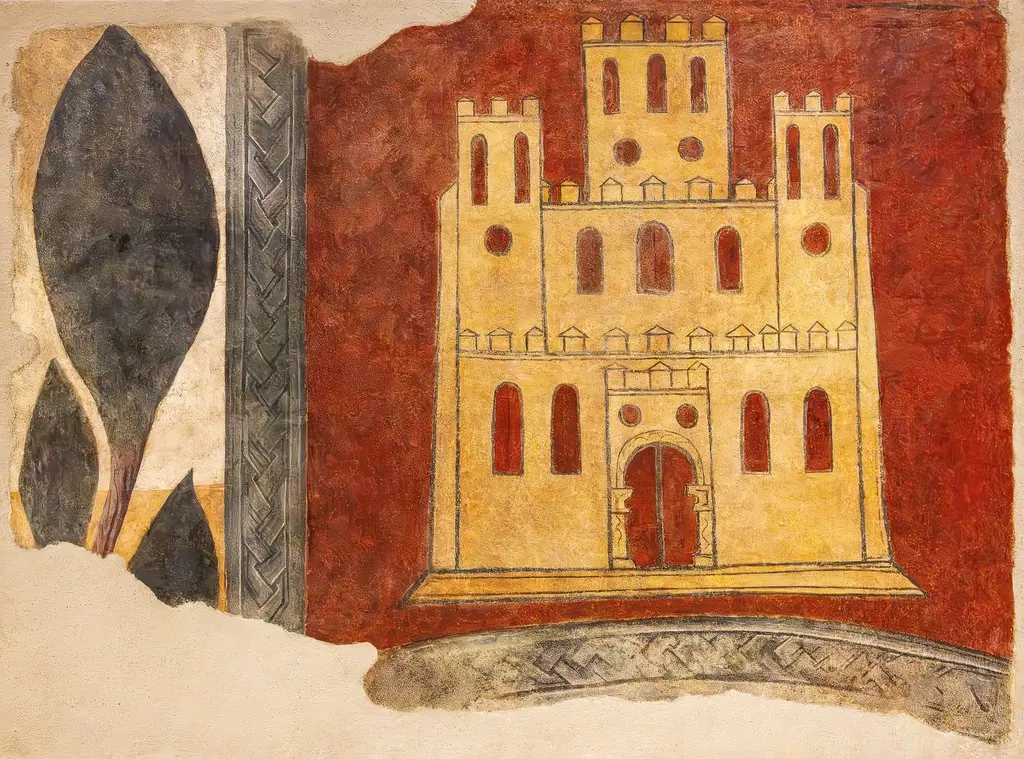 Architectural motif of San Pedro de Arlanza
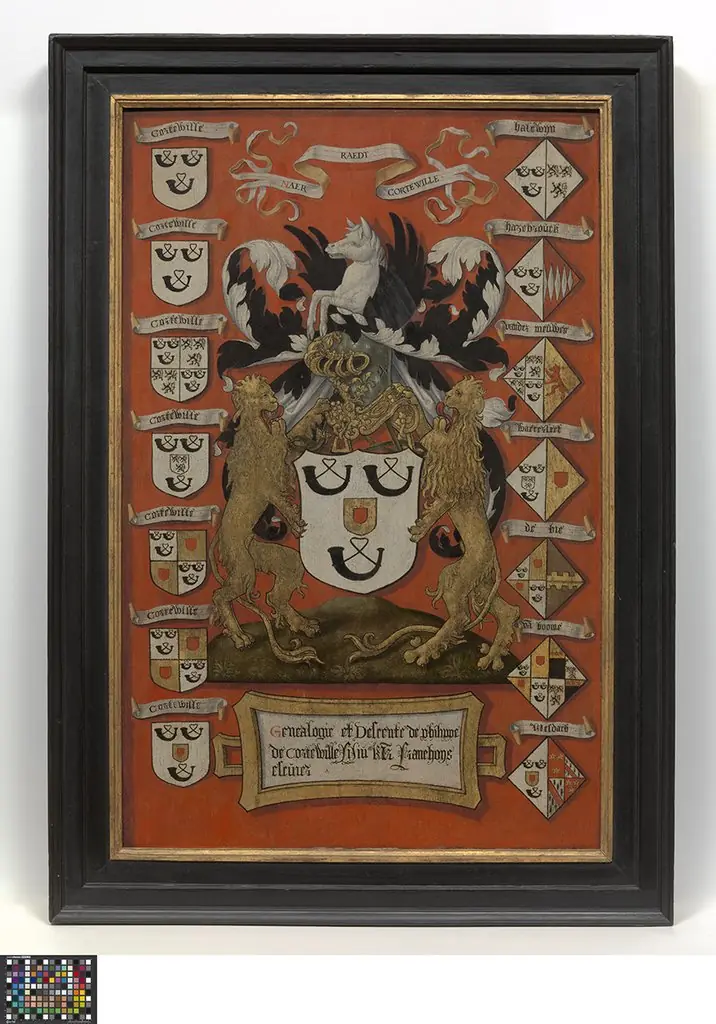 Pedigree of Filips de Cortewille
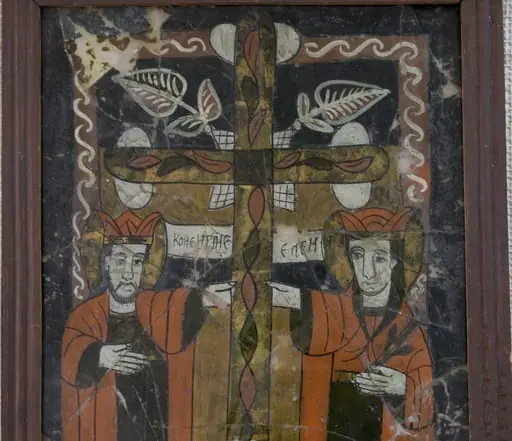 Pictură în oglindă, pe spatele unei bucăți de glajă, ax vertical.Sfinții Împărați Constantin și Elena, 3/4 , în picioare, semiprofil, sub brațele crucii pe care a fost răstignit Isus( găsită de Împărăteasa Elena la Ierusalim) Amândoi au plete castanii, lăsate pe umeri, coroane înalte, veșminte identice, simple, lungi, cămăși verzi și mantii roșii. Plasarea personajelor sub brațele crucii, în jumătatea inferioară, pe fond ocru sugerează complementaritatea celor două planuri(terestru și ceresc). Împărăteasa ține în mână o ramură verde, element ce o însoțește în majoritatea reprezentărilor populare. Fețele sunt ușor diforme, ochii negri. Crucea dreaptă, plasată în centrul compoziției, decorată cu frunze și o spirală în partea de jos, creează simetrie. La întretăierea brațelor crucii elemente vegetale cu contur alb. Chenarul specific icoanelor de Nicula, linia albă(zăluțe, funie) pe fond roșcat. Icoana este caracteristică perioadei de înflorire a picturi pe sticlă de la Nicula. Rama profilată, din lemn de brad, pictată cu o culoare roșcată. Dosul subțire. Sticla spartă în mai multe fragmente.
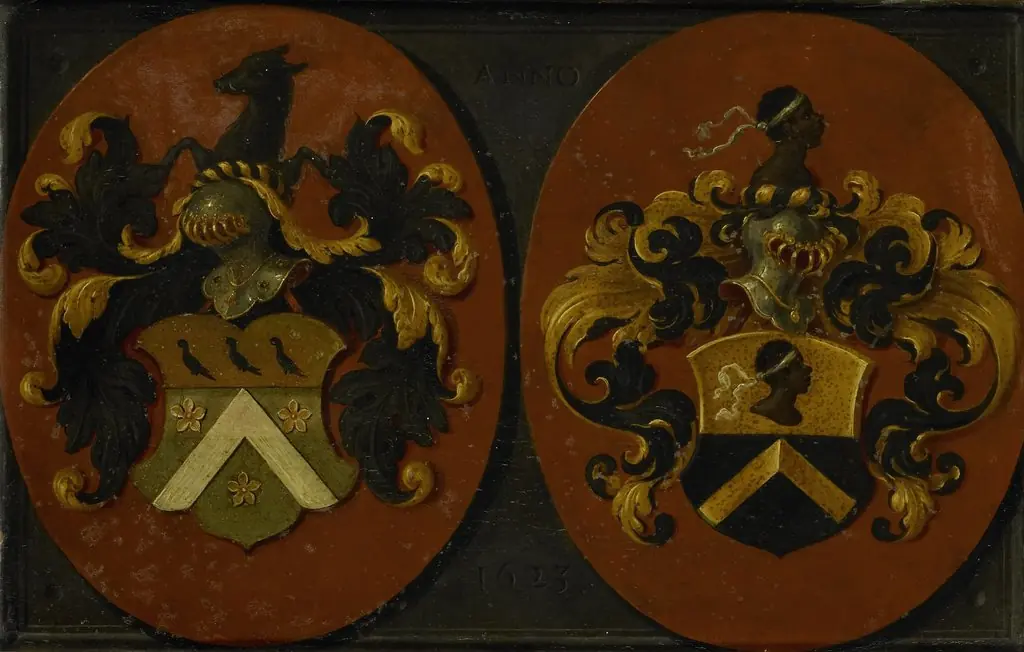 Wapenbord met de wapens van Boudaen en Fourmenois, 1623 (het wapen van Fourmenois omgewend)
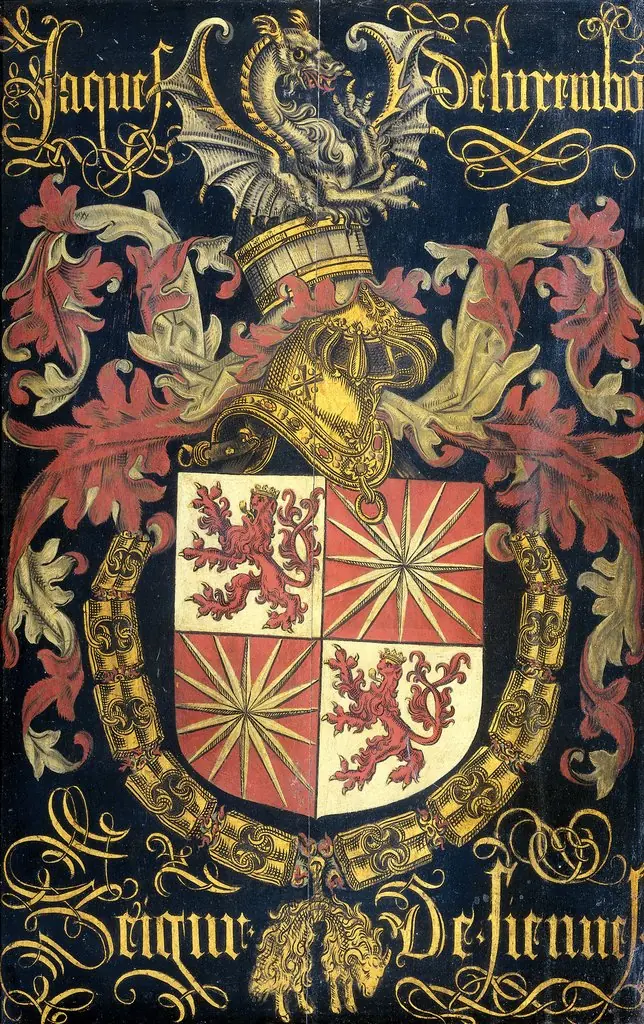 Shield of Jacob of Luxemburg (after 1441-1488), Lord of Fiennes, in his capacity as knight of the Order of the Golden Fleece
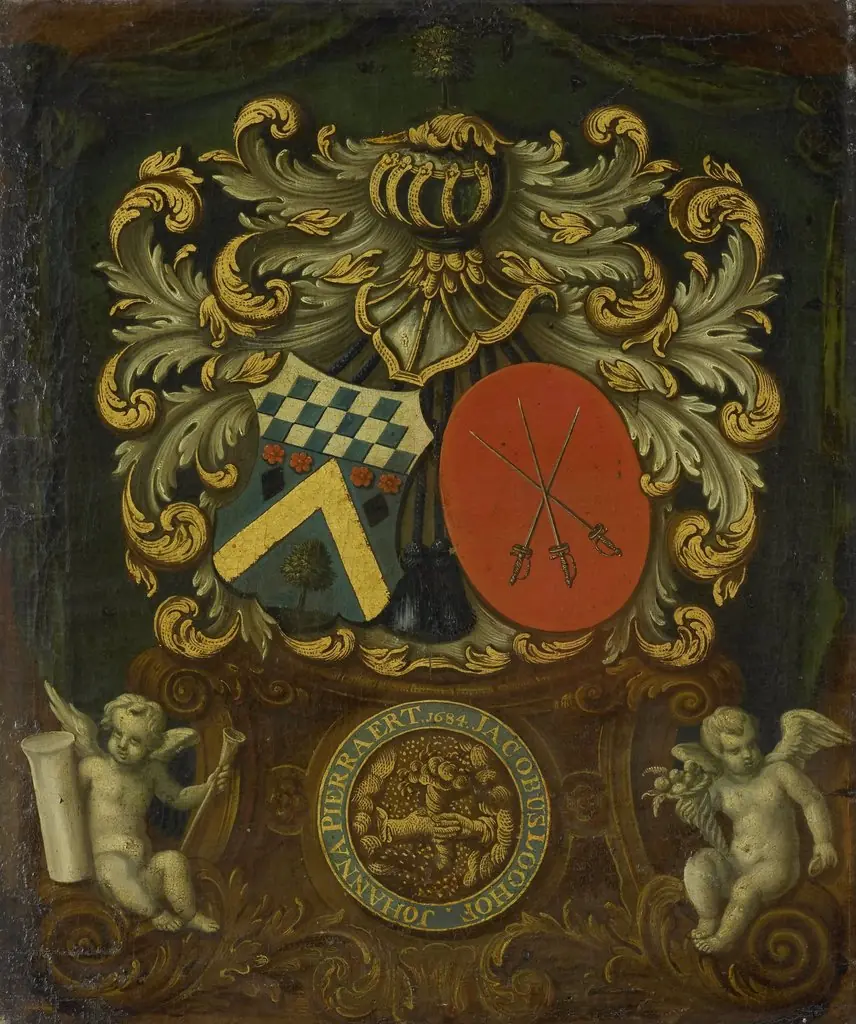 The family shields of Jacobus Loohoff and Johanna Pierraert, 1684
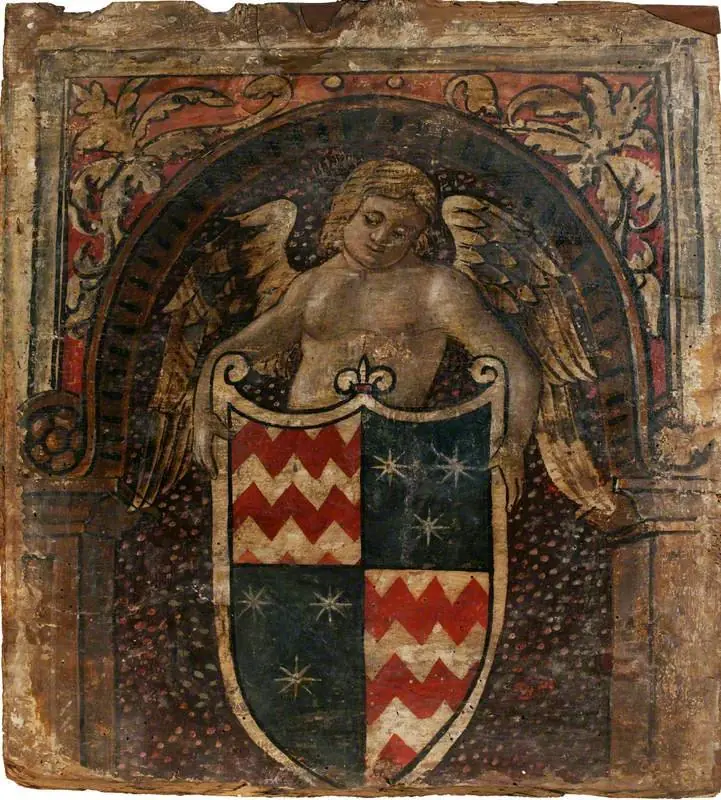 A Cupid with a Coat of Arms (one of 29 painted panels from a frieze)
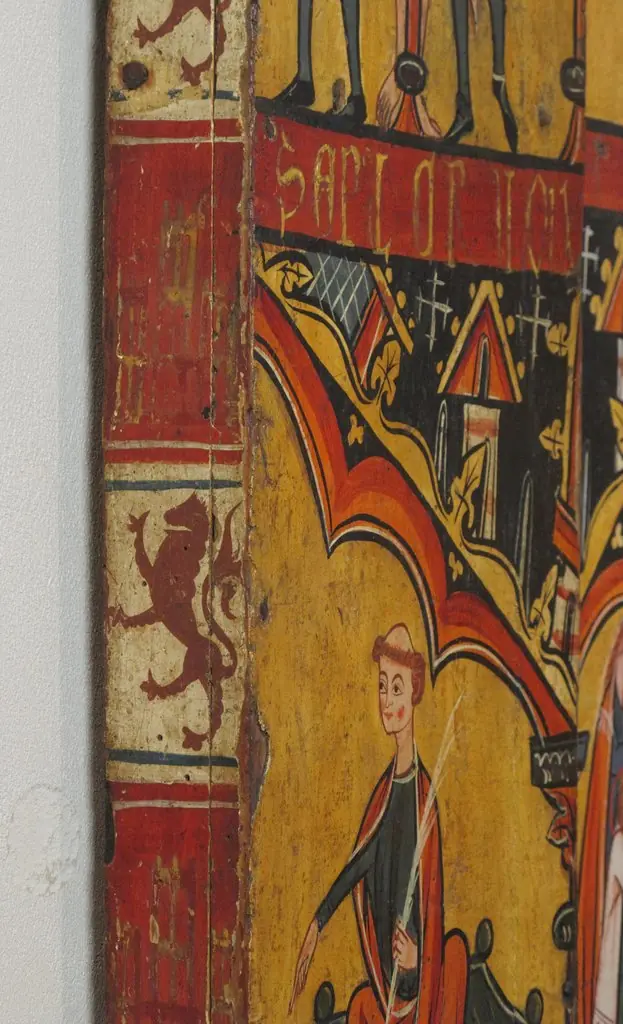 Scenes from the Life of Christ: Disrobing Youths from the Entry into Jerusalem, Flagellation, and Angel at the Sepulchre
 Two coats of arms with three-towered castles