Artwork
Mummy of Herakleides
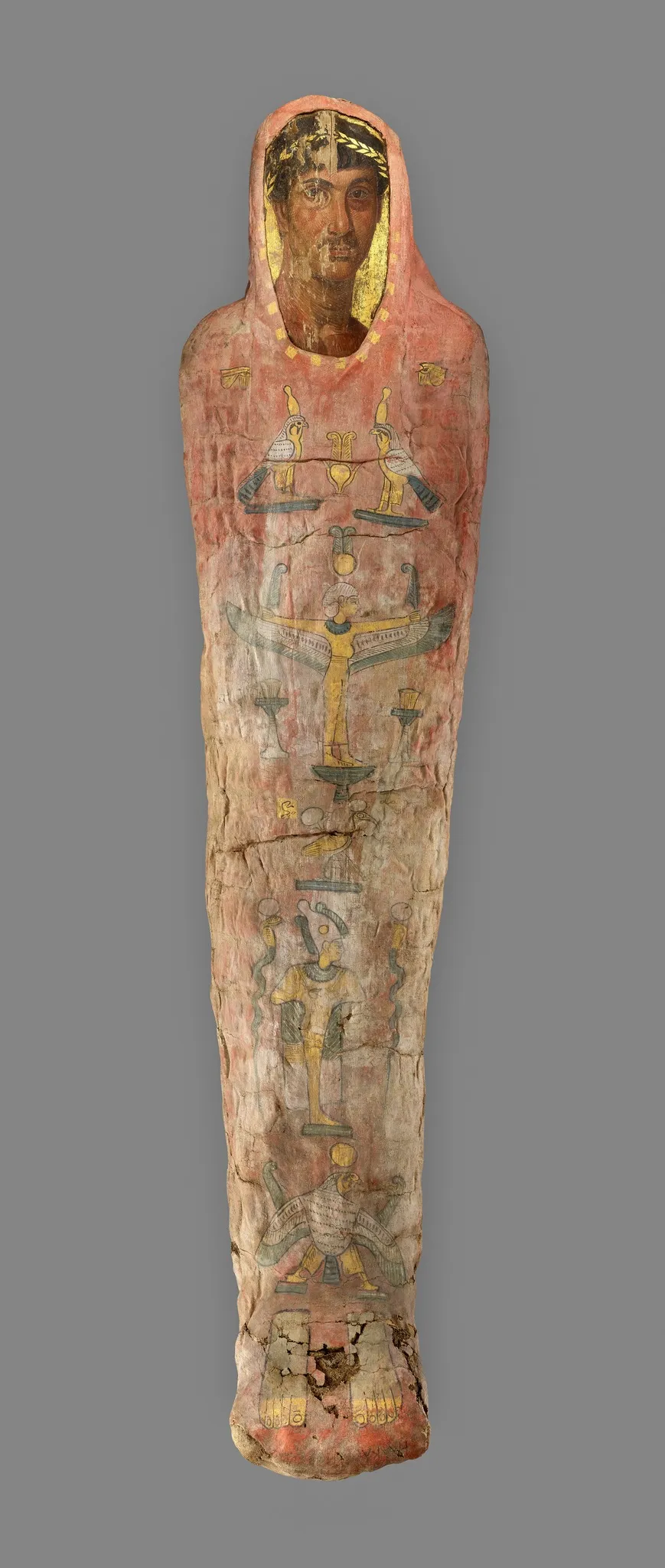
Mummy of Herakleides is a wood painting by the Byzantine icon painting artist Unknown. It is held in the collection of the J. Paul Getty Museum.
About this work
Overview
It reflects the fusion of Egyptian burial customs with Greco-Roman artistic traditions during the Roman occupation of Egypt.
The Mummy of Herakleides is a 2nd-century AD Romano-Egyptian funerary ensemble composed of a wooden coffin covered in a red linen shroud, with a painted portrait panel affixed to its front. Unlike many mummy portraits found fragmented, this example survives largely intact, preserving both the physical remains and the painted face in their original context. It reflects the fusion of Egyptian burial customs with Greco-Roman artistic traditions during the Roman occupation of Egypt.
Subject & Meaning
The portrait depicts a young man named Herakleides, likely of mixed Egyptian and Greek heritage, dressed in Roman-style clothing with a gold wreath. His gaze is direct and serene, suggesting a desire for eternal presence. The inclusion of his name and the portrait’s placement over the face indicate a belief in personal identity persisting beyond death, blending Egyptian mummification with Roman ideals of individual commemoration.
Technique & Style
The portrait is executed in encaustic—pigments mixed with heated beeswax—applied to a wooden panel. The technique allows for subtle modeling of the face, with soft transitions in skin tone and detailed rendering of hair and jewelry. The background is a flat, rich red, typical of the Fayum portrait tradition, emphasizing the figure’s presence against a symbolic void. The brushwork is precise yet naturalistic, reflecting Hellenistic training adapted to local funerary needs.
History & Provenance
Discovered in the Roman-era necropolis of Hawara in Egypt, the mummy was acquired by the J. Paul Getty Museum in the 1980s. Its exceptional state of preservation—retaining the shroud, portrait, and mummified body—makes it one of the few complete examples of its kind. Prior to its acquisition, it had been in private collections for decades, its origins obscured until scholarly investigation confirmed its archaeological context.
Context
During the Roman period in Egypt, elite families adopted mummy portraits as part of a hybrid funerary practice. These portraits replaced traditional Egyptian masks, offering a lifelike representation of the deceased. The red shroud, common in the 2nd century, signaled status and aligned with Roman aesthetic preferences. Herakleides’s portrait reflects a society where cultural identities merged, and death rituals became personal expressions of lineage and belonging.
Legacy
The Mummy of Herakleides remains a key reference for understanding the intersection of Roman portraiture and Egyptian burial rites. Its preservation has enabled detailed study of materials, techniques, and social practices in Roman Egypt. As one of the few complete ensembles, it informs museum displays and academic research on identity, death, and artistic adaptation in multicultural antiquity.
Artist & collection

 Domestic Scene
 Giacomo and Cardinal Marco, investing Andrea, Abbot of San Zeno, with his Benefice
 The Nymph of Fontainebleau
 Portrait of a Woman
 Madonna and Child with Saints in the Enclosed Garden
 Venus and Minerva
 Family Group of Four on Sofa
 Wall painting from Room H of the Villa of P. Fannius Synistor at Boscoreale
 Painted Restoration of the Hathor-Head Frieze in the Tomb of Senenmut
 Osiris carrying a flail and crook
 Userhat and Wife Visit Abydos, Tomb of Userhat
 Menna's Daughter Offering to her Parents, Tomb of Menna
 Ceiling panel with an eagle between coats of arms of the Caldes family and plant motifs
 Dragging a Statue of Thutmose I
 Gifts from Western Asia, Tomb of Rekhmire
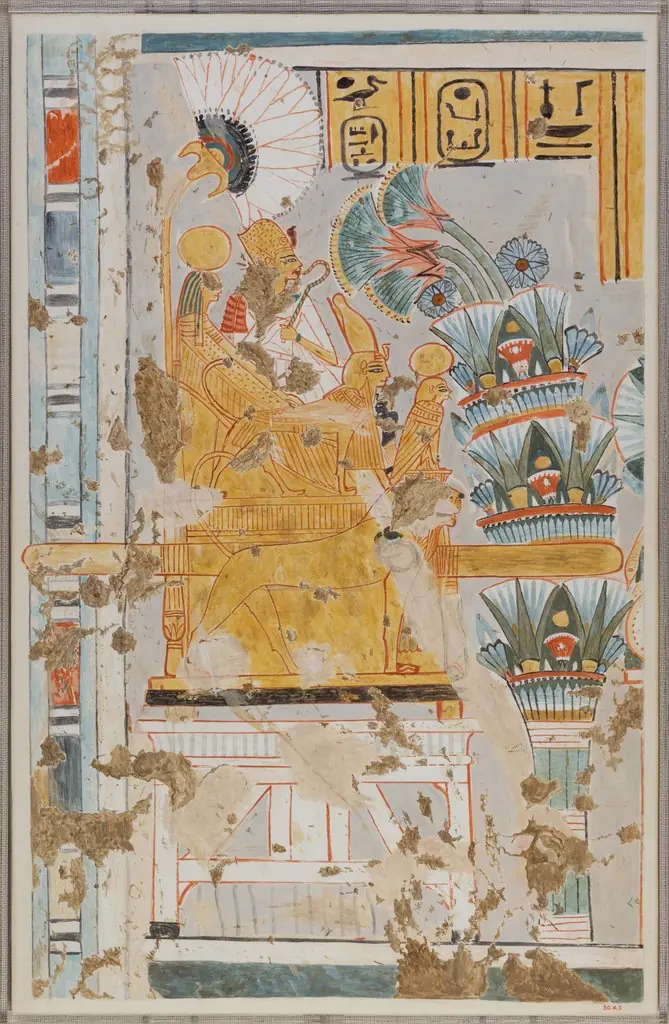 Statue of Deified Amenhotep I
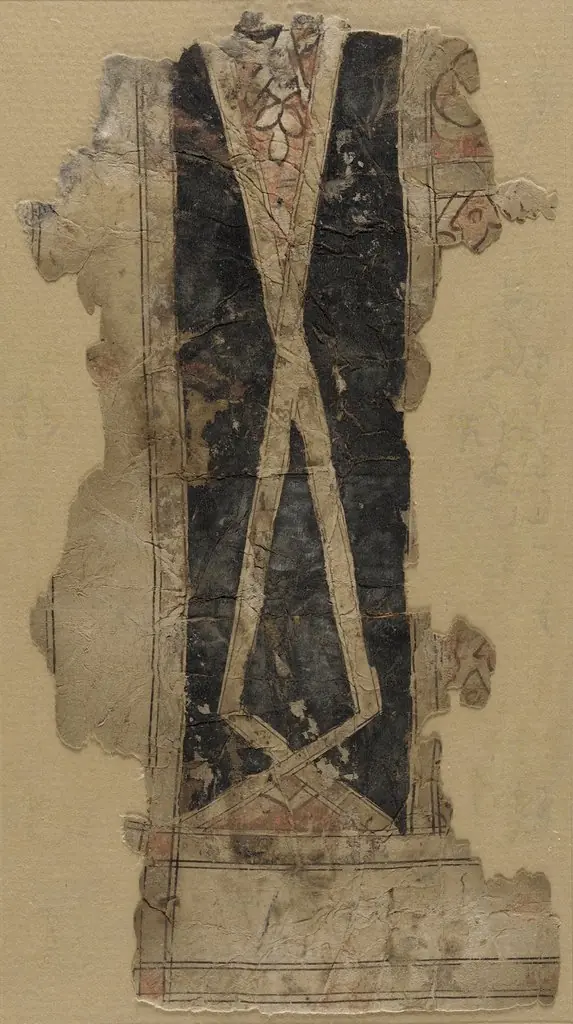 Fragmentary Playing Card
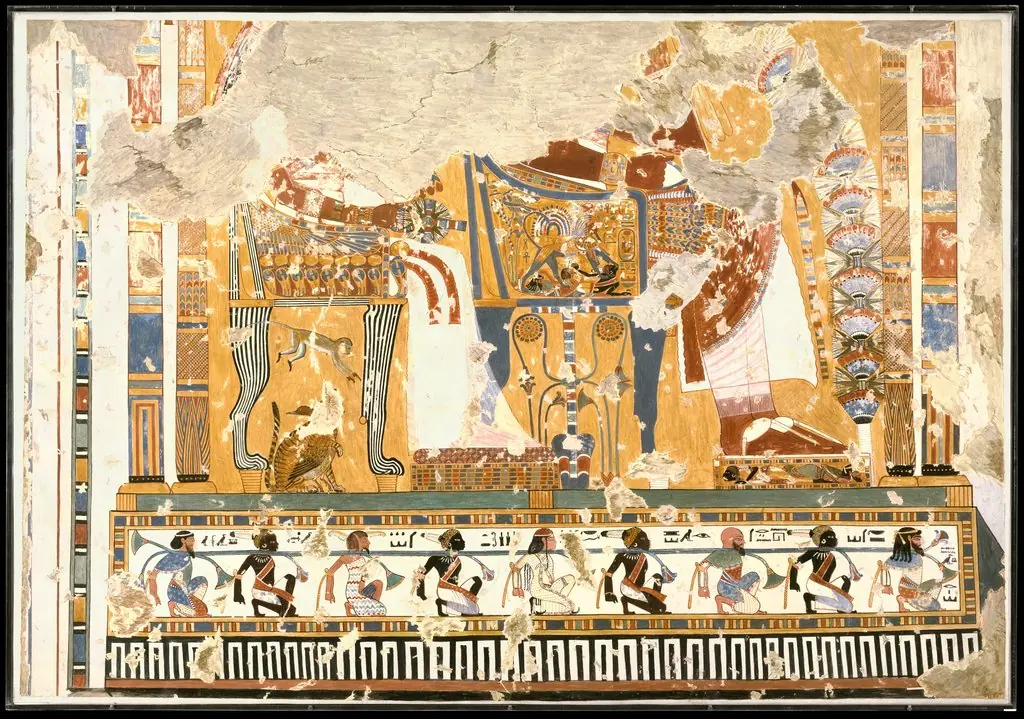 Amenhotep III and Queen Tiye Enthroned Beneath a Kiosk, Tomb of Anen
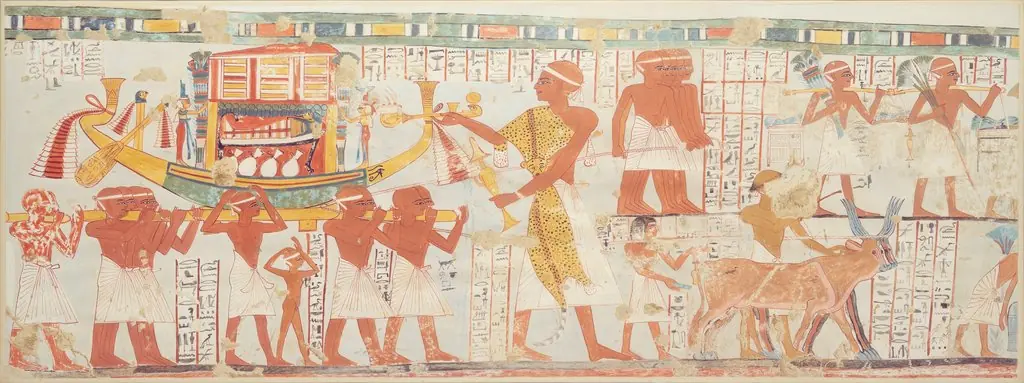 Nakhtamun's Funeral Procession, Tomb of Nakhtamun
 Studies of Mummy cases and Mummies