Artwork
A Virgin Martyr and (possibly) Saint Beatrice (top panel); Saint Martin Dividing His Cloak (bottom panel) (right wing of an altarpiece, exterior)
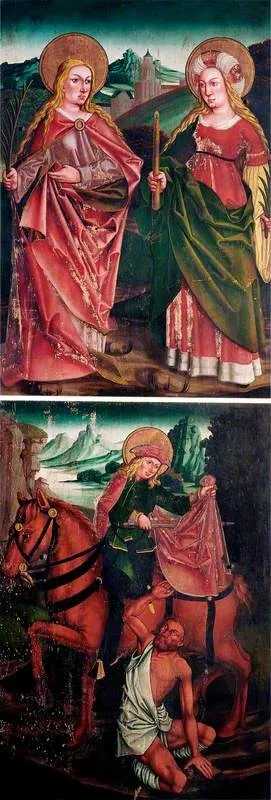
A Virgin Martyr and (possibly) Saint Beatrice (top panel); Saint Martin Dividing His Cloak (bottom panel) (right wing of an altarpiece, exterior) is a tempera painting by the Northern Renaissance artist Unknown. It dates from 1505 and is held in the collection of the Victoria and Albert Museum. The work consists of two tempera panels forming a diptych, originally the exterior of a right wing of an altarpiece.
About this work
Overview
The lower panel shows a mounted figure in a green tunic and red cloak, cutting his cloak with a sword while a nude man kneels nearby.
The work consists of two tempera panels forming a diptych, originally the exterior of a right wing of an altarpiece. The upper panel presents two female figures, each crowned with a golden halo, one clutching a palm branch and the other a sword. The lower panel shows a mounted figure in a green tunic and red cloak, cutting his cloak with a sword while a nude man kneels nearby. Both scenes unfold against a shared landscape of mountains and water.
Subject & Meaning
The upper image is identified as a Virgin martyr, possibly Saint Beatrice, indicated by the martyr’s palm and sword, traditional symbols of martyrdom and steadfast faith. The lower scene illustrates Saint Martin of Tours dividing his cloak for a beggar, a gesture of charity that has become a standard iconographic motif in Christian art.
Technique & Style
Executed in tempera, the panels display the fine, luminous surface typical of Northern Renaissance painting, allowing intricate detail in the figures’ garments and the naturalistic landscape. The delicate brushwork and careful modeling convey a sense of fragility, while the use of gold halos and symbolic attributes underscores the devotional purpose.
Context
As the exterior of a winged altarpiece, the diptych would have been visible to worshippers before the altar was opened for liturgical ceremonies. The pairing of a martyr and a charitable saint reflects the dual themes of sacrifice and compassion that were central to the devotional program of many late medieval and early Renaissance churches.
Artist & collection

 Domestic Scene
 Giacomo and Cardinal Marco, investing Andrea, Abbot of San Zeno, with his Benefice
 The Nymph of Fontainebleau
 Portrait of a Woman
 Madonna and Child with Saints in the Enclosed Garden
 Venus and Minerva
 Family Group of Four on Sofa
 Wall painting from Room H of the Villa of P. Fannius Synistor at Boscoreale
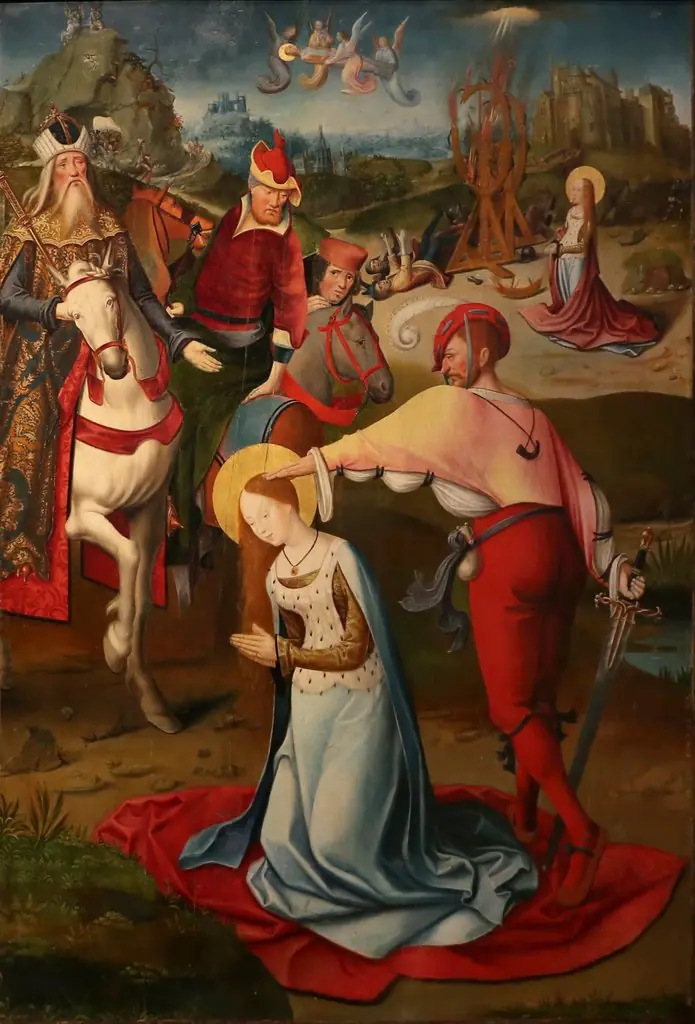 Beheading of Saint Catherine
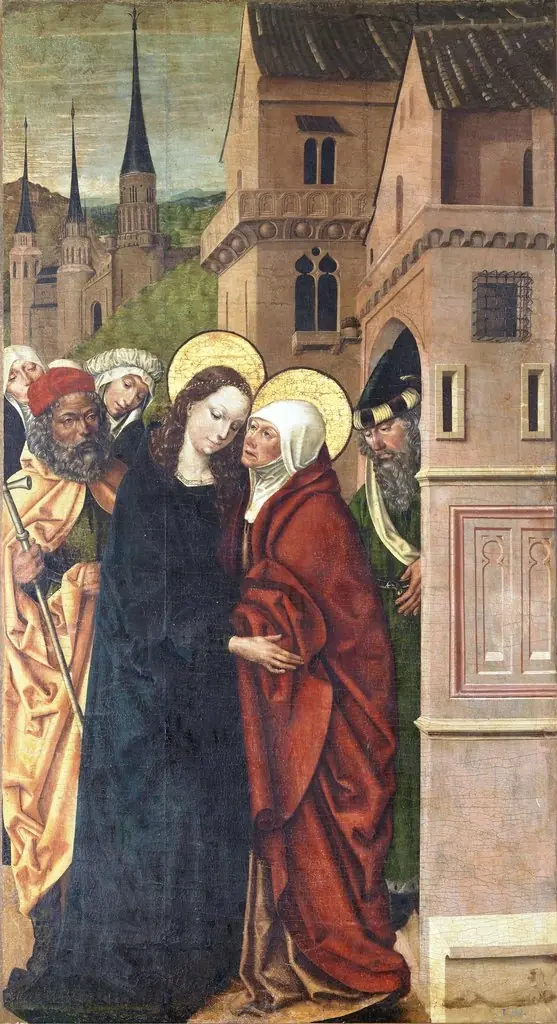 The Visitation
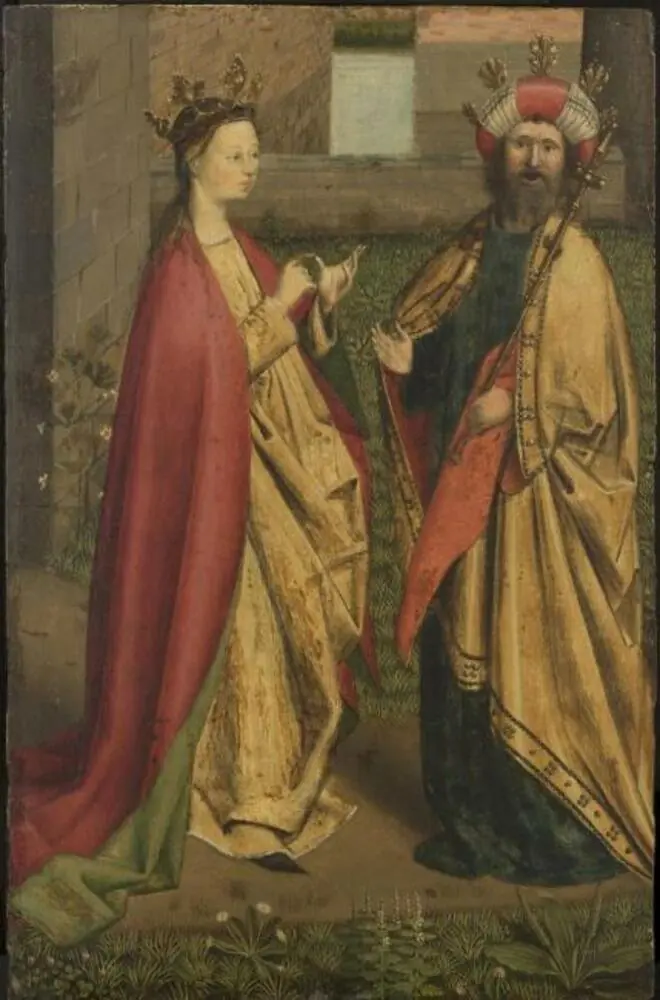 Saint Catherine of Alexandria Preaching to the Emperor
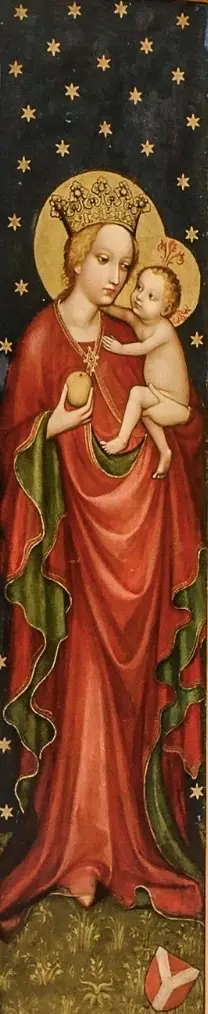 Madonna and Child
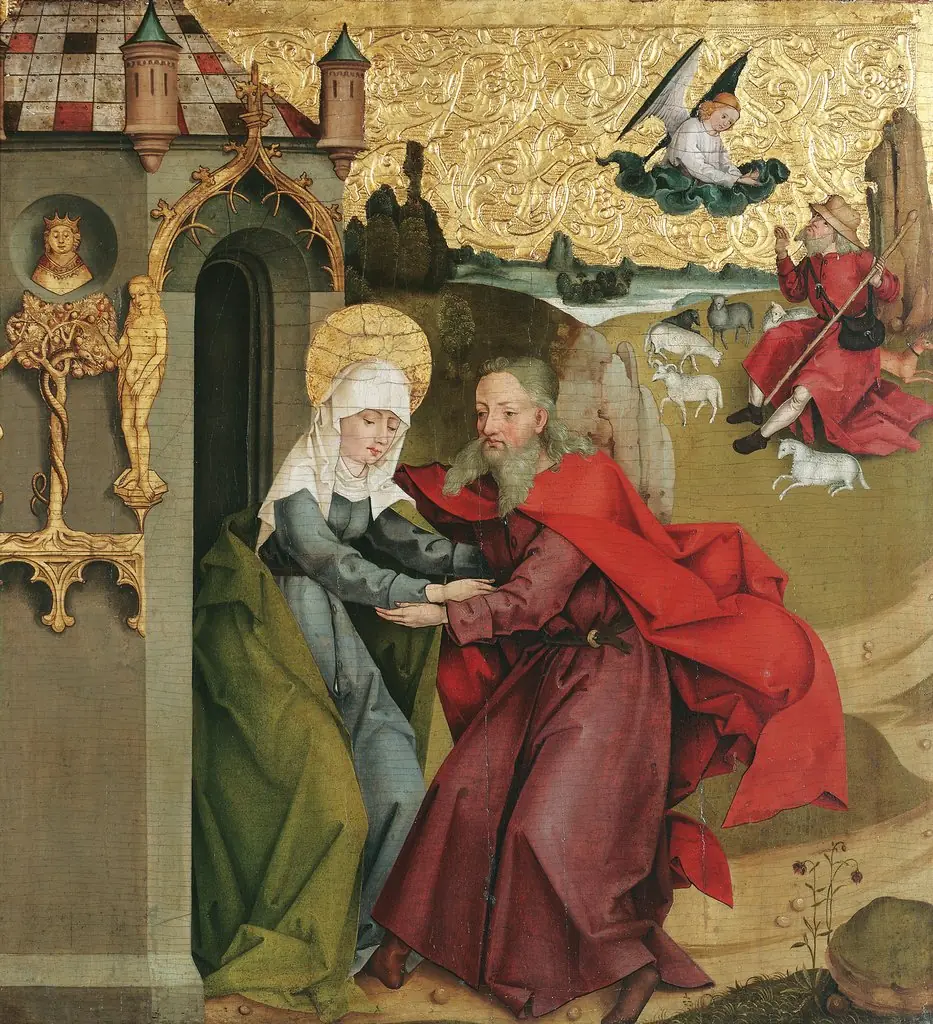 Begegnung Joachims und Annas an der Goldenen Pforte
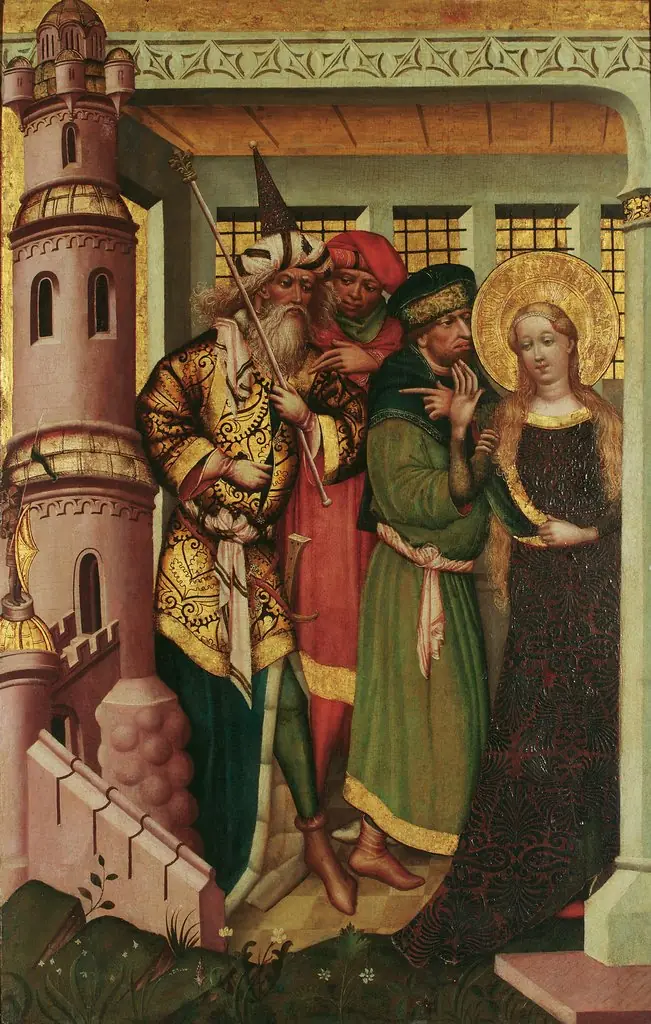 St. Barbara is led into the tower
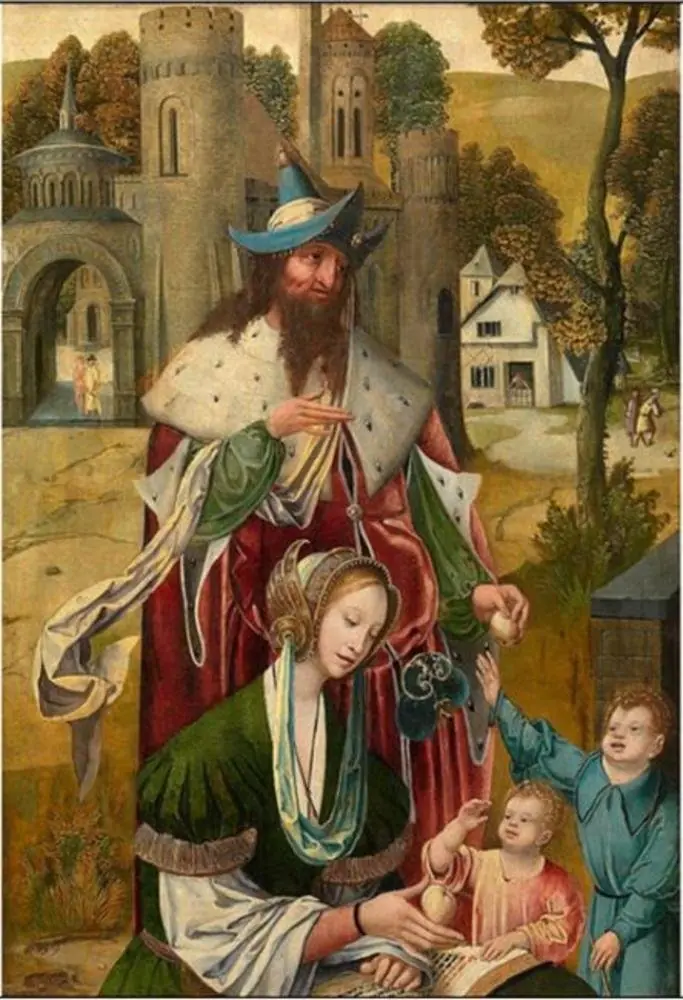 Mary Salome and her Family
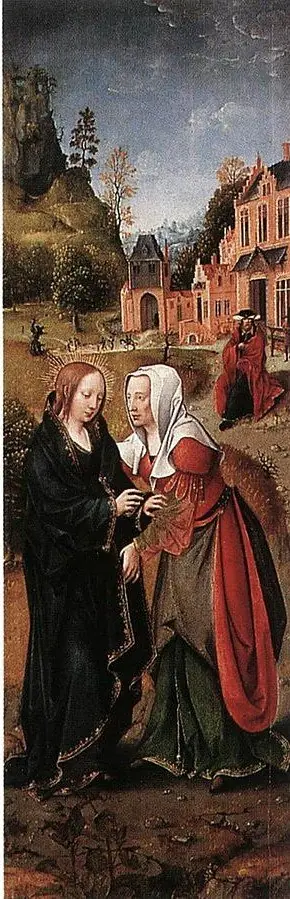 A Visitação (Groeninge)
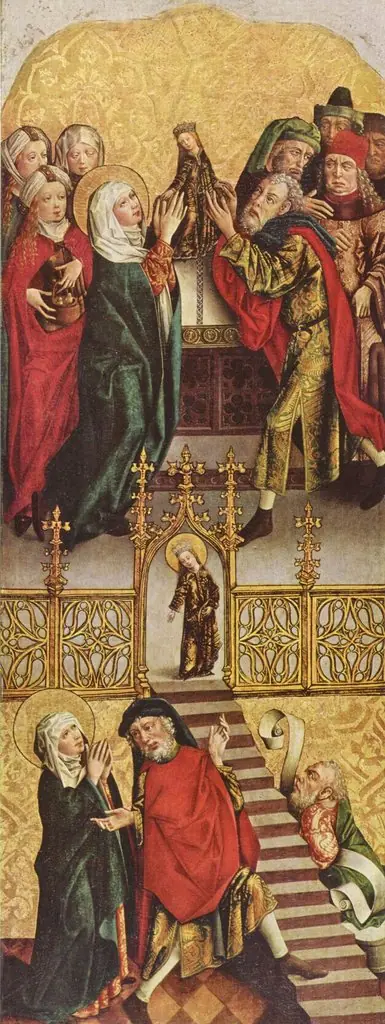 The Presentation of the Virgin Mary in the Temple of Jerusalem
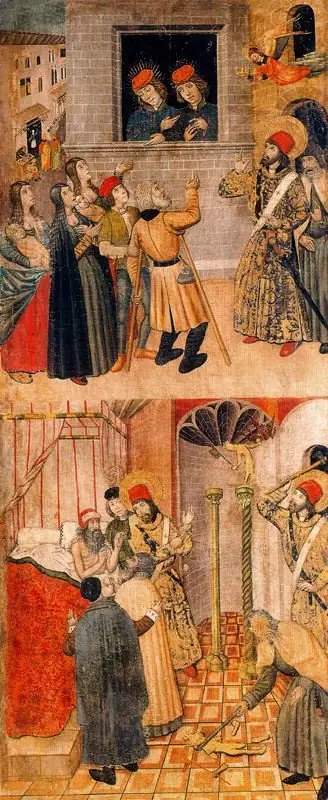 Saint Sebastian speaking to Marcus and Marcellian and Saint Sebastian and Saint Polycarp destroying Idols
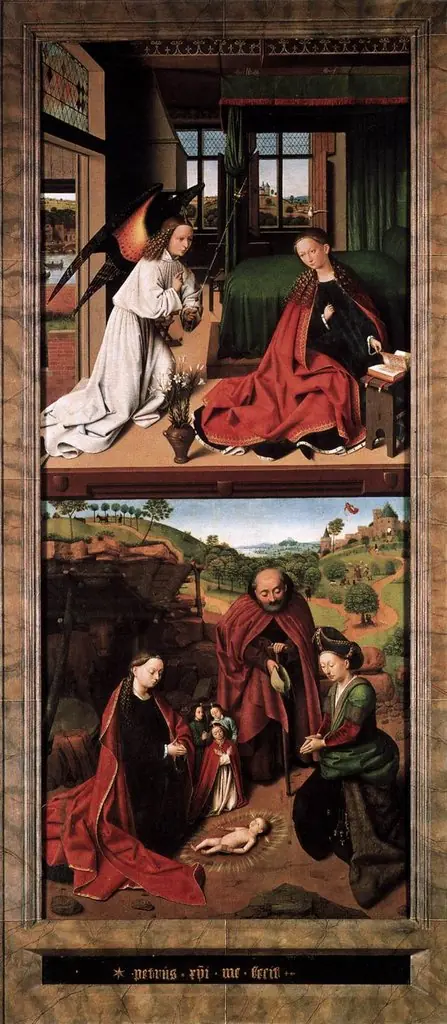 The adoration of the Christ Child; in the background the annunciation to the shepherds
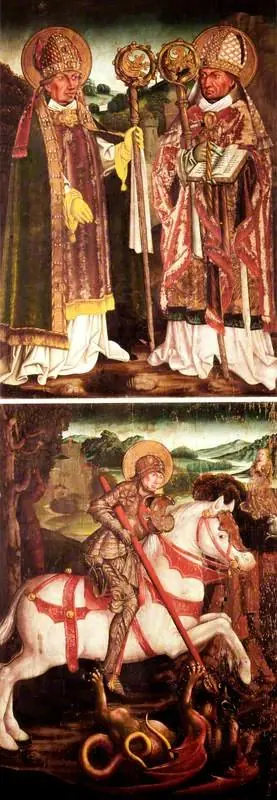 Saint Corbian and (possibly) Saint Adalbert (top panel); Saint George and the Dragon (bottom panel) (left wing of an altarpiece, exterior)