Artwork
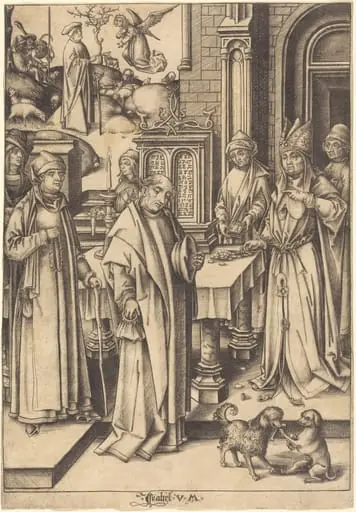
The Expulsion of Saint Joachim from the Temple
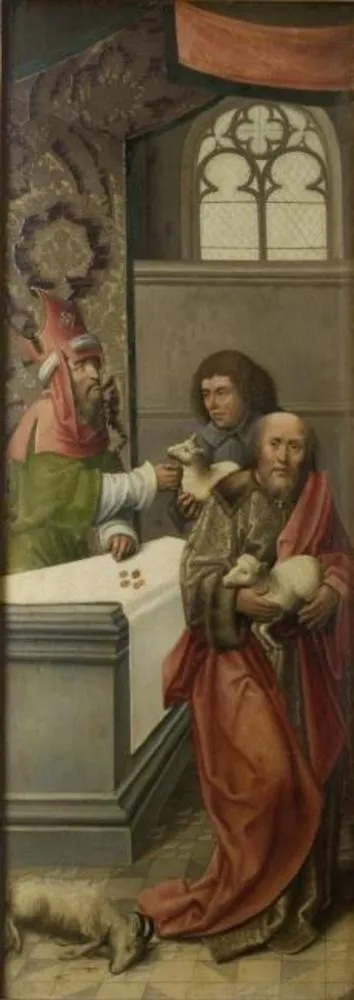
The Expulsion of Saint Joachim from the Temple is an oil painting by the Early Renaissance artist Unknown. It dates from 1493 and is held in the collection of the Philadelphia Museum of Art. This oil painting depicts a moment from the apocryphal tradition involving Saint Joachim, the father of the Virgin Mary.
About this work
Overview
Warm tones and careful modeling of light lend the composition a grounded realism, typical of early Netherlandish devotional art.
This oil painting depicts a moment from the apocryphal tradition involving Saint Joachim, the father of the Virgin Mary. The scene unfolds in a modest interior with tiled flooring and architectural details, emphasizing a quiet, sacred atmosphere. Three figures are present, along with two lambs—one held, one resting—suggesting an offering. Warm tones and careful modeling of light lend the composition a grounded realism, typical of early Netherlandish devotional art.
Subject & Meaning
The painting illustrates Joachim’s rejection from the Temple, where priests refused his sacrifice due to his childlessness, a condition then seen as divine disfavor. The lamb he holds symbolizes his intended offering, while the second lamb, lying nearby, may signify its rejection. The two figures in the background, likely priests, observe silently, reinforcing the social and spiritual isolation Joachim endures. The scene conveys humility and divine testing rather than overt drama.
Technique & Style
The artist employs fine brushwork to render textures: the wool of the lambs, the weave of Joachim’s red robe, and the stone tiles underfoot. Light falls naturally from a window on the right, casting soft shadows and enhancing spatial depth. Colors are muted yet warm, avoiding theatrical contrast. The composition is tightly framed, drawing focus to the central figures and their quiet interaction, characteristic of devotional works from the late medieval period.
History & Provenance
The painting’s origins are tied to northern European religious communities that venerated apocryphal narratives of Mary’s family. It likely originated in the Low Countries during the 15th century, where such subjects were common in private altarpieces. Its survival suggests it was owned by a devout individual or small convent, preserved for personal meditation rather than public display.
Context
In the 15th century, stories of Joachim and Anne were widely circulated in devotional literature and art, especially in regions where Marian devotion was strong. Though not biblical, these narratives filled gaps in the Gospel accounts and offered models of piety amid suffering. Paintings like this served as aids to prayer, reinforcing the idea that divine favor could follow earthly rejection.
Legacy
This work reflects a broader tradition of intimate religious imagery that prioritized emotional resonance over grandeur. While less known than major Renaissance altarpieces, such paintings influenced later depictions of sacred family life. Its quiet dignity and attention to everyday detail helped shape the visual language of domestic piety in Northern European art.
Artist & collection

 Domestic Scene
 Giacomo and Cardinal Marco, investing Andrea, Abbot of San Zeno, with his Benefice
 The Nymph of Fontainebleau
 Portrait of a Woman
 Madonna and Child with Saints in the Enclosed Garden
 Venus and Minerva
 Family Group of Four on Sofa
 Wall painting from Room H of the Villa of P. Fannius Synistor at Boscoreale
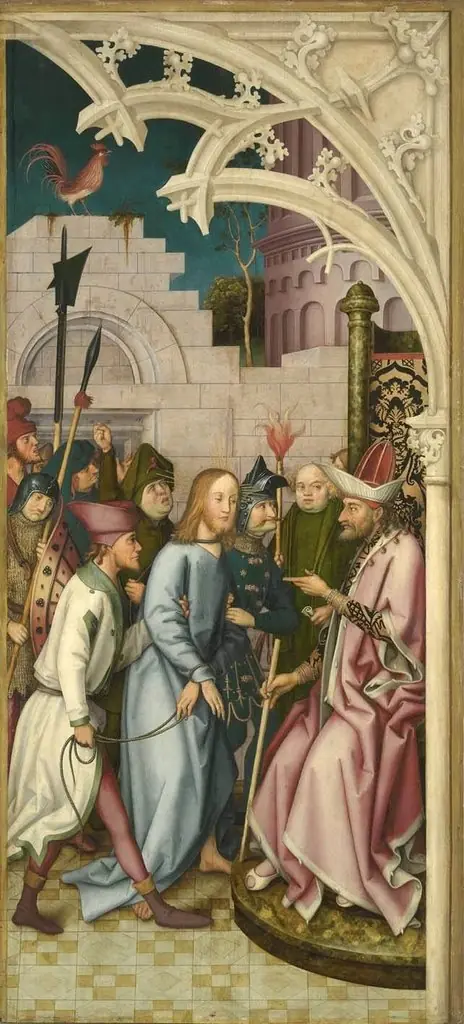 Kaisheimer Altar: Christus vor Pilatus
 Saint John the Baptist in a Landscape
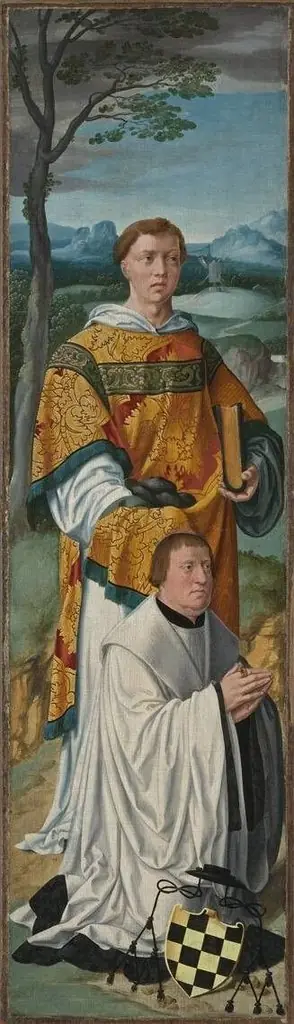 Beweinungsaltar: Hl. Stephanus mit dem Stifter Stephan Vell von Wevelinghoven
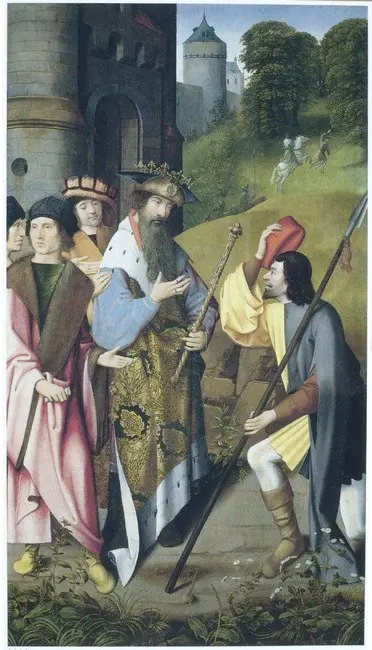 The King’s Spies Bring Him News of Dymphna’s Hideout
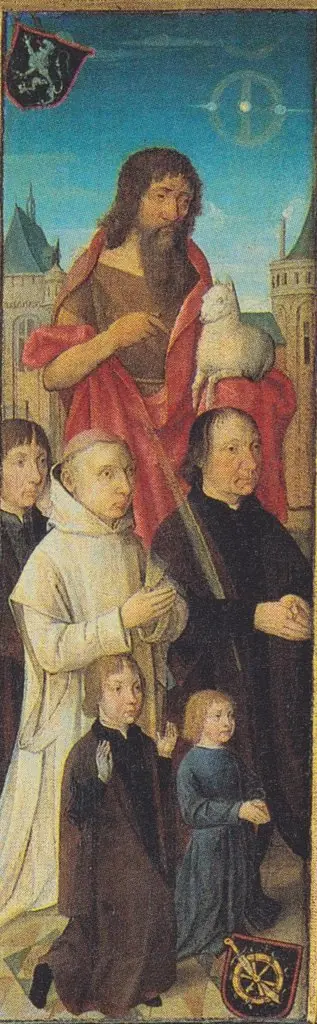 Portrait of Dirck van Heemskerck van Beest (....-1545) with his sons and St. John the Baptist
 De H. Johannes de Doper
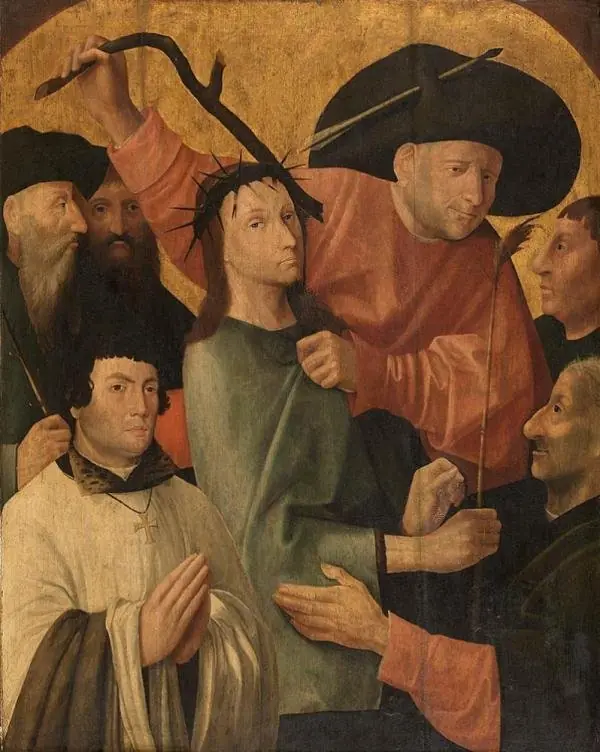 Christ Mocked
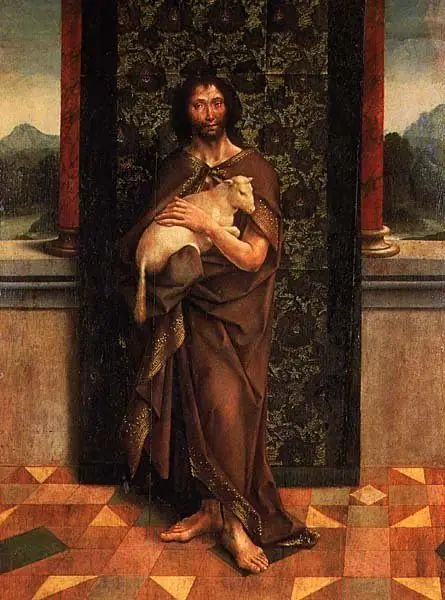 The Good Shepherd
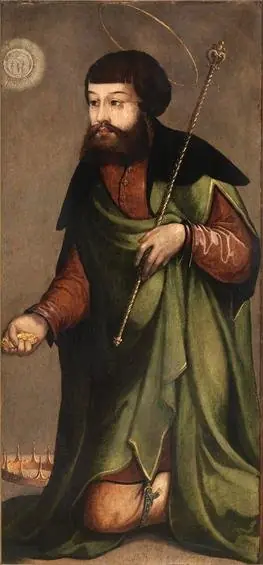 O Infante D. Duarte como Santo Eduardo de Inglaterra
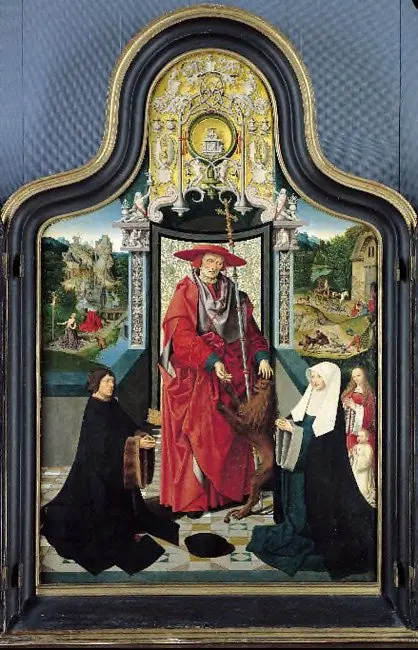 Een stichterspaar en hun kinderen in aanbidding voor de H. Hieronymus. In de achtergrond taferelen uit het leven van Hieronymus
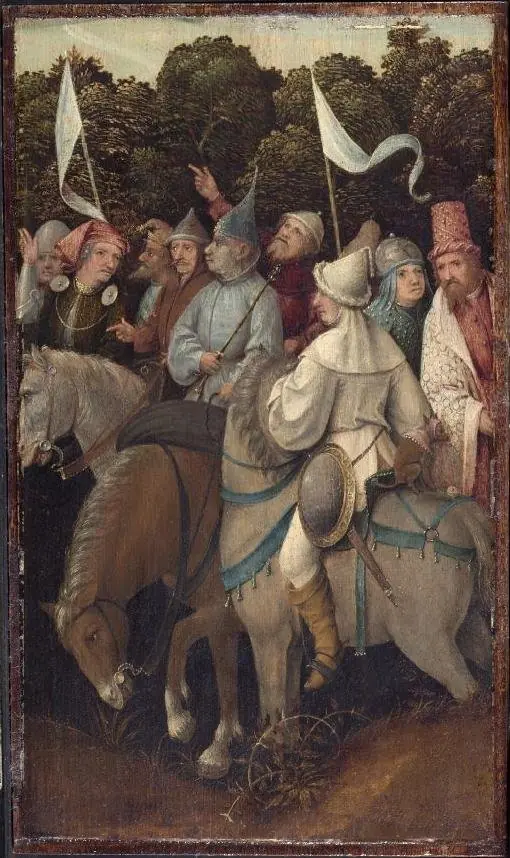 Retinue of the Magi
 Joachim's Sacrifice