Artwork
Portrait of Dirck van Heemskerck van Beest (....-1545) with his sons and St. John the Baptist
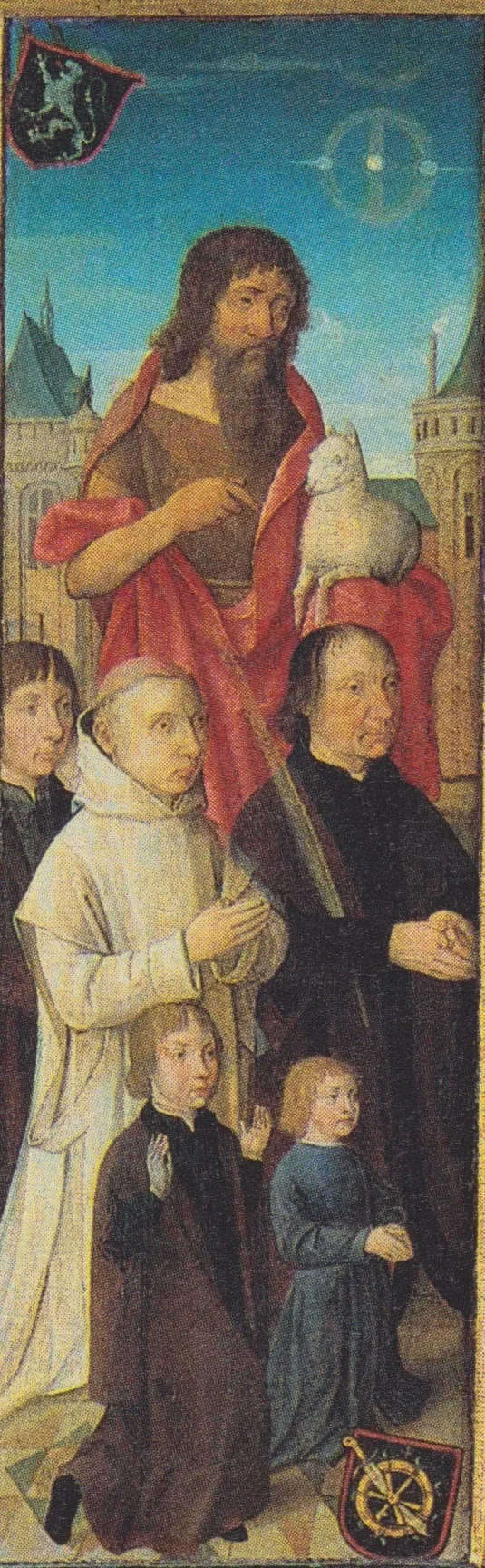
Portrait of Dirck van Heemskerck van Beest (....-1545) with his sons and St. John the Baptist is an oil painting by the Northern Renaissance artist Master of Delft. It dates from 1500 and is held in the collection of the Rijksmuseum.
About this work
Technique & Style
The portrait genre and oil-on-panel handling align with the conventions of late 15th- and early 16th-century Dutch devotional imagery.
The work is executed in oil paint on panel, a standard support for Netherlandish devotional portraits of the period. Its tall, narrow format, 75 cm in height by 31 cm in width, is consistent with a donor panel designed to accompany a larger altarpiece, with the donor and his sons shown kneeling alongside St. John the Baptist.
Stylistically, the painting is attributed to the Master of Delft, an anonymous early Netherlandish workshop active around 1500, the date given for the work's creation. The portrait genre and oil-on-panel handling align with the conventions of late 15th- and early 16th-century Dutch devotional imagery.
History & Provenance
The triptych portrait of Dirck van Heemskerck van Beest with his sons and Saint John the Baptist is dated to 1500 by the Master of Delft, a painter active in the Northern Netherlands during the late fifteenth and early sixteenth centuries. The work entered the collection of the Suermondt-Ludwig-Museum in Aachen, where it remains today. It is not recorded as having passed through the Rijksmuseum or Museum Boijmans Van Beuningen in the provided sources, which list these institutions only as locations in the Wikidata record.
Overview
The oil painting, dated to around 1500, portrays Dirich van Heemskerck van Beest, a Delft resident, together with his two sons and a figure identified as Saint John the Baptist. Executed by the anonymous Master of Delft, the work belongs to the late phase of Early Netherlandish painting and is currently held by the Rijksmuseum.
Subject & Meaning
At the centre stands a bearded man in a red robe, barefoot and holding a lamb, a traditional attribute of John the Baptist. Flanked by two children, one in dark attire, the other in blue, and two robed figures, the composition suggests a devotional scene in which the family directs its attention toward the saint, perhaps invoking his intercession.
Artist & collection
Artist
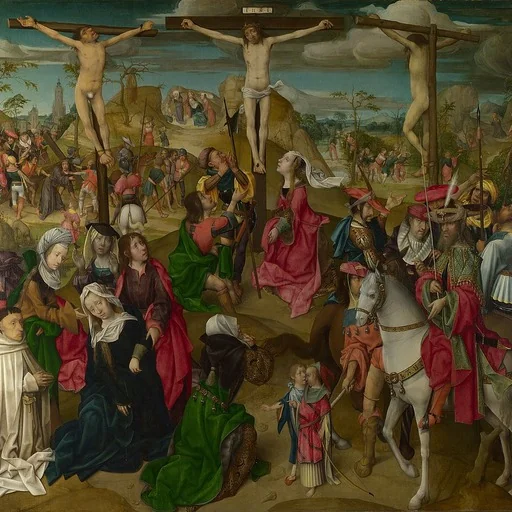
The Master of Delft (fl c. 1490–1520) was a Dutch painter of the final period of Early Netherlandish painting, whose name is unknown. He may have been born around 1470. The notname was first used in 1913 by Max Jakob…

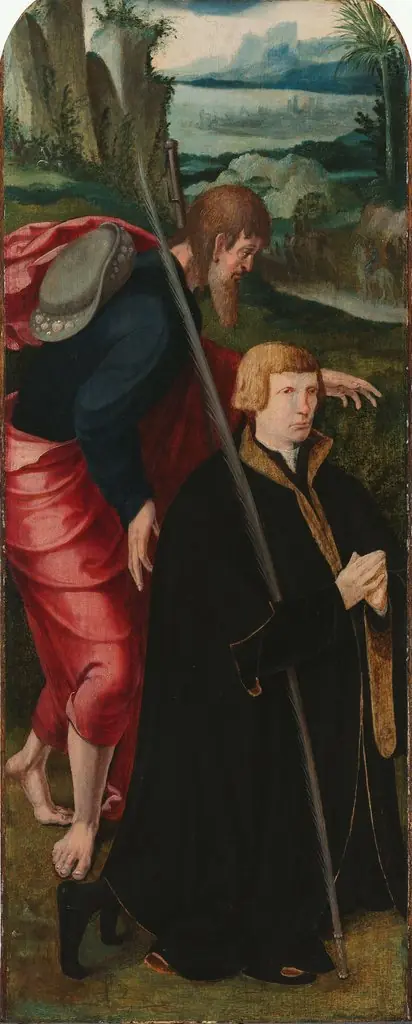
- Wing of Lazarus triptych with donor and Saint James
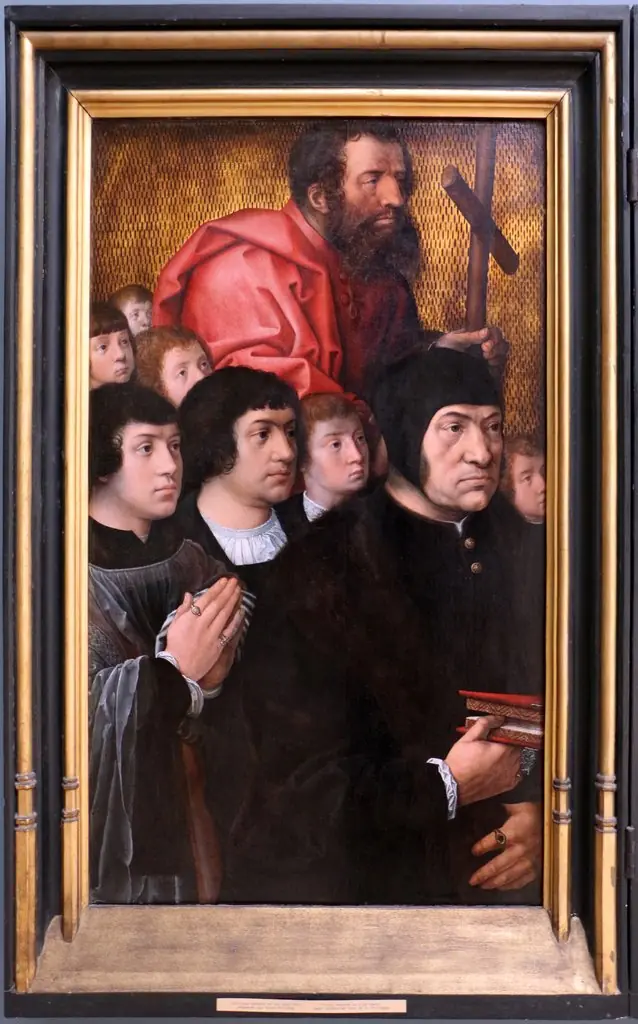 Portrait of Philippe Haneton with his seven sons and the apostle Philip
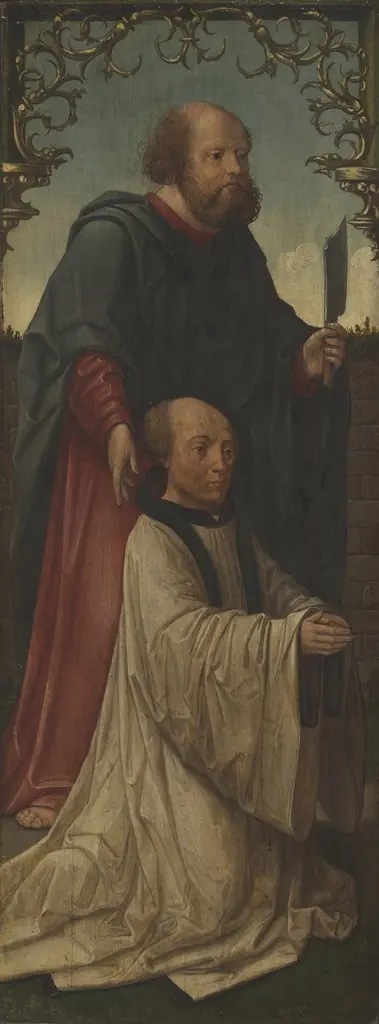 Saint Matthias (?) and a Donor; Saint Andrew (reverse)
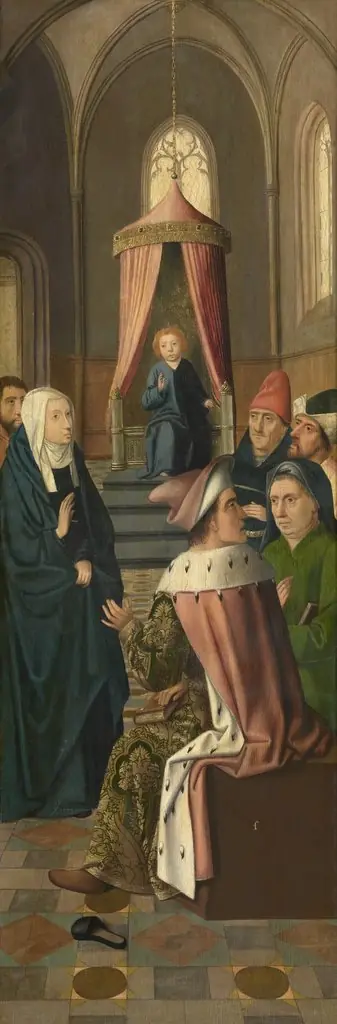 Christ's Dispute with the Doctors
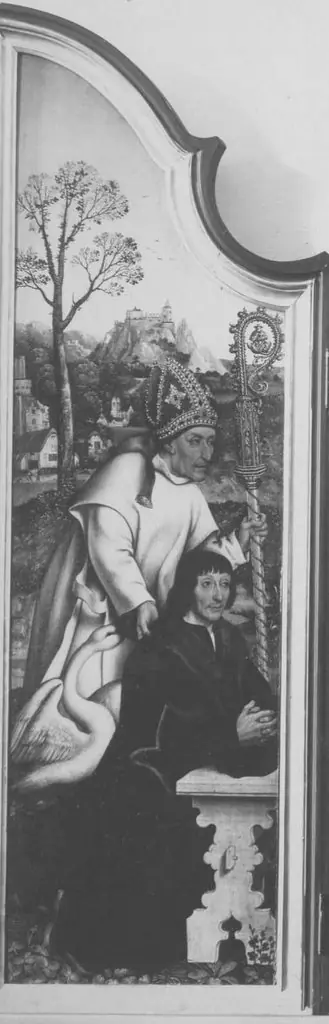 Beweinungsaltar: Hl. Hugo von Lincoln mit Stifter
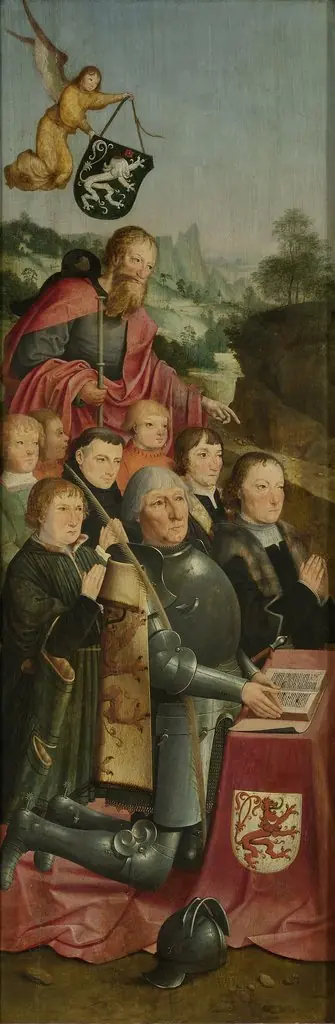 Memorial Panel with Eight Male Portraits, probably Willem Jelysz van Soutelande and Family, with Saint James the Greater and the Van Soutelande Family Crest, inner left wing of an altarpiece
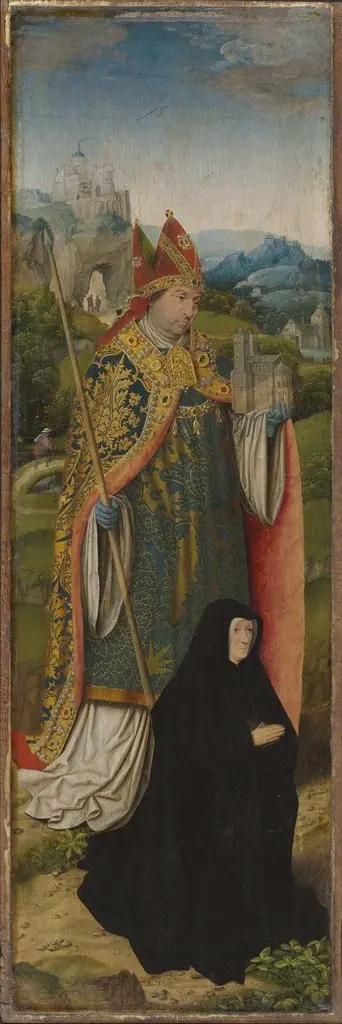 Kreuzigungsaltar: Hl. Bischof (Lambertus von Lüttich?) mit Stifterin
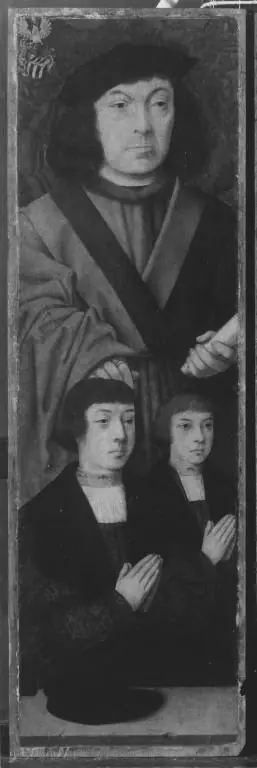 Johann von Aich, mayor of Cologne, with his two sons
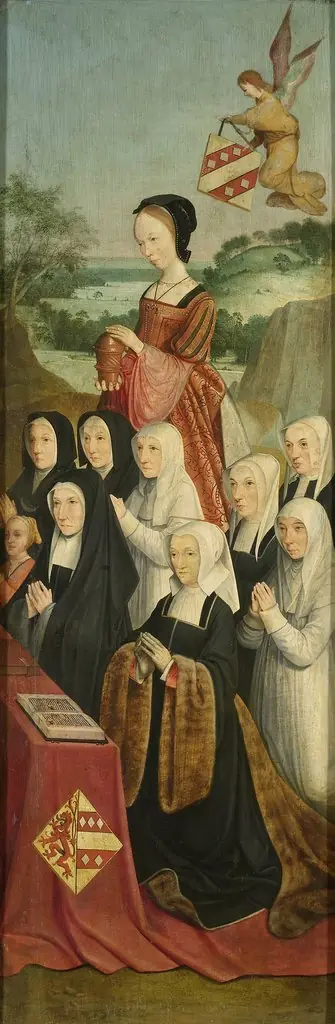 Memorial Panel with Nine Female Portraits, inner right wing of an altarpiece
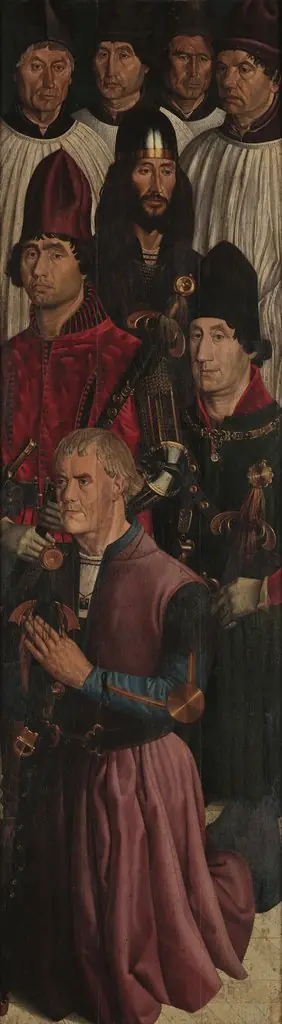 Saint Vincent Panels, fifth panel
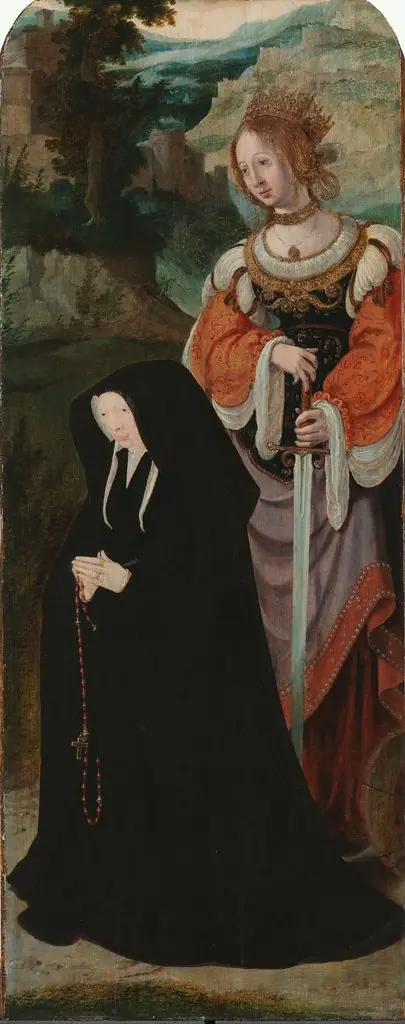 Wing of Lazarus tritptych with donor and Saint Catharine
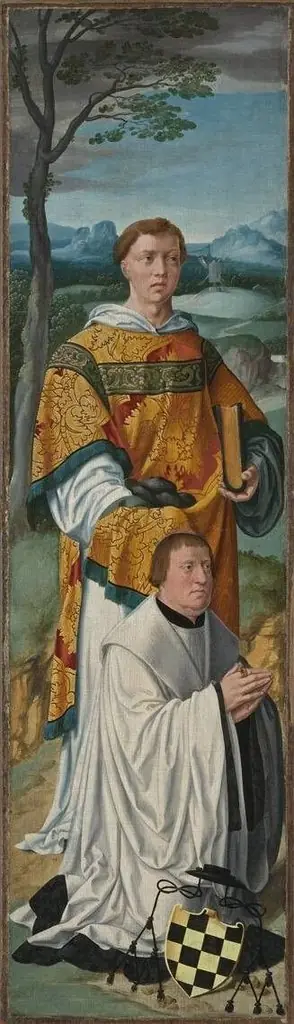 Beweinungsaltar: Hl. Stephanus mit dem Stifter Stephan Vell von Wevelinghoven