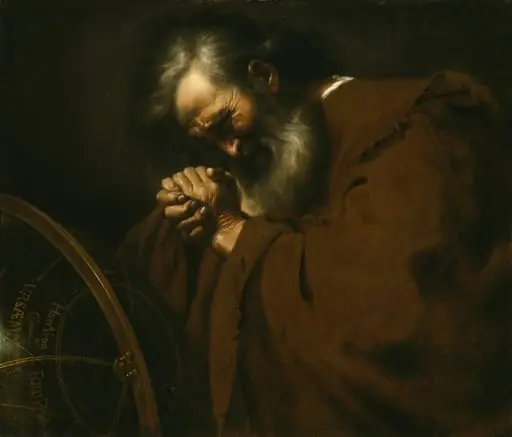
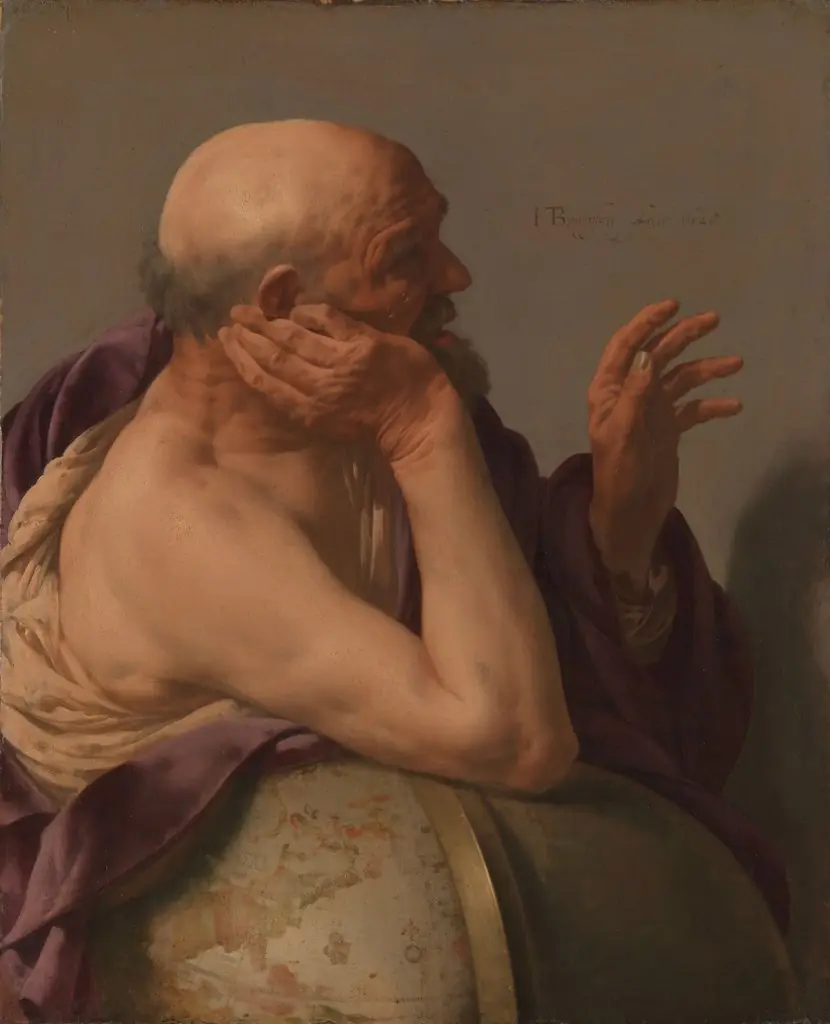
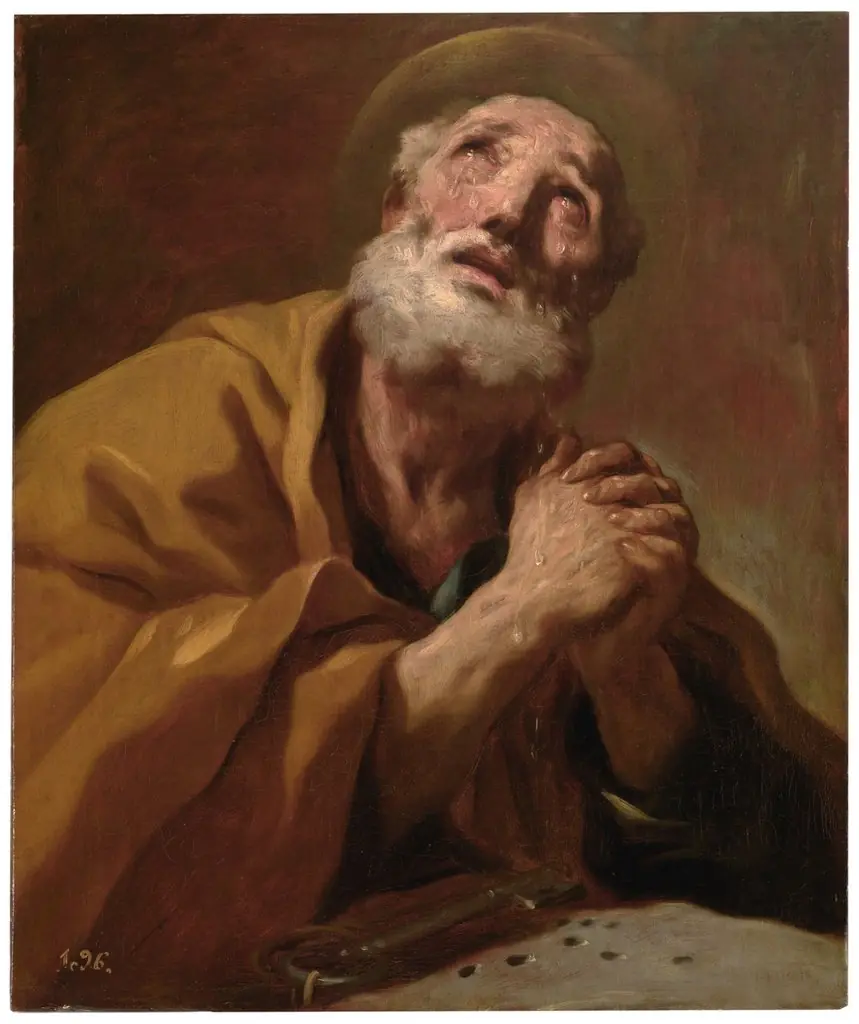
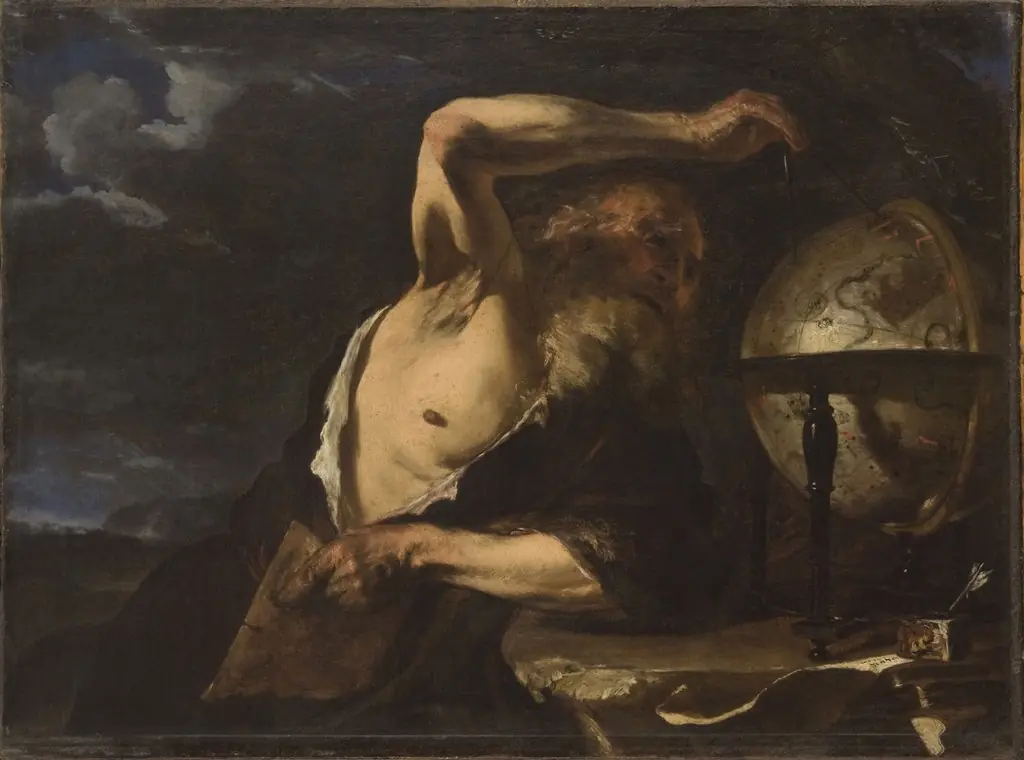
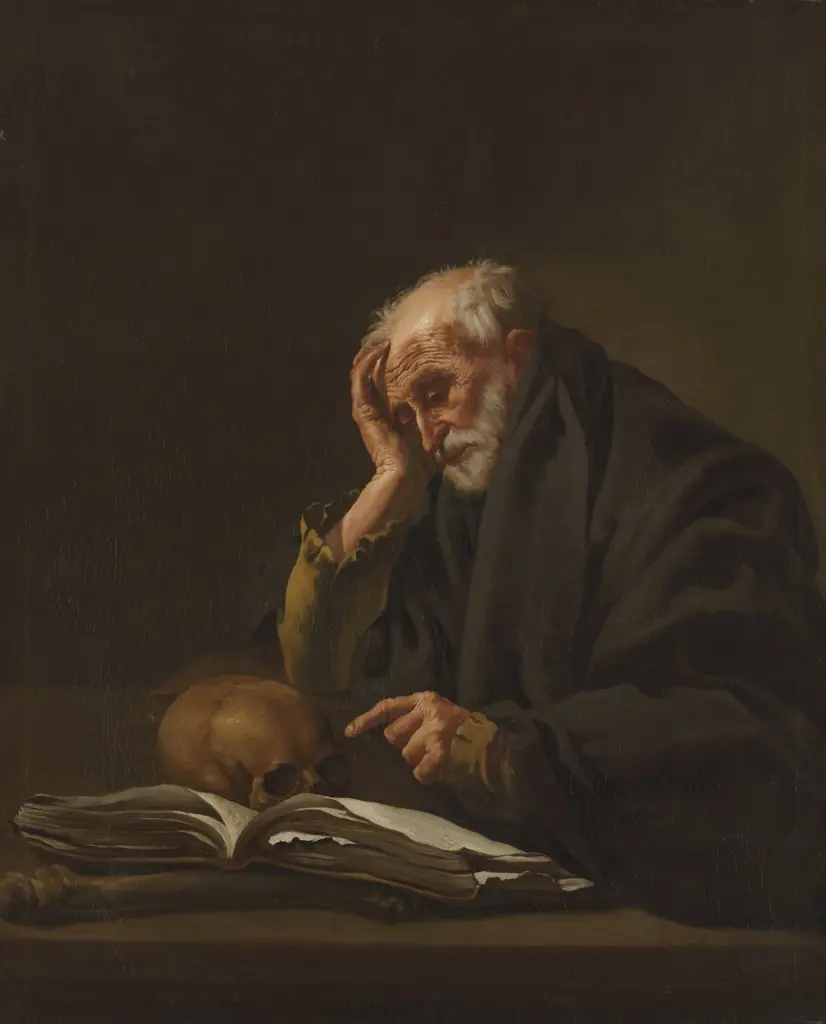
Heraclitus, the Weeping Philosopher
1630
oil
canvas
From the collection of Art Institute of Chicago
1630
oil
canvas
From the collection of Art Institute of Chicago
Heraclitus, the Weeping Philosopher is a 1630 oil by Unknown, a Early Baroque Italian work, held at Art Institute of Chicago.
The painting depicts a man with a long white beard and hair, wearing a brown robe, sitting with his head in his hands. He is positioned in front of a large, circular object with markings on it, possibly a globe or astrolabe. The man's face is contorted in a mixture of sadness and deep thought, as if he is lost in contemplation. The painting is rendered in a somber color palette, with the man's brown robe and the dark background creating a sense of melancholy. The use of chiaroscuro, a technique that uses strong contrasts between light and dark, adds depth and volume to the scene. The artist's use of impasto, a technique that involves applying thick layers of paint, gives the painting a textured quality. The overall effect is one of introspection and contemplation, inviting the viewer to reflect on the human experience.