Artwork
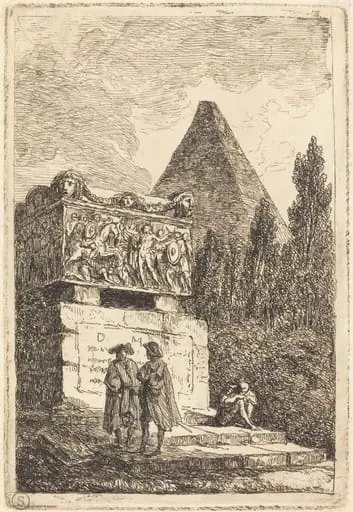
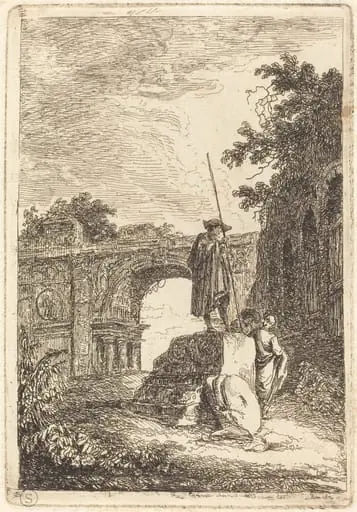
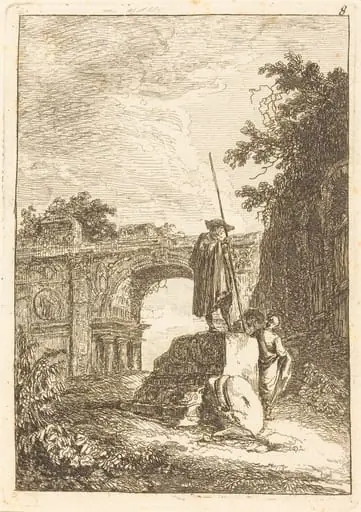
Le Sarcophage
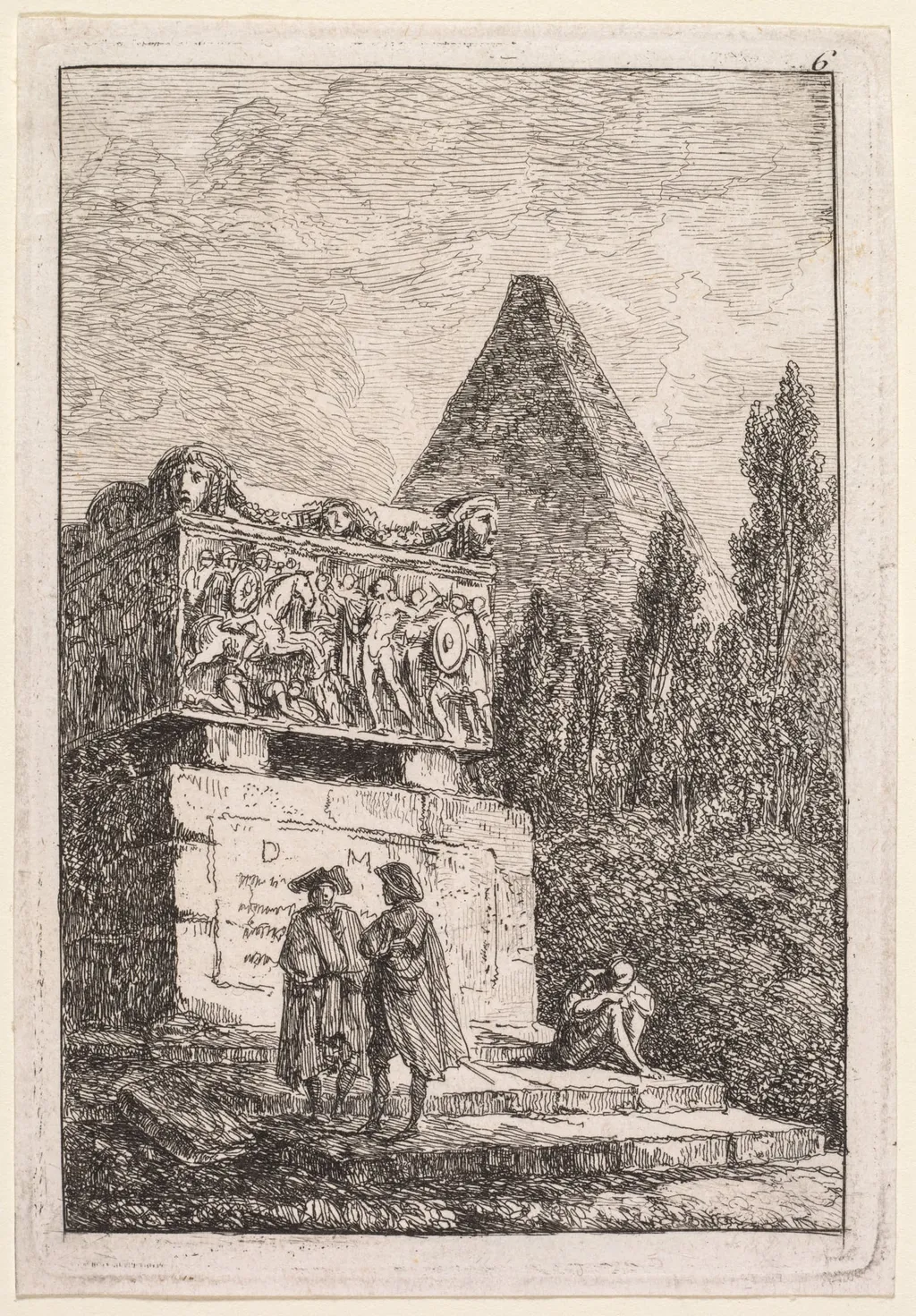
Le Sarcophage is a print by the Romanticist artist Hubert Robert. It dates from 1764 and is held in the collection of the Cleveland Museum of Art.
- Accession no.
- 1930.541
- Credit line
- Charles W. Harkness Endowment Fund
About this work
Overview
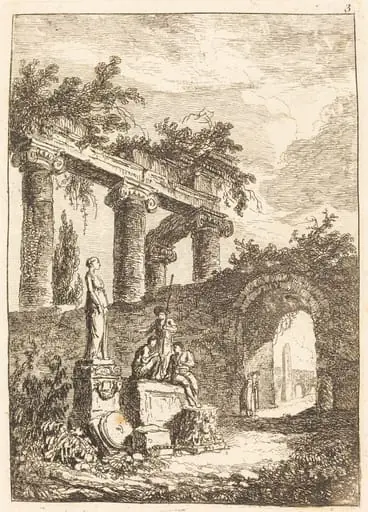
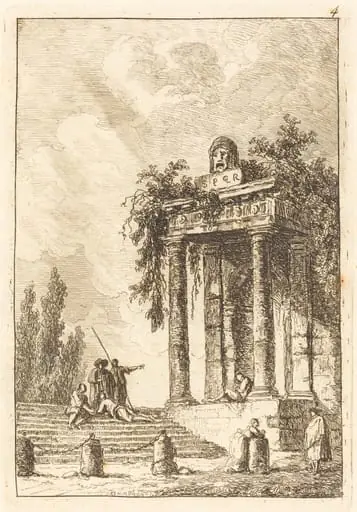
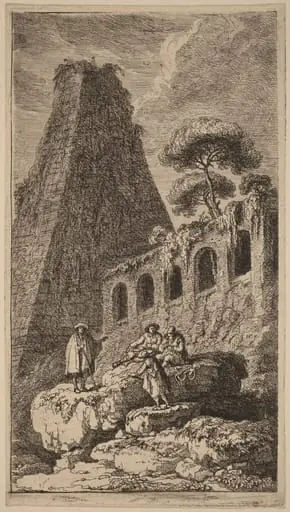
Le Sarcophage is an etching by Hubert Robert, part of a series of prints featuring imaginary figures amidst Rome's ancient ruins.
Subject & Meaning
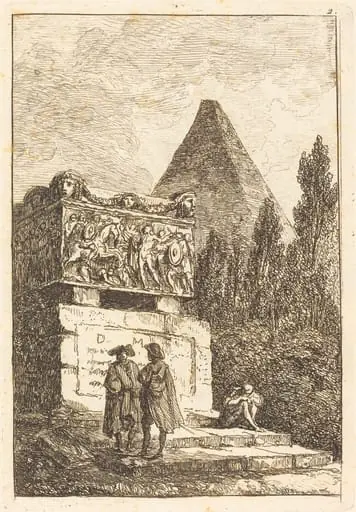
The print depicts two fictional men examining a half-buried Roman sarcophagus overgrown with vines, evoking the experience of tourists encountering ancient relics.
Technique & Style
Robert's etching combines realistic depictions of Roman ruins with invented figures, blending fact and fantasy to create engaging scenes.
History & Provenance
The print is from a series dedicated to Marguerite Le Compte, a traveler and amateur etcher who visited Rome with art enthusiast Claude Henri Watelet in 1764.
Context
Robert's work was influenced by his time in Rome in the 1760s, where he socialized with artists and printmakers associated with the academies.
Own this work as a print
Artist & collection
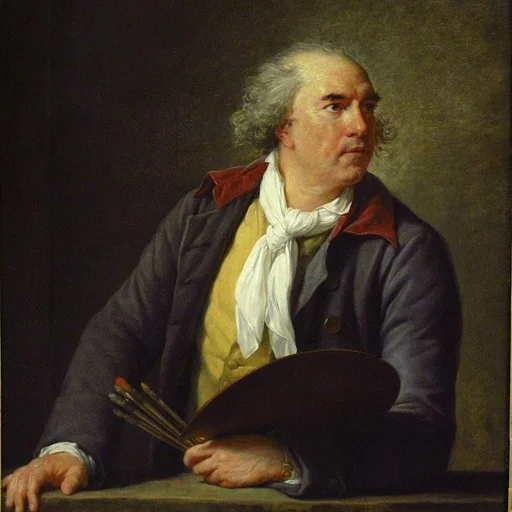
Artist
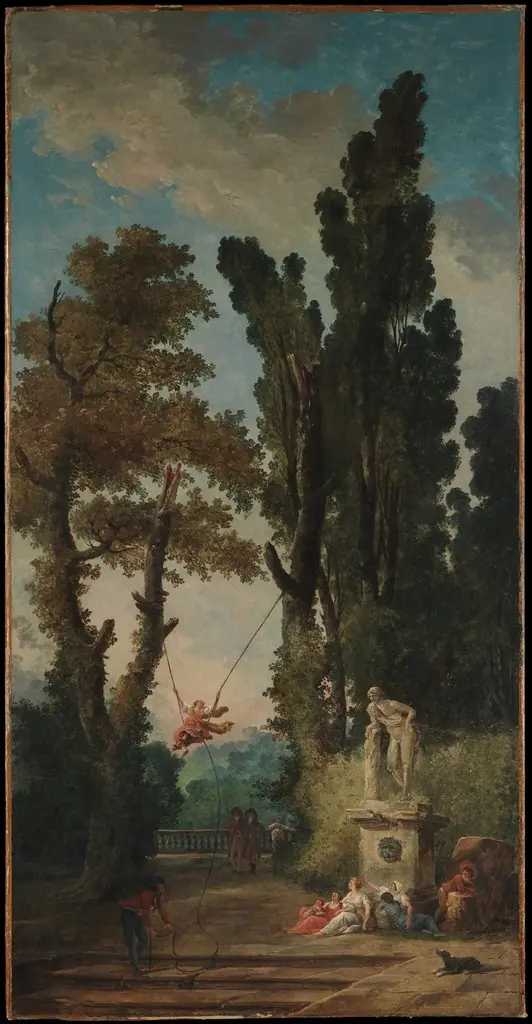
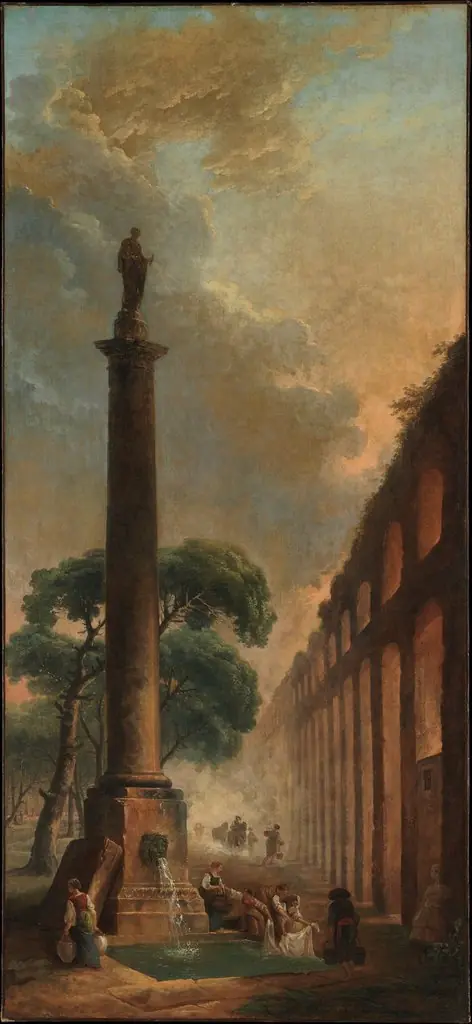
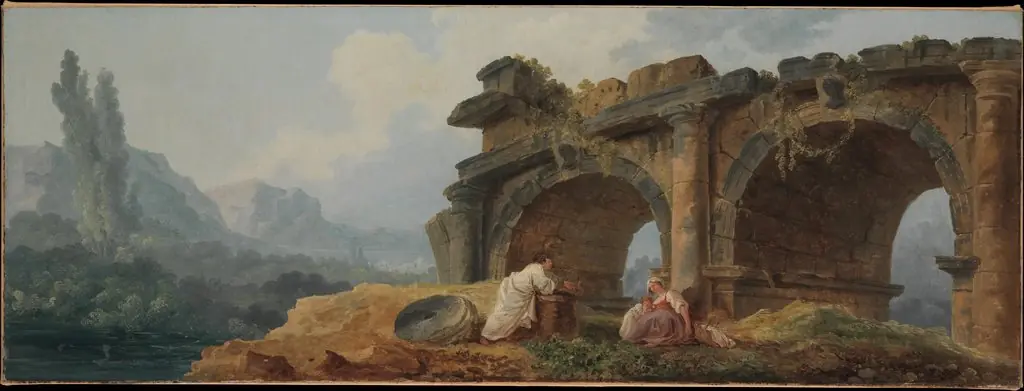
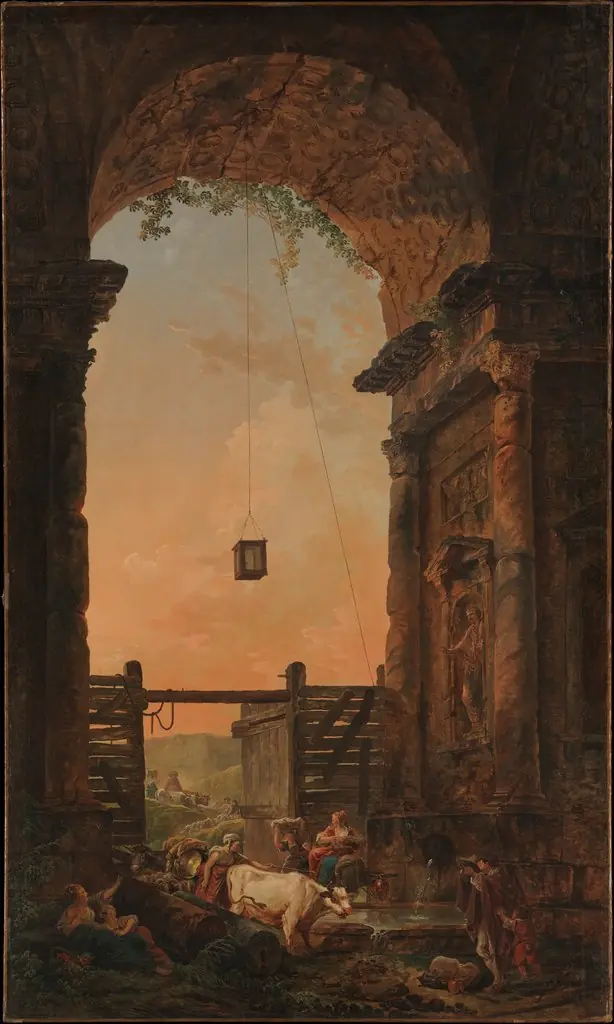
Hubert Robert (French pronunciation:; 22 May 1733 – 15 April 1808) was a French painter in the school of Romanticism, noted especially for his landscape paintings and capricci, or semi-fictitious picturesque depictions of ruins in Italy…