Artwork
Still life with glass, flask, pipe and tobacco packet
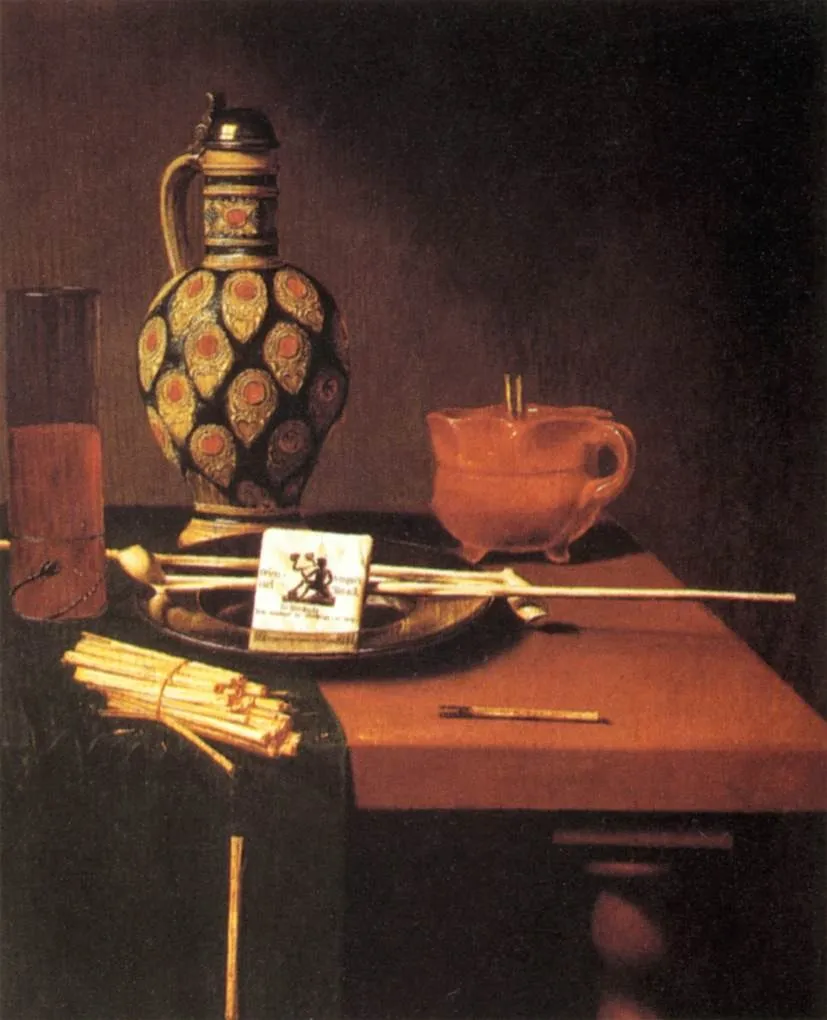
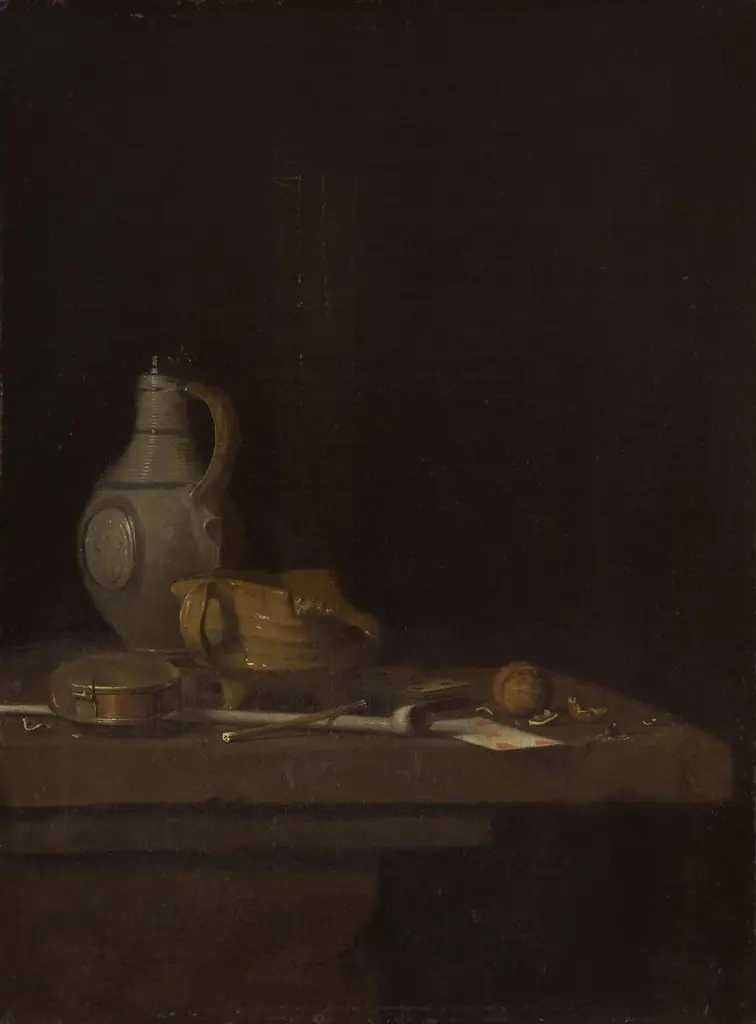
Still life with glass, flask, pipe and tobacco packet is an oil painting by the Dutch Golden Age artist Hubert van Ravesteyn. It dates from 1664 and is held in the collection of the Rijksmuseum.
About this work
Technique & Style
It depicts a glass, a flask, a pipe, a tobacco packet, a stoneware jug with a handle, a match, and a square ceramic bowl arranged on a tabletop.
The painting is executed in oil on a wooden panel, measuring 43 cm high by 35 cm wide. The support is a prepared panel, typical of seventeenth-century Dutch works. It depicts a glass, a flask, a pipe, a tobacco packet, a stoneware jug with a handle, a match, and a square ceramic bowl arranged on a tabletop. As a still life, the composition brings together glassware, metal, ceramic, and organic materials.
History & Provenance
Still life with glass, flask, pipe and tobacco packet was painted in 1664 by Hubert van Ravesteyn, in oil on panel, measuring 43 × 35 cm. It was owned by Jean Philippe Rudolph Marie de Nerée tot Babberich and subsequently by Harold Samuel, Baron Samuel of Wych Cross. Bequeathed by Lord Samuel in 1987, it is now held by the Guildhall Art Gallery, London, as part of the Samuel collection, under accession number 3755. The available sources record no loan or special exhibition history.
Overview
Hubert van Ravesteyn's 1664 oil painting, Still life with glass, flask, pipe and tobacco packet, exemplifies the Dutch Golden Age tradition of depicting common household items. This work showcases a collection of everyday objects arranged on a dark surface, rendered with a characteristic brownish palette. It is currently part of the Rijksmuseum's collection.
Subject & Meaning
The composition features a selection of humble, domestic items, including a prominent patterned flask, a small orange cup, a clay pipe, and a packet of tobacco, all resting on a dark table. A metal tray holds some of these elements, while a single matchstick lies nearby. The arrangement emphasizes the transient nature of daily life through these familiar, unpretentious possessions.
Context
Created during the Dutch Golden Age, a period renowned for its rich artistic output, this painting aligns with the era's appreciation for genre scenes and still life. While Hubert van Ravesteyn is also recognized for his depictions of interiors and cattle, this work illustrates his contribution to the popular still life genre, reflecting the period's interest in domesticity and material culture.
Artist & collection
Artist
Hubert van Ravesteyn was a Dutch painter of interiors and cattle, the son of Herman van Ravesteyn.

- Still Life with Smoking Paraphernalia
 Still Life with Stoneware Jug and Pipe
 Still life with wineglass, beer glass and pipe
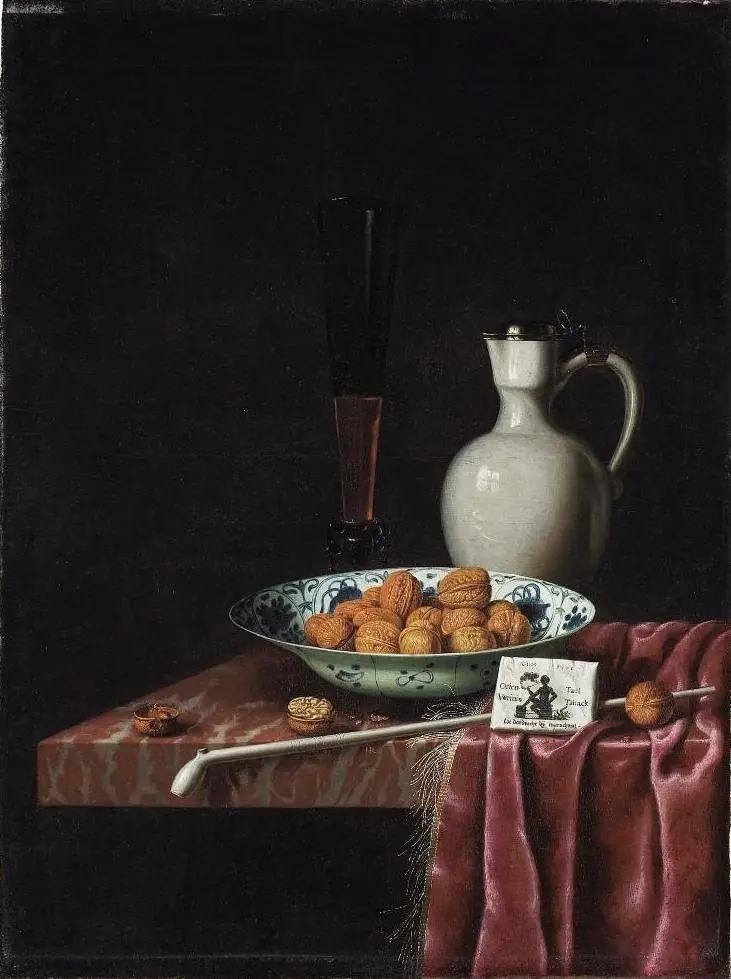 Still Life with Walnuts, Tobacco and Wine
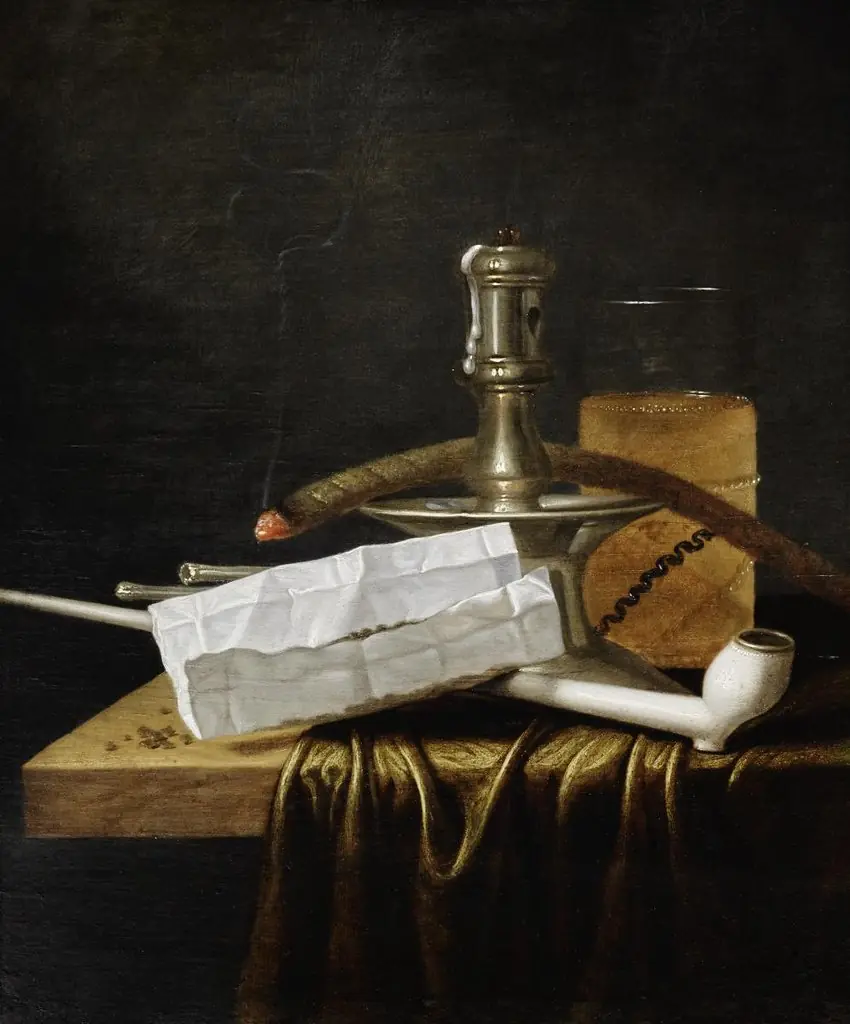 Still life with candlestick, pipe and beer glass
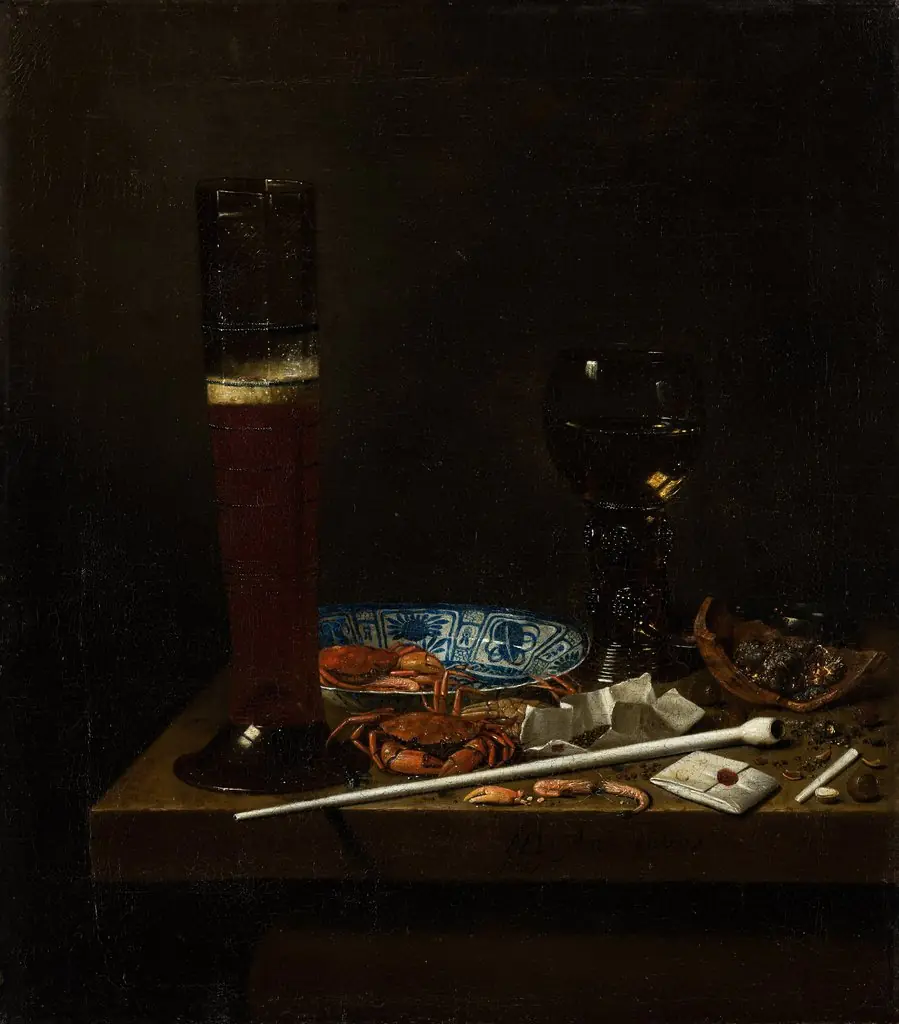 Still Life with Pass Glass
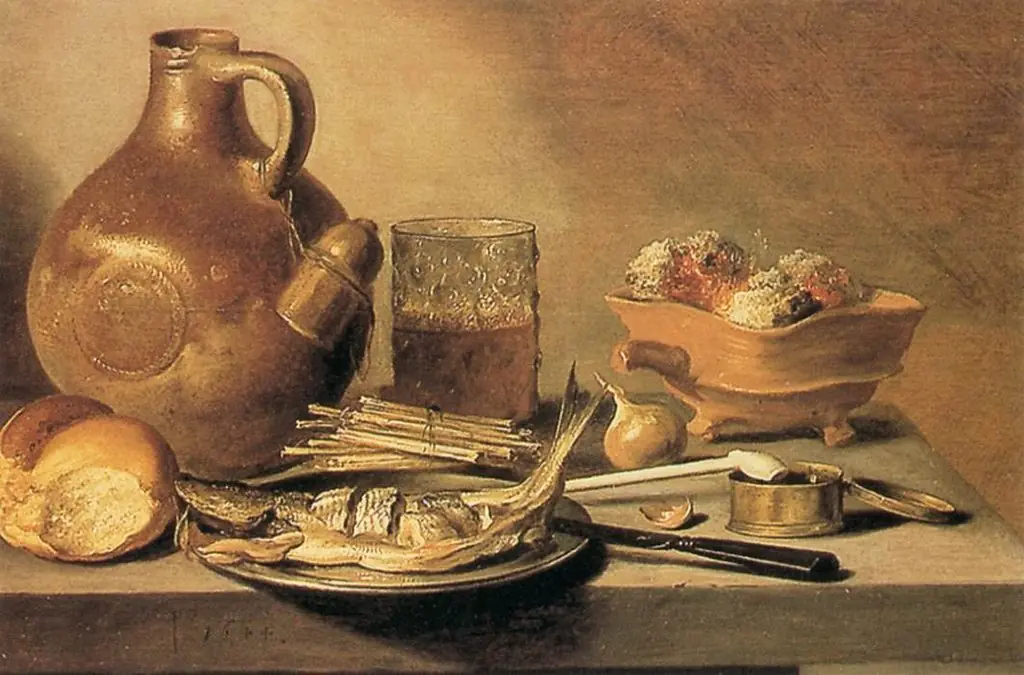 Still Life with Stone Jug, Kipper and smoker's requisites.
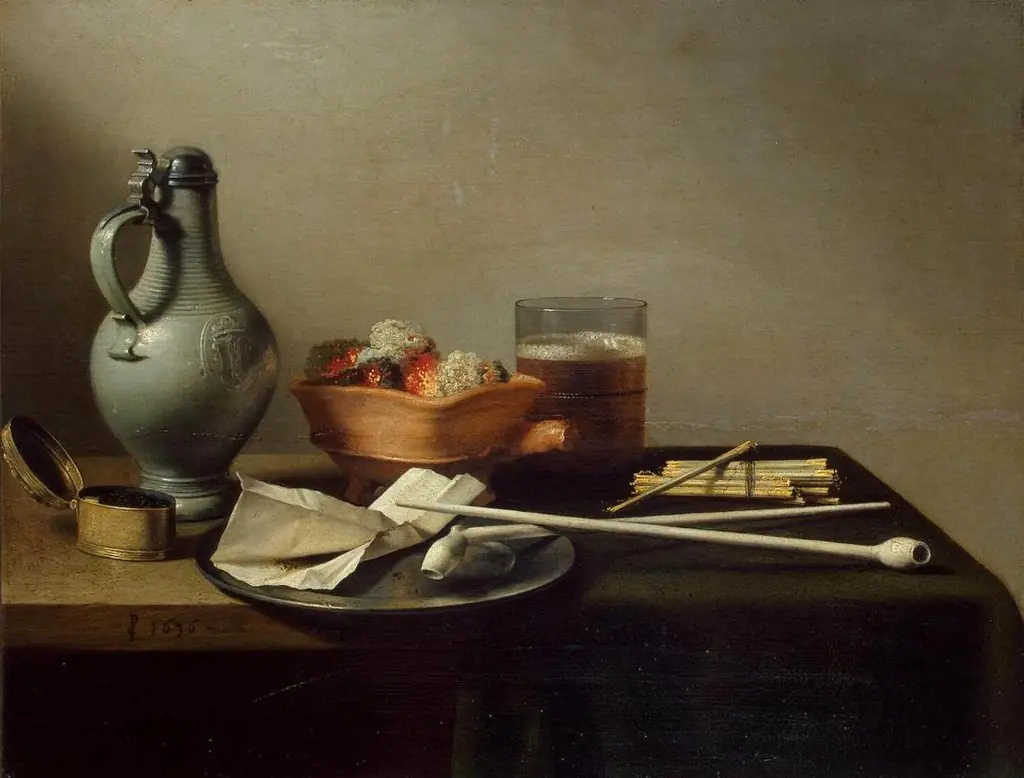 Still Life with Clay Pipes
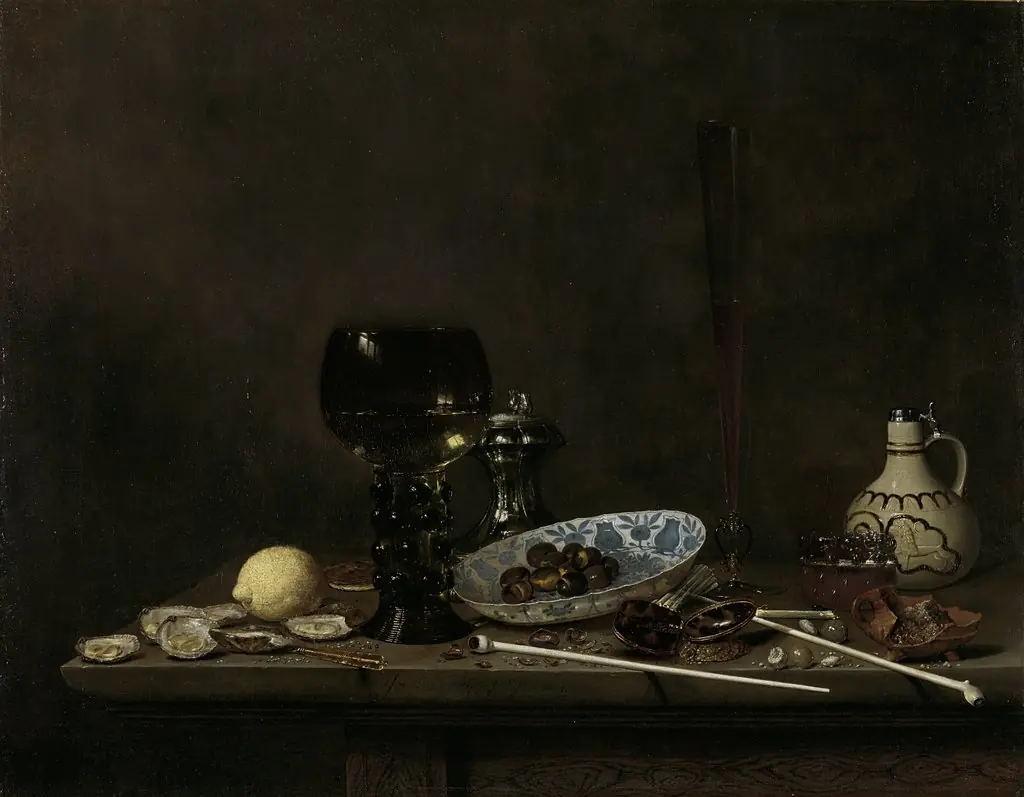 Still life with wineglass, flute, glass, earthenware jug and pipes
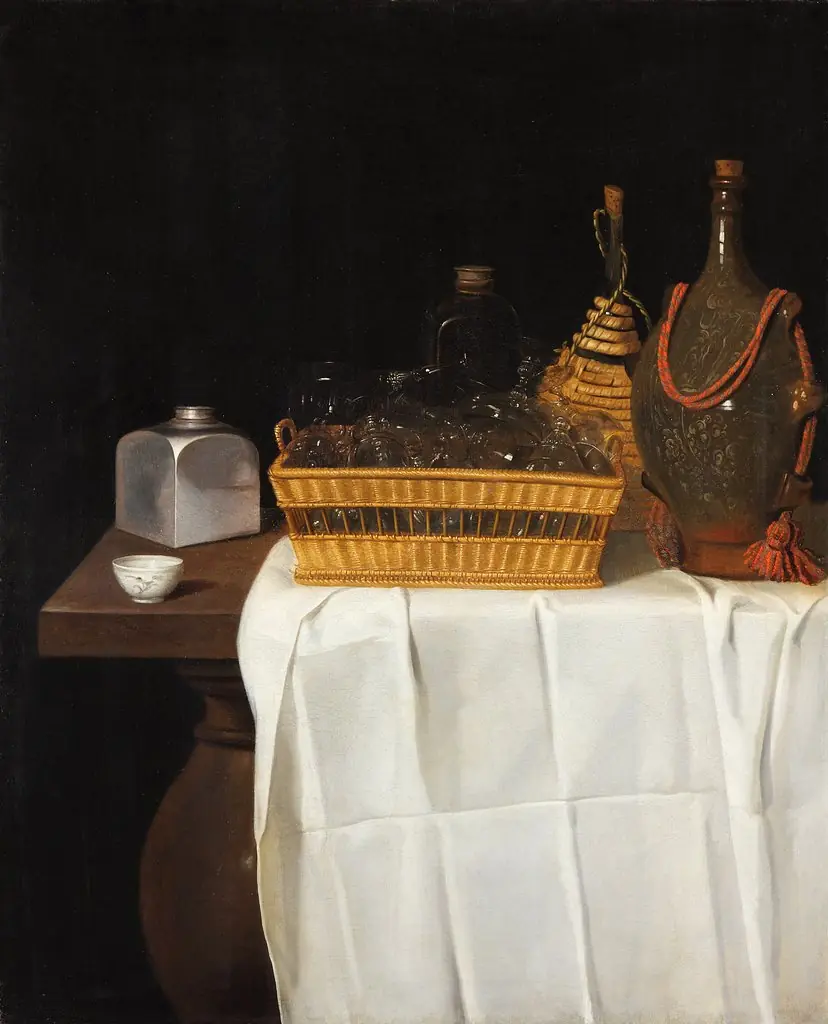 Still-Life with Glasses and Bottles
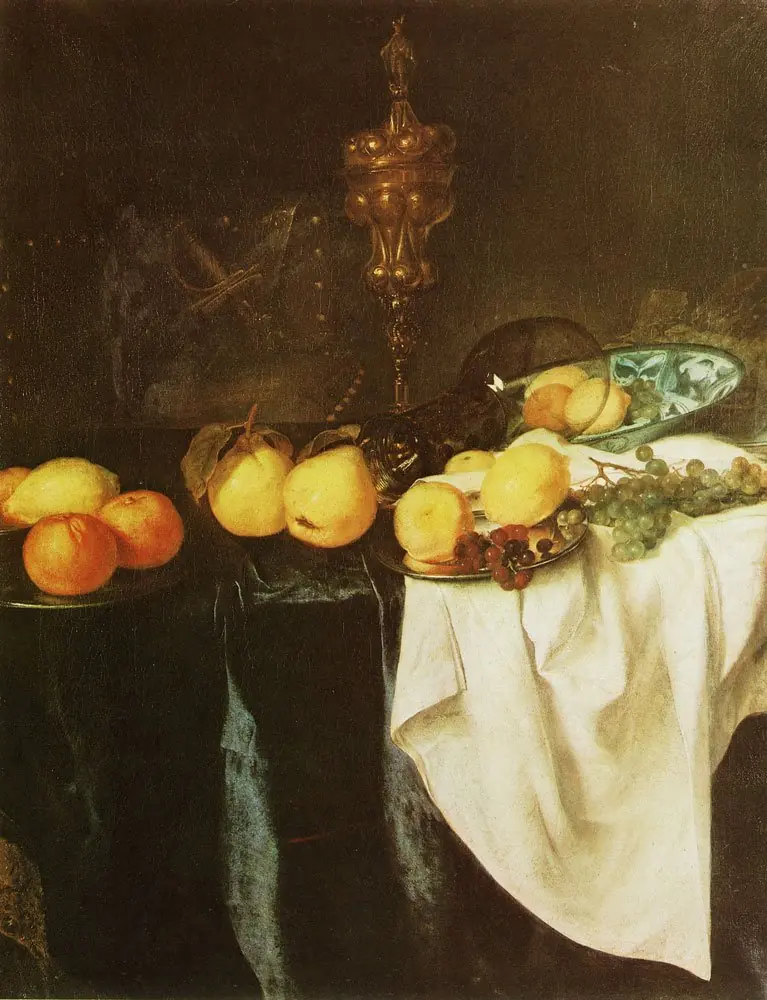 Still life with covered beaker and fruit
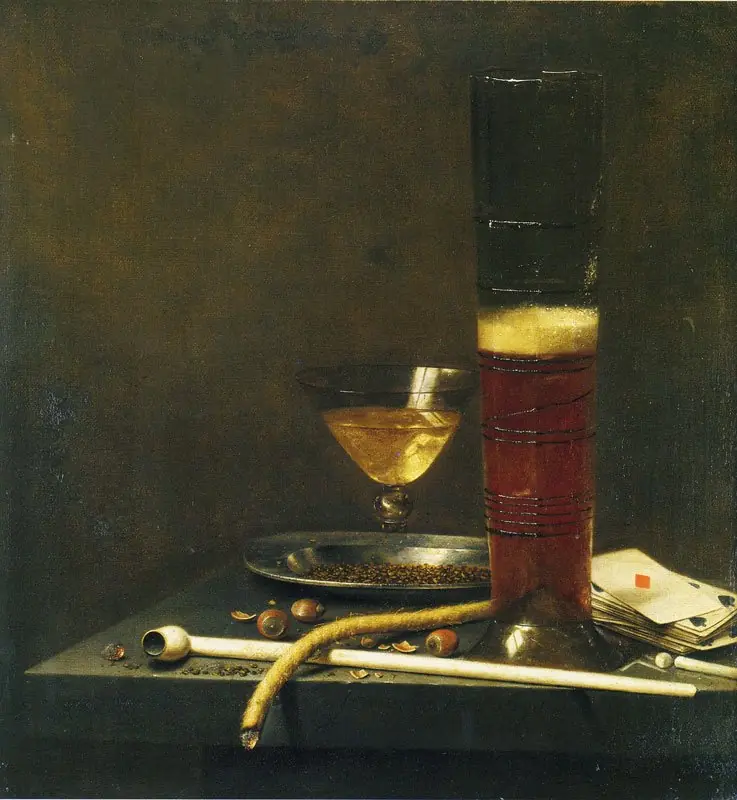 Glasses, Smoking Implements, and Cards
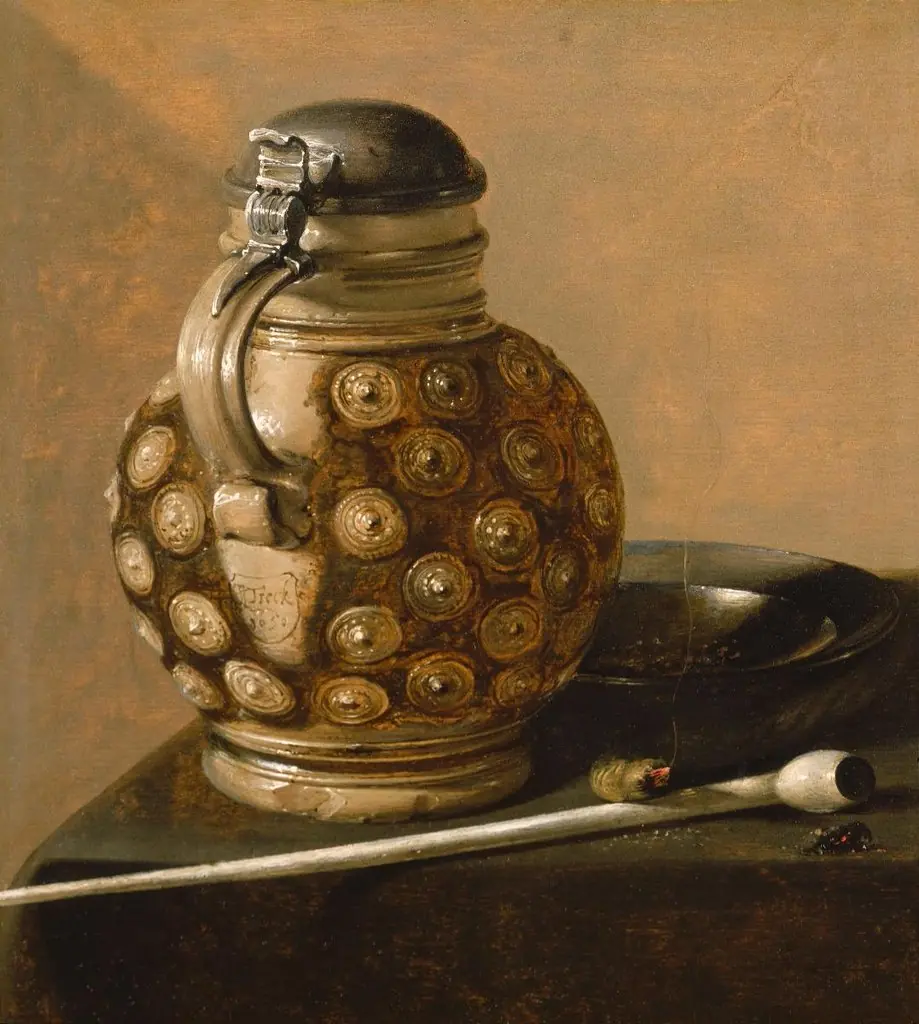 Raucherstillleben mit Kugelbauchkrug
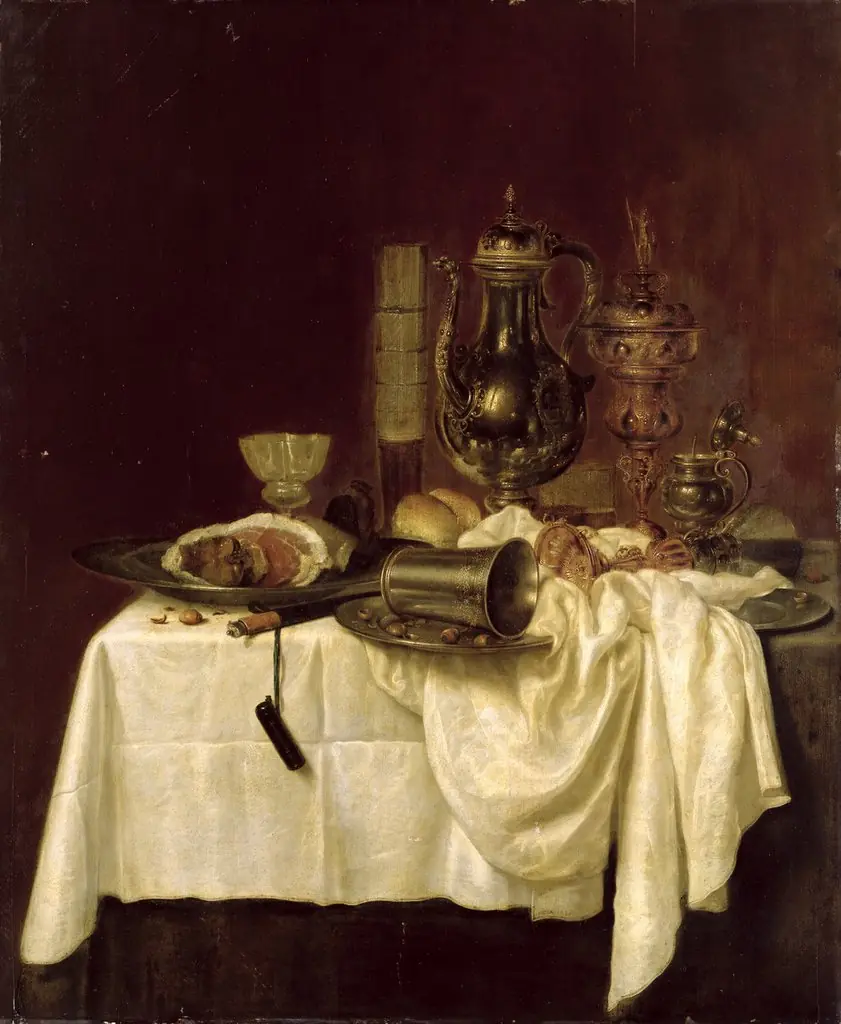 Still life with ham, decanter, columbine cup and passglass on a laid table
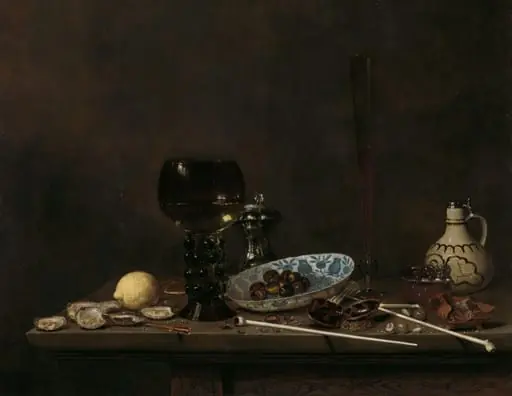 Still Life with Roemer, Salt Cellar, Tobacco, Lemon, and Olives
 Still Life with Musical Instruments
 Still Life with a Stoneware Jar and a Brazier
 Natură moartă cu vază; pandant: Natură moartă cu cană