Artwork
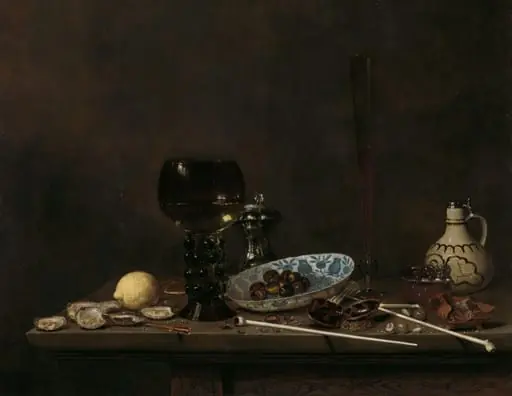
Still life with wineglass, flute, glass, earthenware jug and pipes
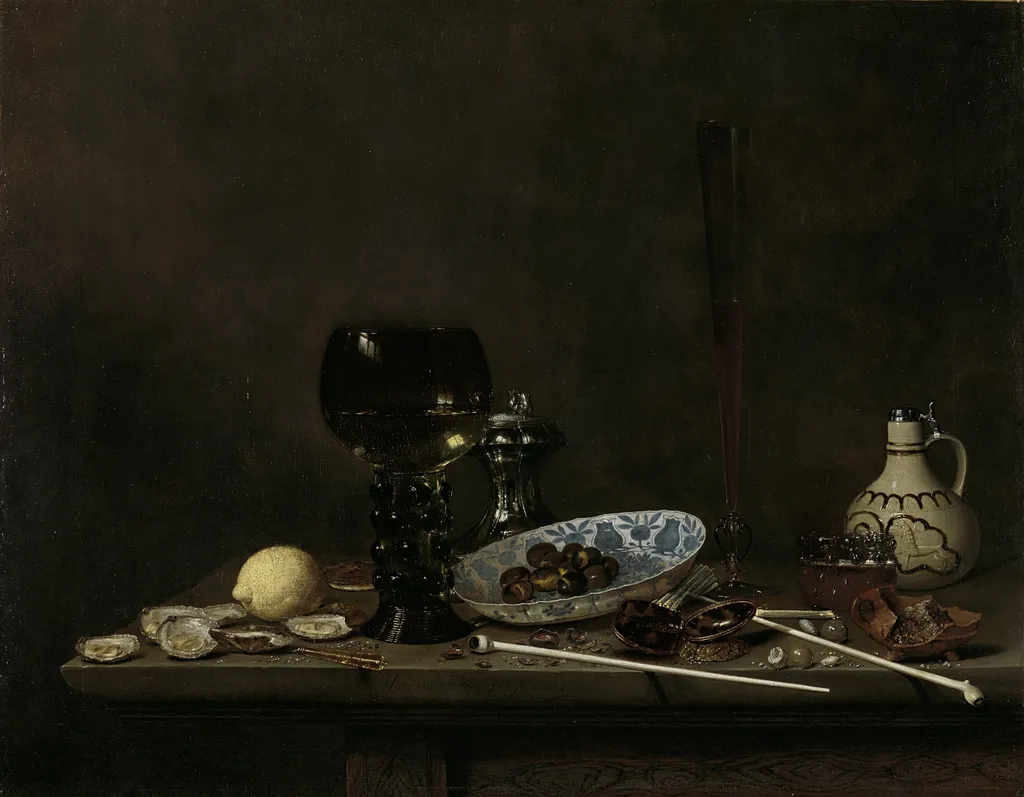
Still life with wineglass, flute, glass, earthenware jug and pipes is an oil painting by Jan Jansz van de Velde. It dates from 1651 and is held in the collection of the Rijksmuseum.
About this work
Technique & Style
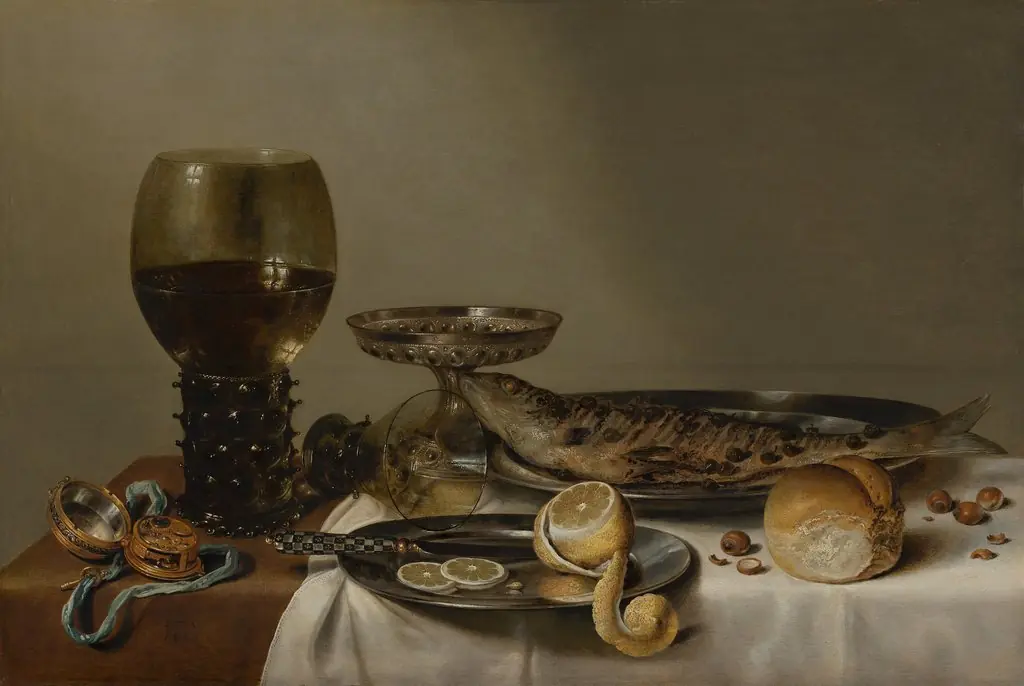
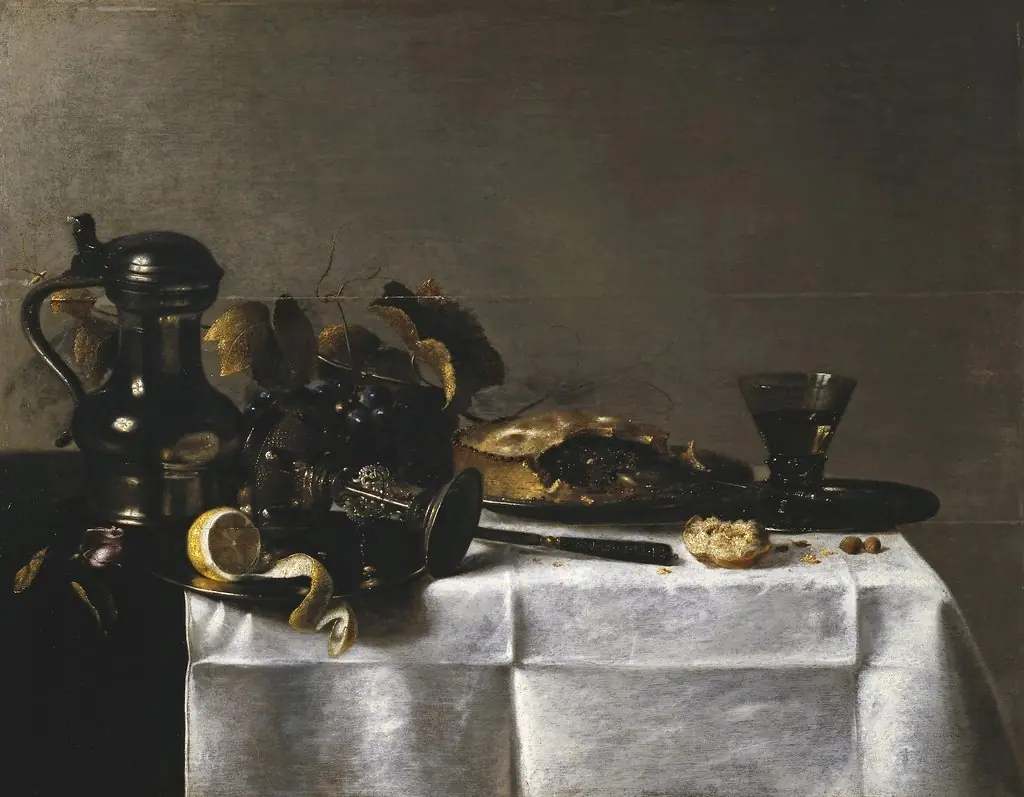
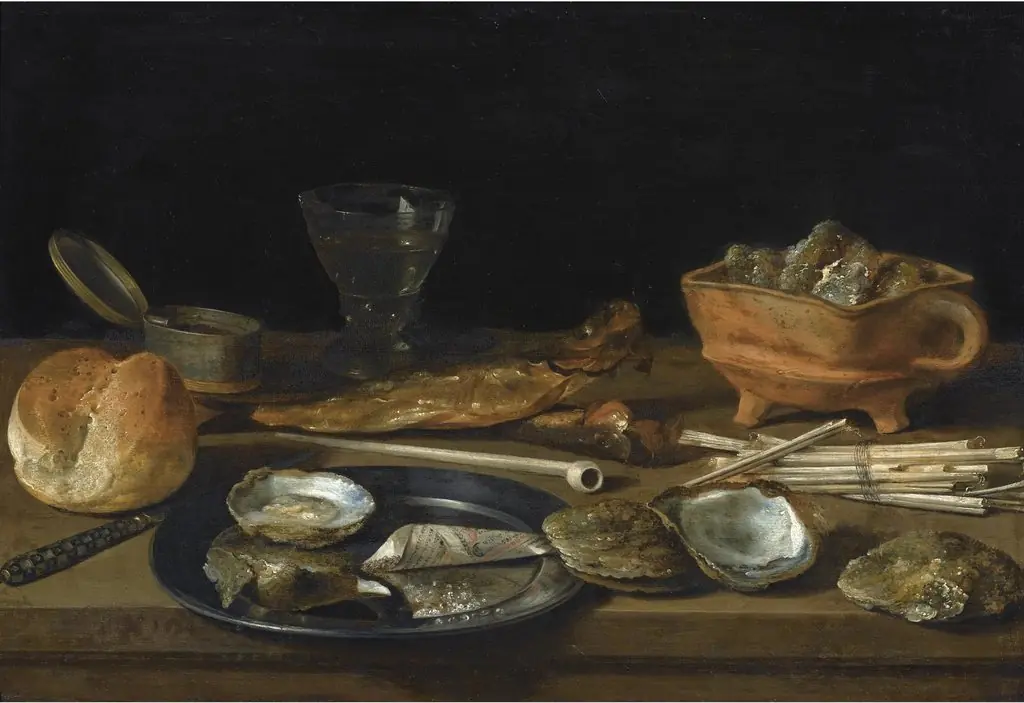
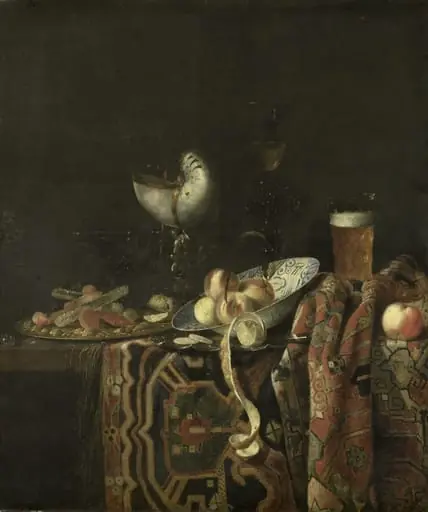
The composition features a rummer alongside a wineglass, flute, glass, earthenware jug and pipes, arranged on a tabletop surface.
The work was painted in oil on canvas, as recorded in the catalog entry for the painting. It measures 70.5 cm by 69.0 cm, according to the museum’s dimensional data. The composition features a rummer alongside a wineglass, flute, glass, earthenware jug and pipes, arranged on a tabletop surface.
Brushwork exhibits a restrained handling of light and a clear delineation of objects, reflecting the stylistic conventions of Dutch still‑life painting in the mid‑17th century. The surface condition is described as well‑preserved, with no noted alterations to the original paint layer.
History & Provenance
The work titled Still life with wineglass, flute, glass, earthenware jug and pipes was painted by Jan Jansz van de Velde in 1651. It entered the collection of the Rijksmuseum in Amsterdam and has remained in that institution, being listed among its holdings in the Dutch national collection. The painting measures 70.5 cm by 91 cm and is executed in oil on canvas.
Its provenance traces directly from the artist's workshop to the Rijksmuseum, with no documented private sales or transfers recorded.
The work is held in the collection of the Rijksmuseum and has been listed in its inventory as accession number SK-A-1865. It was first exhibited at the Rijksmuseum in 1885 and subsequently included in the museum's 1905 retrospective of Dutch still-life painting. The painting has also traveled to the Munich Central Collecting Point for a special exhibition in 1932.
Context
Jan Jansz van de Velde's 1651 painting Still life with wineglass, flute, glass, earthenware jug and pipes is catalogued in the Rijksmuseum collection and exemplifies Dutch Golden Age still-life genre, reflecting the artist's specialization in detailed compositions of domestic objects.
Scholarship highlights the work's technical precision and its role within van de Velde's oeuvre, situating it amid a broader tradition of Dutch still-life painting that emphasized realism and symbolic representation of material wealth.
The painting's provenance across multiple institutional holdings, including the Rijksmuseum and Führermuseum, underscores its recognized significance within art-historical narratives of 17th-century Dutch art.
Legacy
The painting's presence in major institutional collections, including the Rijksmuseum and Führermuseum, cemented its scholarly recognition. Its inclusion in the Munich Central Collecting Point further elevated its status within Dutch still-life studies. Contemporary art historians reference the work as a key example of mid-17th-century compositional balance, particularly in the treatment of reflective surfaces and layered still-life elements.
Overview
This 1651 oil painting by Jan Jansz van de Velde presents a still life composition on a darkened tabletop. Everyday objects, glassware, ceramics, and smoking paraphernalia, are arranged without narrative or human presence. The work belongs to the Rijksmuseum’s collection, where it exemplifies the Dutch still life tradition of the mid-seventeenth century.
Subject & Meaning
The tableau assembles utilitarian items: a rummer, a silver flute, an earthenware jug adorned with a painted horse, a blue-and-white bowl of plums, oysters, a pipe, and a lemon. Such groupings often carried subtle moral or temporal associations, though the painting’s primary focus remains the objects themselves rather than overt symbolism.
Own this work as a print
Artist & collection
Artist
Jan Jansz van de Velde (1620–1662) was a Dutch artist, born in Haarlem.

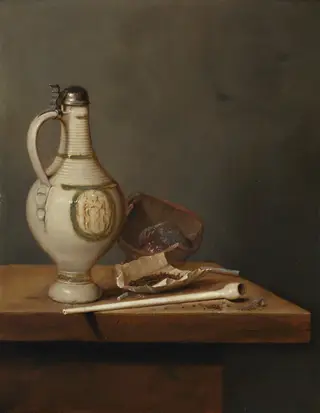 Still Life with Stoneware Jug and Pipe
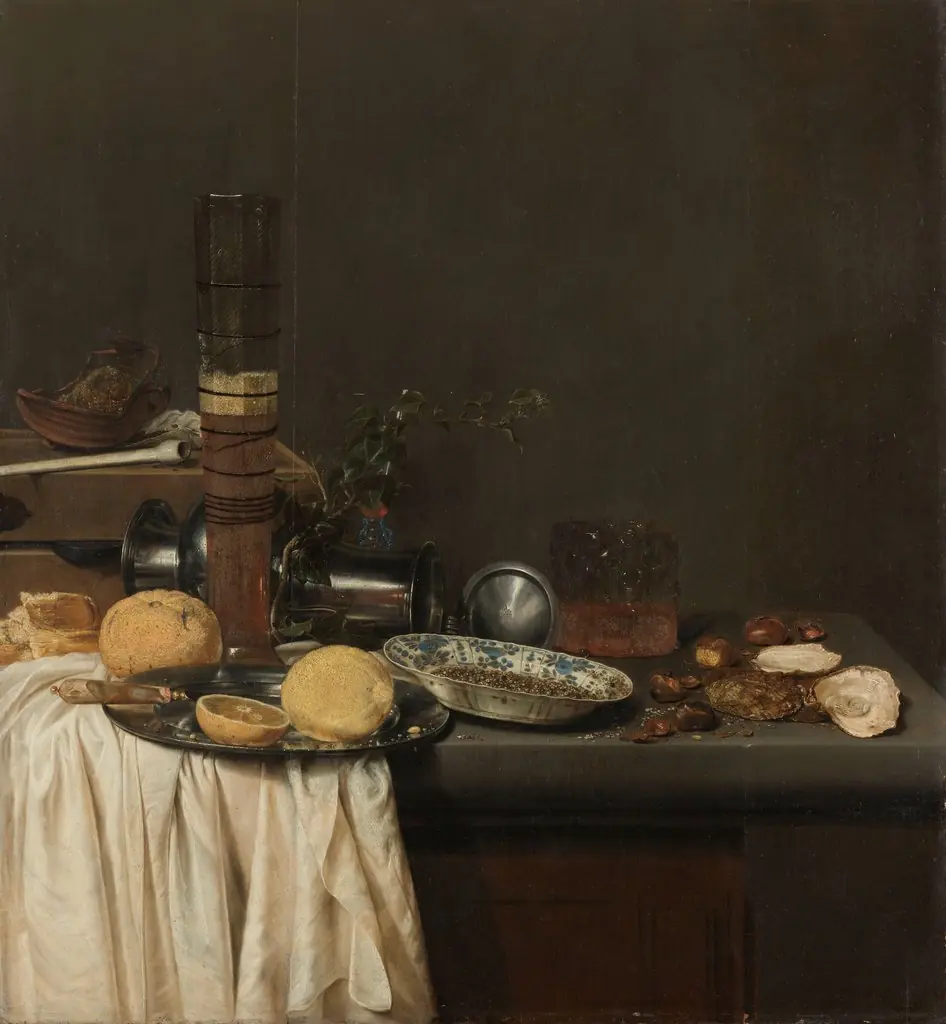 Still-life with a Tall Beer Glass
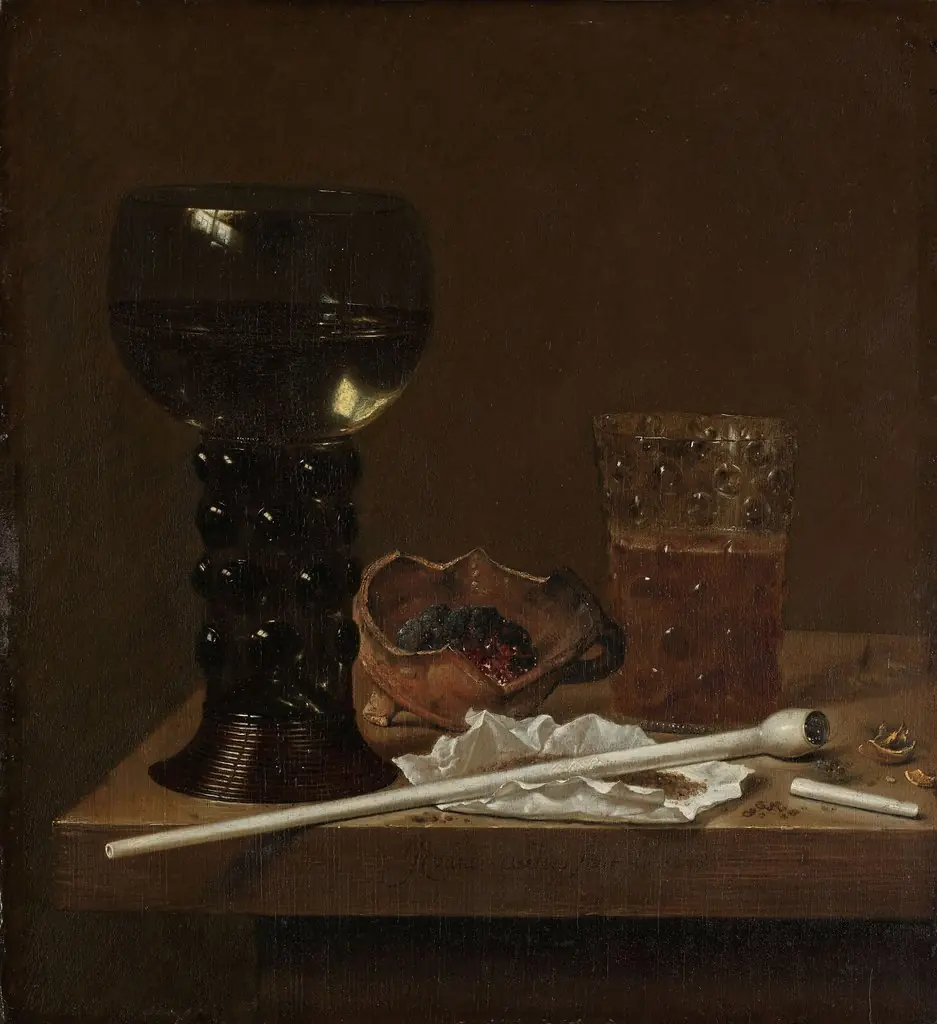 Still life with wineglass, beer glass and pipe
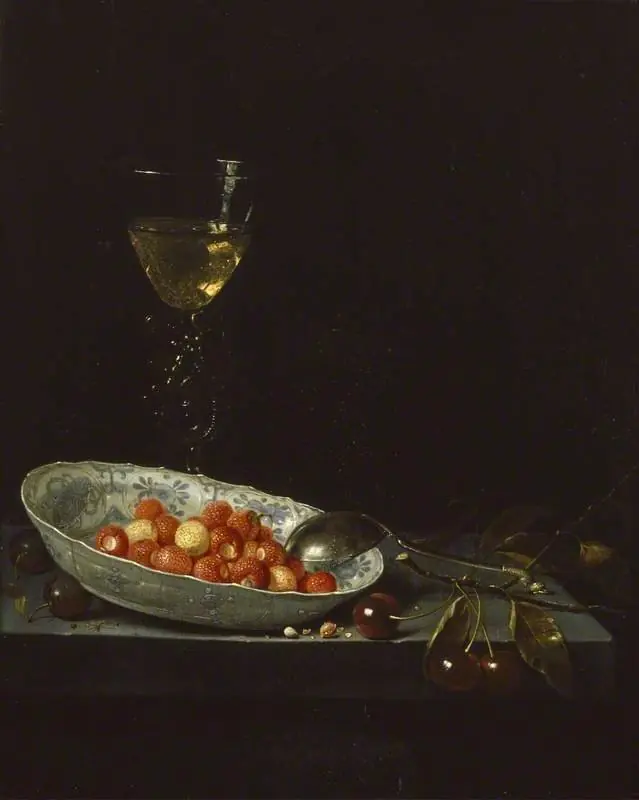 Still Life with Strawberries and Cherries
 Glasses, Smoking Implements, and Cards
 Still Life with Roemer, Salt Cellar, Tobacco, Lemon, and Olives
 Still Life with Goblet and Fruit
 Still Life with a clay Pipe