Artwork
Still life with ham, decanter, columbine cup and passglass on a laid table
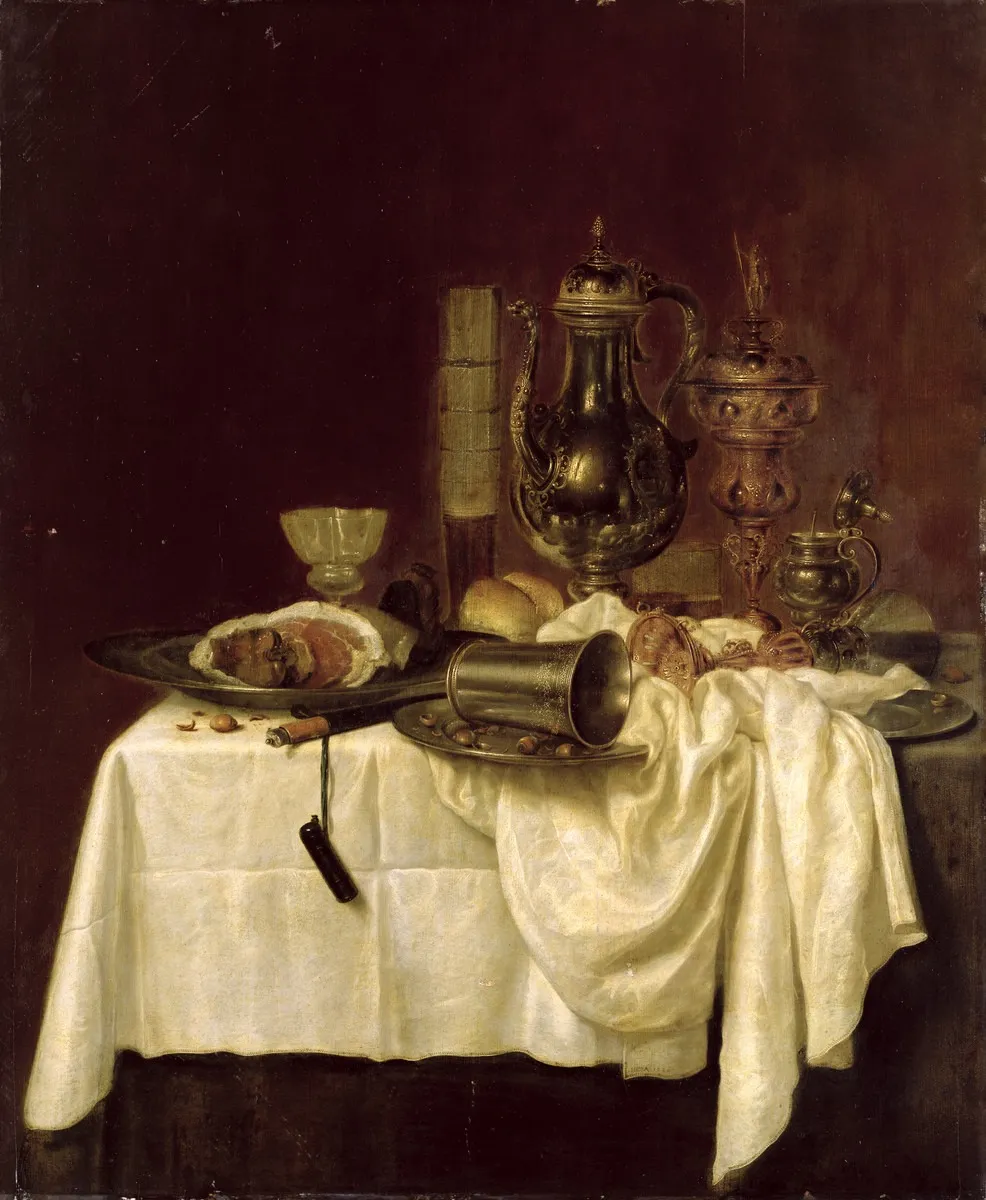
Still life with ham, decanter, columbine cup and passglass on a laid table is an oil painting by the Dutch Golden Age artist Willem Claesz Heda. It dates from 1638 and is held in the collection of the Hamburger Kunsthalle.
About this work
Subject & Meaning
These objects are arranged on a white damask tablecloth with a folded edge, evoking abundance and the fleeting nature of earthly pleasures.
The painting presents a banquet still life centered on a carved ham and a partially peeled lemon, flanked by a silver passglass and a tall columbine cup, with a Venetian-style glass decanter and a bread roll. These objects are arranged on a white damask tablecloth with a folded edge, evoking abundance and the fleeting nature of earthly pleasures. The knife’s blade rests against the table’s edge, its sharpness underscoring the transience of the moment.
The lemon peel and half-empty glass also carry traditional vanitas associations, signaling decay and the passage of time.
Technique & Style
Willem Claesz. Heda's 1638 work is an oil painting executed on a panel support. The piece measures 102.5 cm in height and 84.7 cm in width.
Stylistically, it belongs to the still life genre, focusing on a detailed arrangement of objects including a ham, decanter, and various drinking vessels such as a columbine cup and passglass. The composition features a laid table setting that also incorporates a knife, mustard pot, bread, and specific glassware like a berkemeyer and goblet holder. The artist's handling of the oil medium allows for the precise depiction of textures and reflective surfaces characteristic of the work.
History & Provenance
Still life with ham, decanter, columbine cup and passglass on a laid table is an oil painting on panel created in 1638 by Willem Claesz Heda. The work measures 102.5 cm in height and 84.7 cm in width and depicts a table setting that includes a knife, decanter, passglass, chalice, ham, Akelei covered beaker, wine glass, mustard pot, bread, goblet holder and berkemeyer. It belongs to the still life genre and was painted on a laid table surface.
The painting has been part of the Hamburger Kunsthalle collection since its creation, where it remains on display.
The provenance of the painting is straightforward, moving directly from the artist’s studio to the Hamburger Kunsthalle in Hamburg, where it has been held continuously since 1638. There is no record of a commission or sale prior to its acquisition by the museum, and no subsequent owners are documented. The dating of 1638 is confirmed by both the artist’s known output and the museum’s cataloguing data, and the dimensions cited in the museum’s records match the physical work.
Context
Willem Claesz Heda painted Still life with ham, decanter, columbine cup and passglass on a laid table in 1638, a work now housed in the Hamburger Kunsthalle. Executed in oil on panel, the composition features a richly detailed tabletop arrangement including a decanter, passglass, chalice, ham, and various vessels, reflecting the meticulous observation characteristic of Dutch Golden Age still life painting. Heda’s contribution to the genre, particularly his development of innovative tabletop arrangements and subtle chiaroscuro effects, situates this piece within his mature oeuvre and underscores its significance in the evolution of Dutch still life during the early 17th century.
Overview
Still life with ham, decanter, columbine cup and passglass on a laid table is a 1638 oil painting by Willem Claesz Heda, a Dutch Golden Age painter from Haarlem.
Artist & collection
Artist
Willem Claeszoon Heda (December 14, 1593/1594 – c. 1680/1682) was a Dutch Golden Age painter from the city of Haarlem devoted exclusively to the painting of still life. He is known for his innovation of the late…

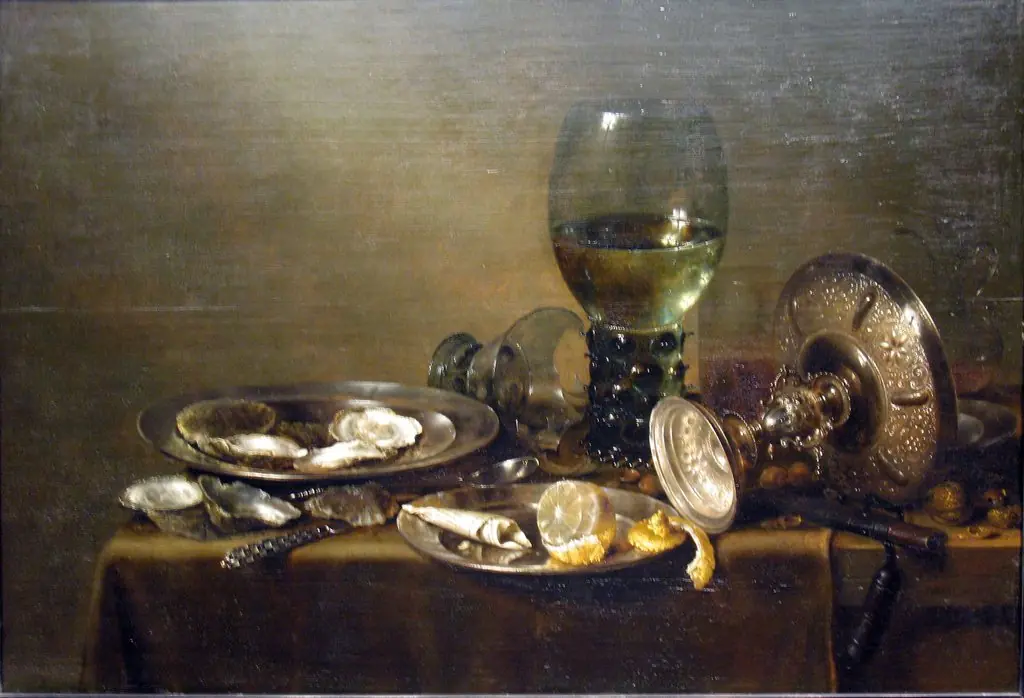
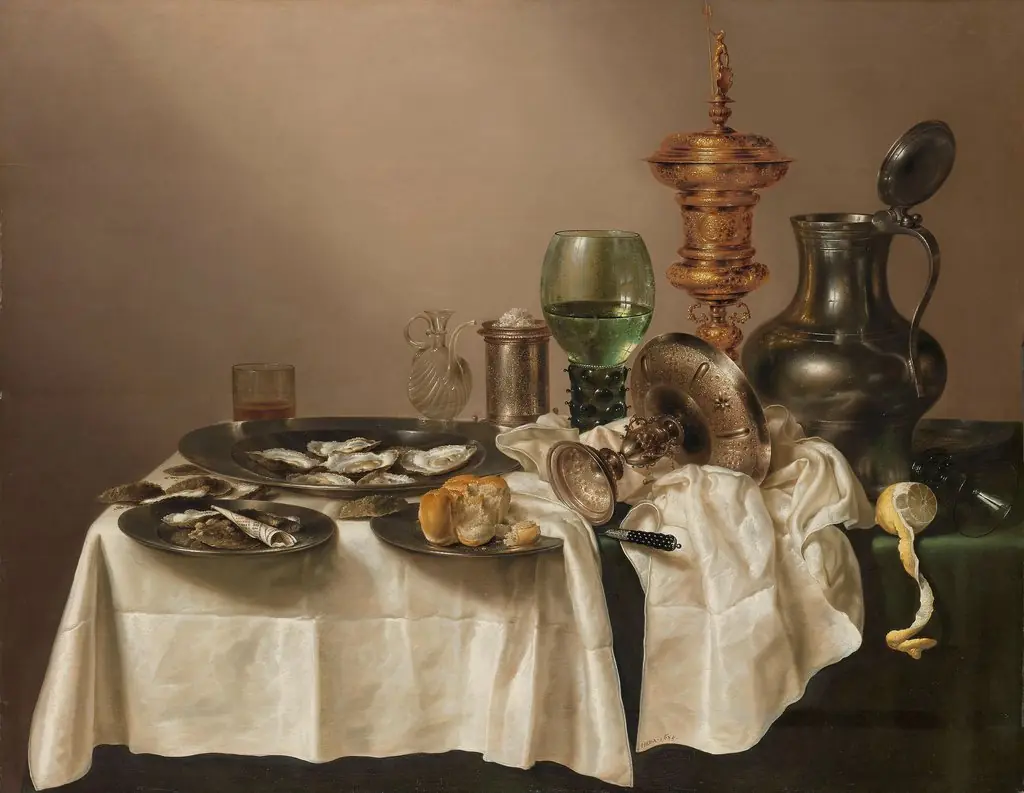
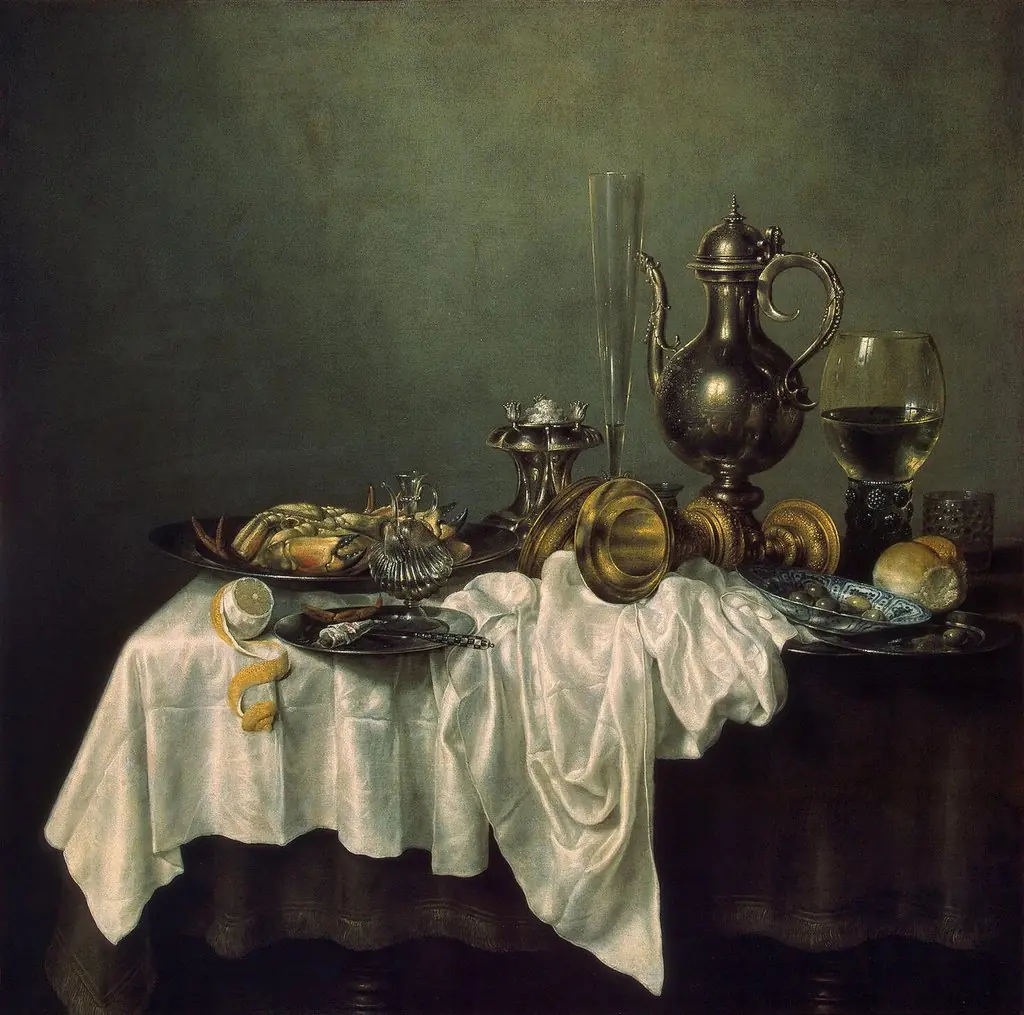
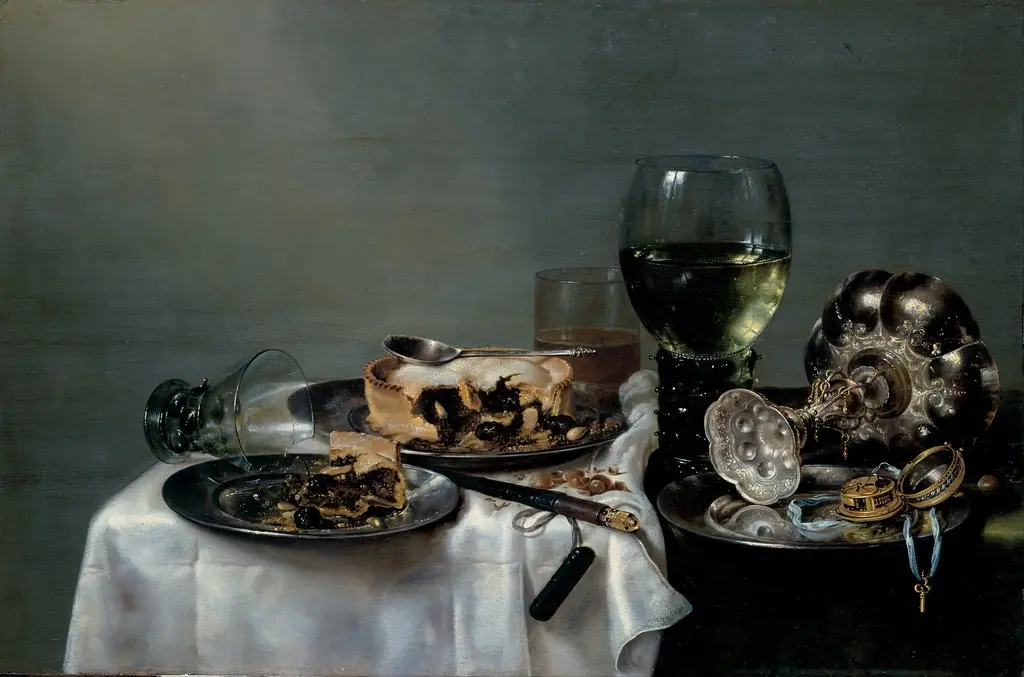
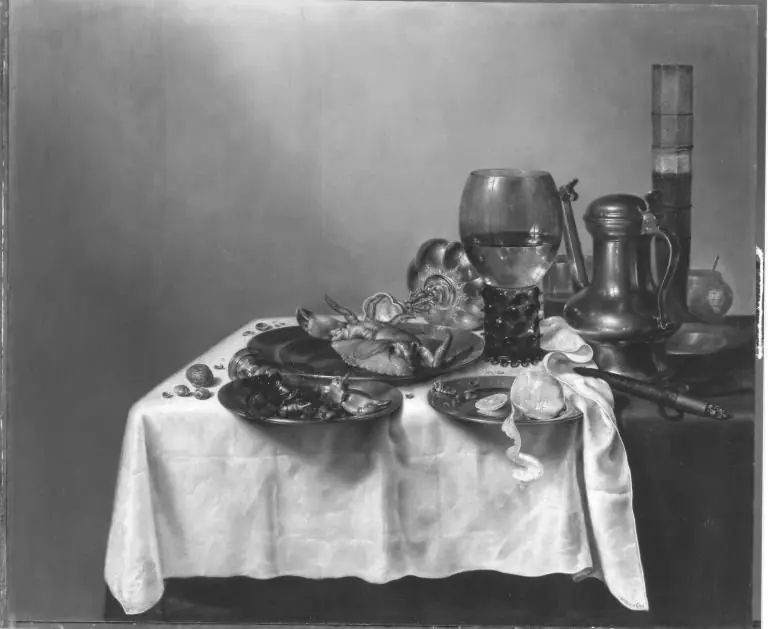
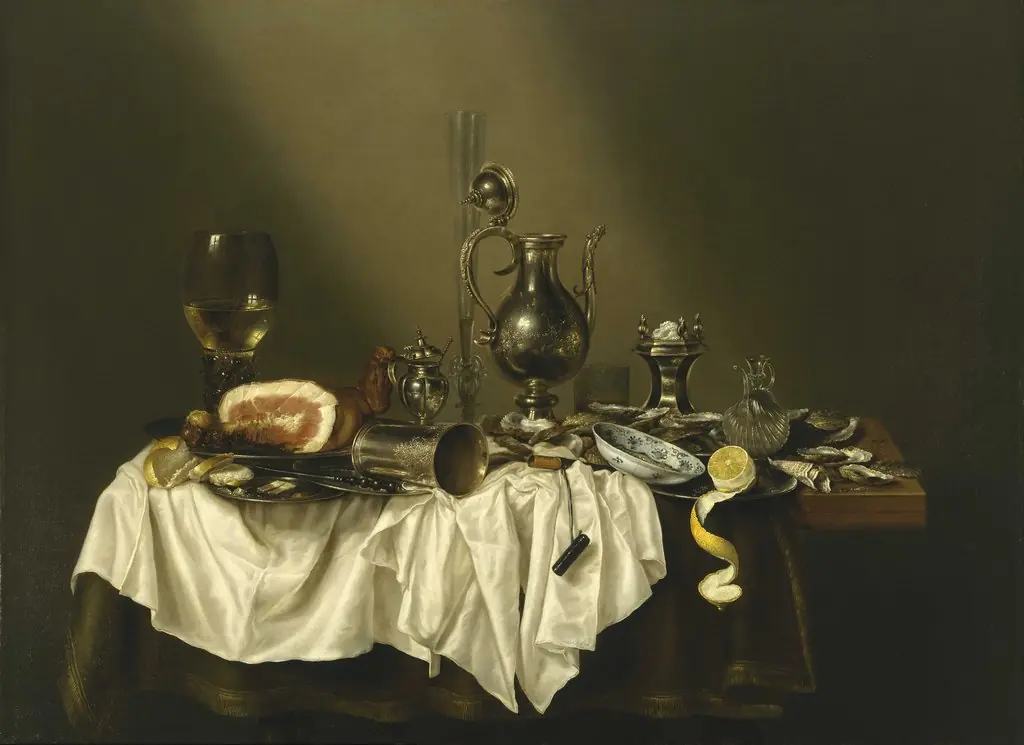
- Still Life with Ham, Covered Beaker, Tazza, Rummer and Jug on a Table
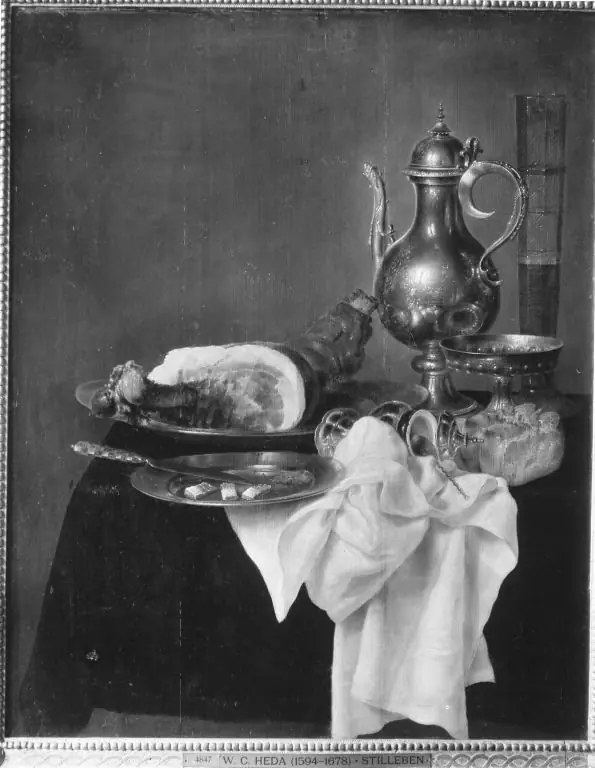 Still life with silver decanter and ham
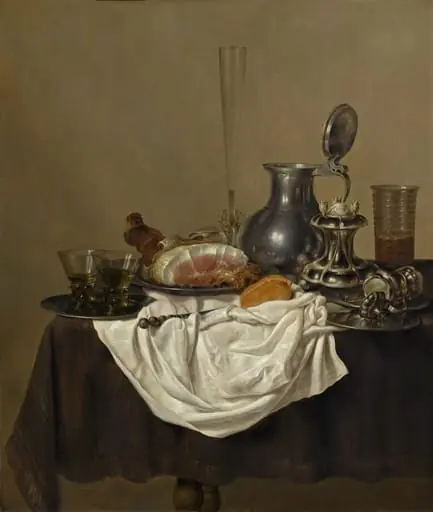 Still Life with Ham
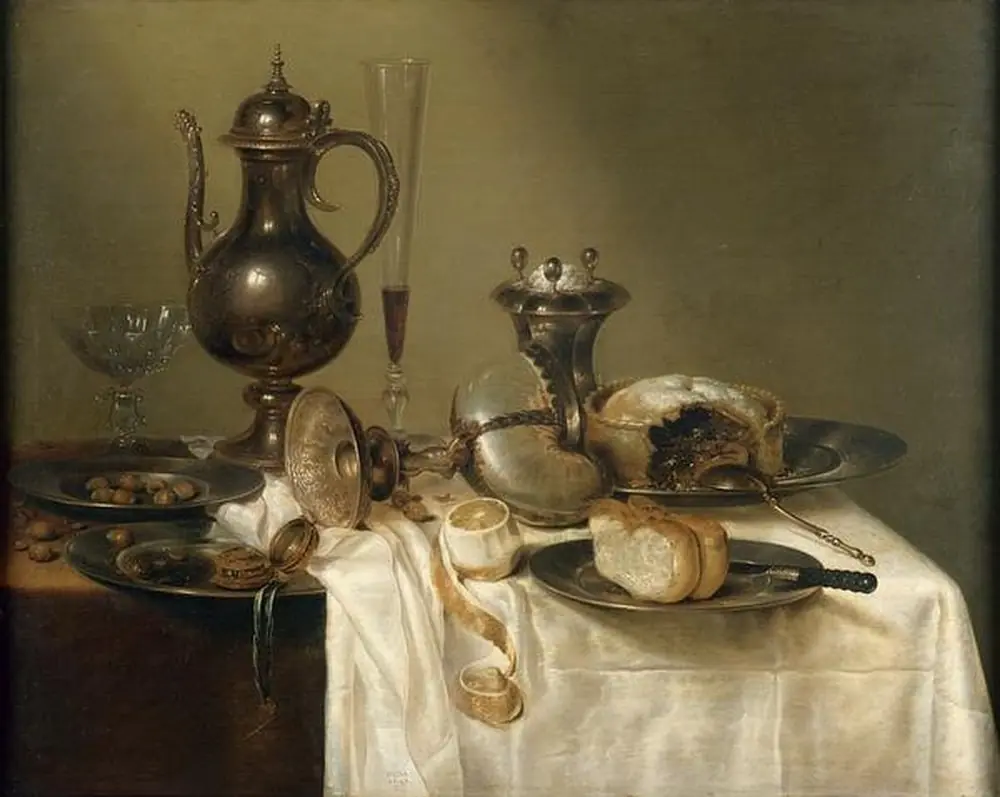 Still life with decanter, nautilus cup, wine glasses and pie
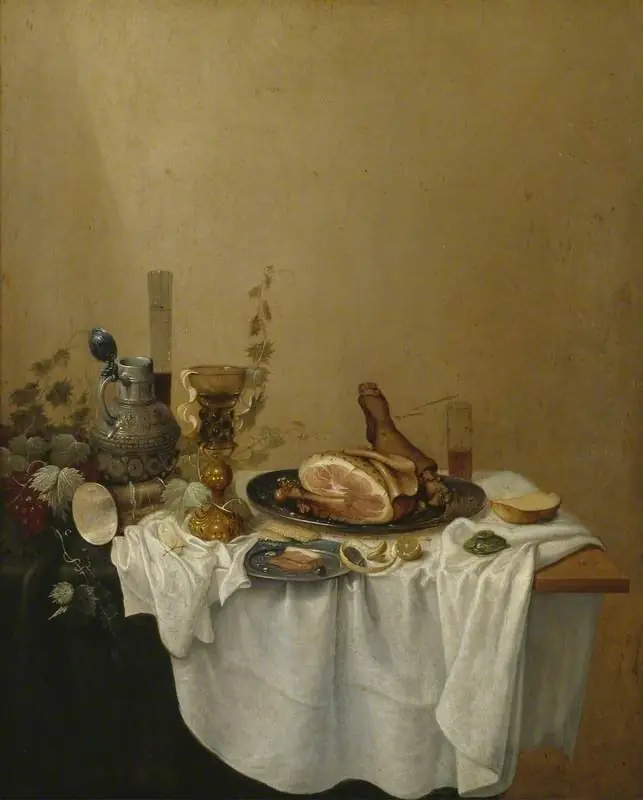 Still life with stoneware jug, bekerschroef, glassware and a leg of ham
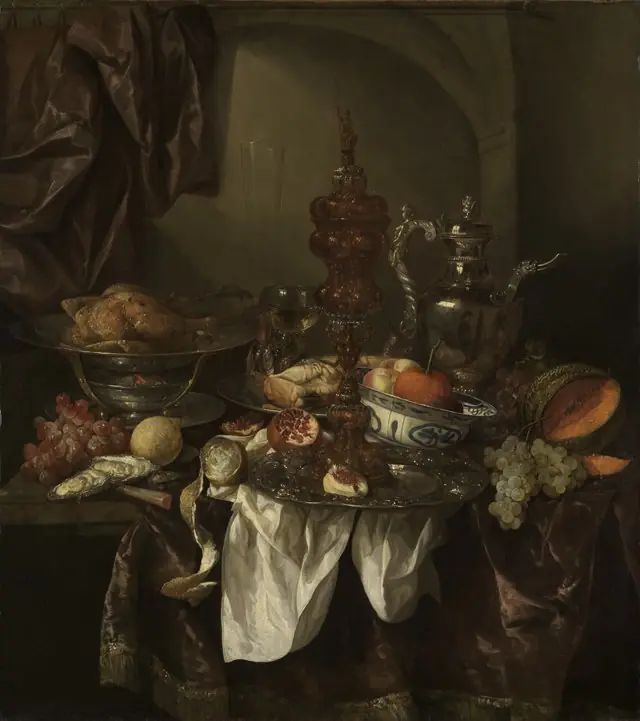 Still life with fruit, roast, silver- and glassware, porcelain and columbine cup on a dark tablecloth with white serviette
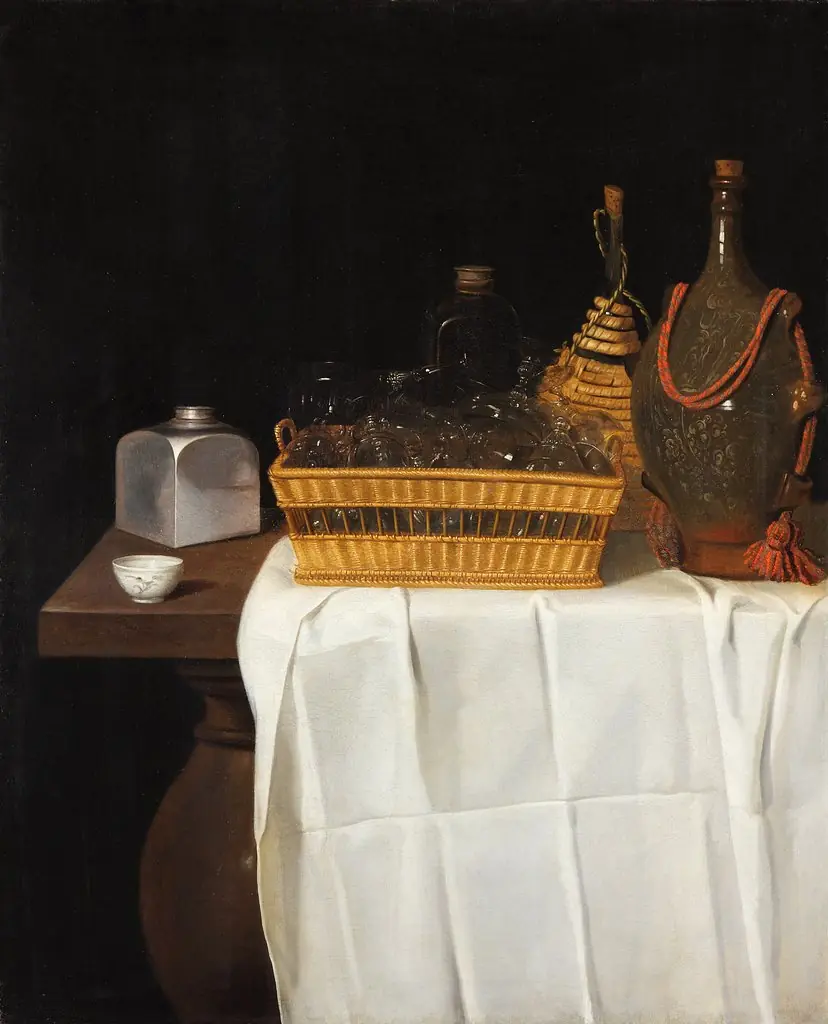 Still-Life with Glasses and Bottles