Artwork
Still Life with Clay Pipes
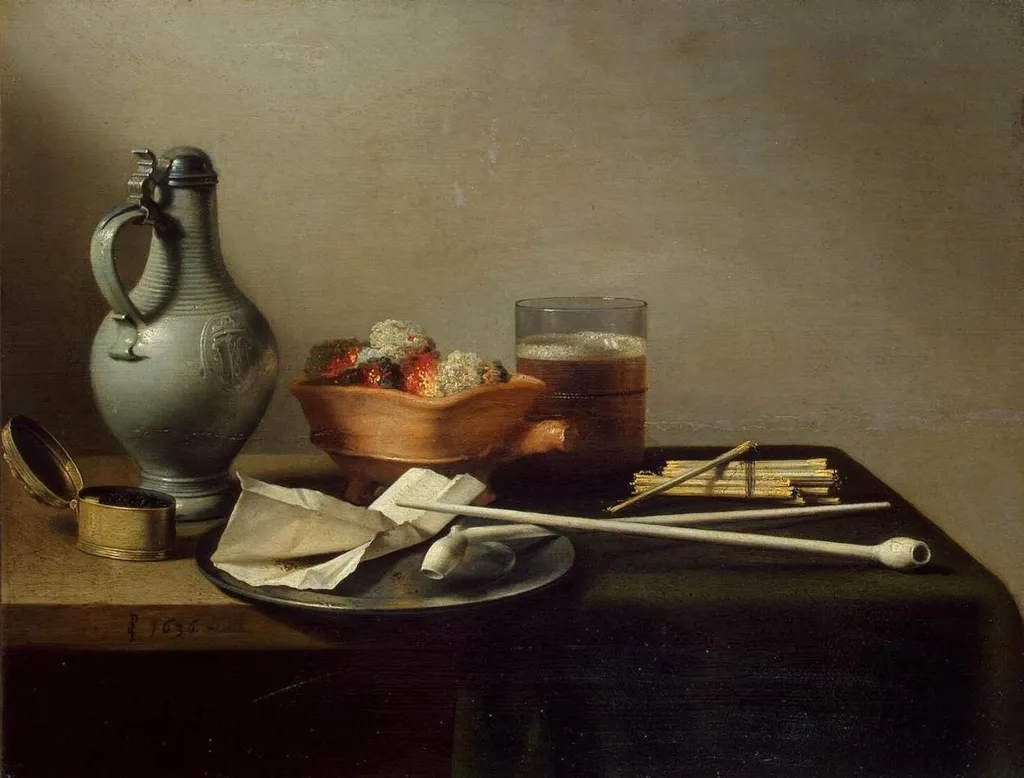
Still Life with Clay Pipes is an oil painting by Pieter Claesz. It dates from 1636 and is held in the collection of the Hermitage Museum.
About this work
Subject & Meaning
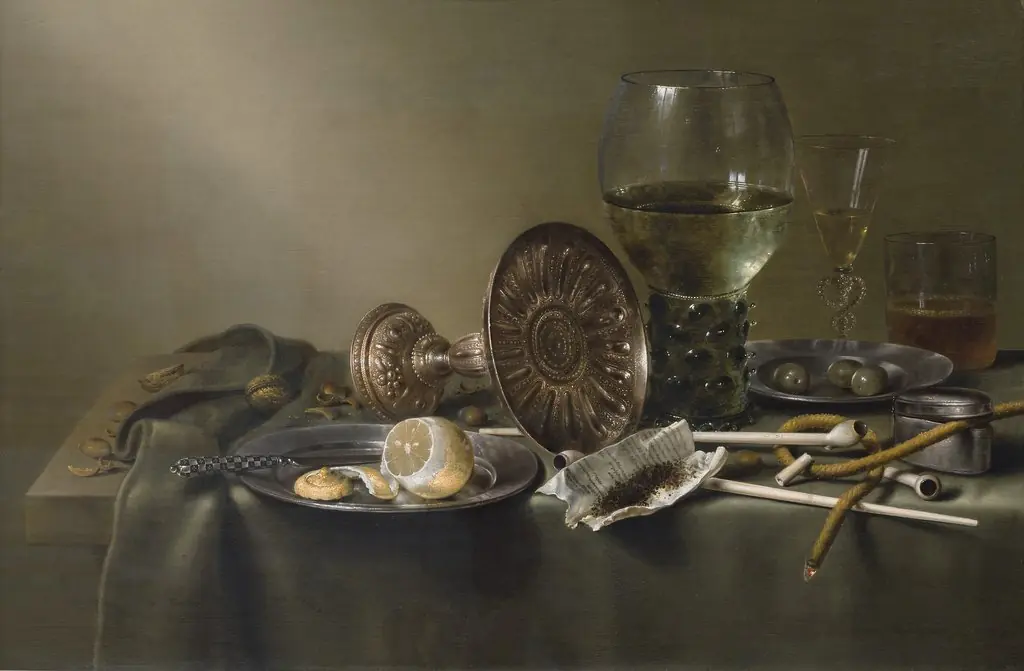
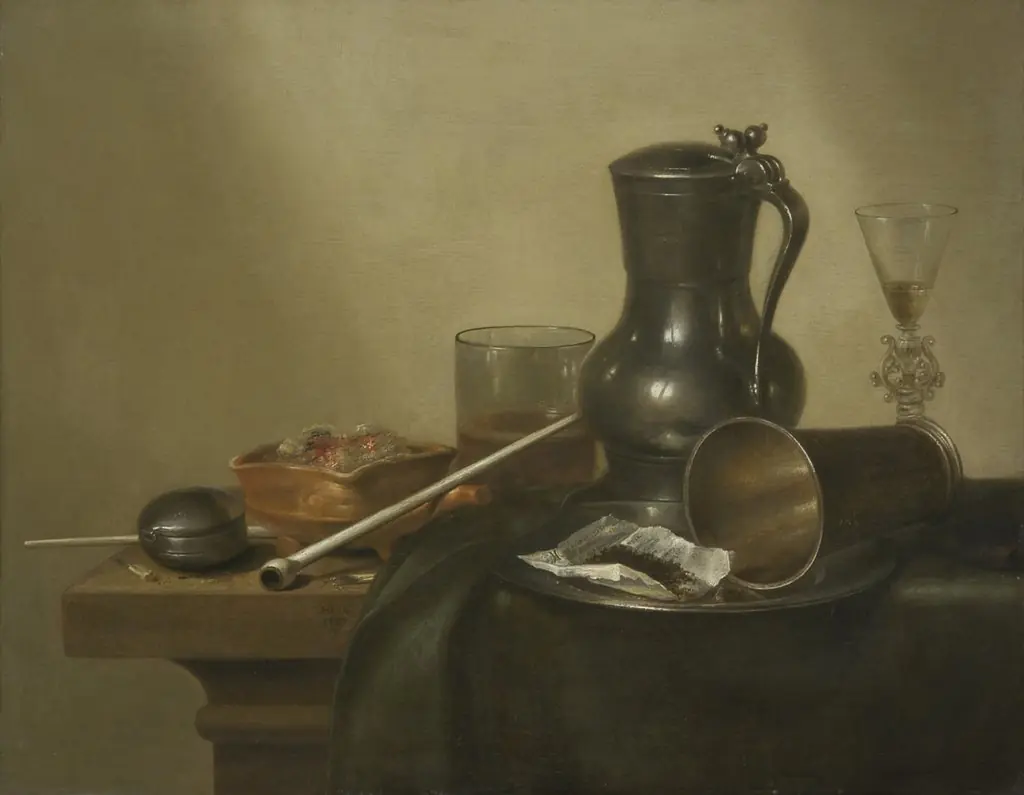
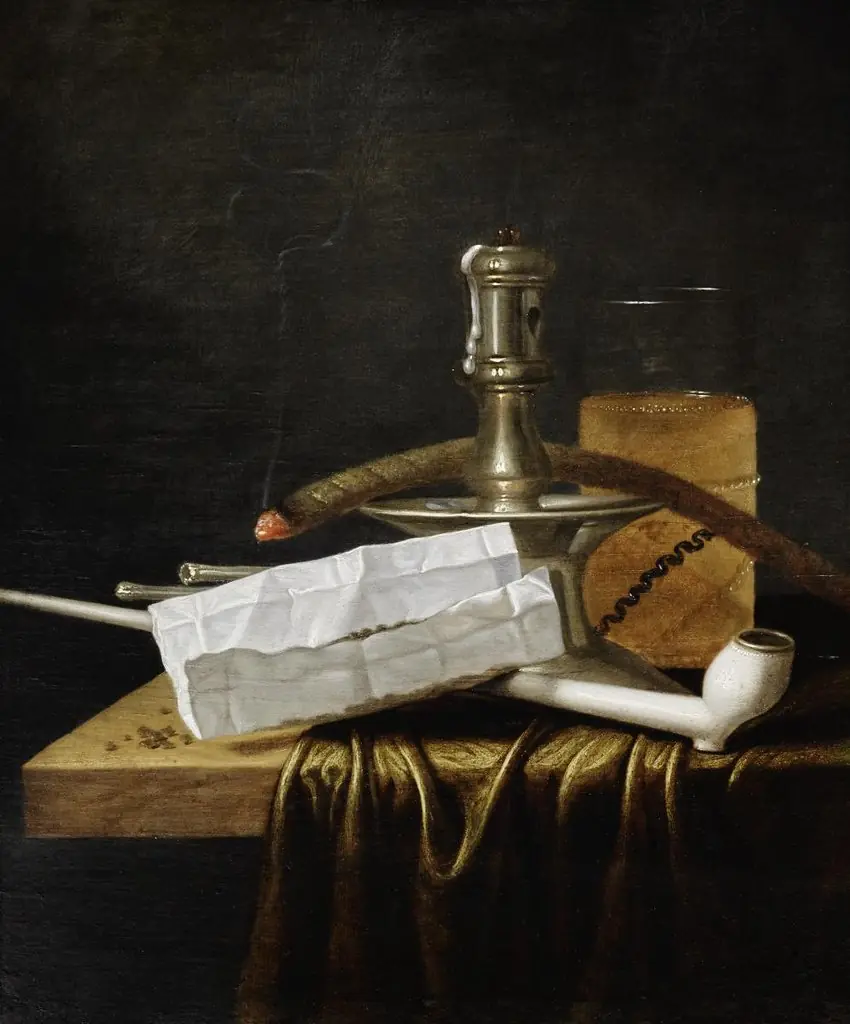
Pieter Claesz's 1636 still life assembles a tightly observed group of modest domestic objects: a Gouda clay pipe, tobacco, a square ceramic bowl with a handle intended for embers or fruit, a Westerwald stoneware wine pitcher, and a beer glass. Each item belongs to the everyday material culture of the Dutch Republic, and their combination is characteristic of the "ontbijtje" or breakfast-piece tradition of Haarlem still life painting.
The arrangement of clay pipes, tobacco, and drinking vessels carries the familiar vanitas undertones of the genre: tobacco smoke and alcohol were conventional emblems of life's transience, while the humble clay pipe in particular was associated with brevity and the fleeting nature of earthly pleasures. The plain ceramic and stoneware vessels, rather than costly silver or Chinese porcelain, reinforce a moralizing message about moderation and the sufficiency of simple comforts, inviting the viewer to contemplate the passage of time through ordinary, recognizable things.
Technique & Style
The work depicts a Gouda clay pipe, a square ceramic bowl with a handle for embers or fruit, a Westerwald stoneware wine pitcher, tobacco, and a beer glass.
The painting was executed in oil on a wooden panel. It measures 49 cm in height by 63.5 cm in width. The work depicts a Gouda clay pipe, a square ceramic bowl with a handle for embers or fruit, a Westerwald stoneware wine pitcher, tobacco, and a beer glass.
These objects are rendered with meticulous detail characteristic of Dutch still-life painting of the mid-17th century. The composition reflects a realistic handling of light and texture, emphasizing the material qualities of each object.
History & Provenance
Pieter Claesz created the oil-on-panel painting Still Life with Clay Pipes in 1636. The work was executed in the Netherlands and depicts specific objects including Gouda clay pipes, a square ceramic bowl, a Westerwald stoneware wine pitcher, tobacco, and a beer glass. Currently, the painting is held in the collection of the Hermitage Museum. Its physical dimensions are recorded as 49 cm in height and 63.5 cm in width.
Still Life with Clay Pipes is held by the Hermitage Museum in Russia, where it is recorded under the inventory number 1418. The work has been displayed in the Hermitage's Russian and European paintings galleries, including a 2014 exhibition of Dutch Golden Age paintings drawn from the museum's collection.
The painting measures 49 cm in height and 63.5 cm in width, and was created in the Netherlands in 1636.
Context
Pieter Claesz's 1636 still life exemplifies Dutch Golden Age genre painting through its meticulous arrangement of humble objects imbued with moral symbolism. The Hermitage Museum holds this work, which features a Gouda clay pipe, Westerwald stoneware pitcher, and ceramic bowl as depicted in its catalog description. Scholarship notes Claesz's specialization in breakfast and banquet scenes that often conveyed transience, situating this painting within his broader oeuvre of modestly composed still lifes.
Its composition reflects Baroque-era interest in everyday objects carrying layered meanings, as seen in contemporary Dutch art historical analyses.
Overview
Pieter Claesz’s 1636 oil painting presents a modest tabletop arrangement, grouping a clay pipe, a stoneware wine pitcher, a glass of dark liquid, and a few ancillary objects. The composition is rendered with restrained colour and a calm atmosphere, typical of Dutch still‑life conventions of the early seventeenth century.
Artist & collection