Artwork
A Flemish Kitchen
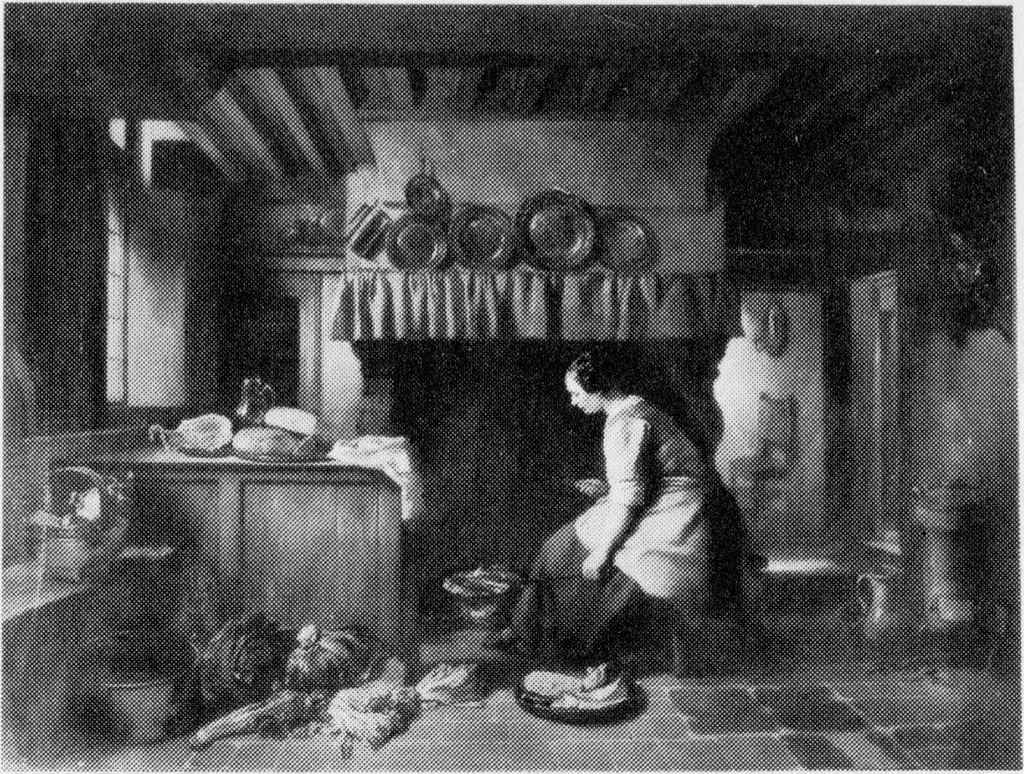
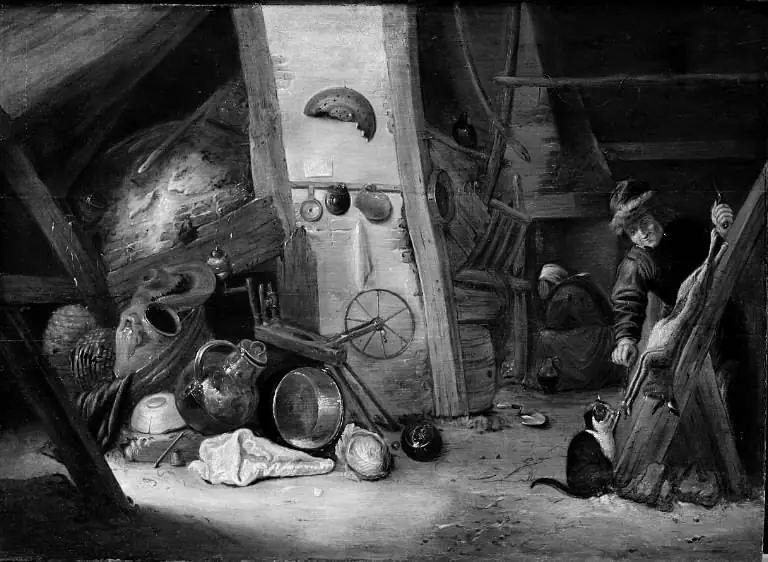
A Flemish Kitchen is an oil painting by the Realist artist Hubertus van Hove. It dates from 1859 and is held in the collection of the Rijksmuseum.
About this work
Subject & Meaning
Hubertus van Hove’s careful rendering of texture and light underscores the genre’s focus on realistic representation rather than allegorical narrative.
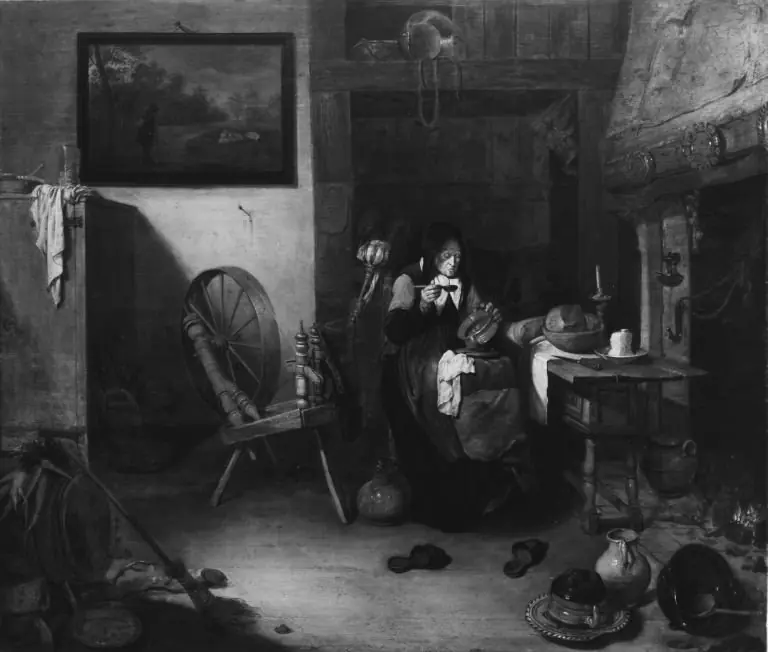
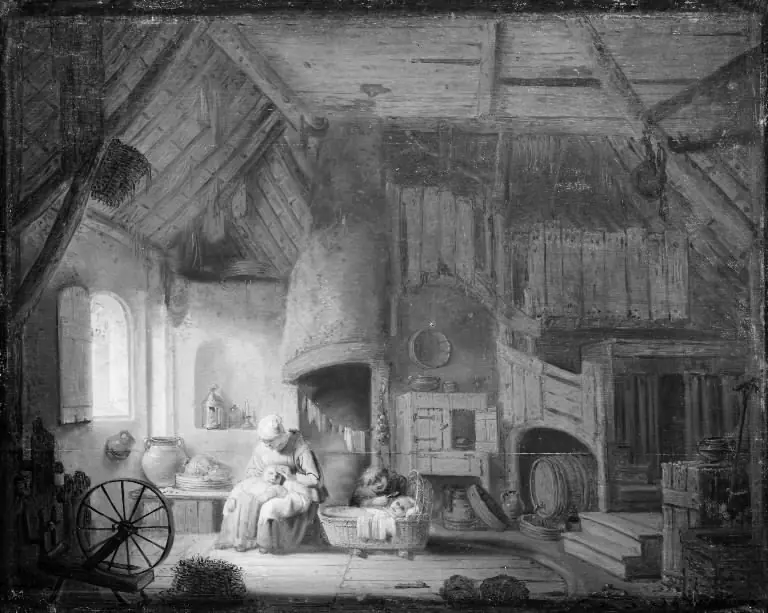
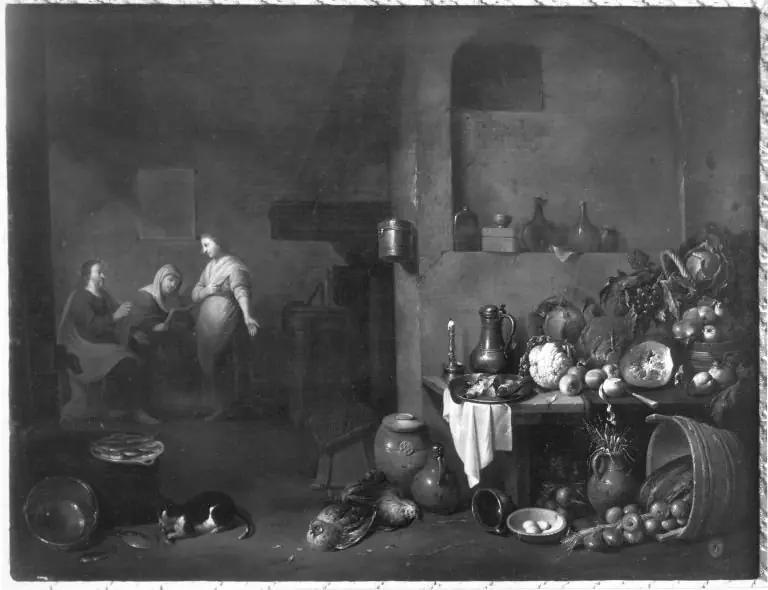
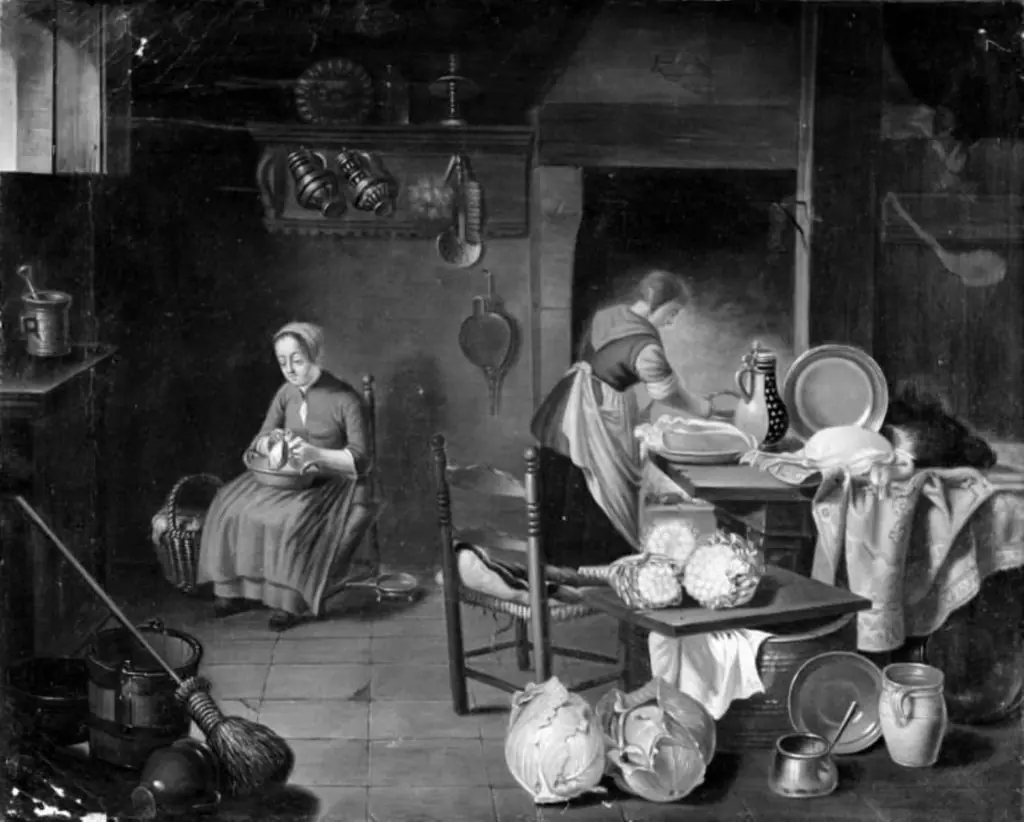
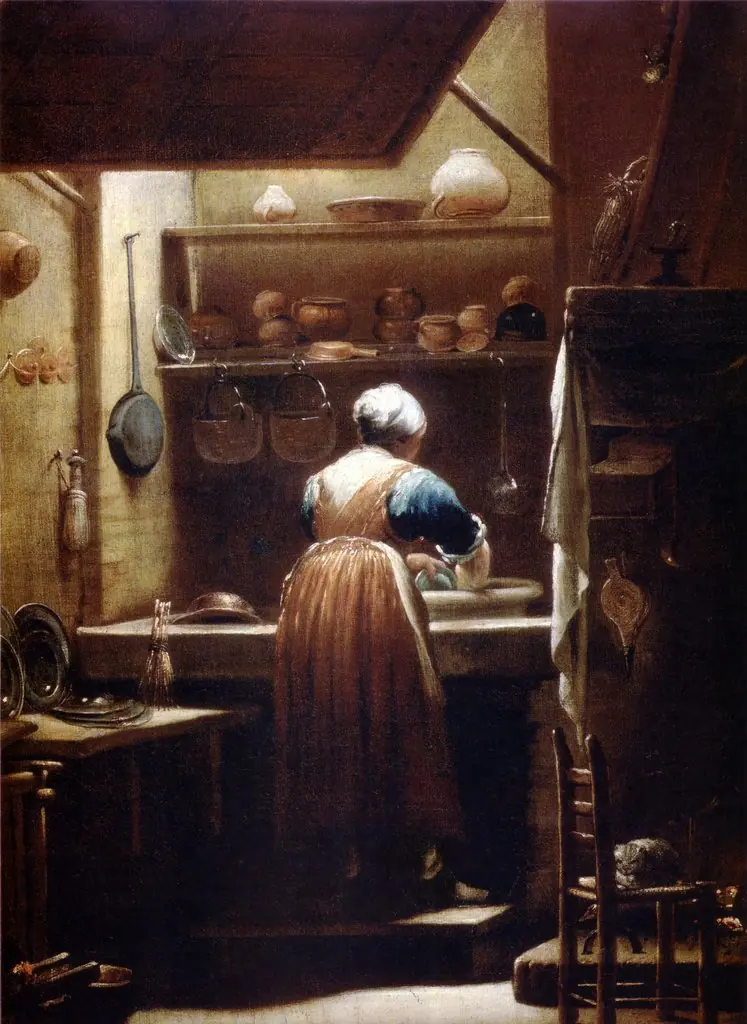
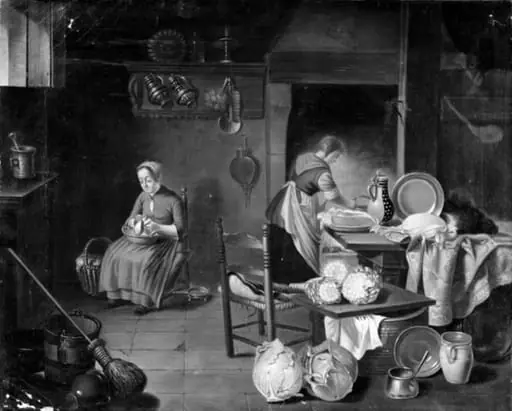
The painting depicts a domestic interior filled with kitchen utensils, a hearth, and household furnishings, emphasizing the everyday material conditions of 19th‑century Flemish domestic life. The arrangement of copper pots, wooden table, and hanging dishes functions symbolically to highlight the labor and domestic responsibilities of the household, while the modest furnishings suggest social modesty. Hubertus van Hove’s careful rendering of texture and light underscores the genre’s focus on realistic representation rather than allegorical narrative.
The work is part of the Rijksmuseum’s collection and was created in 1859, measuring 61.5 cm by 79.5 cm.
Technique & Style
A Flemish Kitchen is executed in oil paint on canvas, a standard combination for mid-nineteenth-century Dutch genre painting. The support measures 61.5 cm in height by 79.5 cm in width, giving the work a horizontal orientation suited to an interior scene. Created in 1859 by Hubertus van Hove, the painting is classified as a genre scene, a category that typically emphasizes careful depiction of domestic activity, period furnishings, and material textures such as metalware, ceramics, and wood.
The medium of oil paint would have allowed van Hove to render the reflective surfaces of copper pots and the varied tones of a Flemish kitchen interior with controlled blending and fine detail. The canvas support, paired with the modest scale, is consistent with the cabinet-picture tradition associated with Dutch genre subjects of this period.
History & Provenance
The painting was created in 1859 by Dutch artist Hubertus van Hove, as confirmed by both the artist’s dated inscription and the work’s cataloged inception year in the Rijksmuseum’s records.
By the time of its registration, the work entered the collection of the Rijksmuseum in Amsterdam, where it has remained as part of the national art holdings managed by the Cultural Heritage Agency of the Netherlands. The museum’s documentation lists the painting under its Dutch title and attributes it to Van Hove, specifying its oil-on-canvas support and dimensions of 61.5 cm by 79.5 cm.
Hubertus van Hove's 1859 oil painting A Flemish Kitchen is held by the Rijksmuseum in Amsterdam. The work is part of the Cultural Heritage Agency of the Netherlands Art Collection, which is managed by the Rijksmuseum. The painting is executed on canvas and measures 61.5 cm in height by 79.5 cm in width. No specific accession number or exhibition history is provided in the available sources.
Legacy
A Flemish Kitchen (1859) exerted modest influence on later genre painting by emphasizing domestic realism and narrative detail, though its reputation remained limited to specialist circles. The work's legacy is chiefly noted through its inclusion in the Rijksmuseum collection, where it continues to inform studies of 19th-century Flemish domestic scenes.
Scholars reference its compositional treatment of kitchen interiors when analyzing the development of genre painting in Northern Europe, citing its precise rendering of domestic space and material culture.
Overview
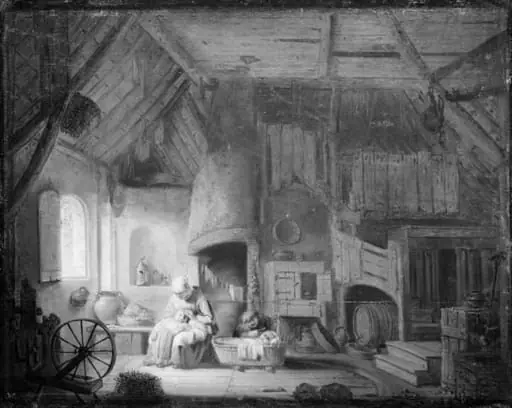
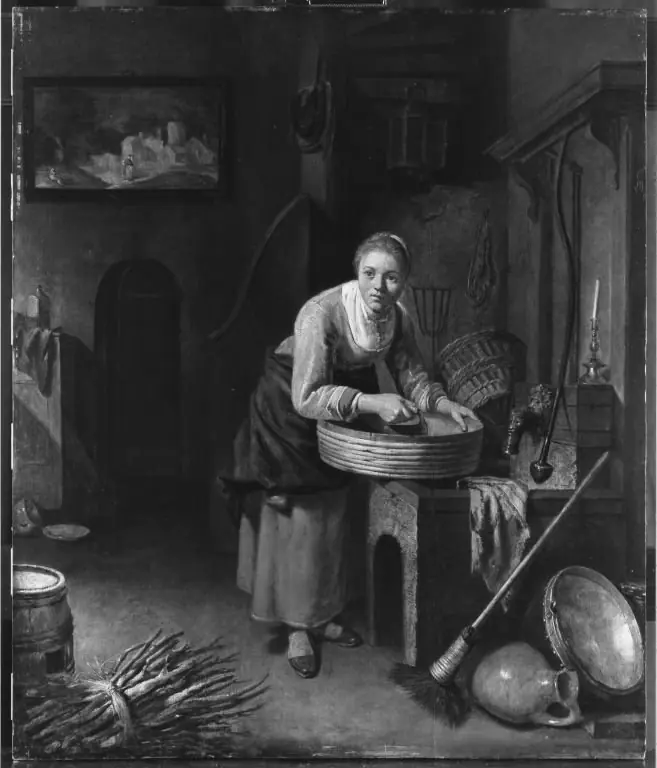
Hubertus van Hove’s oil painting A Flemish Kitchen (1859) portrays a modest interior scene centered on a seated woman. The composition captures a quiet moment in a domestic setting, illuminated by daylight that filters through a left‑hand window, while surrounding walls are lined with everyday objects such as plates and utensils.
Artist & collection
Artist
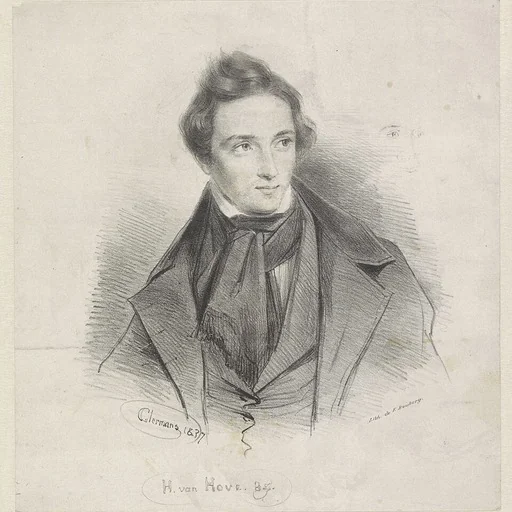
Hubertus (Huib) van Hove (13 May 1814, in The Hague – 14 November 1865? Antwerp) was a Dutch painter, the son of Bartholomeus van Hove (1790–1880) and a teacher of some artists who became members of the Hague School.…