Artwork
Flowers in an Urn
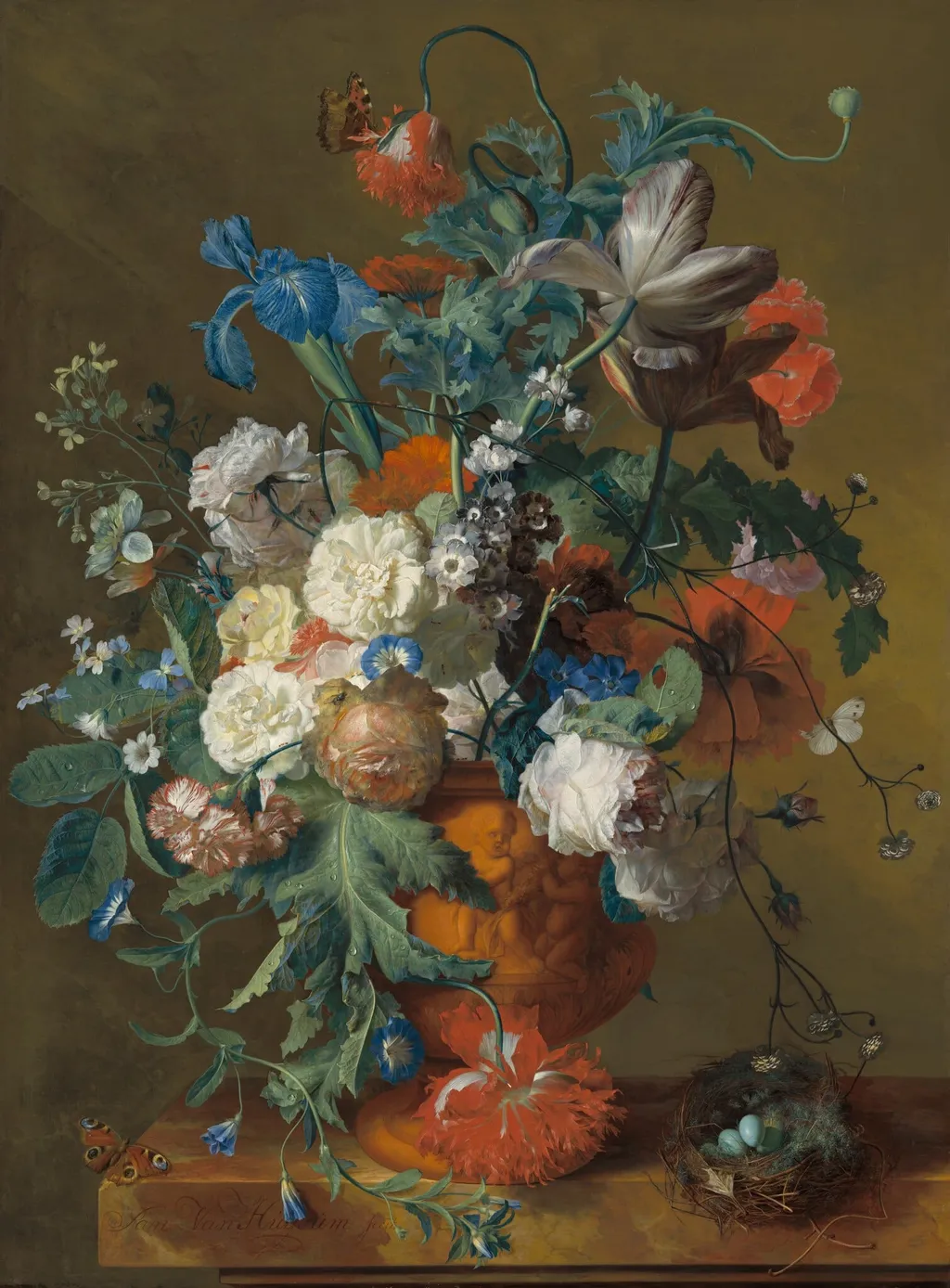
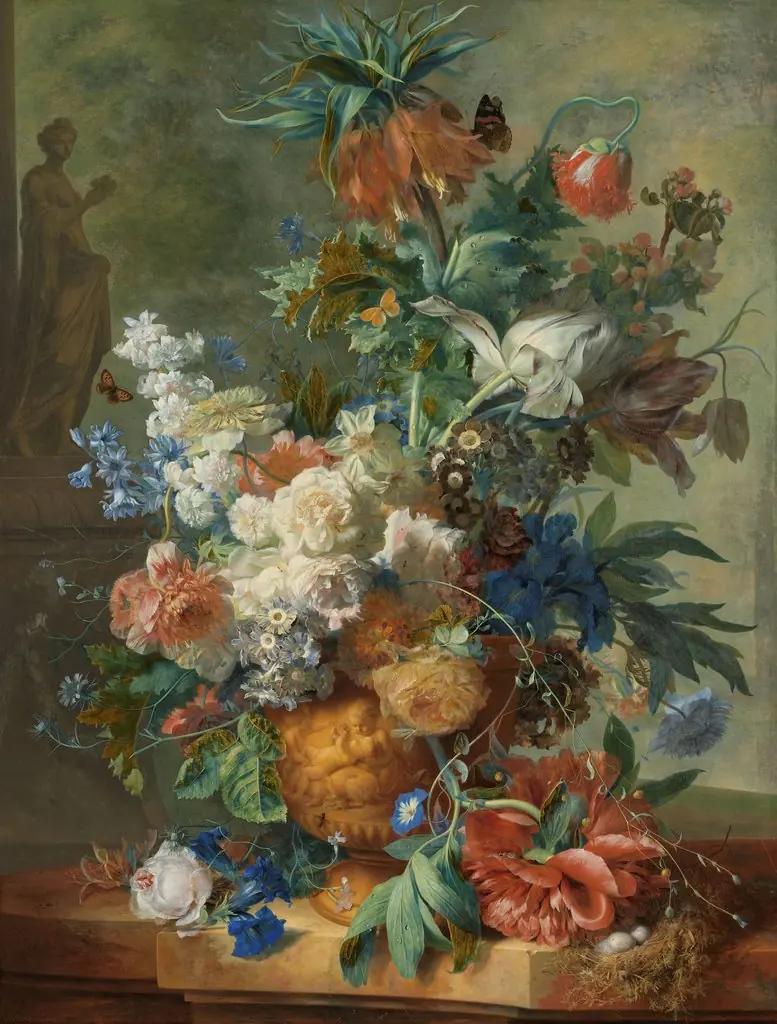
Flowers in an Urn is an oil painting by the Baroque artist Jan van Huysum. It dates from 1721 and is held in the collection of the National Gallery of Art.
- Inscription
- Inscribed:lower left on front of marble tabletop: Jan Van Huysum fecit
About this work
Three pale blue eggs sit in a bird's nest at the edge of a marble tabletop, beside a terra-cotta vase of cupids that Jan van Huysum filled with roses, tulips, and morning glories. Painted around 1720, this panel at the National Gallery of Art marks the moment he abandoned the dark backgrounds of his youth for the pale greenish-ocher tones of his mature style.
Subject & Meaning
The urn itself functions as both a classical decorative vessel and a neutral container that focuses attention on the natural forms.
The painting depicts a still life composition featuring an assortment of flowers arranged in an urn, including Dianthus caryophyllus (carnation), Iris, and rose. Additional motifs include a bird's nest and a butterfly. These elements, blooms of different species, a nest, and an insect, were conventional components in Dutch flower still lifes of the period, and the work fits squarely within the still-life tradition.
The specific iconographic significance is not recorded in the available sources; however, the inclusion of a bird's nest and a butterfly alongside ephemeral blossoms typically alludes to the brevity of life and the cycle of nature, a common theme in vanitas still lifes. The urn itself functions as both a classical decorative vessel and a neutral container that focuses attention on the natural forms.
History & Provenance
Jan van Huysum dated this still life to 1720. Its early provenance includes the Jacques Goudstikker collection in Amsterdam by 1919–1920 and a dealer named Vas Diag before 1924. The Leggatt Brothers, London, then owned the painting; they sold it to Lord Claud Hamilton on 21 July 1924.
After Lord Hamilton’s death, the work passed to his widow, who consigned it for sale at Christie’s, London, on 28 November 1975 (lot 23). From the Alexander Gallery, London, the National Gallery of Art, Washington, purchased it on 18 February 1977. No commission is recorded; the work is an independent still life.
The painting is in the collection of the National Gallery of Art (NGA) in Washington, D.C. It was acquired by the NGA on 18 February 1977. No inventory or accession number is provided in the available sources, and no exhibition history is recorded.
Overview
Jan van Huysum's Flowers in an Urn, an oil on panel from the early 1720s, exemplifies a pivotal moment in the artist's career. This painting showcases his transition from the darker compositions of his early training to the lighter, more decorative approach that would define his mature style. The work features an elaborate floral arrangement, meticulously rendered with a focus on naturalistic detail, reflecting the technical skill that made him a prominent still-life painter in eighteenth-century Europe.
Technique & Style
This painting marks Van Huysum's departure from the dark backgrounds characteristic of his early work, embracing instead a luminous, pale greenish-ocher tonality. His meticulous technique is evident in the precise depiction of dewdrops, insects on petals, and the varied textures of the flowers. Infrared analysis reveals an underlying pilaster and visible pentimenti around the poppies, indicating a dynamic compositional process and careful revisions during its creation.
Own this work as a print
Artist & collection

Artist
Jan van Huysum (or Jan van Huijsum) (15 April 1682 – 8 February 1749) is the most notable member of the Van Huysum family of artists working in Dutch Golden Age of the 17th and 18th centuries; "by common consent, Jan…

- A Bunch of Flowers
 Flowers
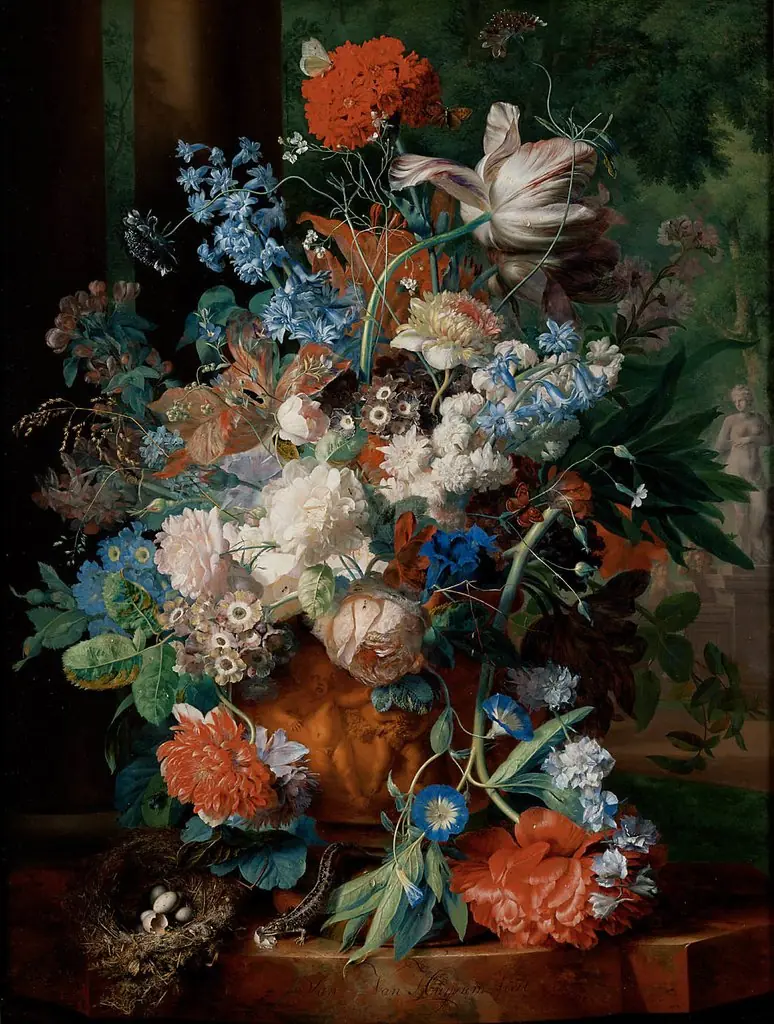 Flower still life in a terracotta vase, for two columns and a park landscape with a statue of Venus
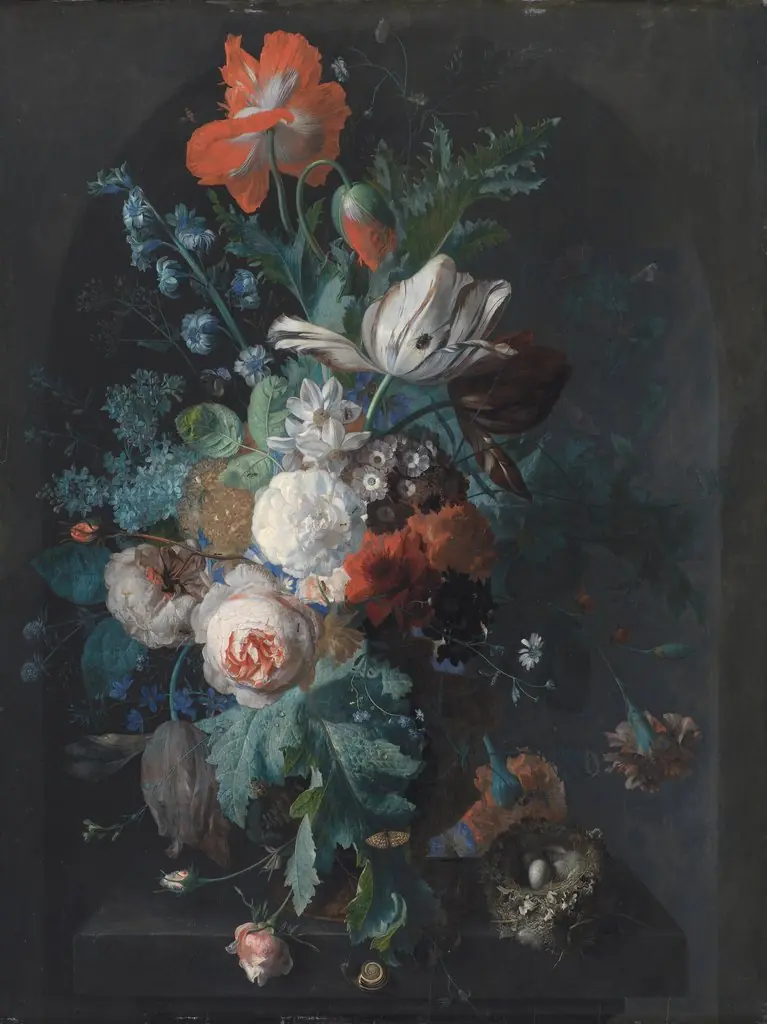 A Vase with Flowers
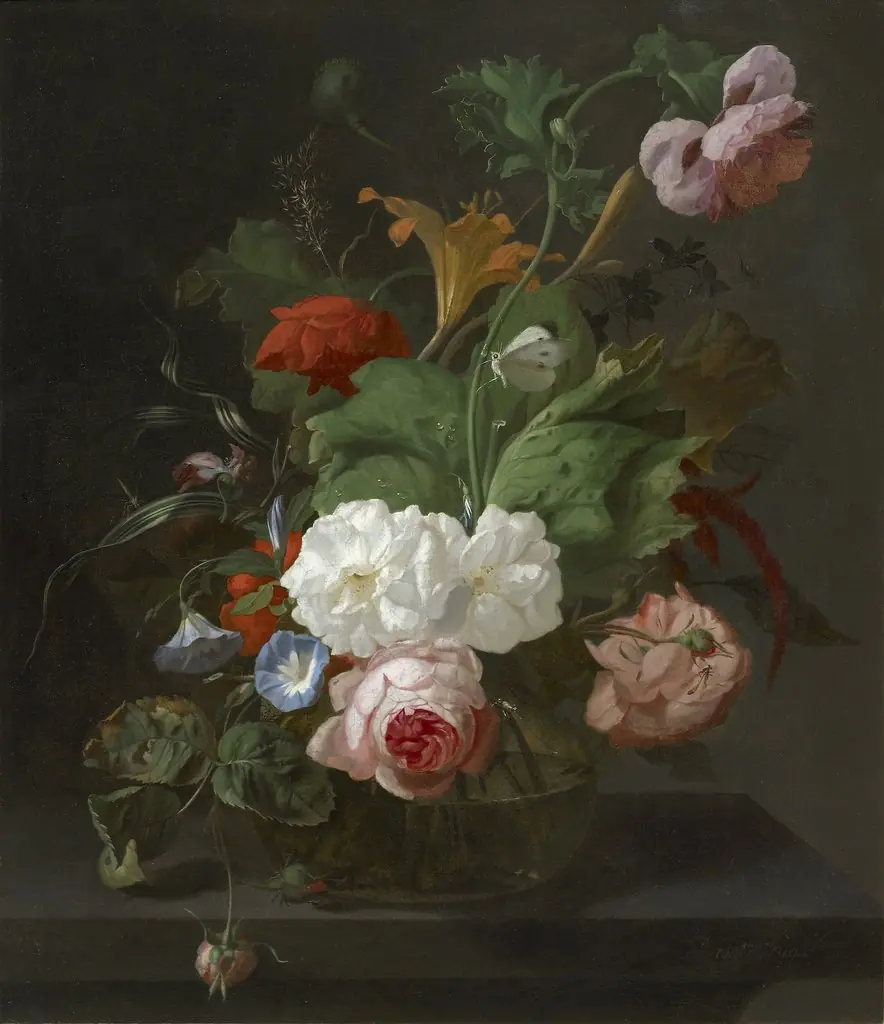 Flowers in a Glass Vase
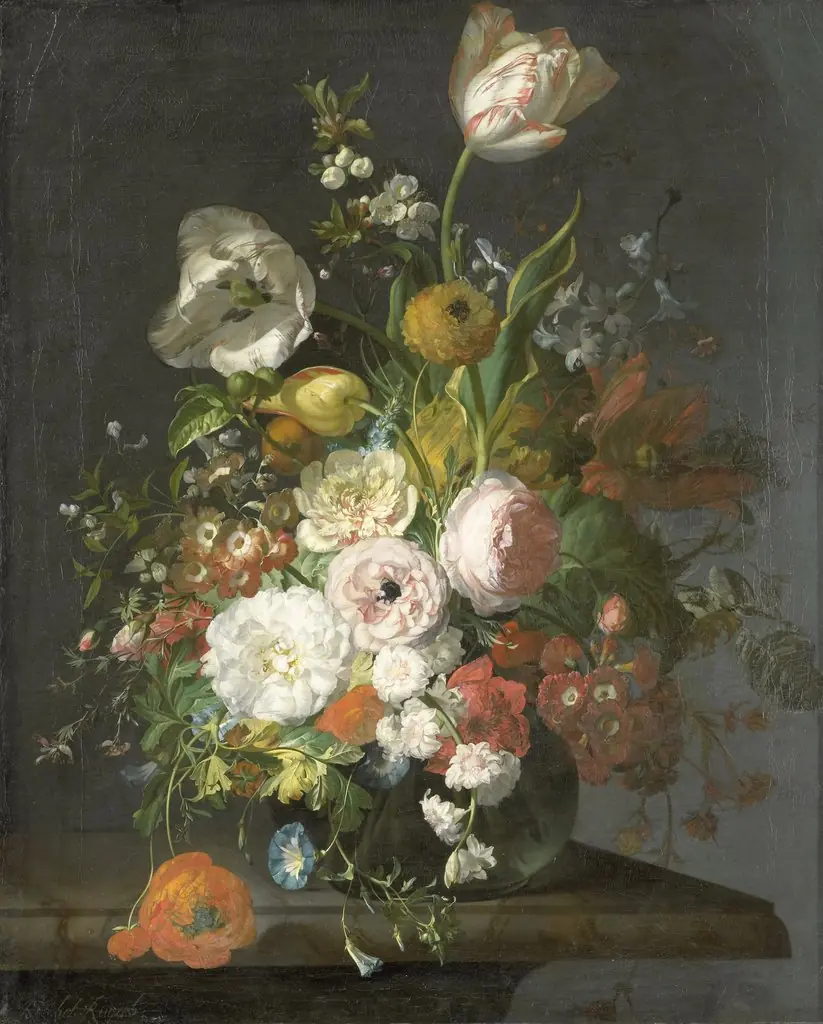 Still Life with Flowers in a Glass Vase
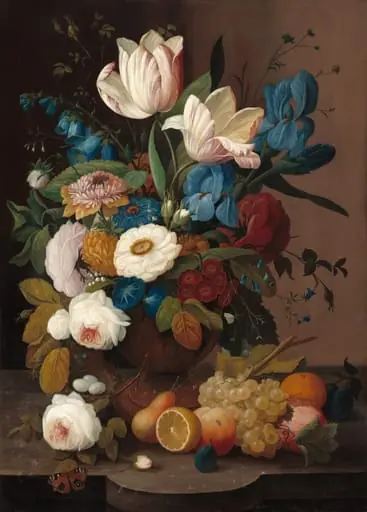 Still Life, Flowers, and Fruit
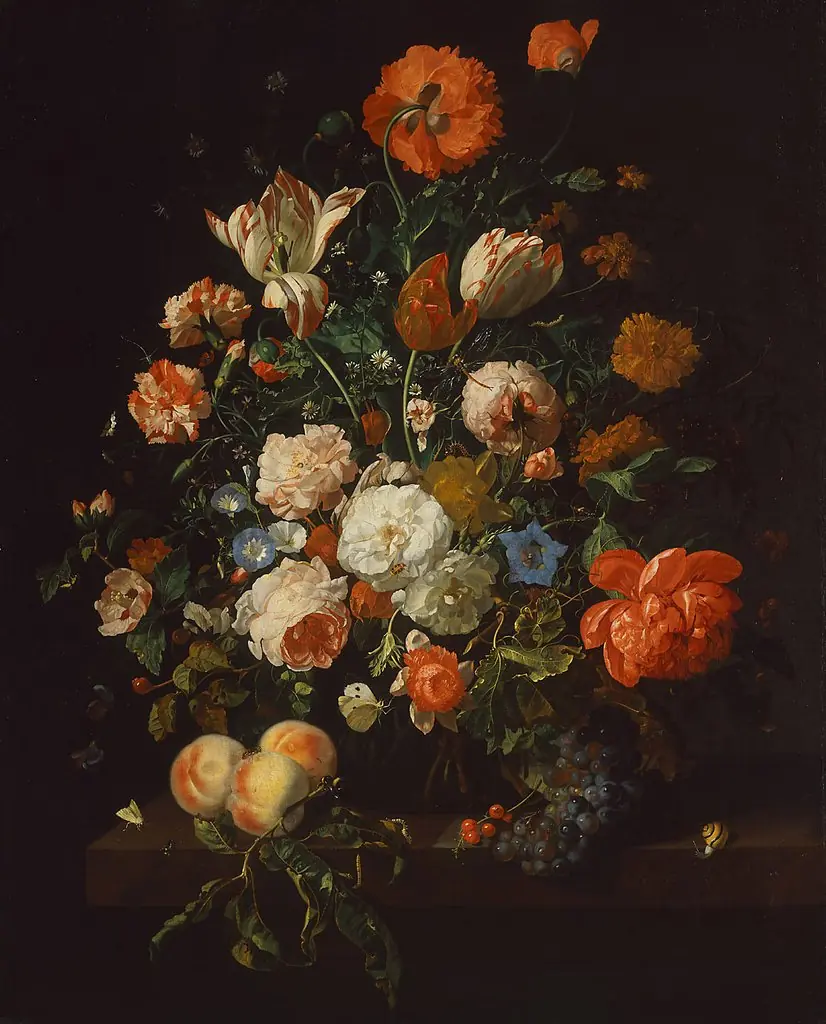 Vase with Flowers
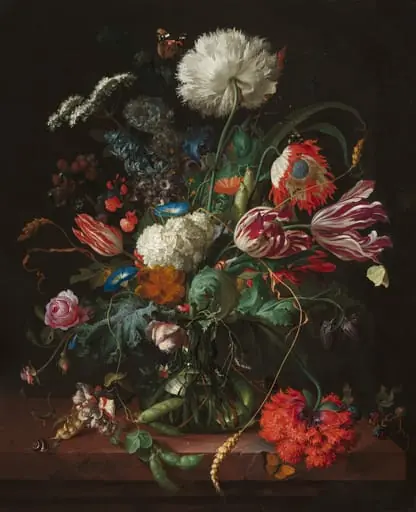 Vase of Flowers
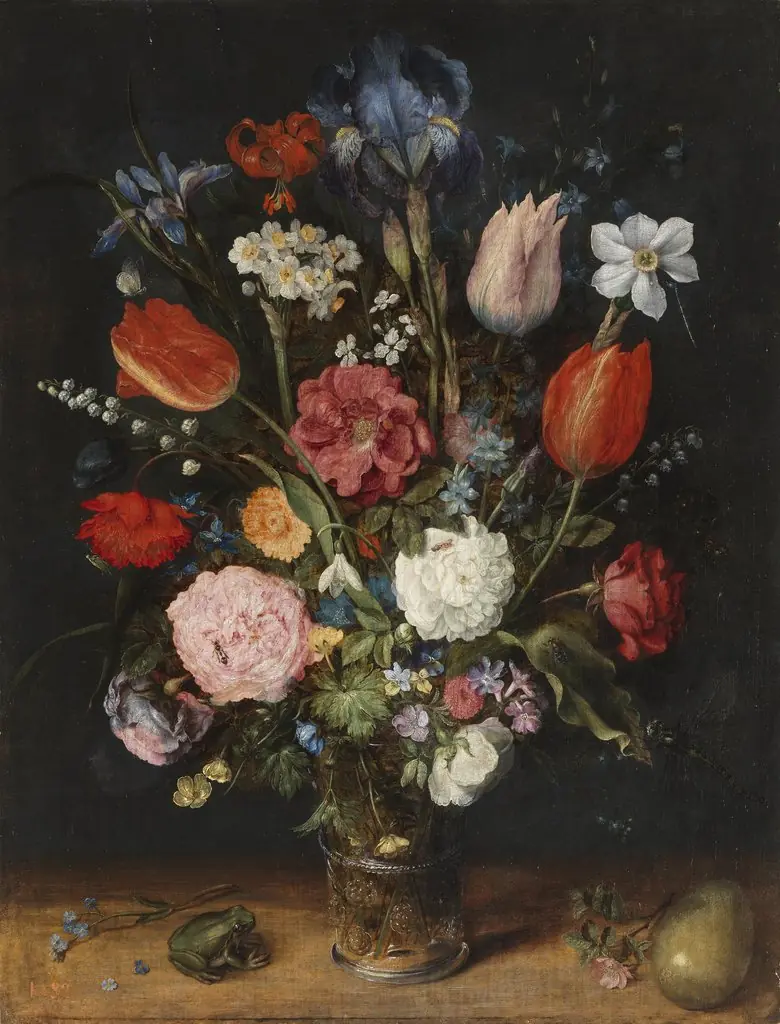 Vase of Flowers
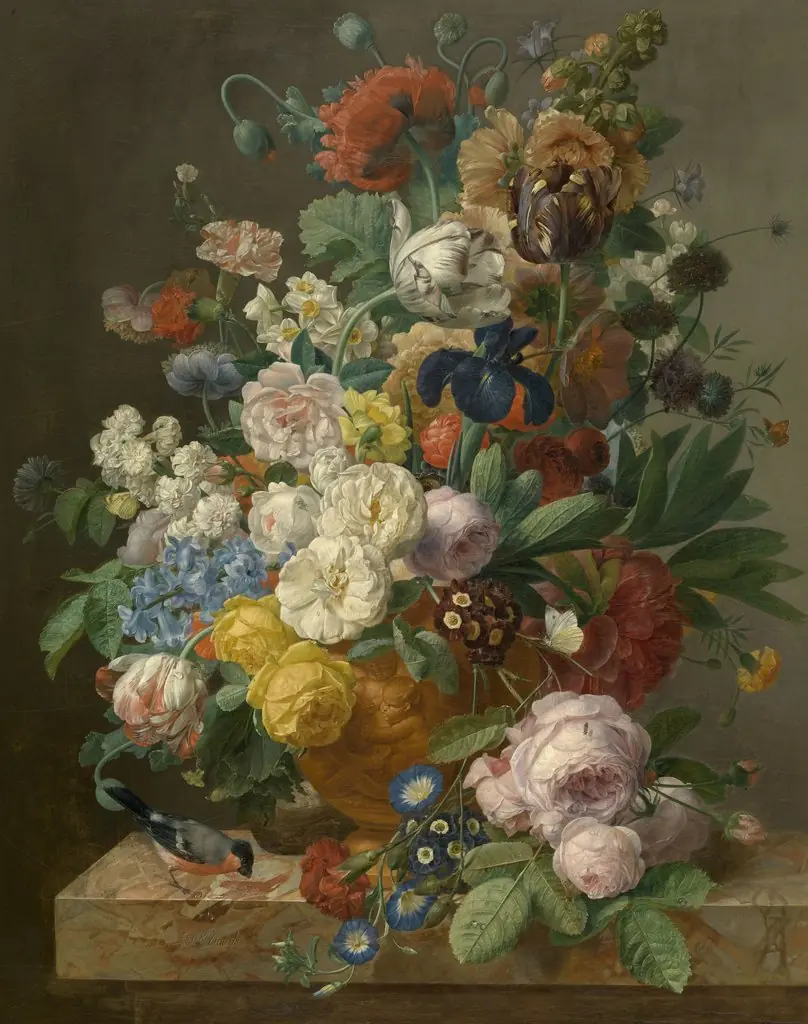 Bouquet of Flowers in a Sculpted Vase
 Studied in the Dutch Golden Age course