Artwork
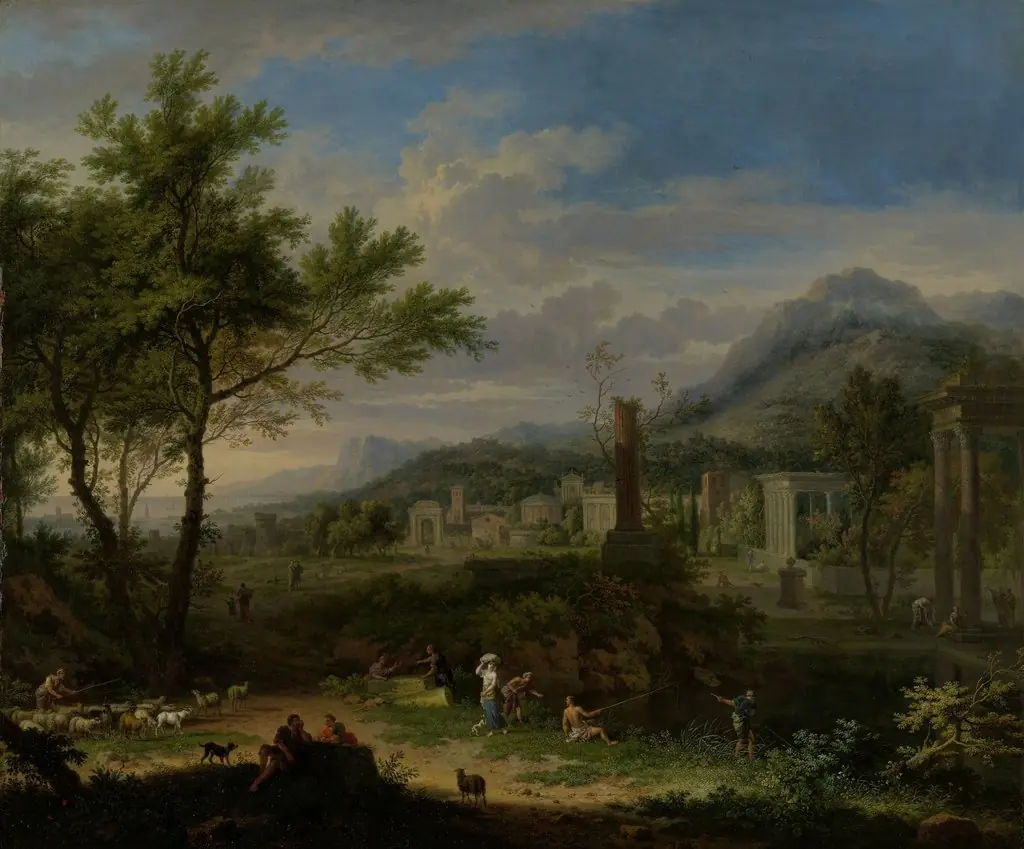
Arcadian Landscape with Fishermen
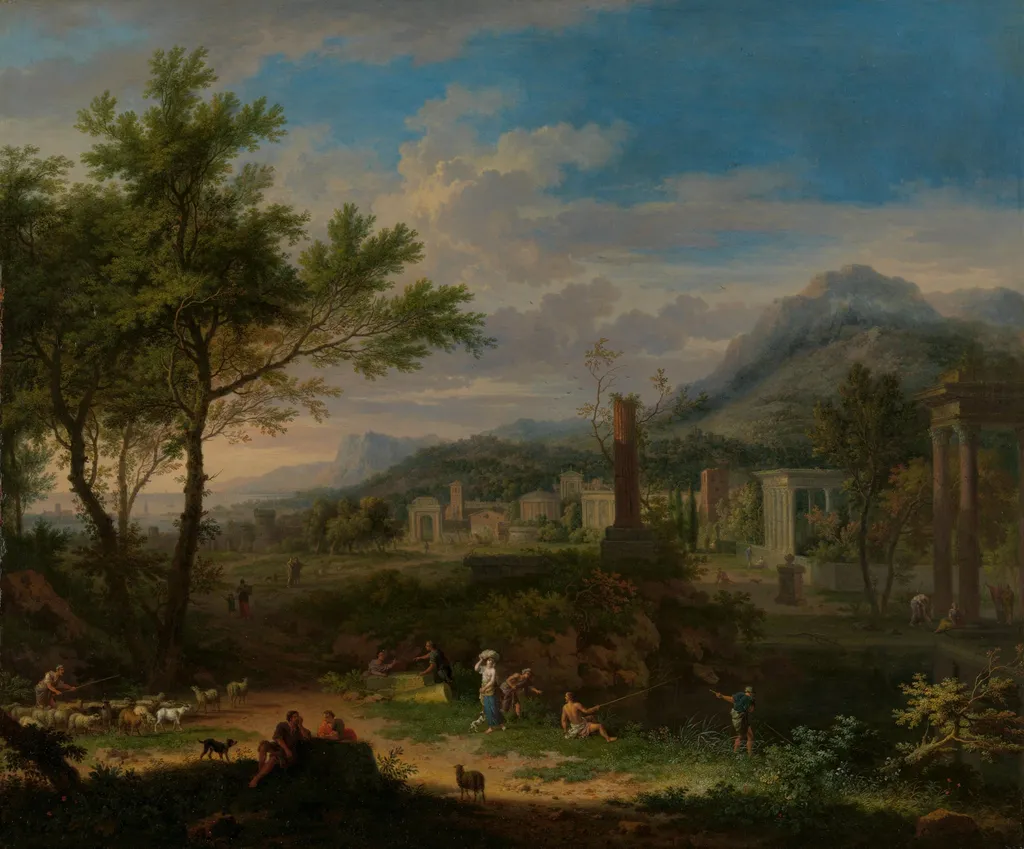
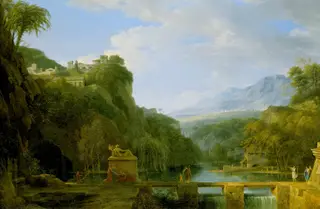
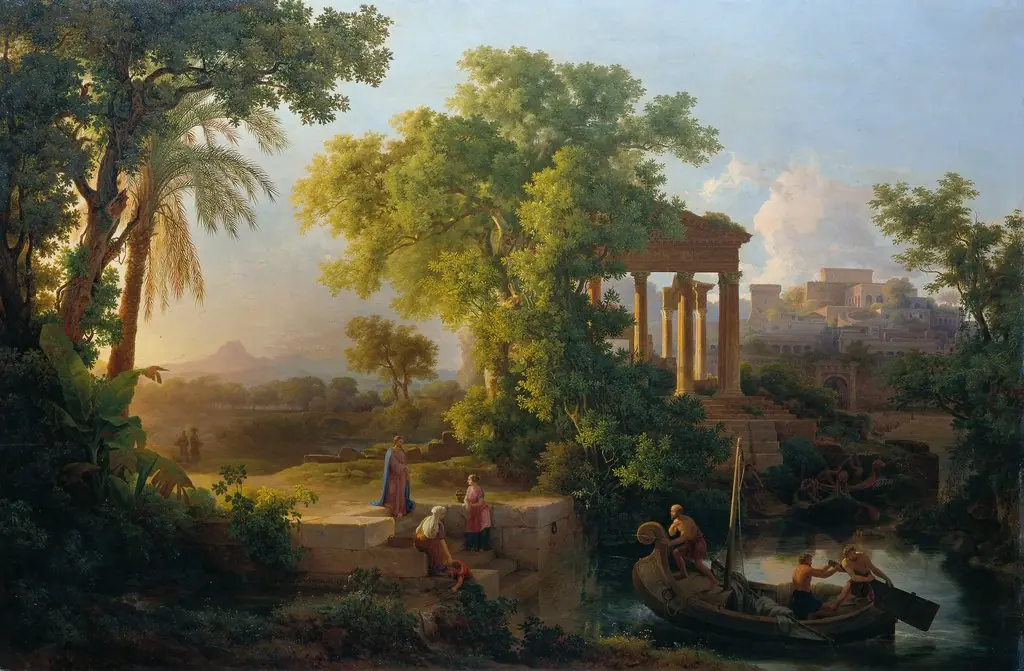
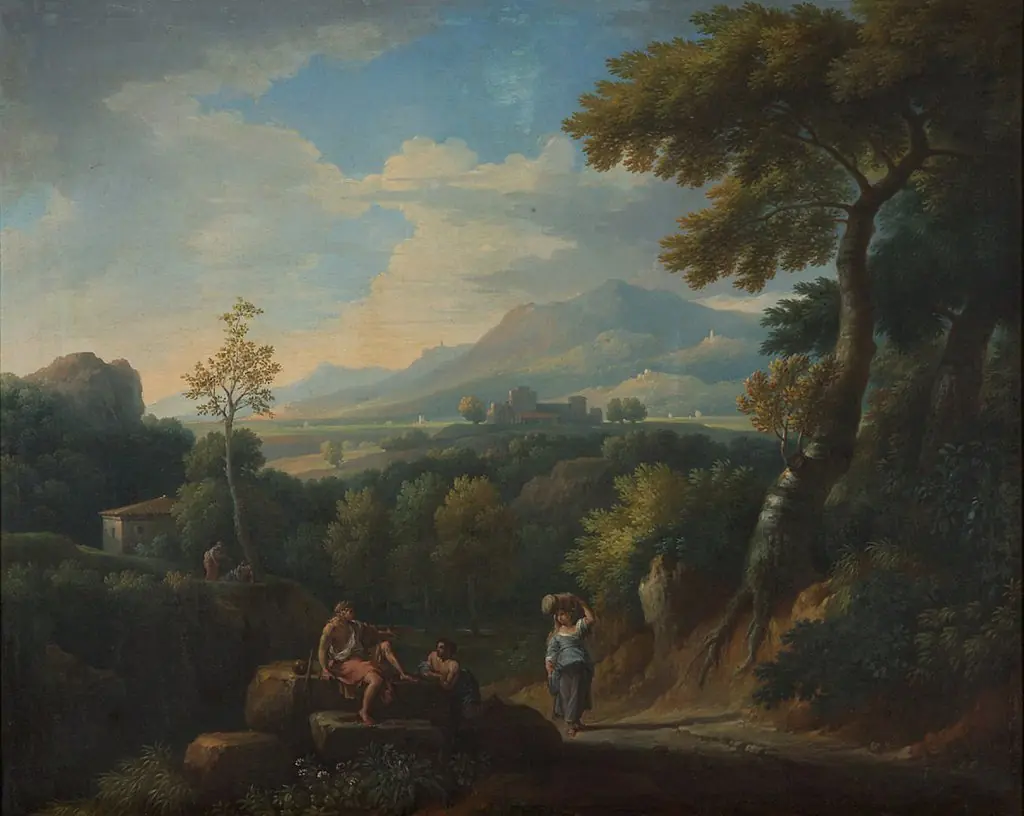
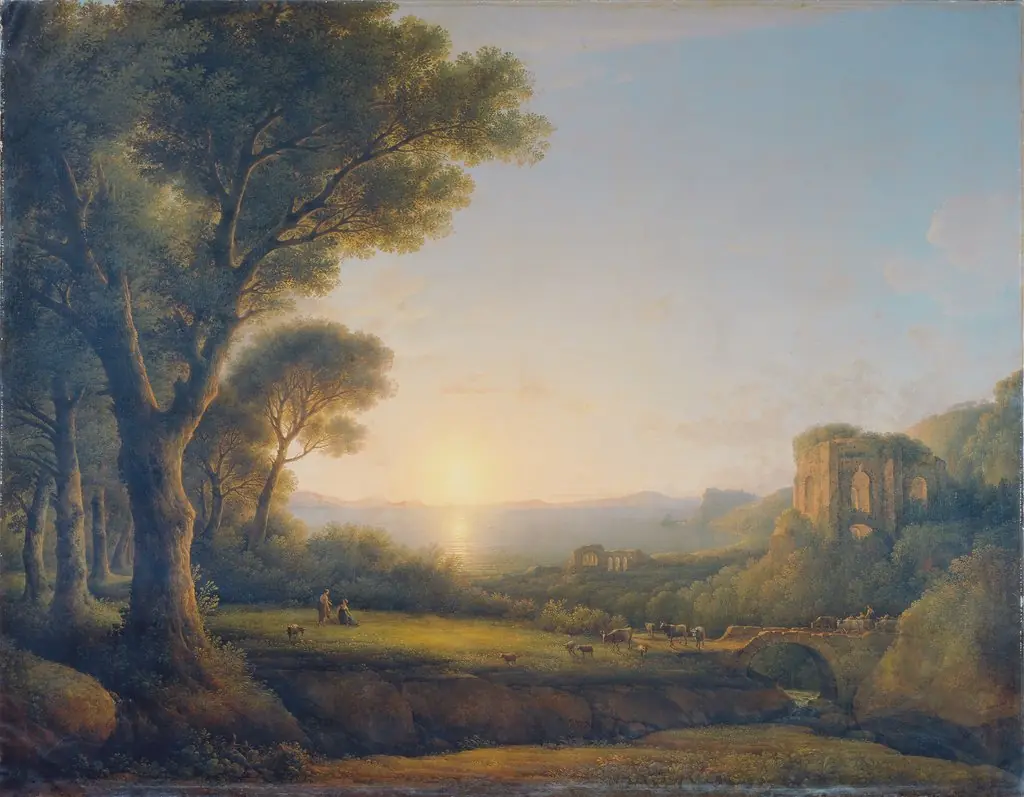
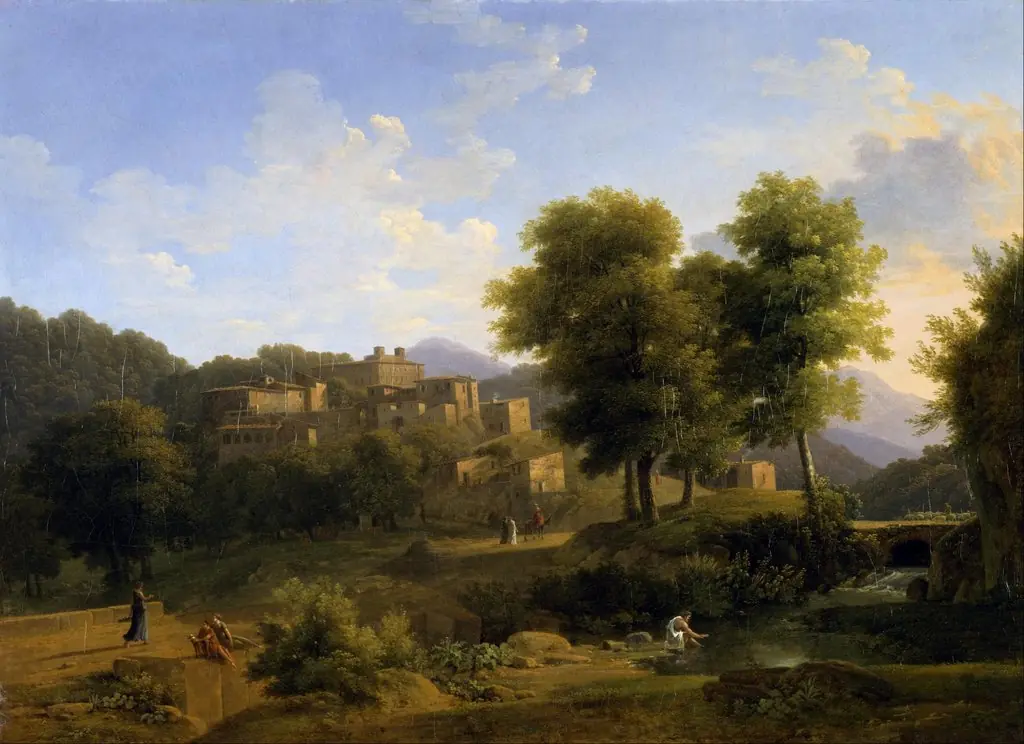
Arcadian Landscape with Fishermen is an unspecified painting by the Rococo painting artist Jan van Huysum. It dates from 1700 and is held in the collection of the Rijksmuseum. The work consists of two compact paintings executed on copper plates.
About this work
Technique & Style
Arcadian Landscape with Fishermen is an oil painting on copper, measuring 57 by 68 centimeters.
Arcadian Landscape with Fishermen is an oil painting on copper, measuring 57 by 68 centimeters. Jan van Huysum employed a layered technique, initially rendering foliage in blue before applying brown or green washes, a method inspired by Otto Marseus van Schrieck. He worked from life, assembling fresh-cut flowers over extended periods, sometimes taking a year or more to complete a piece, using oak or copper panels rather than canvas.
The composition features a pastoral riverscape with classical ruins and distant mountains, rendered with glossy smoothness and lifeless trees, reflecting his later landscape phase. Palette refinement and intricate textural detail characterize his style, particularly in floral still lifes, where he achieved 'unerring elegance of composition' and subtle transitions from light to shadow.
History & Provenance
The painting is held by the Rijksmuseum in Amsterdam.
Its inventory details are: oil on copper (metal), 57 × 68 cm, titled "Paysage arcadien avec des pêcheurs" (Arcadian Landscape with Fishermen). No specific accession or inventory number is provided in the sources, and no exhibition history is recorded.
Legacy
Arcadian Landscape with Fishermen belongs to a small group of van Huysum’s idealized landscapes, whose reputation among later critics has been mixed. Nineteenth‑century writers judged the larger examples “weak and ineffective,” praising only their “tender touches” and “minuteness of detail” in smaller panels. By contrast, van Huysum’s flower pieces, long the measure of his fame, set a durable standard: his compositions guided the main trends in flower painting for sixty to eighty years after his death.
His arcadian scenes, though fewer in number, were copied and echoed by followers such as Jan van Os and his son Georgius Jacobus Johannes van Os, Gerard and Cornelis van Spaendonck, Wybrand Hendriks, and Johannes de Bosch, testifying to a limited but persistent influence.
Overview
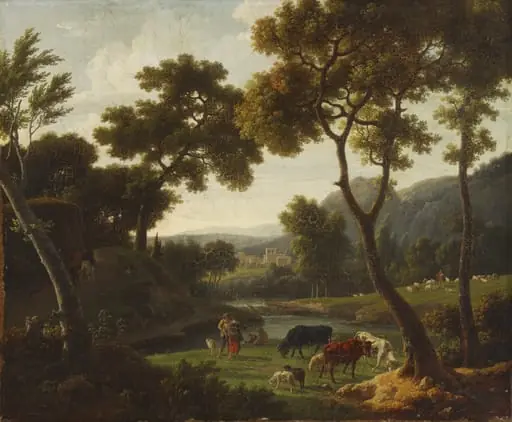
The work consists of two compact paintings executed on copper plates. Each panel presents a tranquil, pastoral setting with gently rolling hills, a classical temple, and figures in ancient attire gathered near a river. Their modest dimensions and polished surfaces create a miniature, self‑contained vision of an idealized countryside.
Subject & Meaning
Both scenes depict an Arcadian landscape, a genre that idealizes rural life as harmonious and timeless. The inclusion of a temple and figures dressed in classical garb evokes the aesthetic of antiquity, suggesting a nostalgic yearning for a peaceful world governed by order and natural beauty.
Own this work as a print
Artist & collection

Artist
Jan van Huysum (or Jan van Huijsum) (15 April 1682 – 8 February 1749) is the most notable member of the Van Huysum family of artists working in Dutch Golden Age of the 17th and 18th centuries; "by common consent, Jan…