Artwork
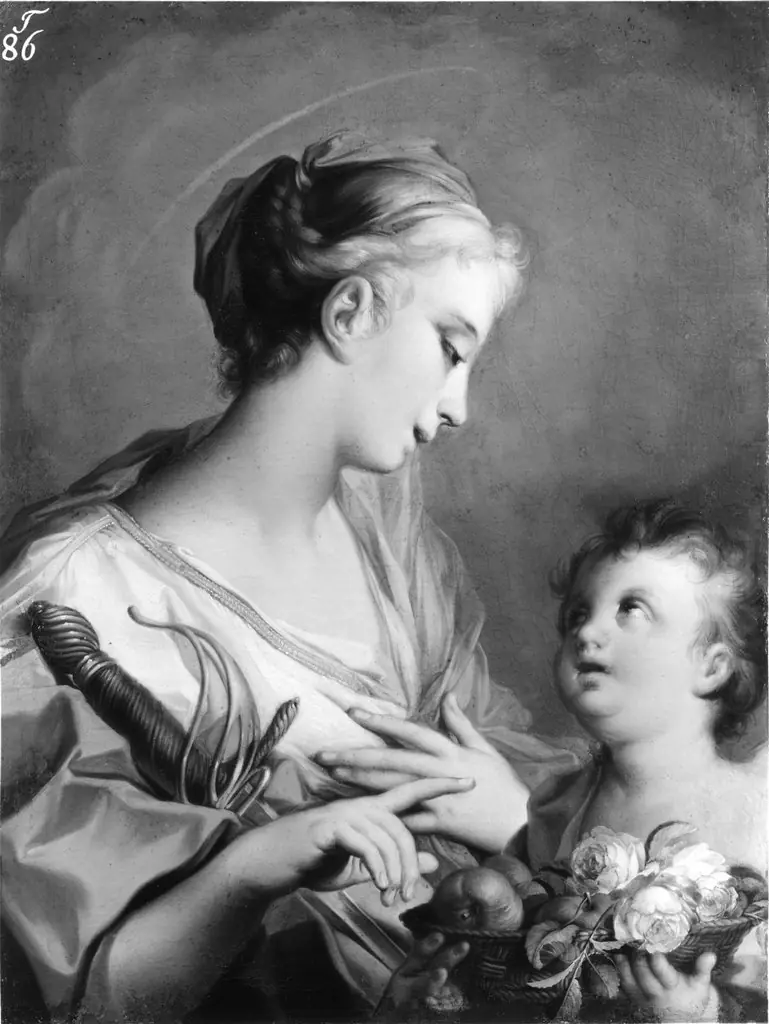
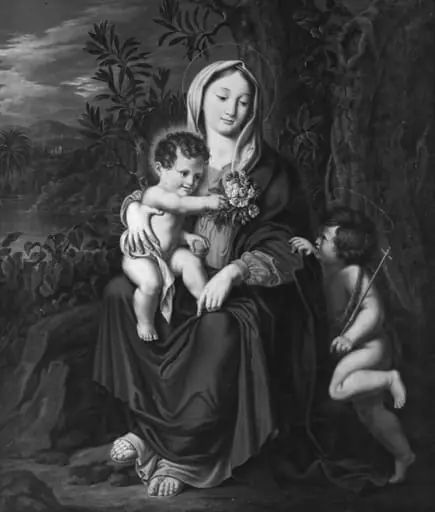
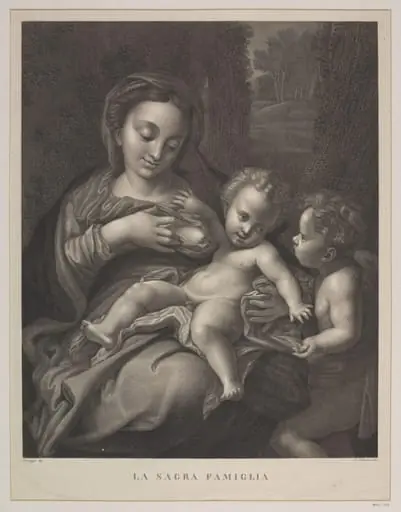
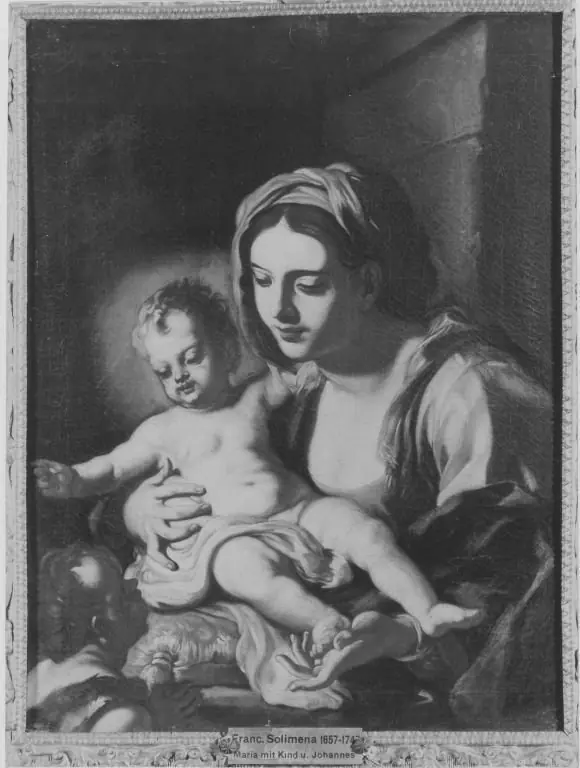
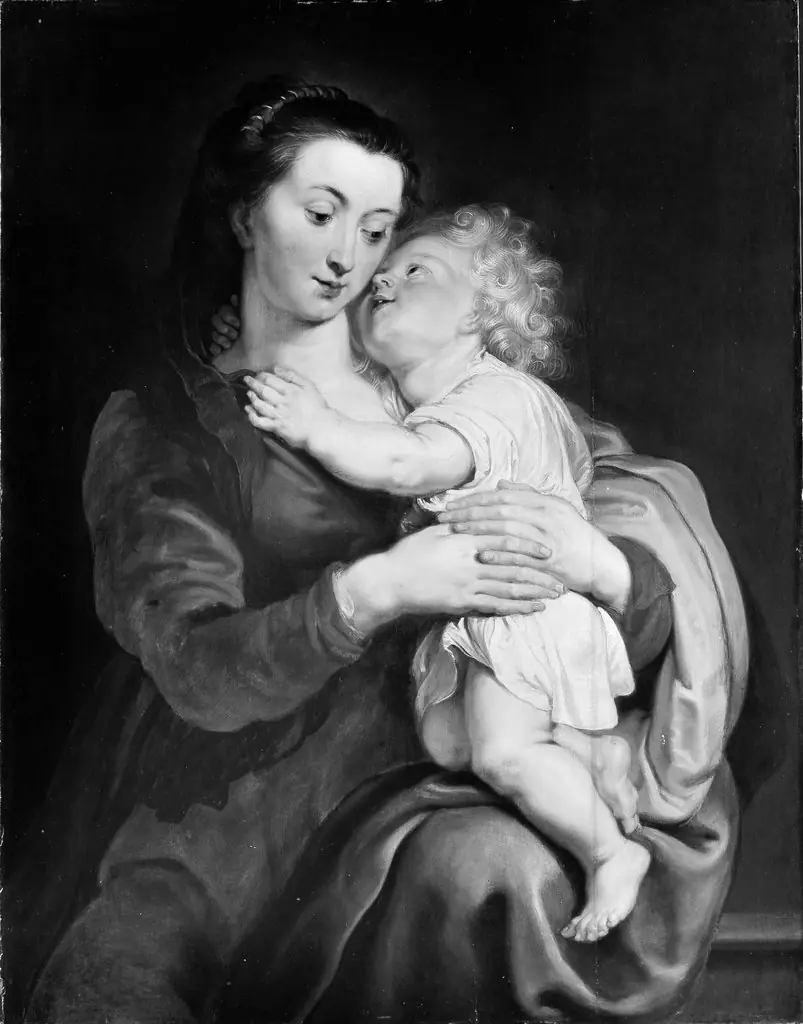
Maria mit Kind und Johannesknaben
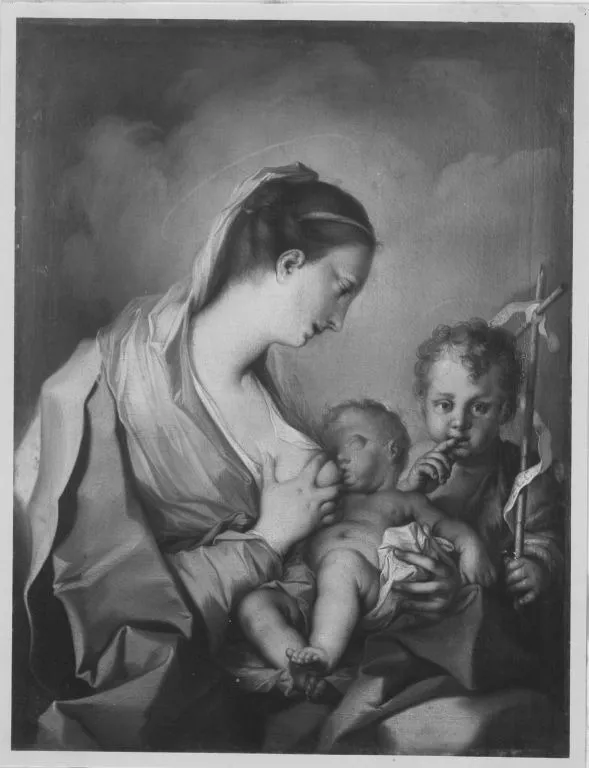
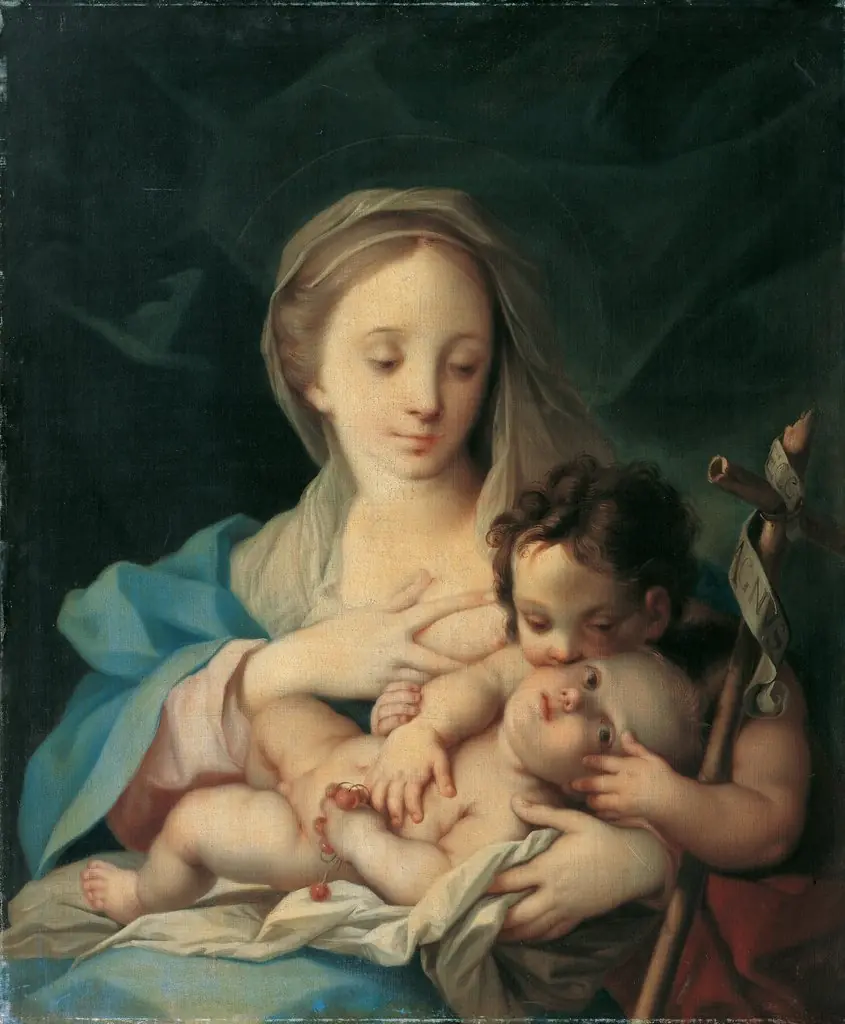
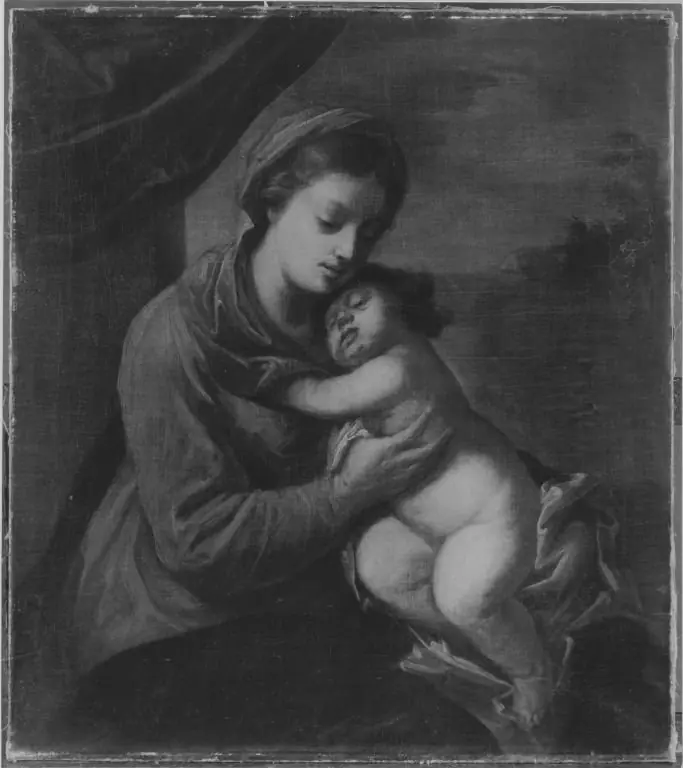
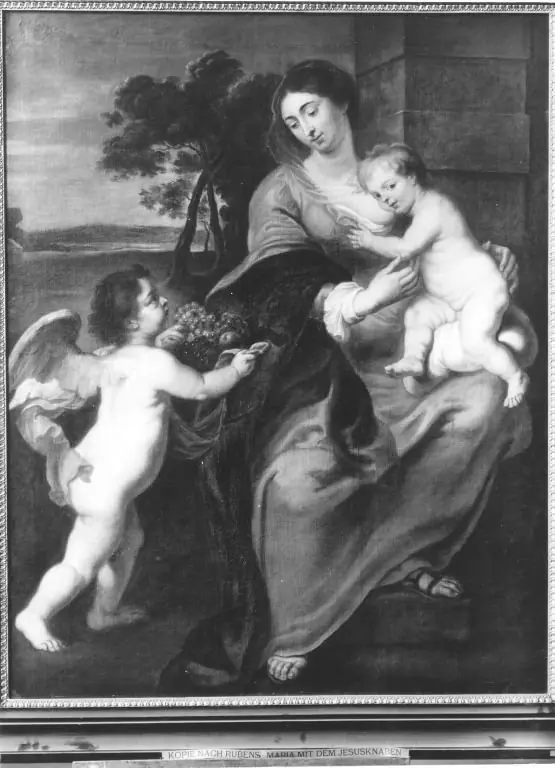
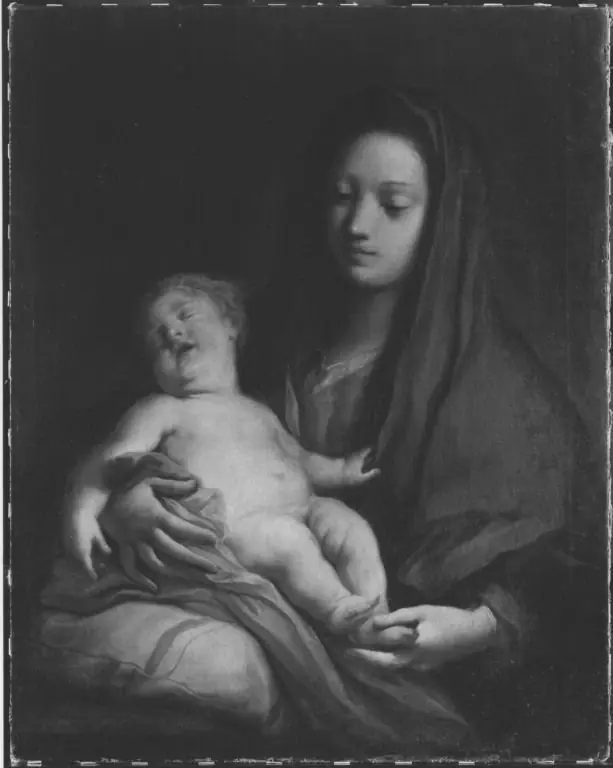
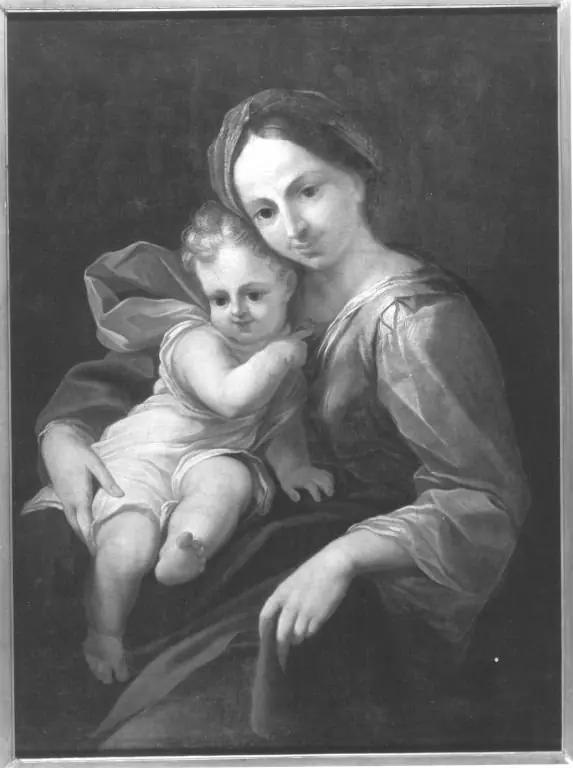
Maria mit Kind und Johannesknaben is an unspecified painting by Ignazio Stern. It dates from 1723 and is held in the collection of the Bavarian State Painting Collections.
About this work
Subject & Meaning
Ignazio Stern's painting depicts the Madonna and Child, a central theme in religious art.
Ignazio Stern's painting depicts the Madonna and Child, a central theme in religious art. The work specifically portrays the Virgin Mary holding the Christ Child. While the title references the young John the Baptist (Johannesknaben), the available documentation explicitly confirms the depiction of Mary and Jesus as the primary subjects.
As a piece of religious genre painting, the image serves as a devotional representation of the holy figures, consistent with traditional Catholic iconography found in the Bavarian State Painting Collections.
Technique & Style
Ignazio Stern employs oil on panel to render Maria mit Kind und Johannesknaben, a religious composition depicting the Virgin Mary with the infant Jesus and the young John the Baptist. The work measures 63.2 cm in height and 48.2 cm in width, reflecting a devotional style typical of 18th‑century Bavarian religious art. Its surface displays delicate brushwork and nuanced chiaroscuro that model the figures with soft transitions and fine detailing.
The painting is housed in the Alte Pinakothek, where it is preserved with careful handling to maintain its structural integrity and visual clarity.
History & Provenance
The work is held by the Bavarian State Painting Collections at the Alte Pinakothek in Munich. Its inventory number is 8611.
The painting has been part of the Alte Pinakothek's exhibition since its acquisition and was included in the 1990 exhibition "Ignaz Stern: Gemälde und Zeichnungen".
Legacy
Ignazio Stern's 17th-century altarpiece Maria mit Kind und Johannesknaben has shaped devotional art through its intimate portrayal of the Madonna and Child alongside Saint John the Baptist as a cherubic boy. The composition's emphasis on tender interaction between figures influenced Baroque religious painting across southern Germany, particularly within the workshops connected to the Bavarian court. Its enduring presence in public collections has cemented its status as a representative example of the region's sacred imagery, frequently cited in studies of Counter-Reformation visual strategies.
Overview
Ignazio Stern’s early eighteenth‑century canvas, titled Maria mit Kind und Johannesknaben, presents a quiet devotional scene. Executed around 1723, the oil painting measures modestly and now belongs to the Alte Pinakothek’s holdings. The work reflects the Baroque sensibility of its creator, an Austrian‑born painter who spent most of his professional life in Rome.
Context
The work aligns with the Counter‑Reformation emphasis on intimate, emotionally resonant religious imagery. By portraying Mary, the Christ Child, and John together, Stern follows a tradition popular among Baroque artists who sought to make sacred narratives accessible to viewers through relatable, humanized figures set against dramatic lighting.
Artist & collection
Artist
Ignazio Stern (or Ignaz Stern) (January 17, 1679 – May 28, 1748), born in Mauerkirchen in Upper Austria in the Archduchy of Austria, was a Baroque painter who worked in Rome, dying there in 1748.