Artwork
Saint Thomas Aquinas
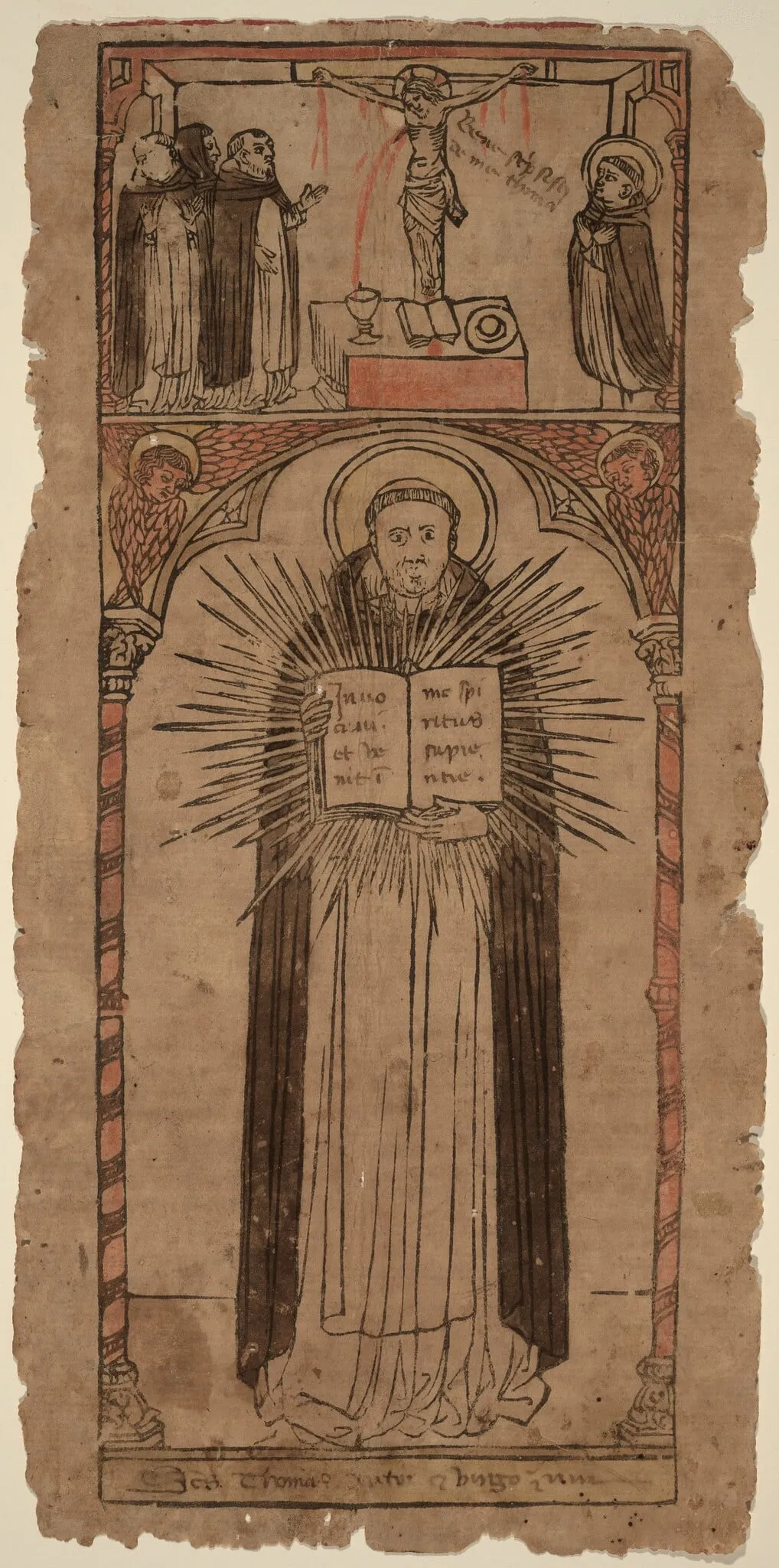
Saint Thomas Aquinas is an ink print by the Renaissance artist Italian 15th Century. It dates from 1450 and is held in the collection of the National Gallery of Art.
- Inscription
- Inscribed:at upper right, inscribed in black ink: Bene scripsisti de me Thoma (You have written well about me, Thomas); at center, on pages of open book, inscribed in black ink: Invocavi et venit in me spiritus sapientie (I called upon God, and the spirit of wisdom came upon me); at bottom, inscribed in black ink: Sanctus Thomas doctor et virgo [translations from Parshall, Peter, and Rainer Schoch. _Origins of European Printmaking: Fifteenth-Century Woodcuts and Their Public._ Washington, DC: National Gallery of Art, 2005, p. 315.]
About this work
Overview
The print 'Saint Thomas Aquinas' is a hand-colored woodcut with an inscription added in pen and ink. It depicts the Catholic saint in a straightforward composition.
Technique & Style
The artwork is a woodcut, a technique involving carving a design into wood before printing. The image is enhanced with hand-coloring in dark brown, orange, and yellow, which adds visual emphasis to the scene.
Subject & Meaning
The subject of the print is Saint Thomas Aquinas, a significant figure in Catholicism. The simple setting in which he is depicted may underscore his spiritual or intellectual focus.
Artist & collection

Artist
An anonymous Italian engraver from the 1490s carved images that could be peeled apart like paper dolls.

![The Destruction of the Egyptian Idols [verso], by Italian 15th Century](https://artifactworldgallery.com/img/italian-15th-century--the-destruction-of-the-egyptian-idols-verso--646d3c2b8098cfee-w320.webp)
![The Flight into Egypt [recto], by Italian 15th Century](https://artifactworldgallery.com/img/italian-15th-century--the-flight-into-egypt-recto--8f4d5275d7f90f98-w320.webp)
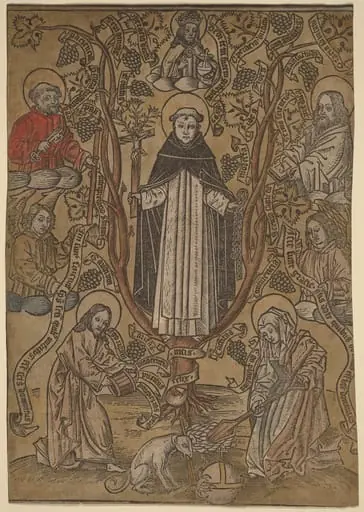 The Genealogical Tree of the Dominicans
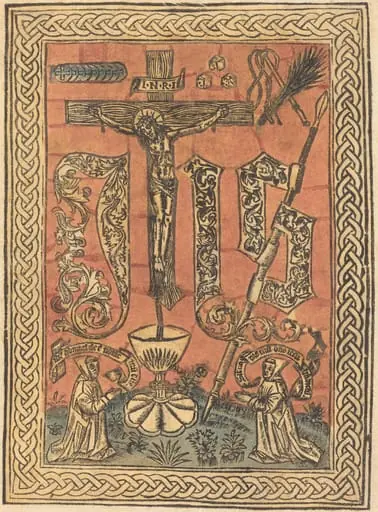 The Sacred Monogram
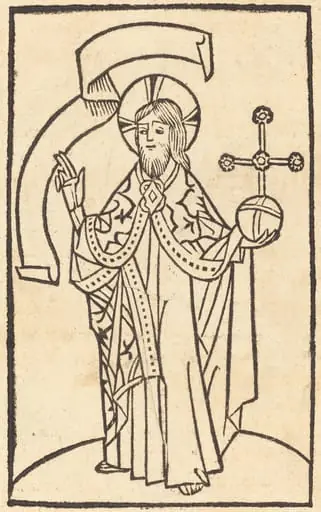 Christ as Salvator Mundi
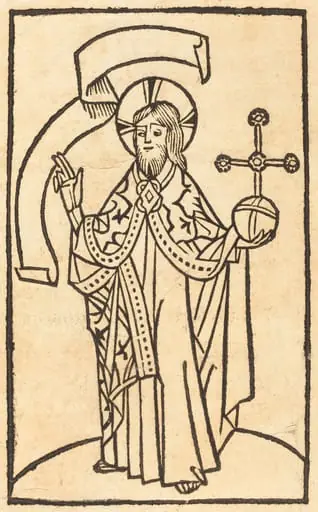 Christ as Salvator Mundi
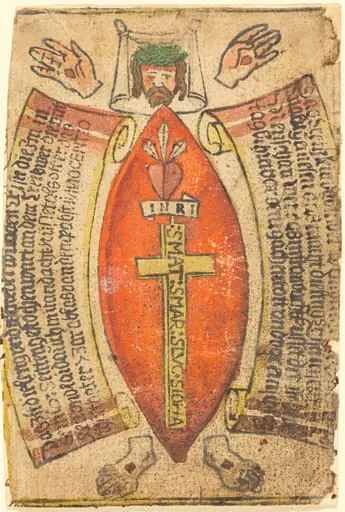 The Measure of the Side Wound and the Body of Christ
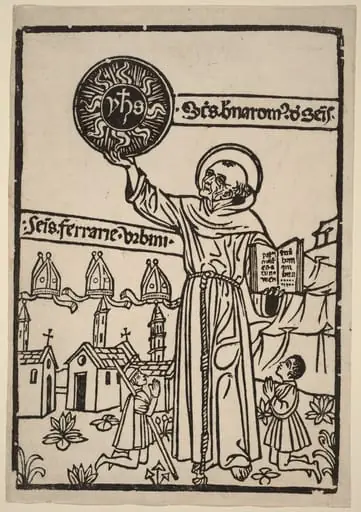 Saint Bernardino of Siena
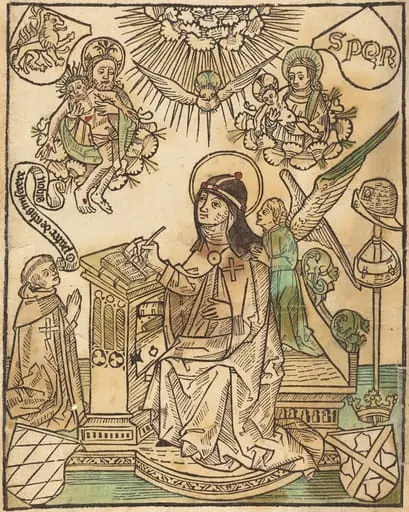 Saint Bridget
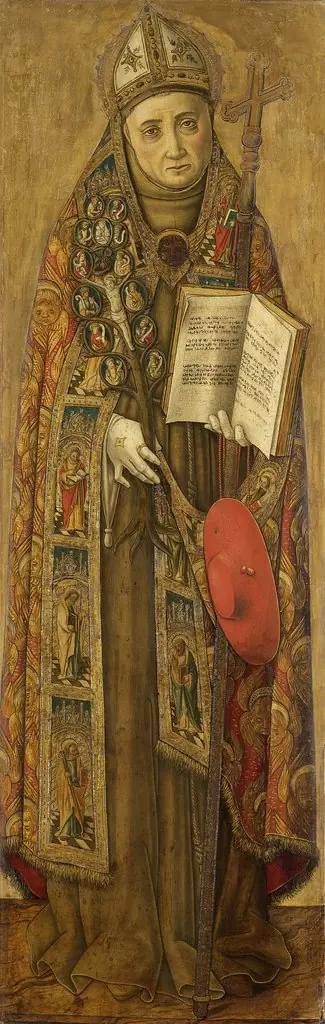 St. Bonaventure, pendant to St. Louis
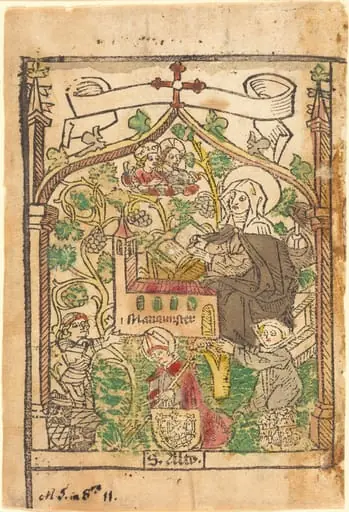 Saint Alto, Saint Bridget and the Founders of the Mariamunster
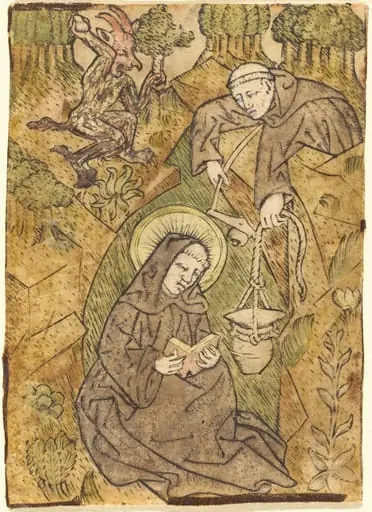 Saint Benedict and the Monk Romanus
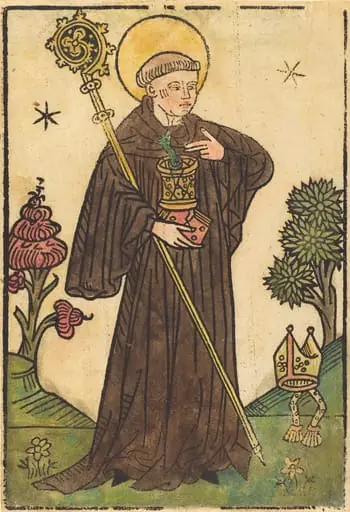 Saint Benedict
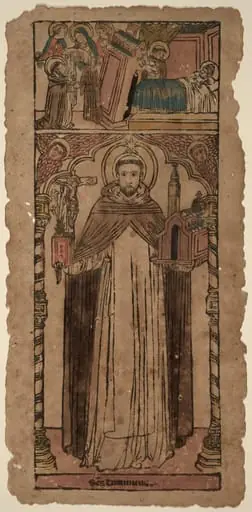 Saint Dominic