Artwork
The Adoration of the Christ Child
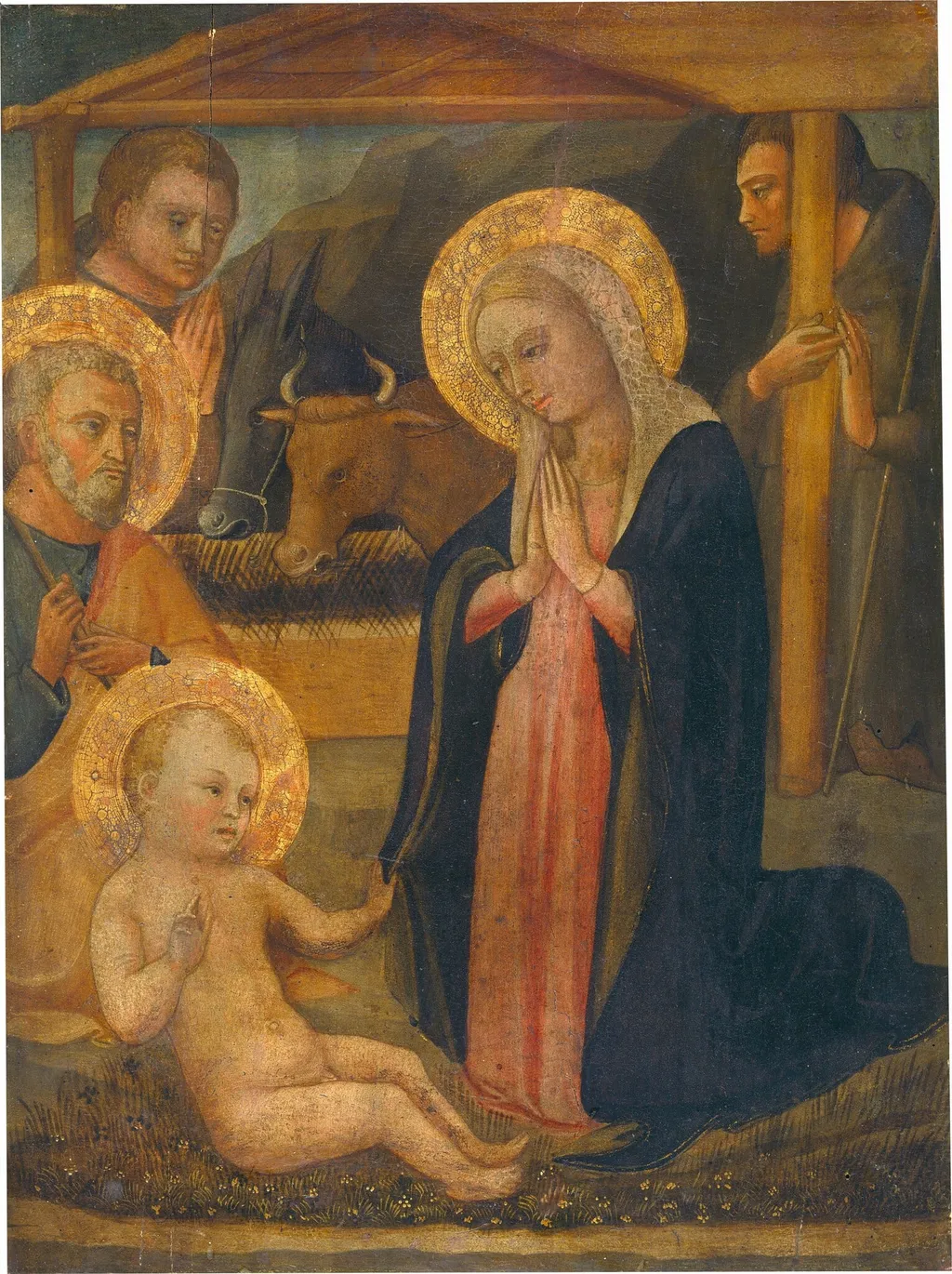
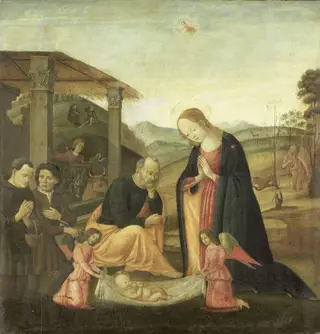
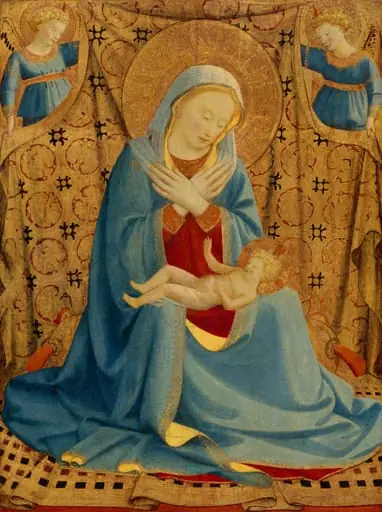
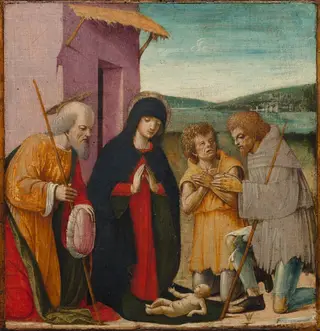
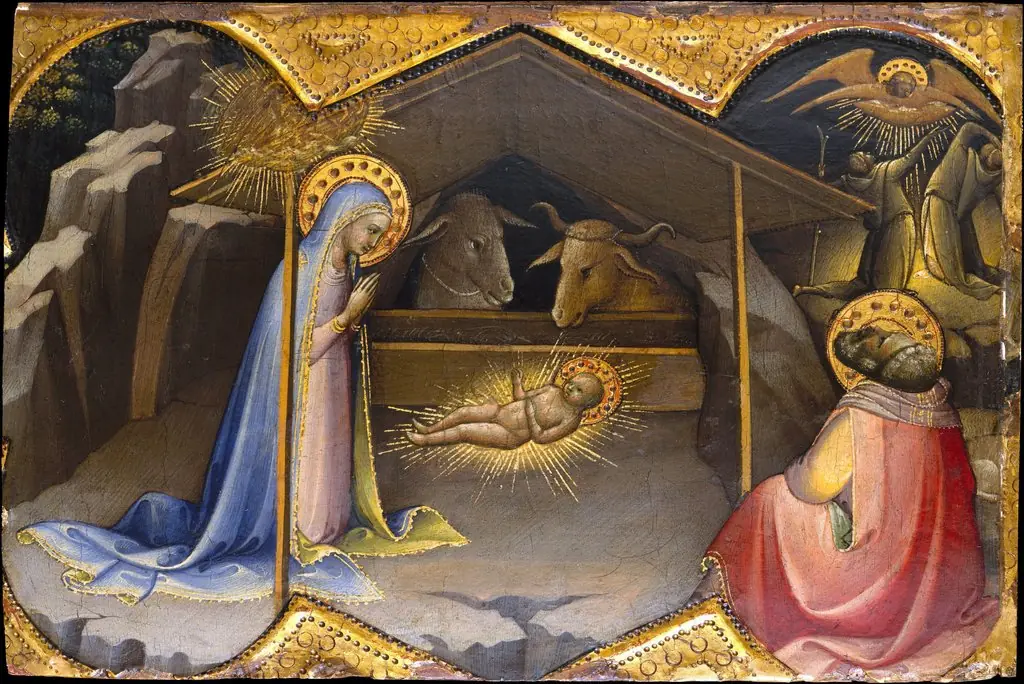
The Adoration of the Christ Child is a tempera painting. It dates from 1442 and is held in the collection of the National Gallery of Art. This painting depicts a devotional scene centered on the infant Christ.
About this work
Subject & Meaning
The main subject is the birth and veneration of Christ, a religious theme rendered in tempera on poplar panel by a fifteenth-century Italian artist.
The painting depicts the Nativity of Jesus, showing the Adoration of the Christ Child. The main subject is the birth and veneration of Christ, a religious theme rendered in tempera on poplar panel by a fifteenth-century Italian artist. As a Nativity scene, the work belongs to the broader iconographic tradition of the Adoration, in which the newborn Christ is the focal point of devotion, framed by sacred figures gathered to honor the Incarnation.
The composition centers on the Christ Child as the object of adoration, embodying the theological idea of God made manifest in human form. Drawing on the Gospel accounts of Christ's birth, it presents the moment as one of revelation and worship, communicating the central Christian mystery of the Incarnation and inviting viewers to contemplate the divine nature of the child at the heart of the scene.
History & Provenance
Dated to 1442, this tempera on poplar panel was created by an anonymous Italian artist of the fifteenth century, with some attributions linking the work to Bicci di Lorenzo. Its early twentieth-century history begins in Florence, where it belonged to a Mr. Banti, possibly L.M. Banti, though discrepancies regarding the support material suggest it may have left that collection before the 1926 Banti sale. By April 1920 the work was in the possession of Raoul Tolentino and was sold at the American Art Association in New York.
It was subsequently acquired by William R. Timken of New York. On his death in 1949 the painting passed to his widow, Lillian Guyer Timken, and following her death it was bequeathed to the National Gallery of Art, Washington, in 1960.
Overview
This painting depicts a devotional scene centered on the infant Christ. A group of figures gathers around the newborn, emphasizing reverence and humility. The composition draws the viewer's eye to the central figures, highlighted by their halos and distinct coloring.
It is executed in tempera on a poplar panel, a common practice for religious works of its era.
Technique & Style
This painting was created using tempera paints applied to a poplar wood panel. The artist employed a palette where the vibrant red of the kneeling woman's garment and the delicate rendering of the infant's skin provide visual contrast. These elements stand out against a backdrop of more subdued, earthy tones.
The background remains largely unadorned, featuring only suggestions of a structure and natural ground, which directs focus to the figures.
Artist & collection

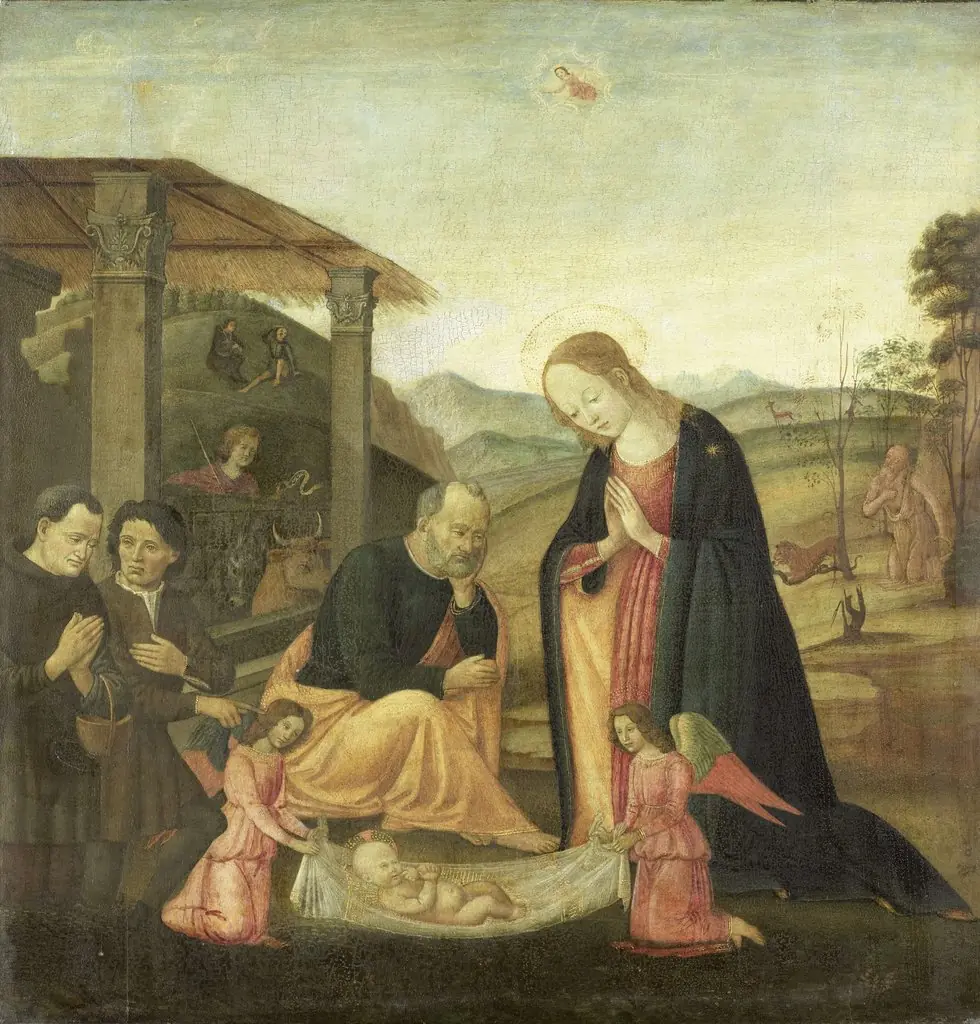
- Adoration of the Christ Child
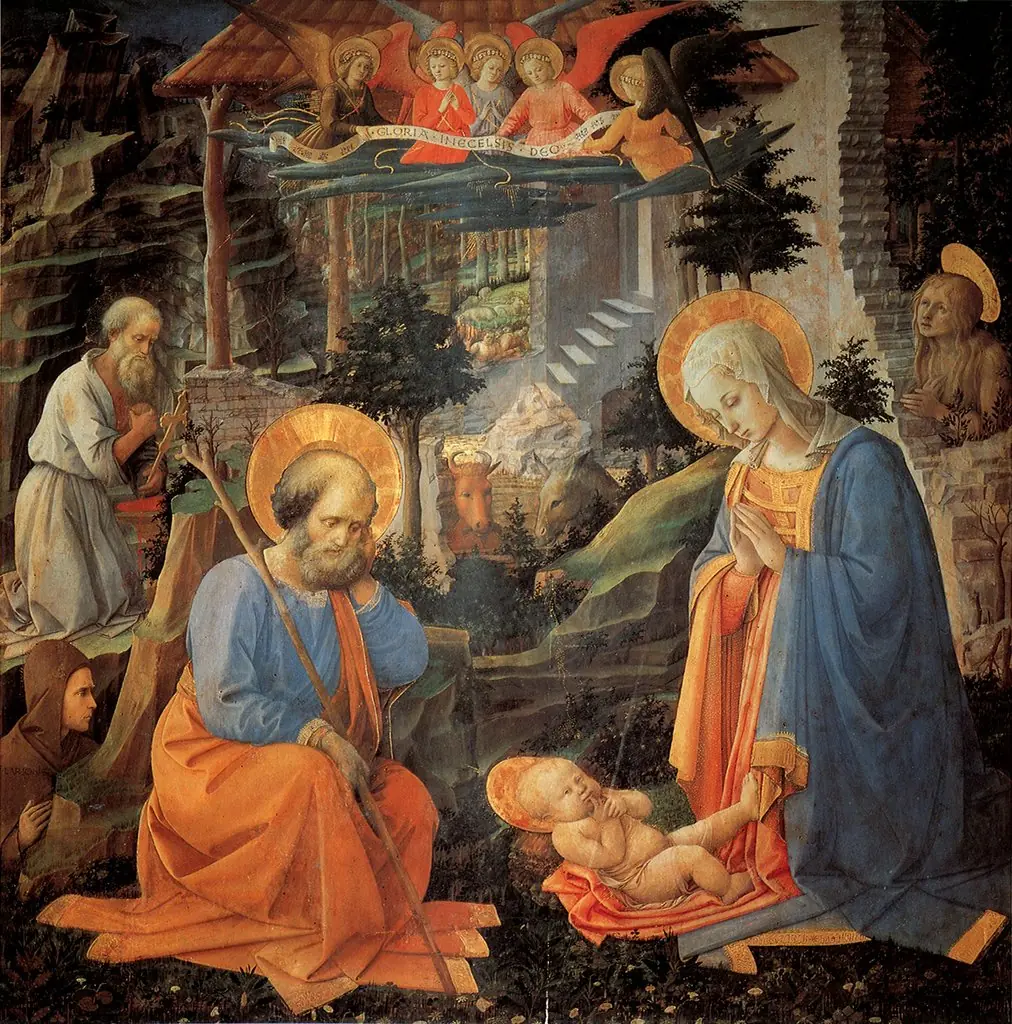 Adoration of the Child with SS. Joseph, Jerome, Hilarion, Magdalena and angels
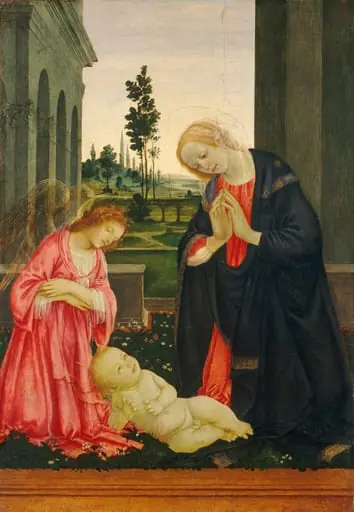 The Adoration of the Child
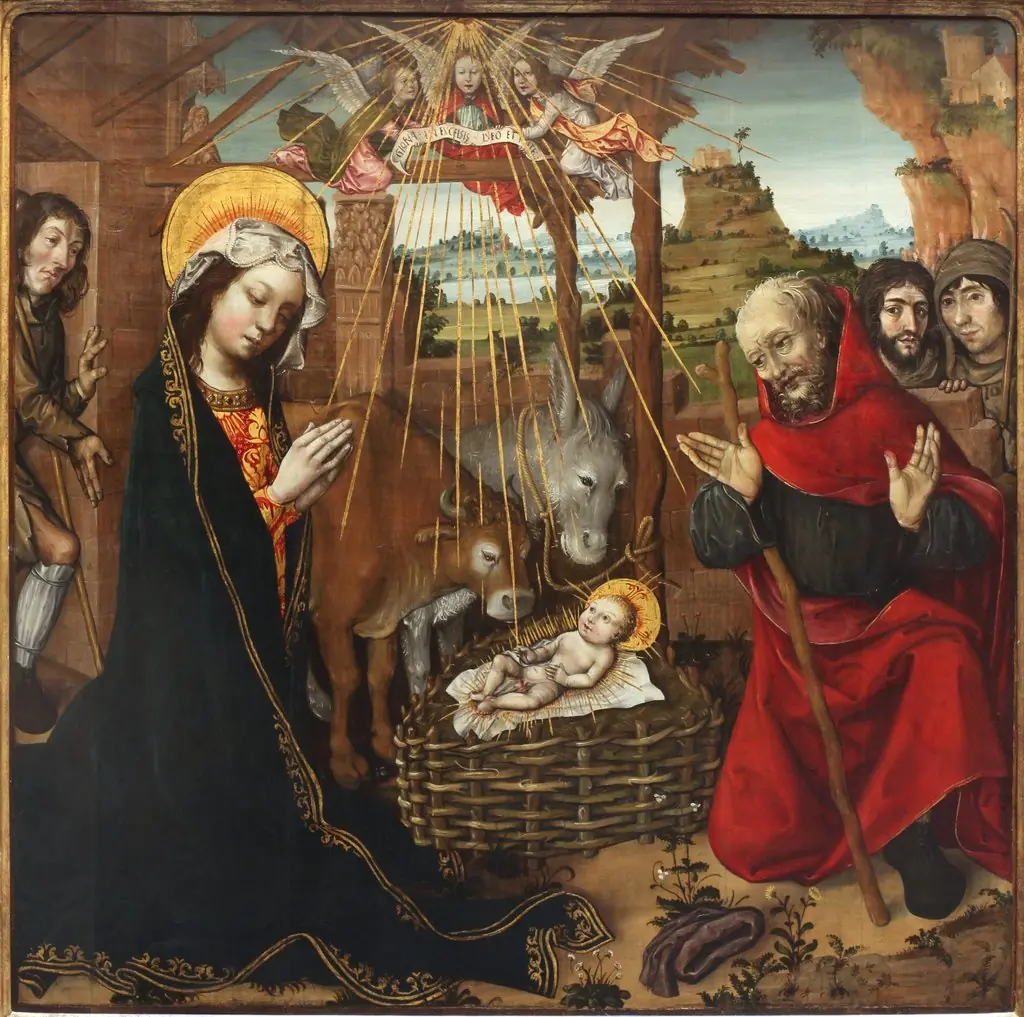 The adoration of the Child
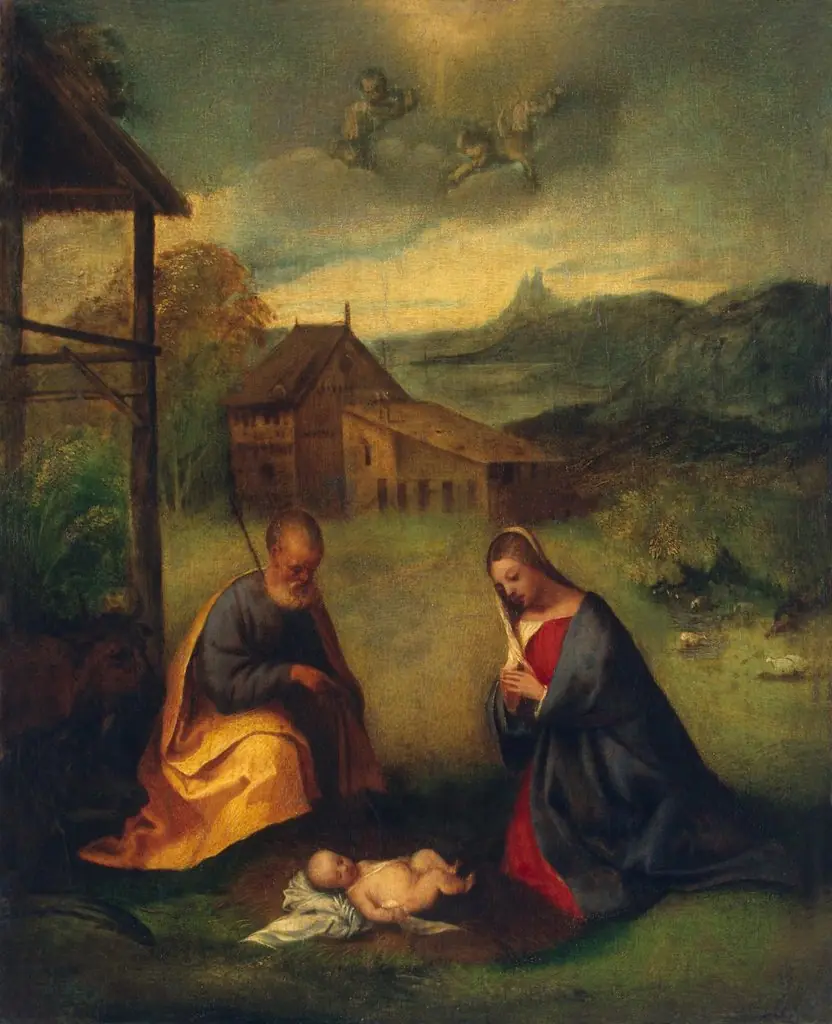 Adoration of the Christ Child
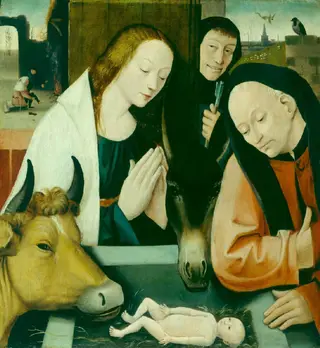 The Nativity - The Adoration of the Christ Child
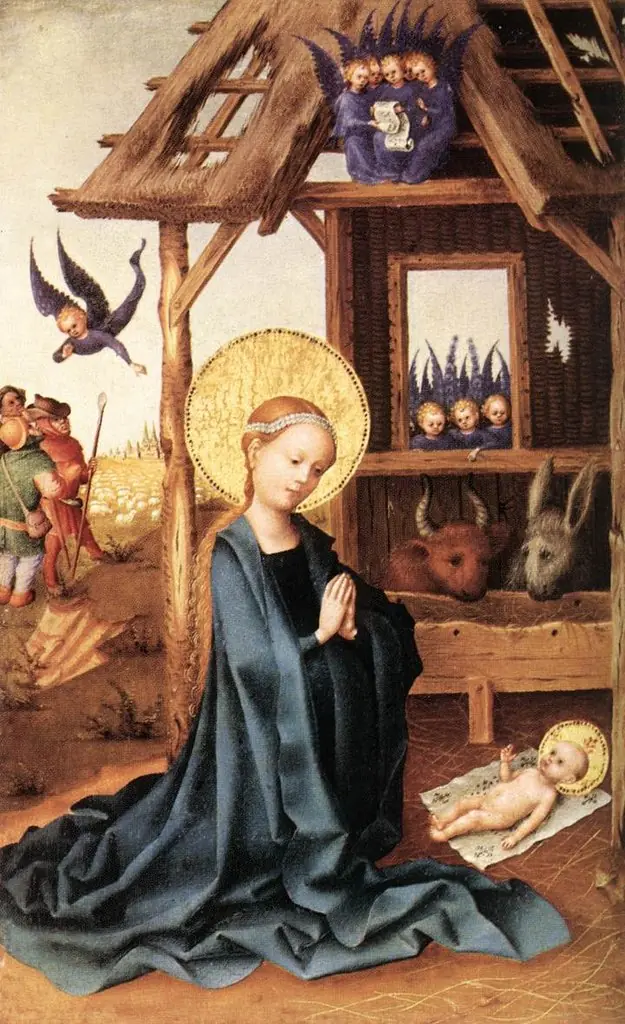 Adoration of the Child Jesus
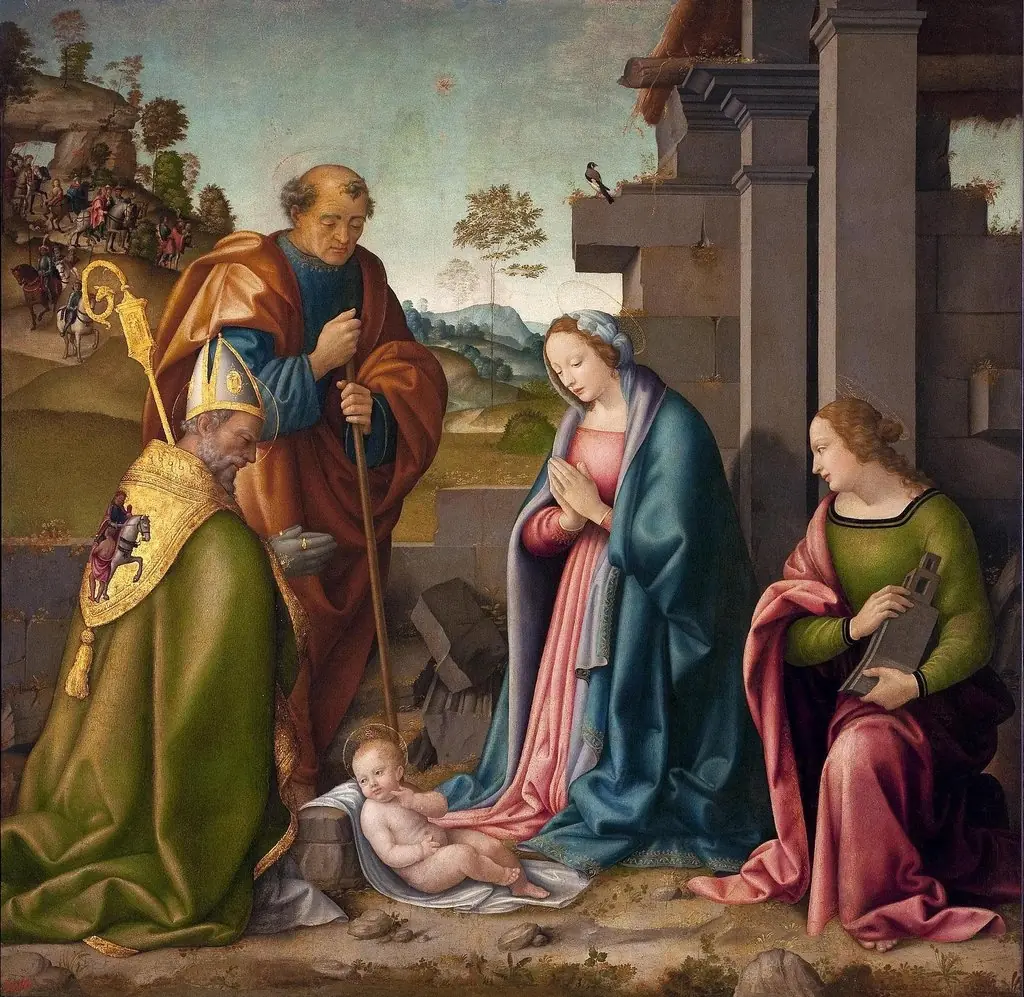 Adoration of the Christ Child, with Sts Barbara and Martin