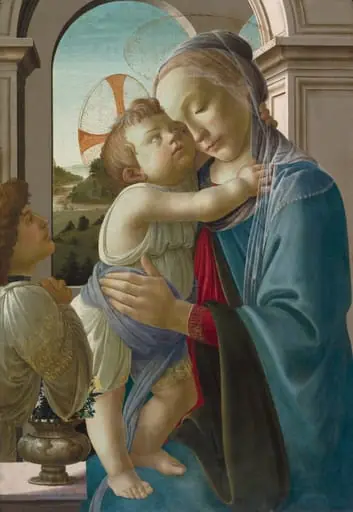
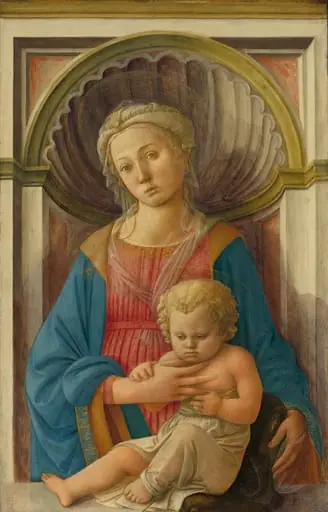
Artwork
Madonna and Child
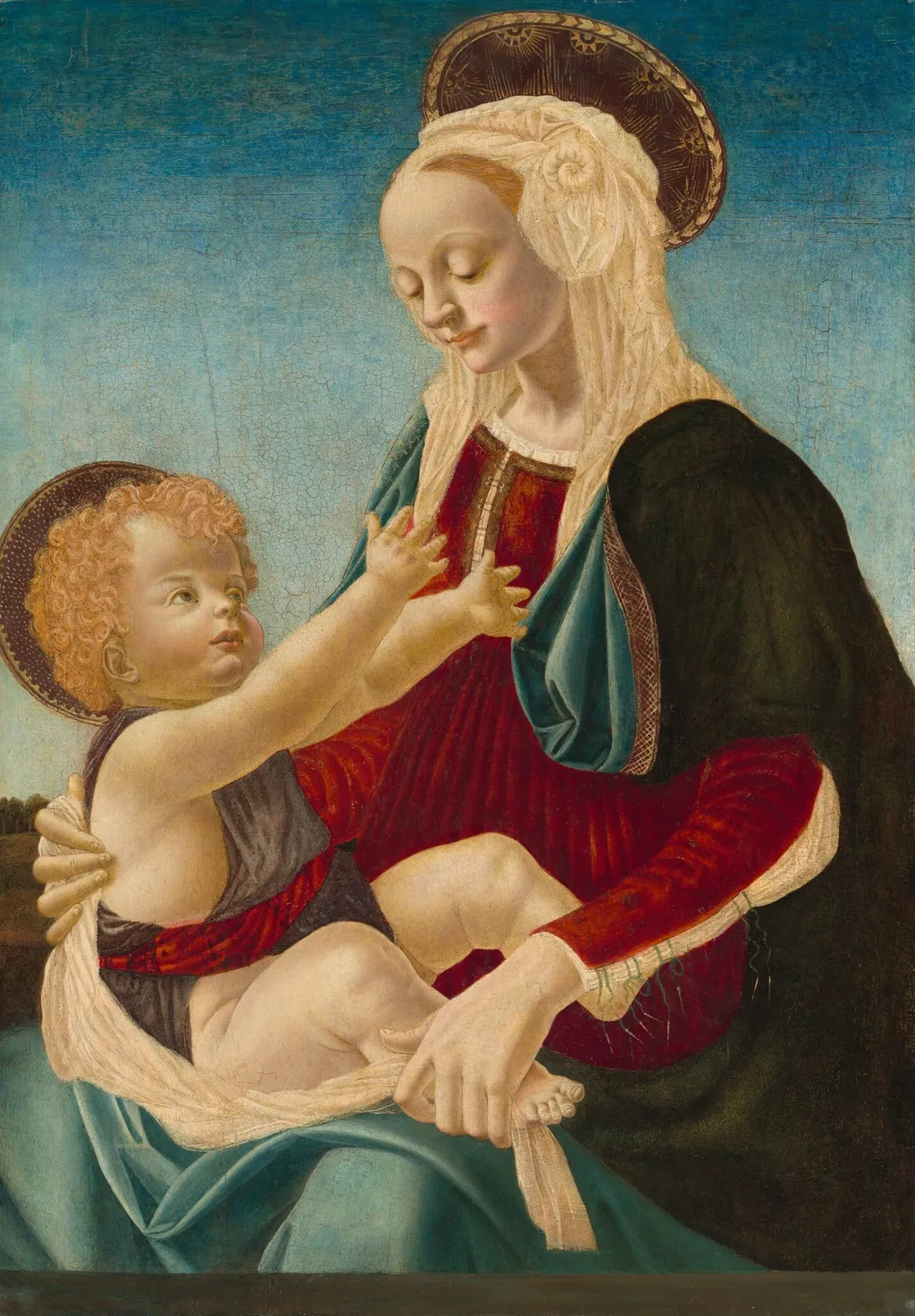
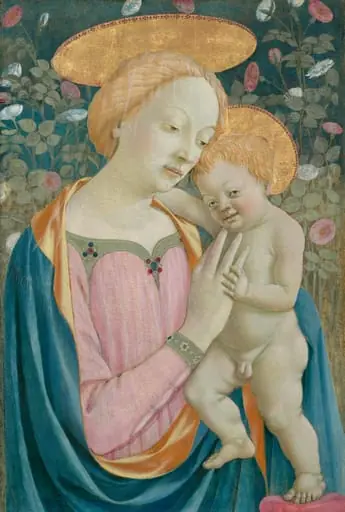
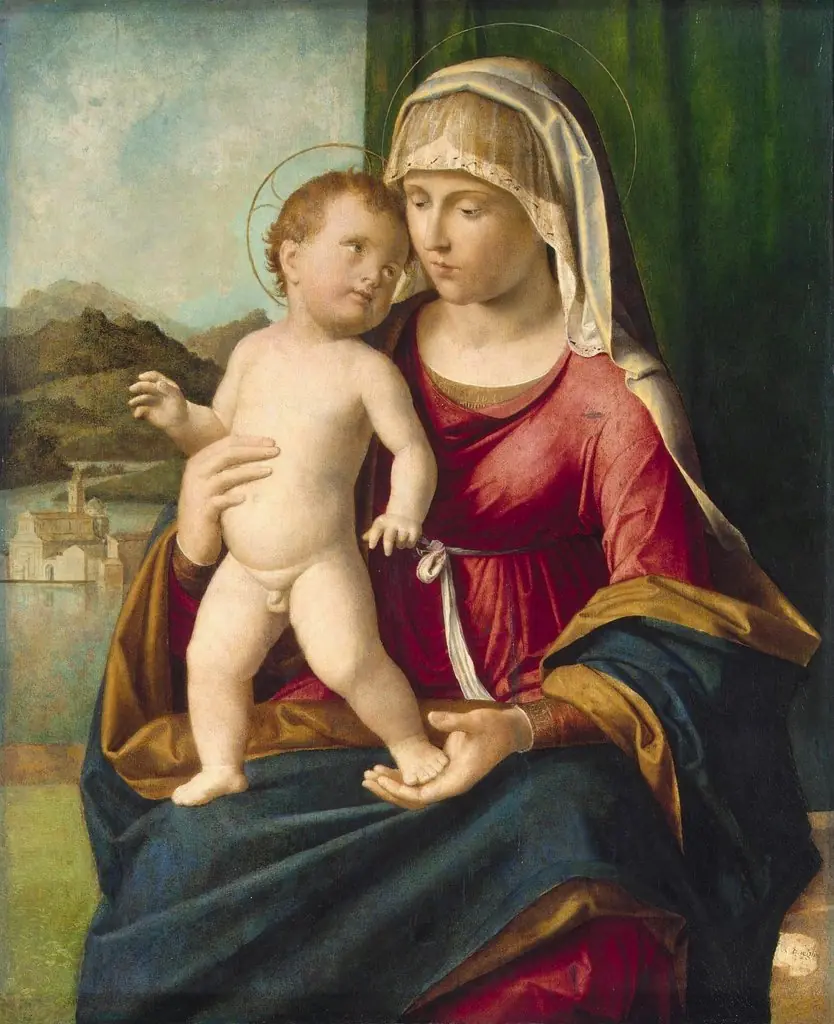
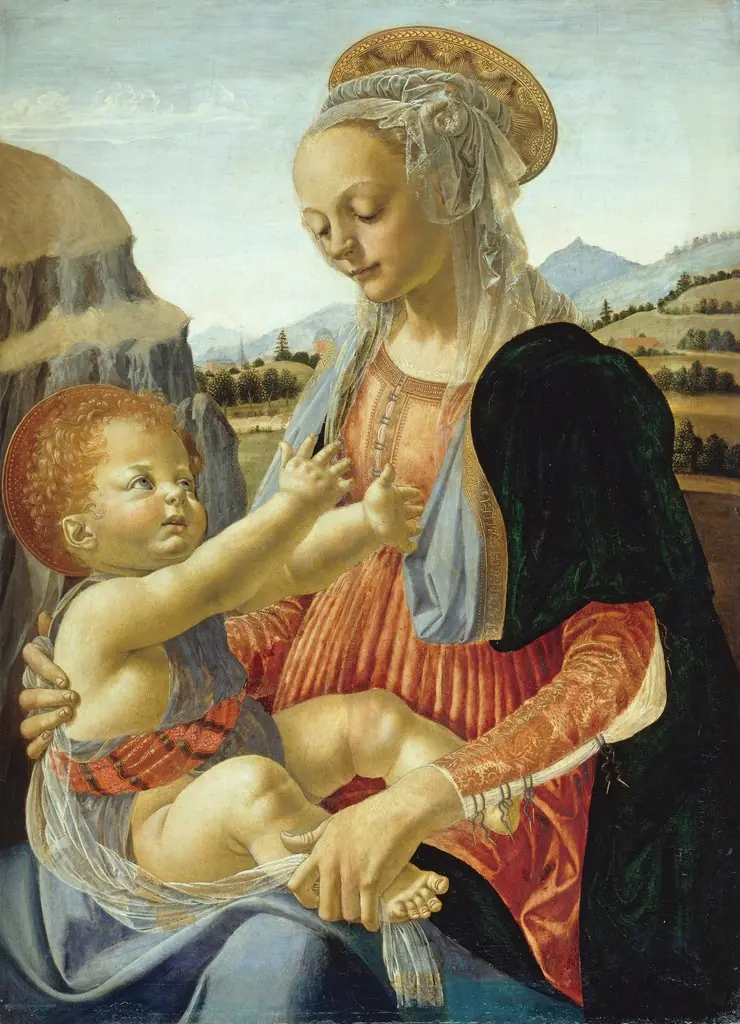
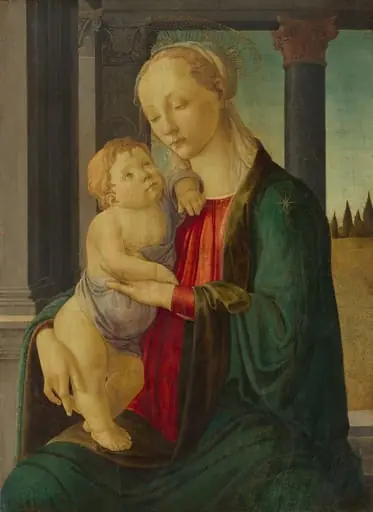
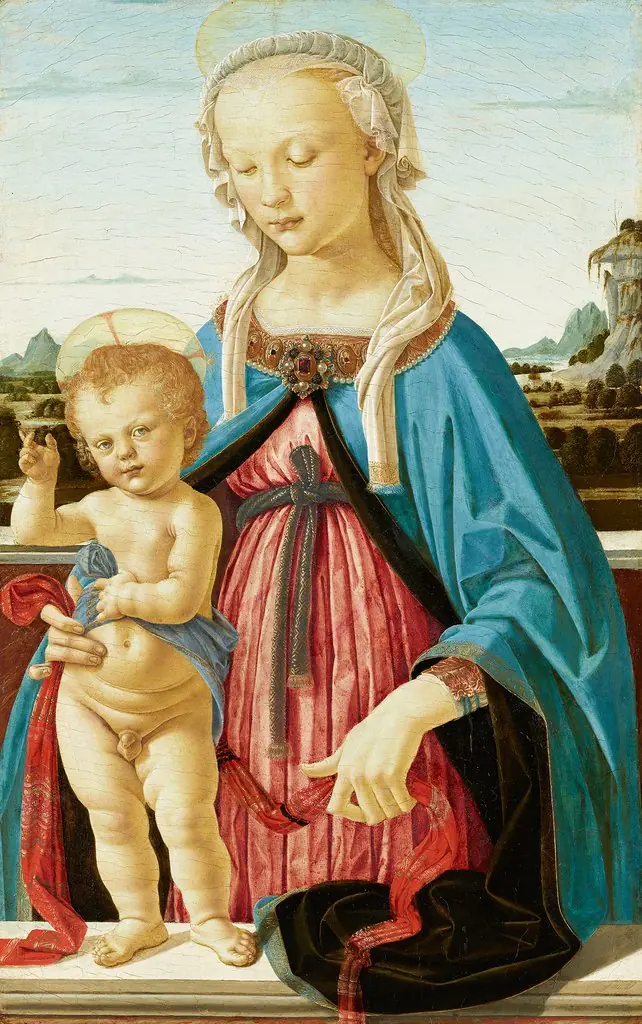
Madonna and Child is a tempera painting. It dates from 1475 and is held in the collection of the National Gallery of Art.
About this work
Mary holds the Christ Child in a traditional composition by an Italian painter of the 15th century, around 1475. Gold leaf decorates her clothing, a common technique of the period that adds richness and depth to the panel.
Subject & Meaning
Its depiction aligns with contemporary interpretations of the holy family as both sacred narrative and emblem of compassionate guidance.
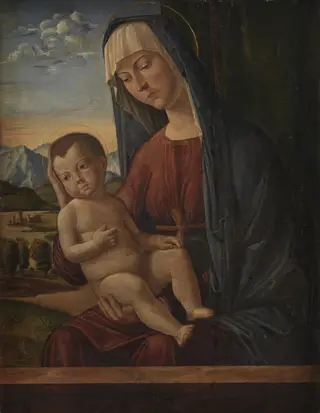
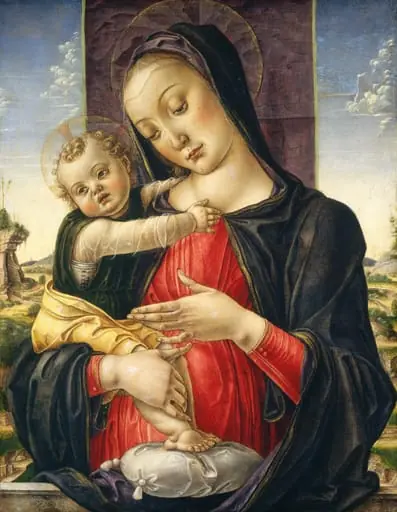
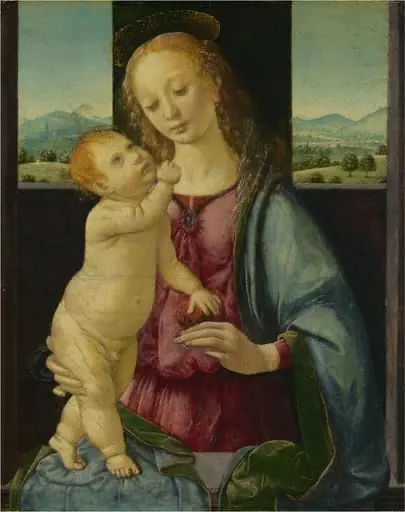
The painting shows the traditional iconography of the Madonna and Child, presenting the Virgin Mary gently holding the infant Christ. This composition emphasizes the humanity of Christ and the nurturing role of Mary, symbols of divine incarnation and maternal protection within Renaissance religious art. The work’s subject follows established visual conventions that convey theological themes of salvation and familial intimacy, reflecting the devotional practices of 15th‑century Florence.
Its depiction aligns with contemporary interpretations of the holy family as both sacred narrative and emblem of compassionate guidance.
Technique & Style
The work is executed in tempera on a poplar wood panel, the standard support for early Renaissance Italian paintings. The pigment is bound with egg yolk, producing a luminous, thinly layered surface that characterises the medium of the period. The panel measures 78.1 cm in height and 53.6 cm in width, and its surface has remained intact through a documented chain of ownership from the Schickler collection to the National Gallery of Art.
The painting depicts the Virgin Mary with the Christ Child, a conventional subject in devotional art, and its composition reflects the stylistic conventions of 15th‑century Italian religious imagery, as attributed to the workshop of Andrea del Verrocchio. No specific conservation treatments are recorded in the available sources.
History & Provenance
The work was created in 1470 as a tempera painting on poplar panel by an unidentified Italian master, intended as a devotional image of the Madonna and Child, a common subject in fifteenth‑century religious art. Its early ownership traced back to Baron Arthur de Schickler of Paris and Martinvast, who held it by 1896; it passed to his daughter Marguerite, Comtesse Hubert de Pourtalès, and was sold in April 1919 through a joint agreement involving Duveen Brothers, Wildenstein & Co., and Arnold Seligmann & Co. Full title was transferred to Wildenstein in 1922, later entering the collection of Clarence H. Mackay by 1924, then Duveen, and finally the Samuel H. Kress Foundation in 1939, before being gifted to the National Gallery of Art in 1943.
The painting is held by the National Gallery of Art in Washington, D.C., as part of the Samuel H. Kress Collection. Its provenance traces from Baron Arthur de Schickler in Paris and Normandy by 1896 to his daughter, Marguerite, Comtesse Hubert de Pourtalès. The work was sold in April 1919 to a consortium of dealers including Duveen Brothers, Wildenstein & Co., and Arnold Seligmann, with full ownership passing to Wildenstein in 1922.
It subsequently entered the collection of Clarence H. Mackay in Roslyn, New York, by 1924 before being sold to the Samuel H. Kress Foundation in 1939. The foundation presented the work as a gift to the National Gallery of Art in 1943. While the sources detail this extensive ownership history, they do not list specific exhibition dates or venues for the artwork.
Context
The Madonna and Child has attracted sustained scholarly attention, particularly through Bernard Berenson’s 1896 catalogue that recorded its attribution and provenance. Dealer archives reveal complex ownership transfers involving the Schickler collection, Wildenstein, and Duveen Brothers, reflecting its significance in the early 20th‑century art market. Subsequent research, including cataloguing by the National Gallery of Art, situates the work within the oeuvre of an Italian fifteenth‑century painter associated with Verrocchio, emphasizing its role as an exemplar of devotional painting.
Its inclusion in the Samuel H. Kress Collection has further cemented its status as a representative piece of Renaissance religious art, studied for both stylistic qualities and provenance history.
Overview
This painting, titled Madonna and Child, depicts a conventional religious subject rendered in tempera on a poplar panel. It portrays the Virgin Mary cradling the infant Christ, a theme central to Christian art. The work exemplifies the artistic practices prevalent in 15th-century Italy, combining devotional imagery with specific material techniques to create a visually rich composition.
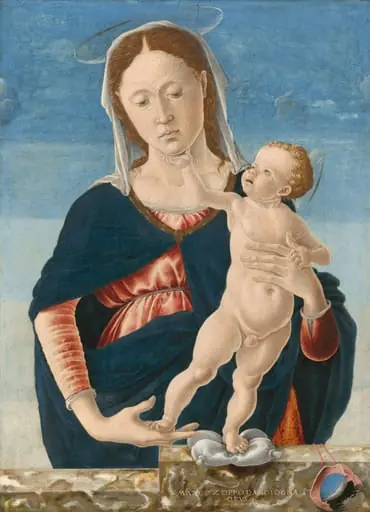
Artist & collection