Artwork
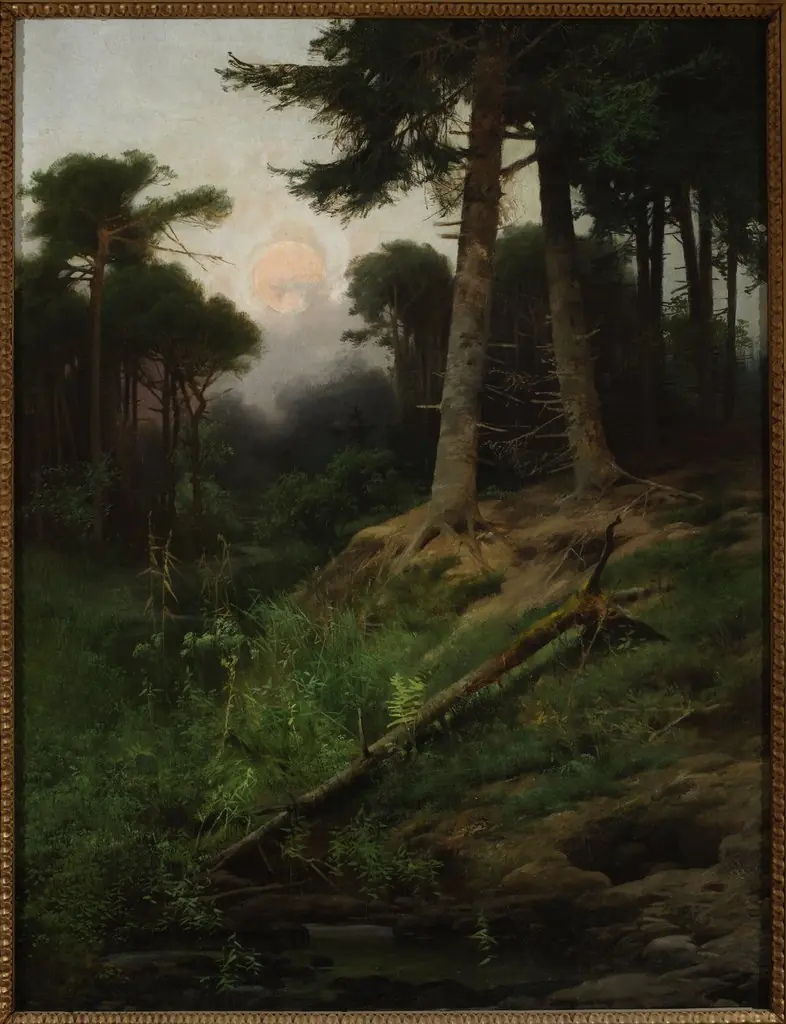
Morning in a Pine Forest
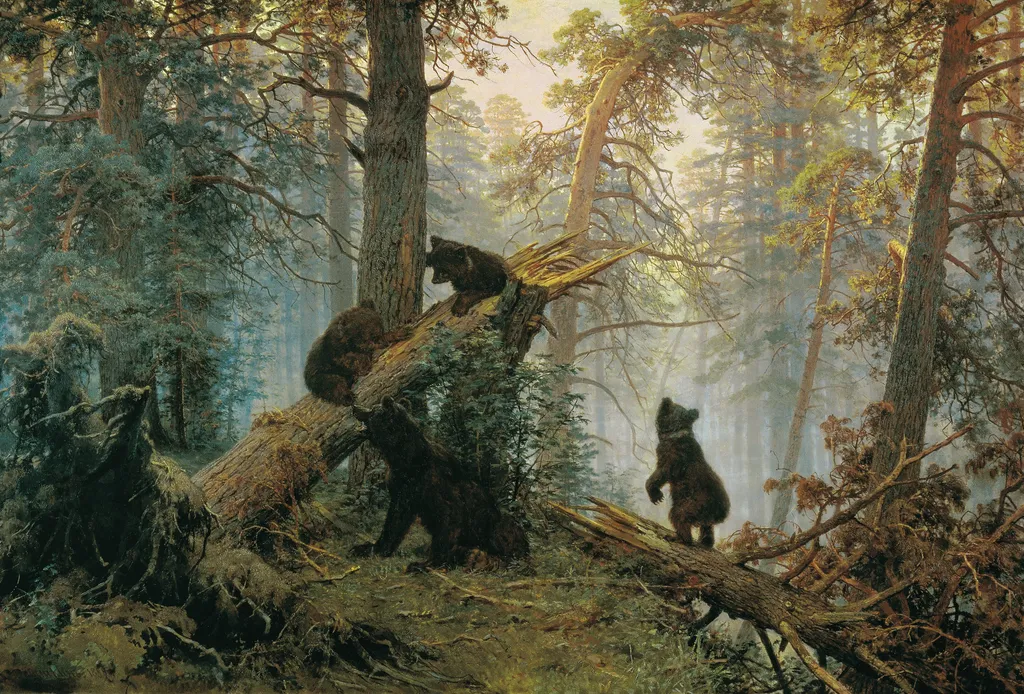
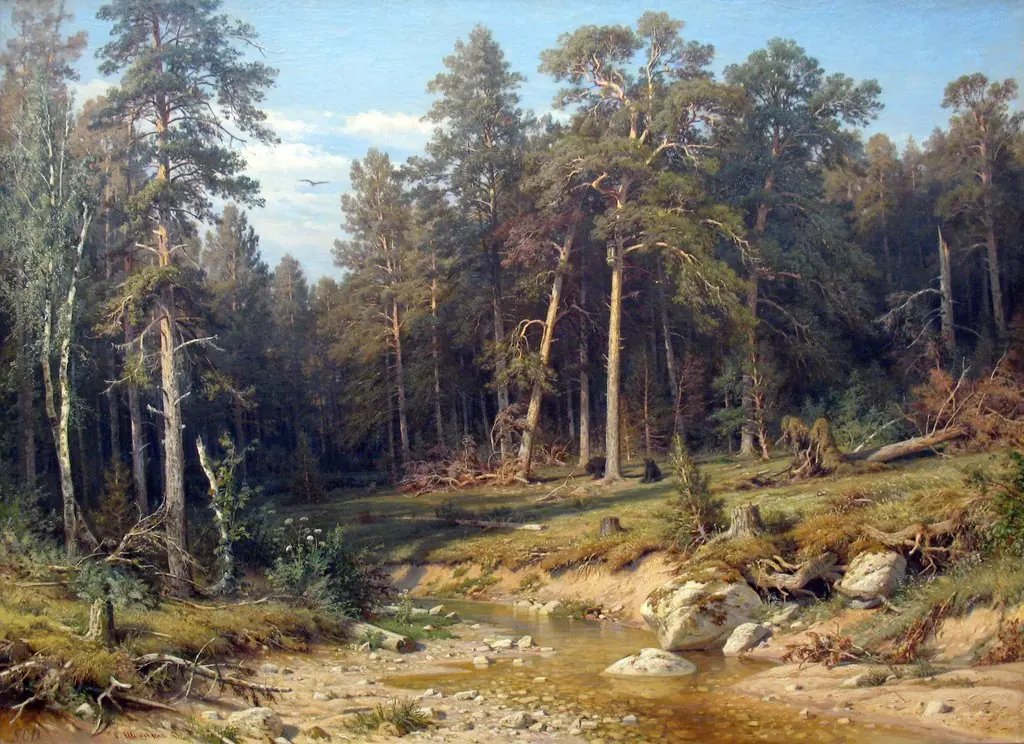
Morning in a Pine Forest is an oil painting by the Realist artist Ivan Shishkin. It dates from 1895 and is held in the collection of the Tretyakov Gallery.
About this work
This painting shows a quiet forest scene at dawn. Ivan Shishkin painted it in oil on canvas around 1889. It’s called Morning in a Pine Forest.
Here’s something cool: Shishkin teamed up with another artist, Konstantin Savitsky, to finish the bears and sunlight. The big trees and soft morning light make the forest feel alive.
Check out more works by Ivan Shishkin.
Overview
Morning in a Pine Forest is an 1889 oil on canvas landscape painting by Russian artists Ivan Shishkin and Konstantin Savitsky.
Morning in a Pine Forest is an 1889 oil on canvas landscape painting by Russian artists Ivan Shishkin and Konstantin Savitsky. Measuring 139 by 213 centimeters, the work is held in the Tretyakov Gallery in Moscow. Originally titled The Bear Family in the Forest, the painting ranks among the most recognized images in Russian culture, placing second in popularity only to Viktor Vasnetsov's Bogatyrs according to one poll. Its widespread fame arises from both its atmospheric depiction of untouched wilderness and a subsequent authorship controversy that saw Savitsky's contribution formally erased from the canvas.
Subject & Meaning
The composition centers on a dense pine forest enveloped in morning mist. A large fallen pine, its pale splintered wood indicating a recent break, angles diagonally across the scene. Four bears occupy the foreground: three cubs and an adult. Two cubs climb the fallen trunk, one reaching higher than the other, while a third stands upright on its hind legs on a lower log. The adult bear remains mostly obscured by dark foliage at the base of the fallen tree. Sunlight filters from the upper right, casting luminous beams through the haze and illuminating the canopy tops. The scene captures the carefree play of the cubs under the watch of their mother, set against the atmospheric depth of the receding, moss-covered forest.
Technique & Style
Executed in oil on canvas, the painting demonstrates a meticulous handling of natural textures and atmospheric effects. The palette combines deep browns and greens with golden yellow highlights and cool blue-gray mist. Shishkin's brushwork renders detailed bark texture and individual pine needles, establishing a strong objective realism that conveys the density and verticality of the forest. The rendering of the receding forest distance and mist reveals a specialized focus on botanical accuracy and the optical effects of light filtering through haze. Savitsky's animal figures integrate into this setting, adding dynamic movement to the otherwise still and monumental landscape.
History & Provenance
Shishkin painted the landscape based on pine forests near Gorodomlya Island on Lake Seliger, a territory of untouched wilderness where he frequently spent summers. Initially, the composition did not include bears. Savitsky, who knew Shishkin well, proposed adding living creatures to make the painting more dynamic. At Shishkin's request, due to his doubts about his own animal painting abilities, Savitsky painted the bear family and signed the canvas alongside Shishkin. Art collector Pavel Tretyakov purchased the work soon after its completion. Tretyakov, however, ordered Savitsky's signature removed with turpentine, asserting that the entire concept and execution disclosed only Shishkin's creative method. Consequently, the painting is typically credited solely to Shishkin, and Savitsky's name was removed from the official record of the work.
Context
The painting emerged during a period of high achievement in Russian landscape painting, where artists sought to capture the distinct character of the national environment. Shishkin was recognized as a preeminent connoisseur of the forest, praised for his strong objective approach. A contemporary commentary noted that looking into the gray fog of the forest distance in the painting reveals the strength of his objective method. The removal of Savitsky's signature by Tretyakov reflects the collector's belief that the overarching vision and stylistic execution of a work defined its authorship, subordinating the collaborative addition of the bears to Shishkin's dominant landscape manner.
Legacy
The painting holds a significant place in Russian popular culture. In the late 1880s, the candy factory of Ferdinand Theodor von Einem, later nationalized as Krasny Oktyabr, reached an agreement with the painting's owner to reproduce the image. The first batch of Mishka Kosolapy, or Clumsy Bear, candies was produced in the early 1890s. In 1913, artist Manuil Andreev designed the iconic wrapper, placing the painting's subject within a frame of green spruce branches and six-pointed stars of Bethlehem, reflecting its status as an expensive Christmas gift. The candy won the Grand Prix at the 1900 Paris Exposition and a top award at the 1896 All-Russian Industrial and Art Exhibition in Nizhny Novgorod. The image has been reproduced on numerous objects and even appeared in an episode of the animated series Masha and the Bear, where the character Bear paints a replica of the canvas.
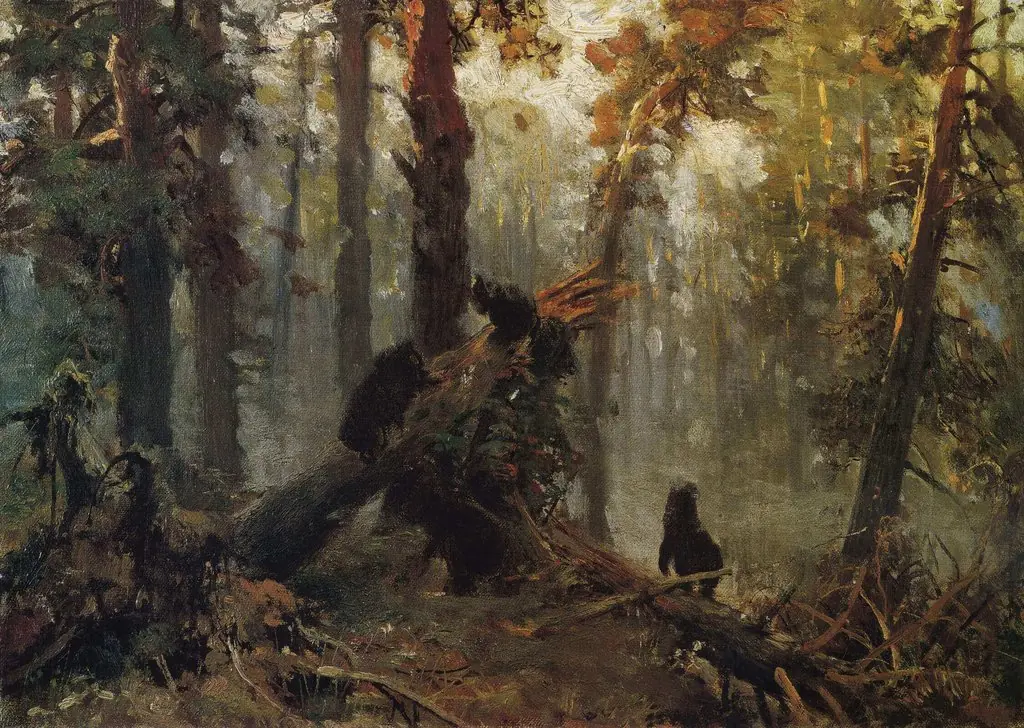
Own this work as a print
Artist & collection
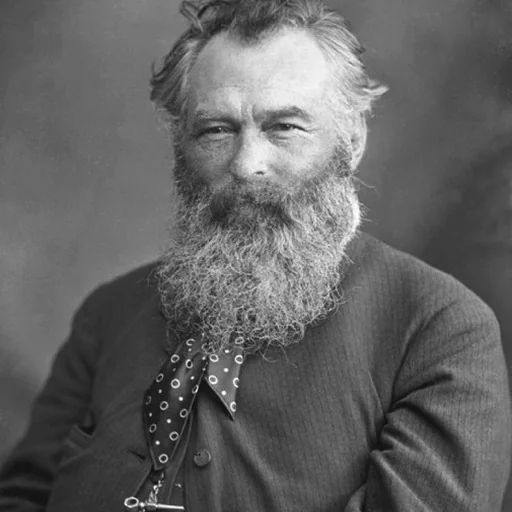
Artist
Ivan Ivanovich Shishkin (Russian: Иван Иванович Шишкин; 25 January 1832 – 20 March 1898) was a Russian Realist painter and draughtsman, best known for his landscape subjects.