Artwork
Walton bridges
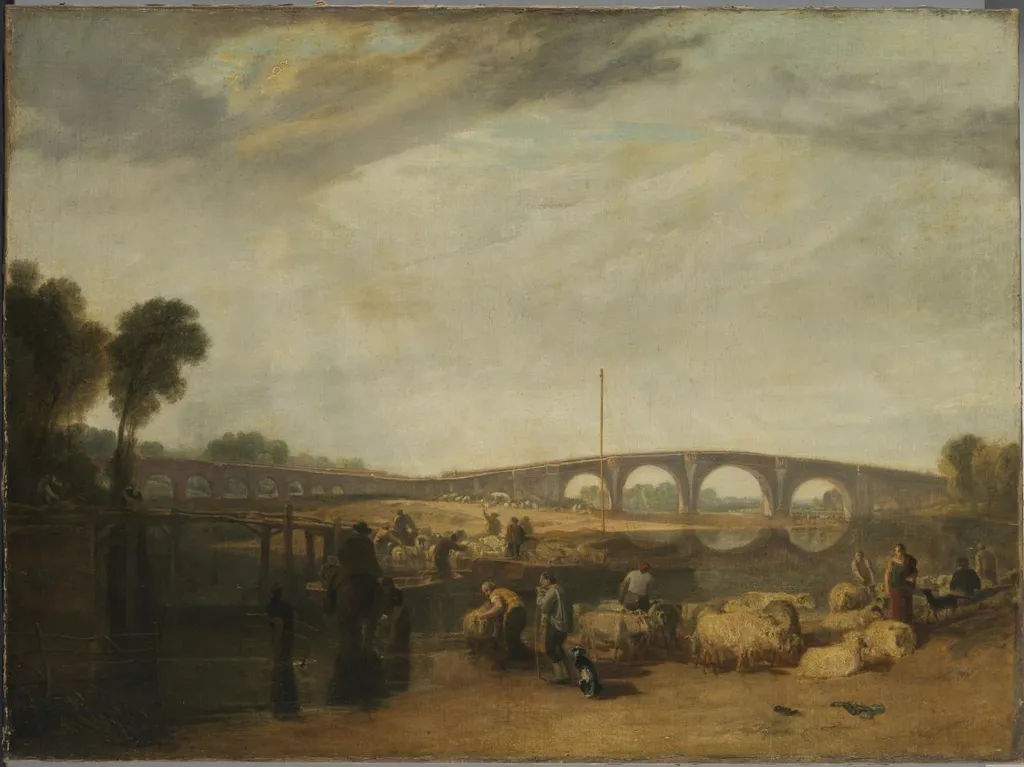
Walton bridges is an oil painting by Joseph Mallord William Turner. It dates from 1806 and is held in the collection of the National Gallery of Victoria. J.
About this work
Overview
J.M.W. Turner painted Walton Bridges around 1806, presenting a riverine landscape on the Thames at Walton. The canvas captures two stone bridges, their arches forming twin parabolic shapes, set against a muted sky. The composition includes figures on the riverbank, livestock, and a broad view of the water, rendered in oil.
Subject & Meaning
The work records a specific moment in the Thames’s built environment, showing the replacement of an earlier mid‑eighteenth‑century bridge that had been depicted by Canaletto. By foregrounding everyday activity, people and sheep, Turner juxtaposes human presence with the engineered grandeur of the new stone spans.
Technique & Style
Turner employs a restrained palette of greys and blues, allowing the cloudy sky to dominate the atmosphere. His handling of light and shadow, particularly the chiaroscuro on the arches, creates depth, while fine brushwork delineates the stonework and the textures of the riverbank and livestock.
History & Provenance
Rather than showing the painting at the Royal Academy’s Summer Exhibition, Turner may have displayed it privately in his Queen Anne Street studio in 1807. That same year the Earl of Essex purchased the canvas, installing it at Cassiobury House alongside two other Turner pieces.
Legacy
Since 1920 the painting has been part of the National Gallery of Victoria’s collection in Melbourne, where it remains accessible to the public. Its presence in an Australian institution reflects the broader 20th‑century movement of British art into international collections.
Artist & collection
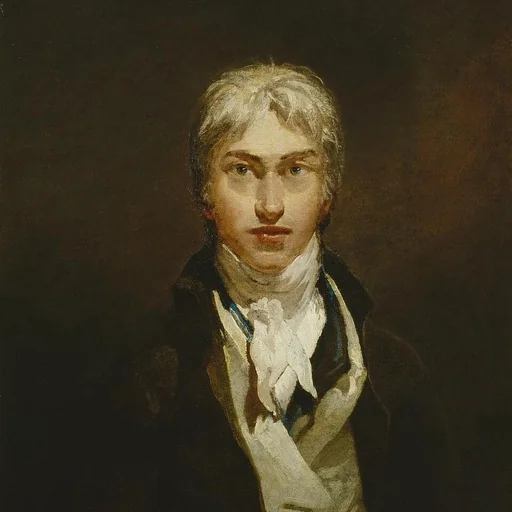
Artist
Joseph Mallord William Turner was born in 1775 at Maiden Lane, Covent Garden, where his father kept a barber and wig-making shop.

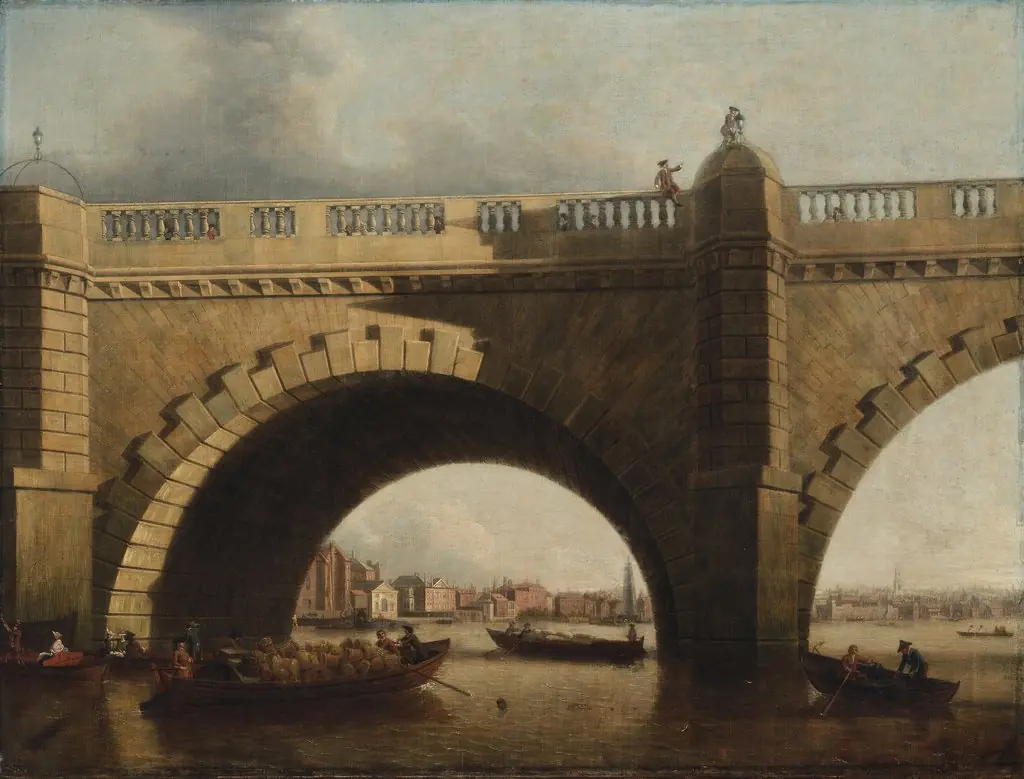 An Arch of Westminster Bridge, London
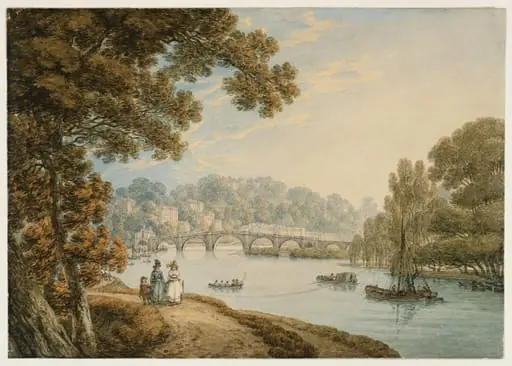 Richmond, Surrey
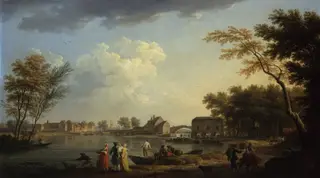 View of the Seine at Nogent-sur-Seine
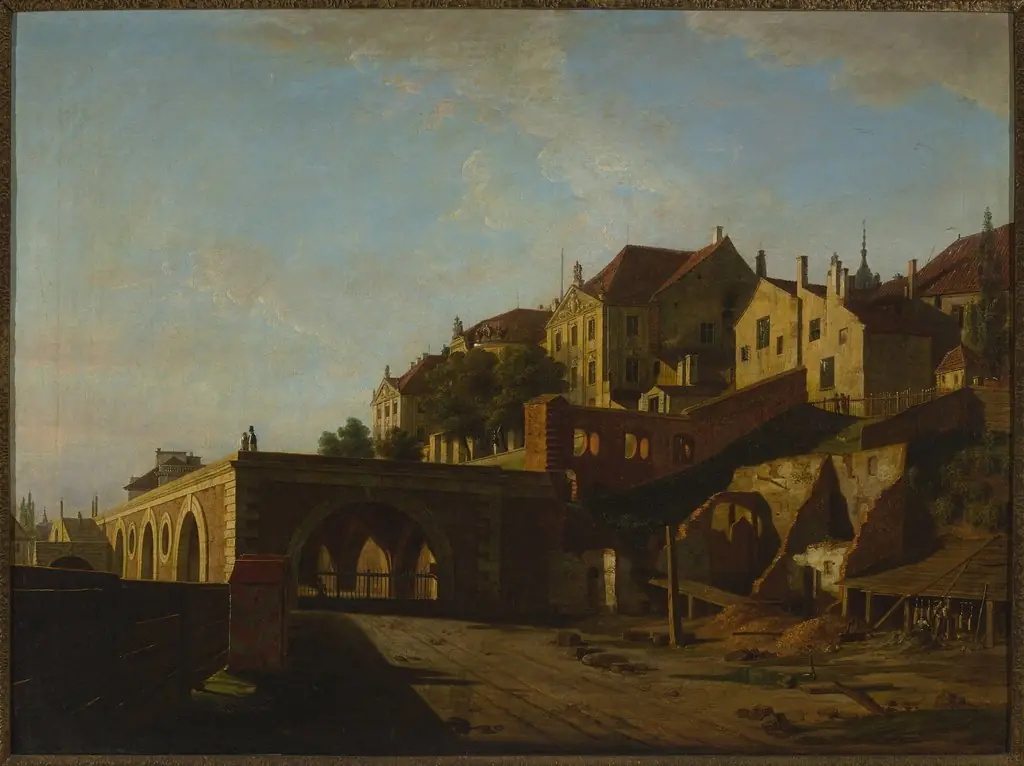 View of the castle from the north
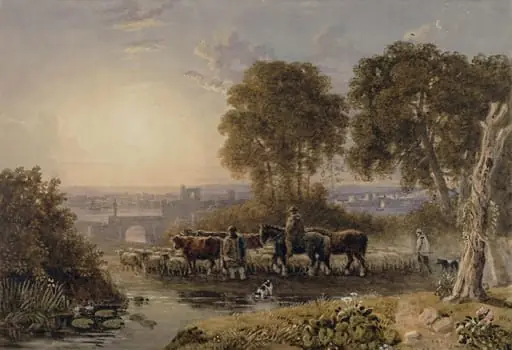 Landscape with Drovers
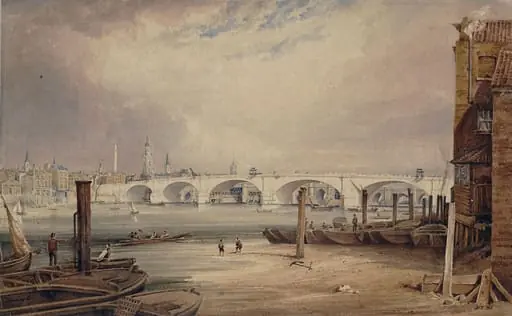 Old and New London Bridge, from the Surrey shore
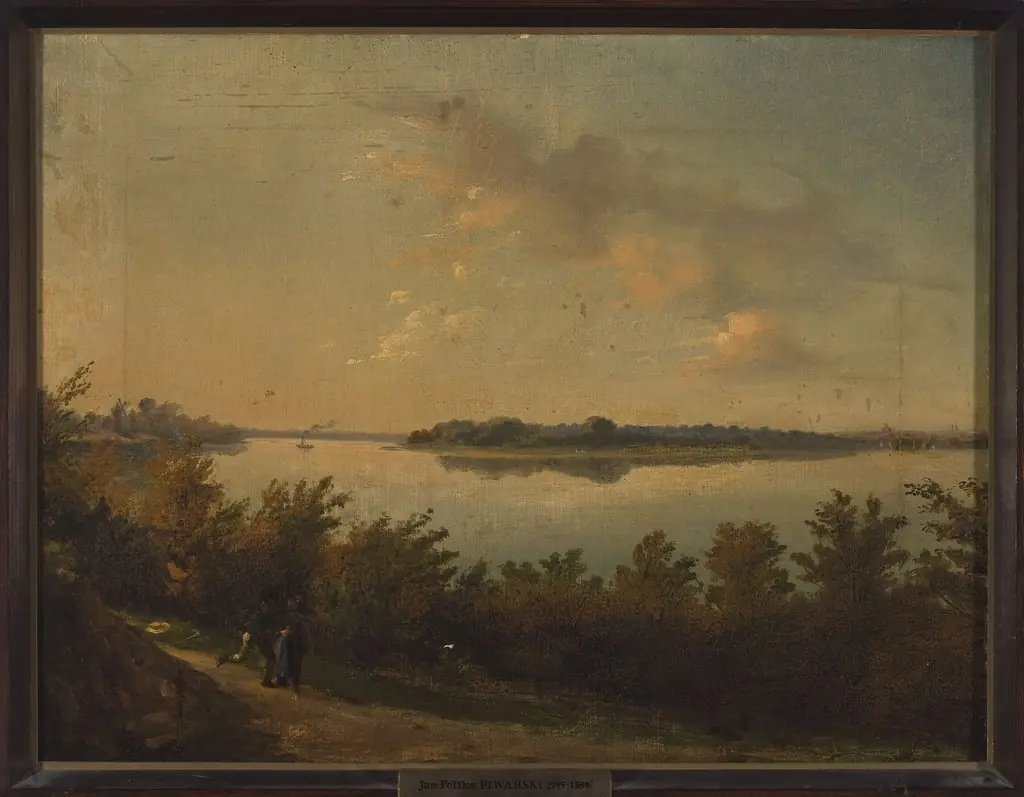 Saska Kępa – Landscape at sunset
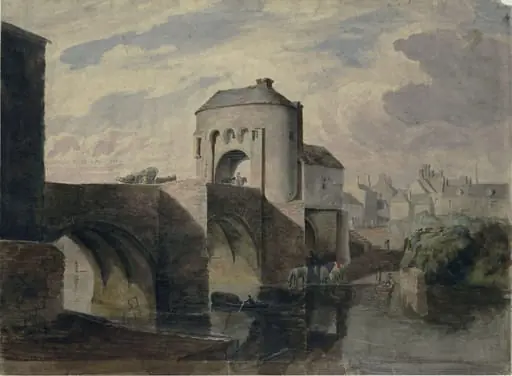 Bridge over the River Monmow, Monmouth
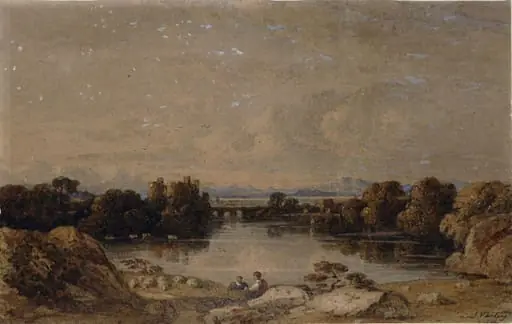 Landscape
 View of a Bridge of the Seine in Paris by Moonlight