Artwork
Whalers
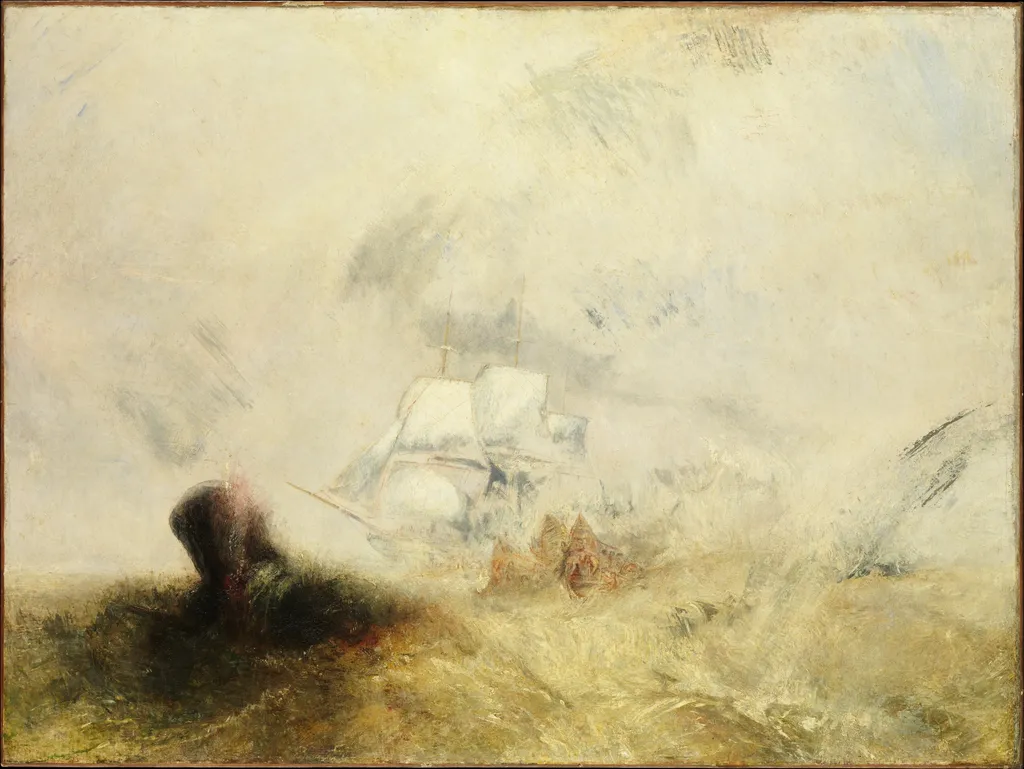
Whalers is an oil painting by the Academic Art artist Joseph Mallord William Turner. It dates from 1845 and is held in the collection of the Metropolitan Museum of Art. J.
About this work
Subject & Meaning
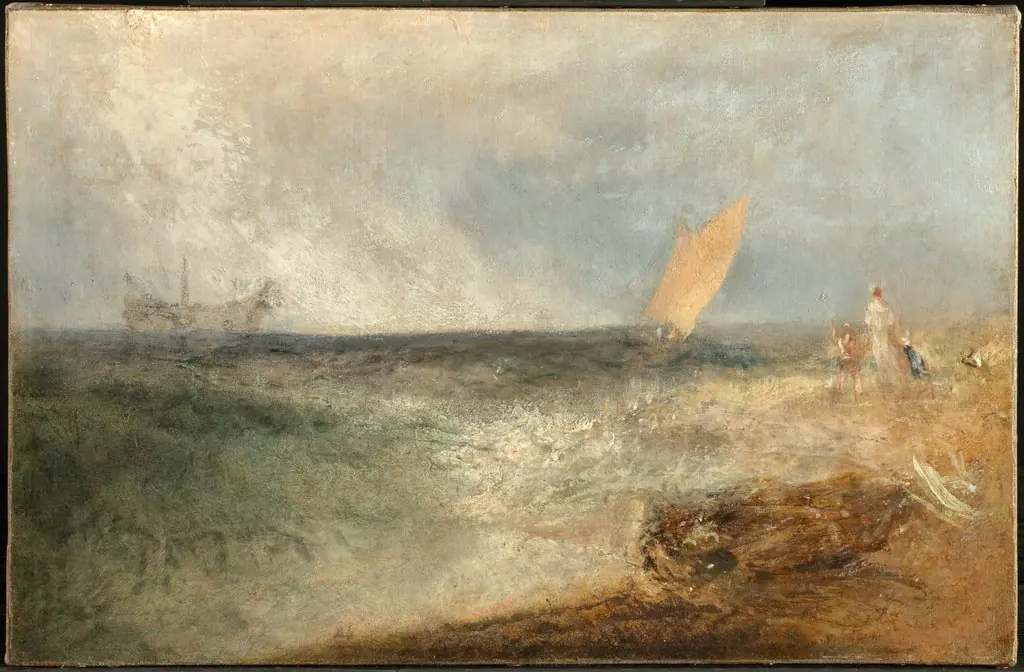
Turner's 1845 painting Whalers depicts a violent maritime scene where a wounded sperm whale thrashes in a sea of foam and blood.
J.M.W. Turner's 1845 painting Whalers depicts a violent maritime scene where a wounded sperm whale thrashes in a sea of foam and blood. The composition features the massive head of the dying cetacean breaking the surface on the left, with its tail visible in the froth to the right, while a small boat is tossed in the foreground. In the background stands a ghostly, three-masted whaling vessel, emphasizing the scale of the hunt.
The work illustrates the intense struggle between man and nature, portraying the brutal reality of the whaling industry through the depiction of blood-stained waters and the desperate movements of the animal. Originally created with the intention of selling to collector Elhanan Bicknell, a wealthy investor in the whaling business, the painting serves as a dramatic representation of the industry's violence rather than a romanticized view of the sea.
Technique & Style
Executed in 1845, Whalers is an oil painting on canvas measuring 91.8 by 122.6 centimeters. The work exemplifies Turner's late marine style through its dynamic composition, which captures a wounded sperm whale thrashing amidst a turbulent sea of foam and blood. Formal elements include a ghostly three-masted whaling vessel situated in the background, contrasting with the chaotic foreground where a small boat is tossed by the surge.
The massive head of the whale breaks the surface on the left, while its tail churns the froth on the right. This handling of paint creates an atmospheric intensity characteristic of Turner's academic art movement contributions, focusing on the violent interaction between humanity and nature rather than precise topographical detail.
History & Provenance
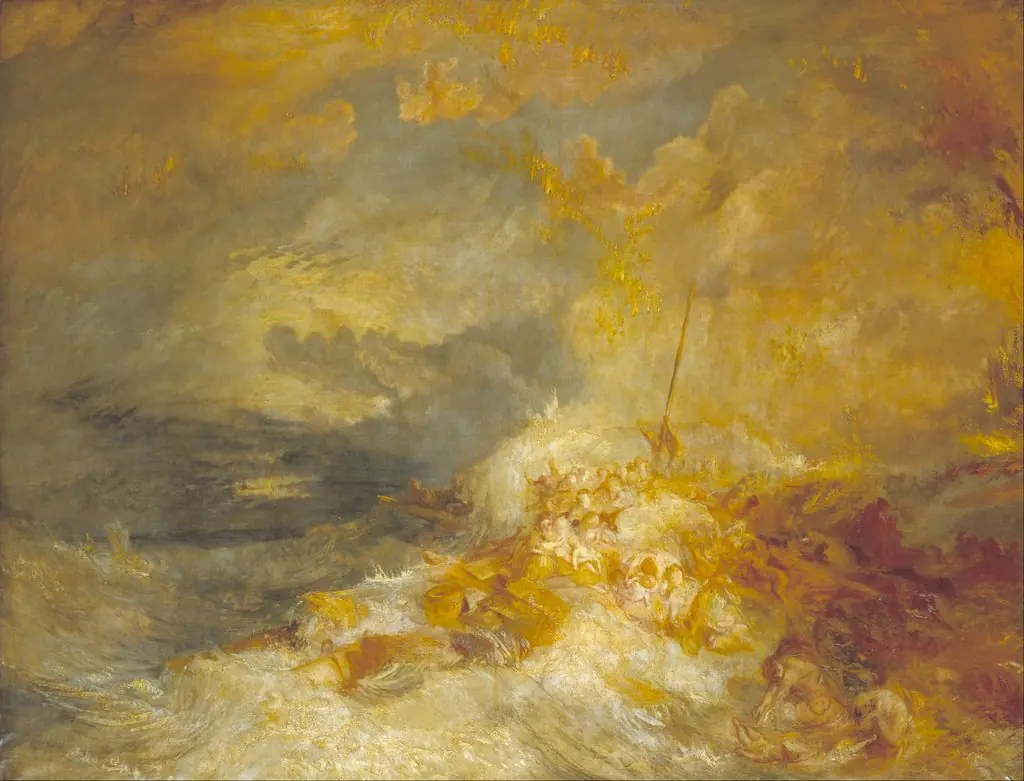
Whalers was painted by J. M. W. Turner in 1845 in oil on canvas. The work was originally created with the specific aim of selling it to the collector Elhanan Bicknell, a wealthy investor in the whaling business. Turner exhibited it at the Royal Academy Exhibition of 1845 at the National Gallery in London, where he showed two different paintings under the same title; the companion piece entered the Turner Bequest of 1856 and is now held by Tate Britain.
Of the whaling-themed works Turner hoped Bicknell would acquire, Bicknell ultimately purchased only one. The painting subsequently entered the collection of the Metropolitan Museum of Art in New York, where it is catalogued under accession number 96.29.
J.M.W. Turner's 1845 oil painting Whalers is held in the collection of the Metropolitan Museum of Art in New York, where it is cataloged under the accession number 96.29. The work was originally created with the intention of being purchased by collector Elhanan Bicknell, though it ultimately entered the museum's holdings. In 2016, the painting served as the centerpiece for the exhibition Turner's Whaling Pictures, which was hosted by the Metropolitan Museum of Art.
This display highlighted the marine genre work alongside other related pieces. The museum's collection also notes the painting's dimensions and medium, confirming its status as a significant example of Turner's late marine art within their permanent inventory.
Context
Turner's Whalers (1845) is recognized as a pivotal marine work that blends academic conventions with dramatic narrative, reflecting contemporary fascination with whaling and the natural world. Scholarship notes its exhibition at the 1845 Royal Academy show and its later inclusion in Turner’s Whaling Pictures exhibition at the Metropolitan Museum of Art in 2016, underscoring its role in reevaluating the artist’s engagement with maritime themes. The painting’s depiction of a wounded sperm whale and a ghostly whaling vessel has been analyzed for its emotional intensity and technical mastery, situating it within Turner’s broader oeuvre of seascapes and his influence on later marine art. Its dual presence in the Met and Tate collections highlights its enduring scholarly and curatorial significance.
Legacy
Turner’s Whalers became a focal point for reassessing his late marine works, anchoring the 2016 exhibition Turner’s Whaling Pictures at the Metropolitan Museum of Art and drawing scholarly attention to the artist’s engagement with contemporary whaling practices. The painting’s dramatic depiction of a wounded sperm whale thrashing amid bloodied foam, coupled with its spectral whaling vessel, has cemented its status as a powerful meditation on human exploitation of nature. While one of two similarly titled works shown at the Royal Academy in 1845, the Metropolitan version is now the more frequently cited, having entered the museum’s collection directly and featured centrally in curatorial projects that probe Turner’s late style and thematic preoccupations.
Overview
J. M. W. Turner's 1845 oil painting, Whalers, captures a dramatic moment of a whaling hunt. Executed on canvas, the work depicts a large whaling vessel and smaller boats engaged in the pursuit of a whale amidst turbulent waters. This painting is held in the collection of the Metropolitan Museum of Art.
Own this work as a print
Artist & collection
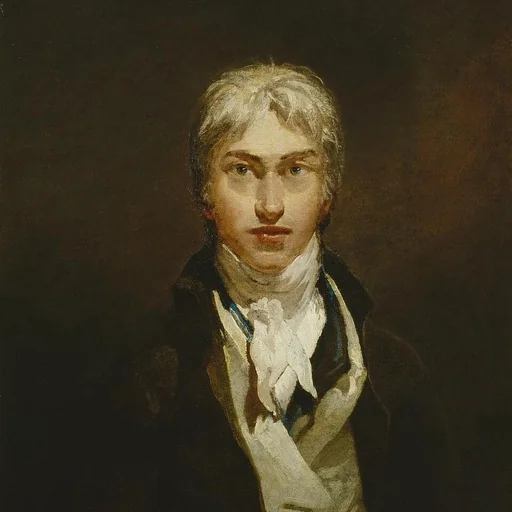
Artist
Joseph Mallord William Turner was born in 1775 at Maiden Lane, Covent Garden, where his father kept a barber and wig-making shop.

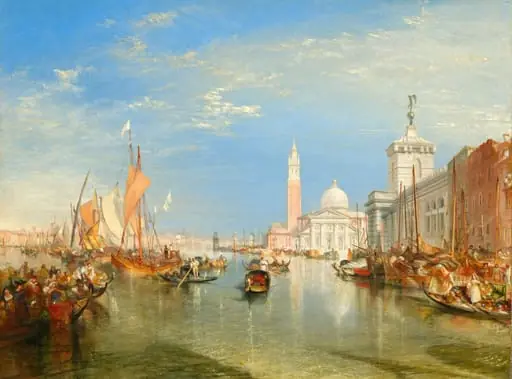 Venice: The Dogana and San Giorgio Maggiore
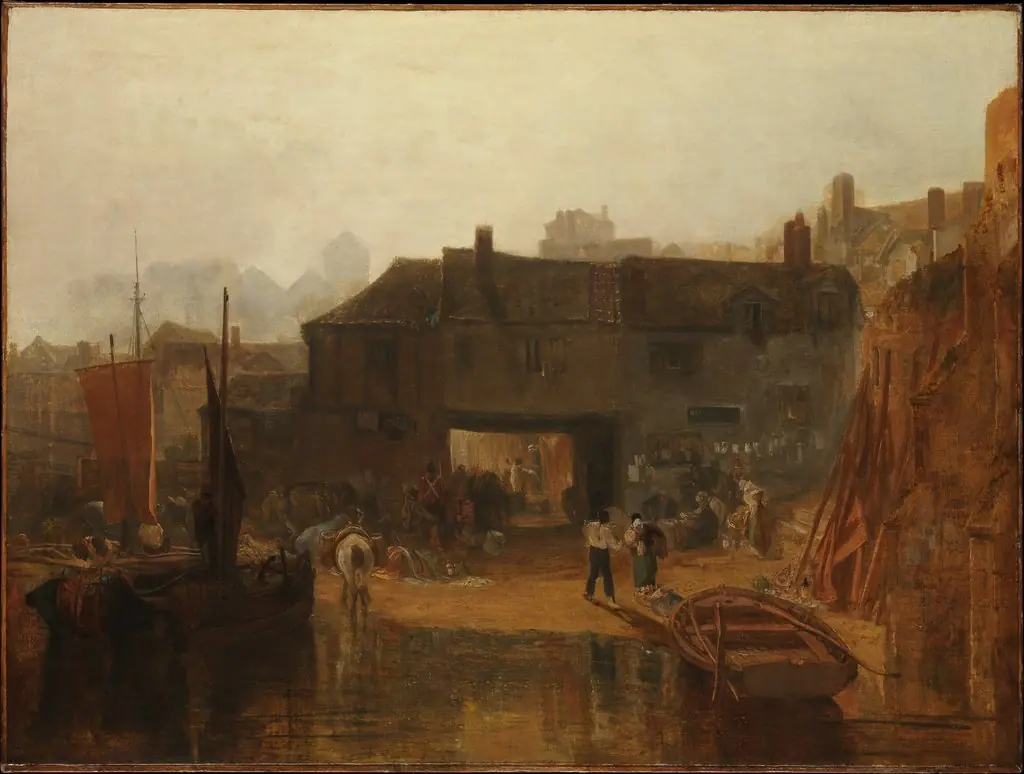 Saltash with the Water Ferry, Cornwall
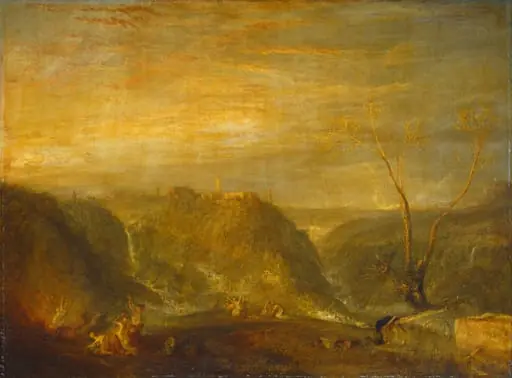 The Rape of Proserpine
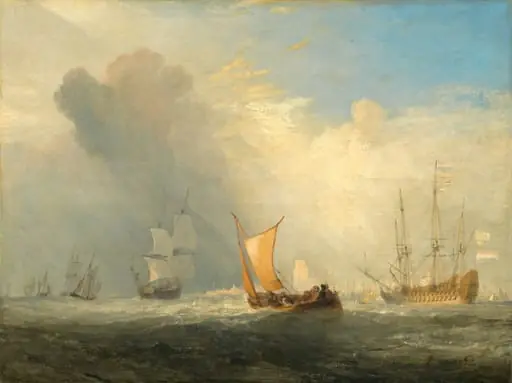 Rotterdam Ferry-Boat
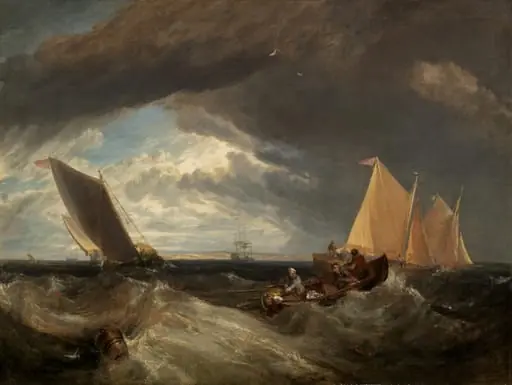 The Junction of the Thames and the Medway
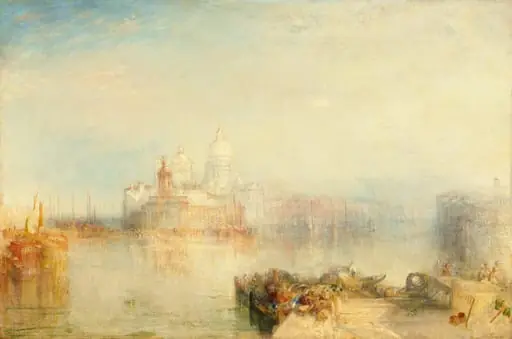 The Dogana and Santa Maria della Salute, Venice
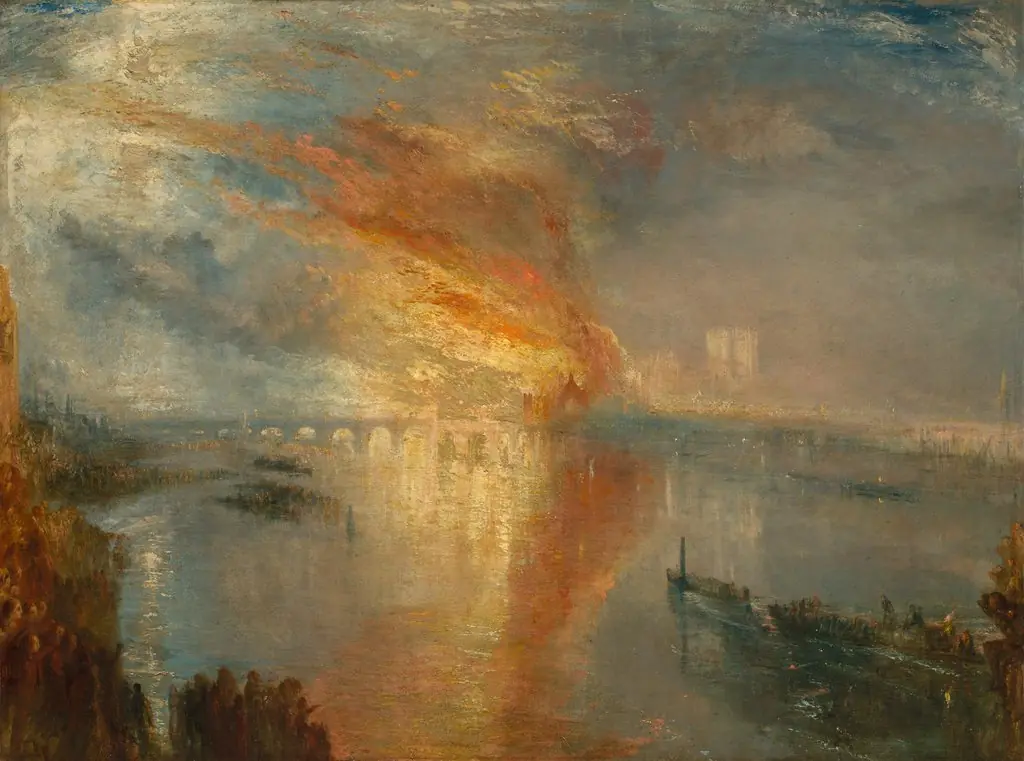 The Burning of the Houses of Lords and Commons, 16 October 1834
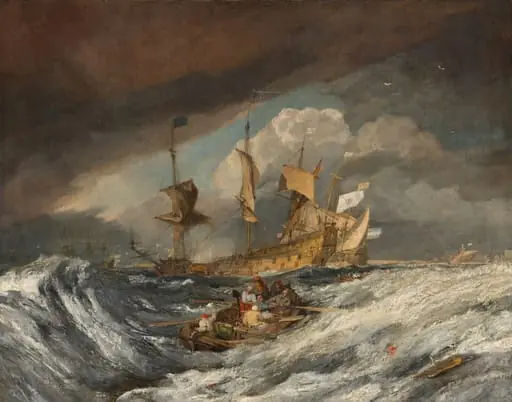 Boats Carrying Out Anchors to the Dutch Men of War