Artwork
The Rape of Proserpine
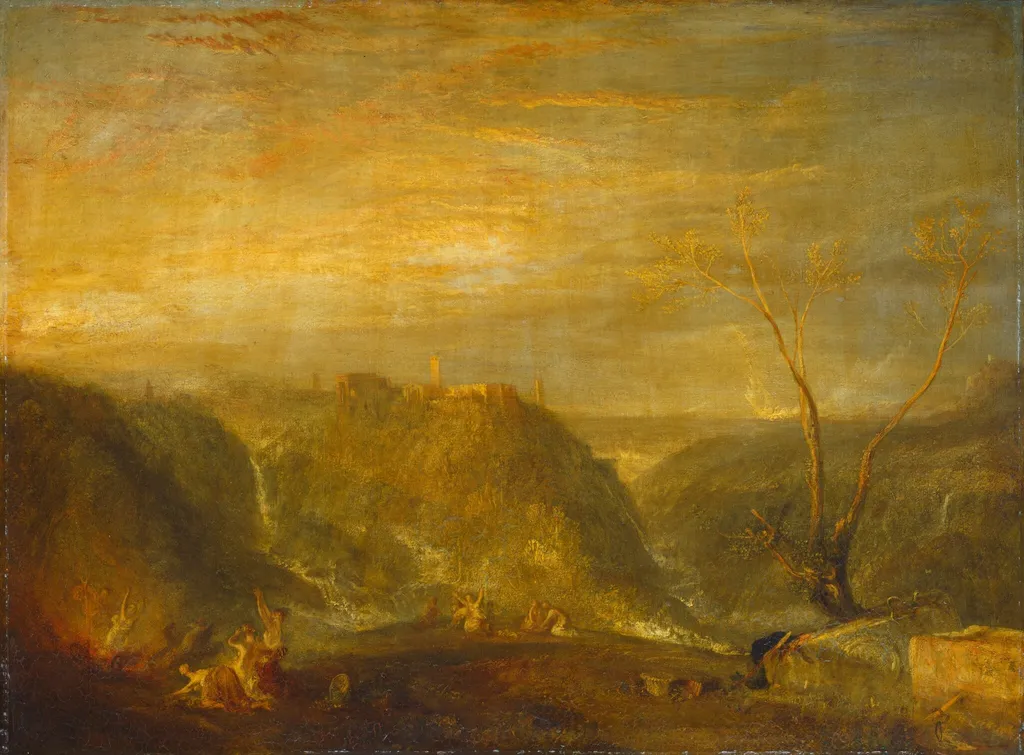
The Rape of Proserpine is an oil painting by the Romanticist artist Joseph Mallord William Turner. It dates from 1839 and is held in the collection of the National Gallery of Art.
About this work
Pluto seizes Proserpine by the waist as she struggles, their clothes swirling against a stormy sky of black and orange. Turner painted the old myth of her abduction to the underworld in 1839, his brushwork thick and rough, indifferent to smooth finish.
Subject & Meaning
It illustrates the abduction of Persephone, known in classical myth as the Rape of Persephone, and is classified as a landscape with mythological subject.
The Rape of Proserpine is a mythological painting by J. M. W. Turner completed in 1839. It illustrates the abduction of Persephone, known in classical myth as the Rape of Persephone, and is classified as a landscape with mythological subject. The composition includes a prominent tree, a detail noted in the work’s descriptive record.
Executed in oil on canvas, the piece measures 92.6 × 123.7 cm and has been part of the National Gallery of Art’s collection in Washington, D.C., since a 1951 gift from Florence Elaine Calkin. Its iconography combines narrative elements of the myth with landscape conventions typical of Turner’s later output.
History & Provenance
The work was commissioned by the Royal Academy and first exhibited there in 1839, dated to that year. Its early ownership is documented from at least 1849, when it was in London and possibly held by William Wethered. By 1852 it belonged to John Chapman, passing by descent to his son Edward Chapman.
The picture was later co-owned by Arthur J. Sulley & Co. and Thos. Agnew & Co. in London, before being sold in 1912 to the New York collector Watson B. Dickerman. After his death it descended to his wife Florence E. Dickerman, who in 1951 donated it to the National Gallery of Art, Washington, D.C.
The Rape of Proserpine is part of the National Gallery of Art collection in Washington, D.C. The painting entered the museum in 1951 as a gift from Florence E. Dickman, who inherited it from her husband Watson B. Dickman, who purchased the work in 1912 from Arthur J. Sulley & Co. in New York. Earlier ownership is traced to William Wethered of King's Lynn, Norfolk, and subsequently to John Chapman of Hill End, Cheshire, and Carlecotes, Yorkshire, before passing to his son Edward Chapman. The work is catalogued as a painting by J.M.W. Turner, created in 1839, and is recorded in the National Gallery of Art's collection database. The supplied documentation does not mention any exhibition history for the piece.
Context
The Rape of Proserpine (1839) is a mythological landscape by J.M.W. Turner that illustrates the abduction of Persephone, a subject drawn from classical mythology. Contemporary scholarship situates the work within Turner’s late output, noting his sustained interest in antiquity and the way he merges atmospheric effects with narrative detail. The painting’s genre combines landscape and mythological themes, reflecting 19th‑century academic trends that sought to elevate nature scenes through literary subjects.
Its provenance, traced from possible earlier owners to the National Gallery of Art, underscores its acceptance into a canonical collection of Turner’s works.
Overview
Joseph Mallord William Turner's 1839 oil on canvas, "The Rape of Proserpine," captures a dramatic moment from classical mythology. The painting portrays Pluto seizing Proserpine, set against a turbulent, expressive landscape. Turner's characteristic handling of light and color imbues the scene with intense emotion and movement, reflecting the violent nature of the ancient narrative.
Technique & Style
Turner employs a vigorous application of oil paint, characterized by thick, visible brushstrokes that convey energy rather than precise detail. The tumultuous atmosphere is heightened by a sky rendered in dark, stormy hues of black and orange, suggesting chaos. The figures' garments appear to swirl around them, contributing to the overall sense of dynamic motion and the violent intensity of the encounter.
Own this work as a print
Artist & collection
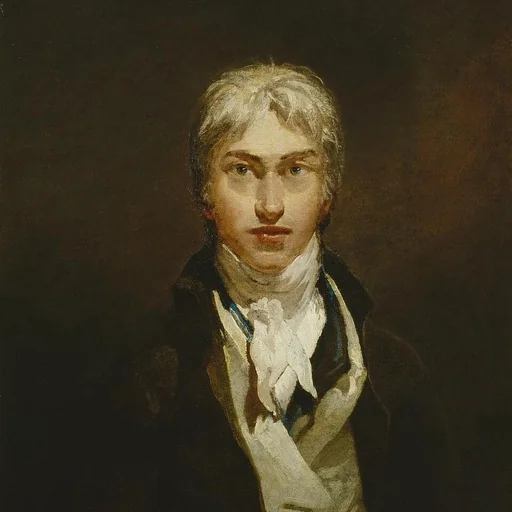
Artist
Joseph Mallord William Turner was born in 1775 at Maiden Lane, Covent Garden, where his father kept a barber and wig-making shop.

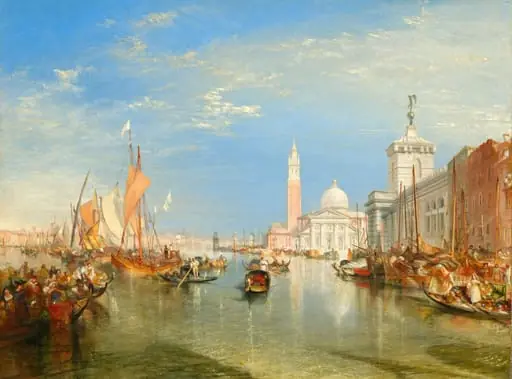 Venice: The Dogana and San Giorgio Maggiore
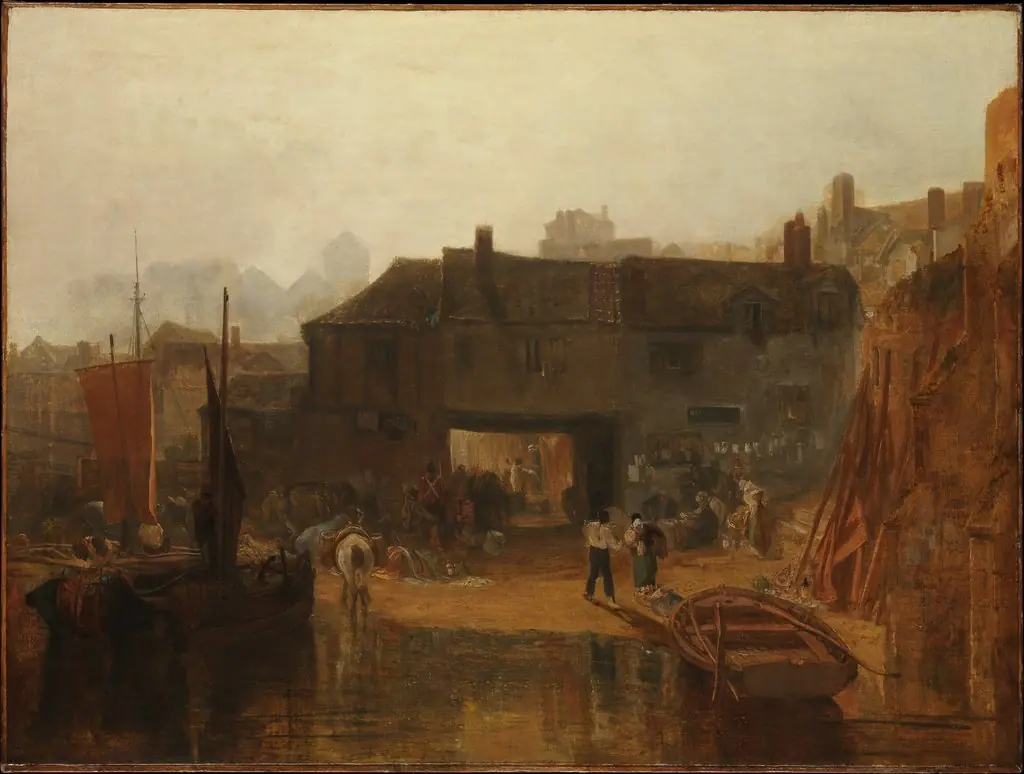 Saltash with the Water Ferry, Cornwall
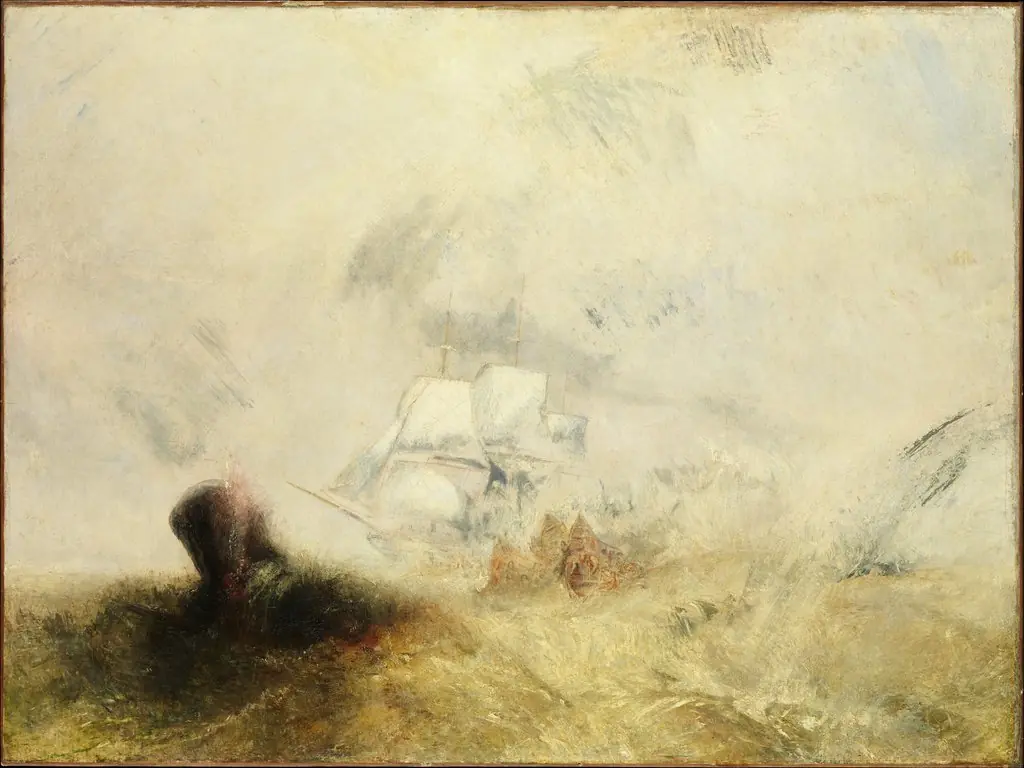 Whalers
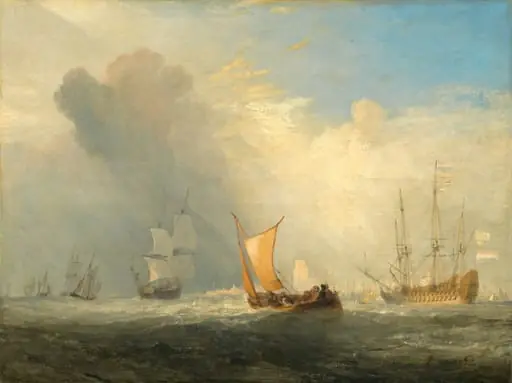 Rotterdam Ferry-Boat
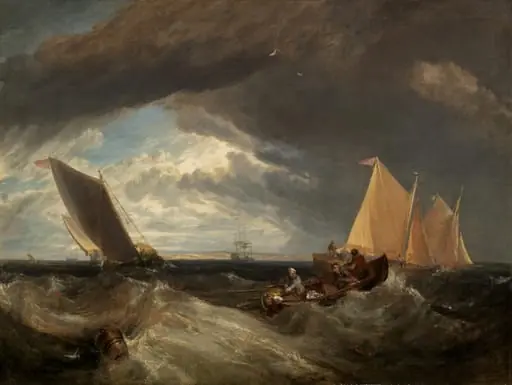 The Junction of the Thames and the Medway
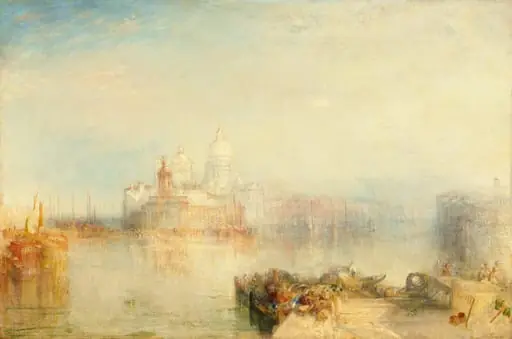 The Dogana and Santa Maria della Salute, Venice
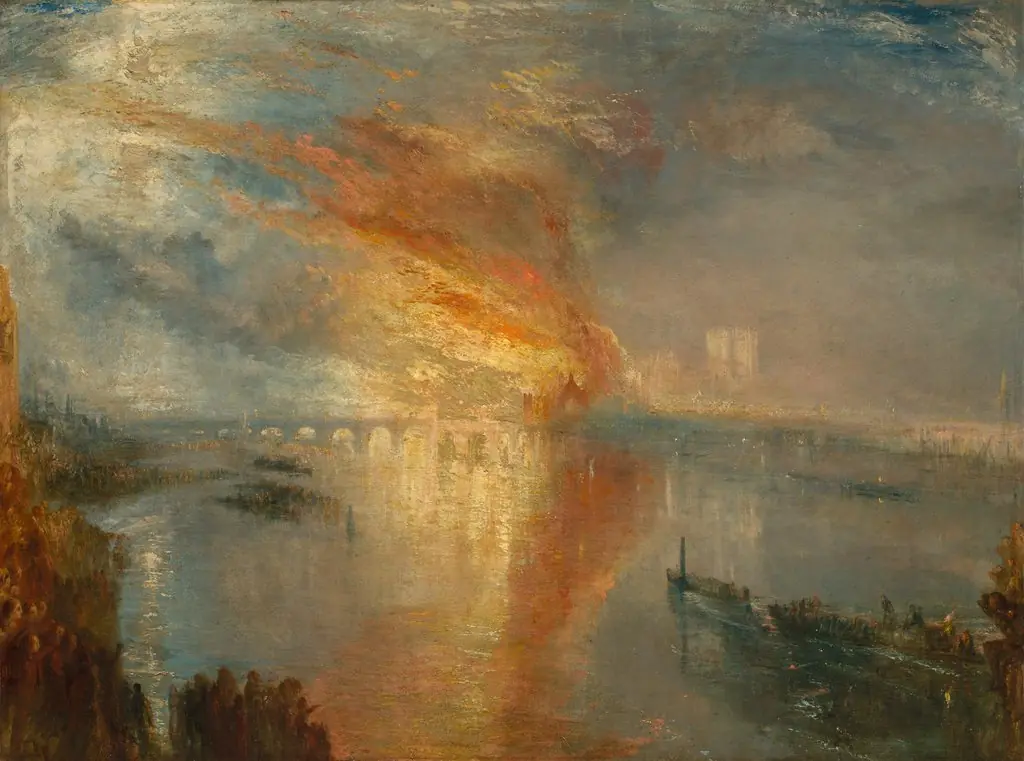 The Burning of the Houses of Lords and Commons, 16 October 1834
 Boats Carrying Out Anchors to the Dutch Men of War