Artwork
Saltash with the Water Ferry, Cornwall
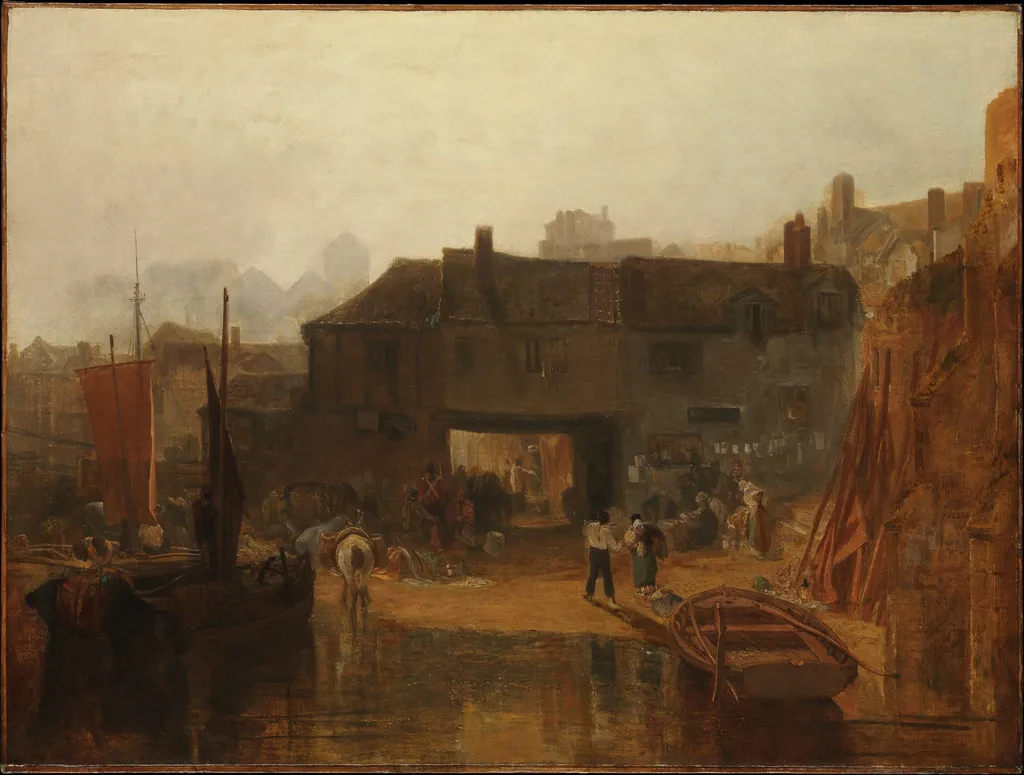
Saltash with the Water Ferry, Cornwall is an oil painting by the British Romanticist artist Joseph Mallord William Turner. It dates from 1811 and is held in the collection of the Metropolitan Museum of Art.
About this work
J.M.W. Turner's 1811 oil view of Saltash on the River Tamar, across from Plymouth. A small ferry links the two banks beside an inn, with smaller craft on the water. A redcoat sentry stands watch, and a quote from Nelson nods to the ongoing Napoleonic Wars.
Subject & Meaning
The composition includes a boat, a building, and a man and woman, reflecting everyday maritime activity.
Saltash with the Water Ferry, Cornwall (1811) portrays the town of Saltash on the River Tamar opposite Plymouth, showing a ferry linking the two banks, an inn, several small craft, and figures including a red-coated sentry; the sentry and a quotation from Horatio Nelson allude to the Napoleonic Wars then underway. The composition includes a boat, a building, and a man and woman, reflecting everyday maritime activity. Executed by J.M.W. Turner during a West Country visit, the painting was displayed in Turner's private London gallery before entering the Metropolitan Museum of Art's collection in 1889.
Technique & Style
Executed in 1811, this landscape is an oil painting on canvas measuring approximately 90 by 121 centimeters. The composition depicts the town of Saltash on the River Tamar, featuring a ferry connecting the settlement to Plymouth. The scene includes an inn, various small craft, and figures such as a redcoat sentry, elements that allude to the contemporaneous Napoleonic Wars.
Turner created the work during a visit to the West Country, also producing a view of the nearby Hamoaze. Stylistically, the painting serves as a topographical record while incorporating narrative details through specific figures and historical references. Rather than debuting at the Royal Academy's Summer Exhibition, the artist initially displayed the piece in his own London gallery.
History & Provenance
Saltash with the Water Ferry, Cornwall was produced by J. M. W. Turner in 1811 during a visit to the West Country, when he also painted a view of the nearby Hamoaze. Turner chose to exhibit the finished work in his own London gallery rather than at the Royal Academy's Summer Exhibition. It was later shown in 1846 at the Royal Hibernian Academy in Dublin.
The painting subsequently entered the Metropolitan Museum of Art in New York in 1889, acquired through the Marquand Collection assembled by Henry Gurdon Marquand, and remains in that institution's collection today.
Context
Turner's Saltash with the Water Ferry, Cornwall (1811) was first shown in his private London gallery rather than at the Royal Academy, signaling his independence from institutional exhibition norms of the period. The painting's inclusion in the 1846 Royal Hibernian Academy exhibition in Dublin reflects its continued circulation within British art networks decades after its creation. Art-historical scholarship positions the work within Turner's broader West Country campaign of 1811, alongside closely related views such as his depiction of the Hamoaze, emphasizing the artist's sustained engagement with maritime and coastal topography during this phase.
The Napoleonic-era imagery, evidenced by the redcoat sentry and Nelson quotation, anchors the painting in Britain's wartime visual culture, a theme recurrent in Turner's oeuvre of the period.
Overview
Joseph Mallord William Turner's oil painting, "Saltash with the Water Ferry, Cornwall," created in 1811, captures a view of the town of Saltash. Situated on the River Tamar, Saltash faces the significant port of Plymouth. The landscape depicts daily life, including a ferry crossing the river and various small boats.
However, subtle details within the scene also allude to the broader geopolitical climate of the ongoing Napoleonic Wars.
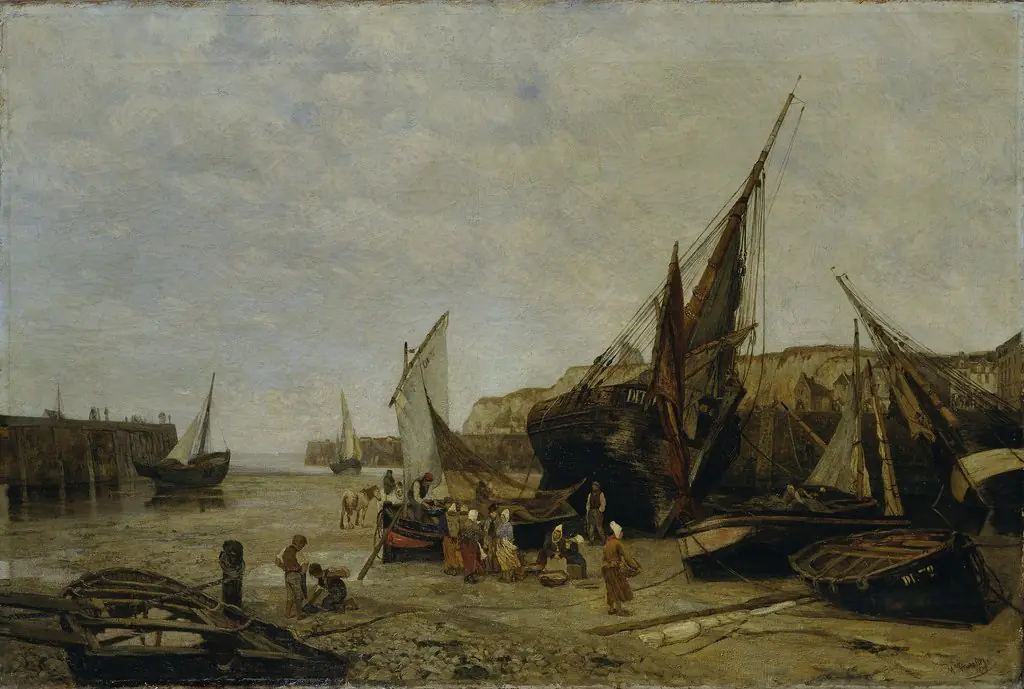
Own this work as a print
Artist & collection
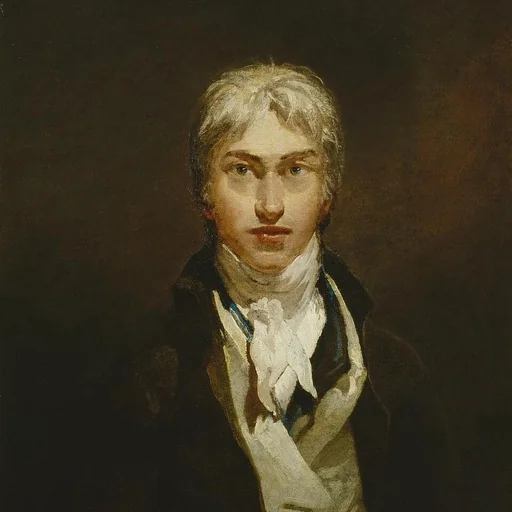
Artist
Joseph Mallord William Turner was born in 1775 at Maiden Lane, Covent Garden, where his father kept a barber and wig-making shop.

- Der Hafen von Dieppe
 The old fishmarket at Hastings
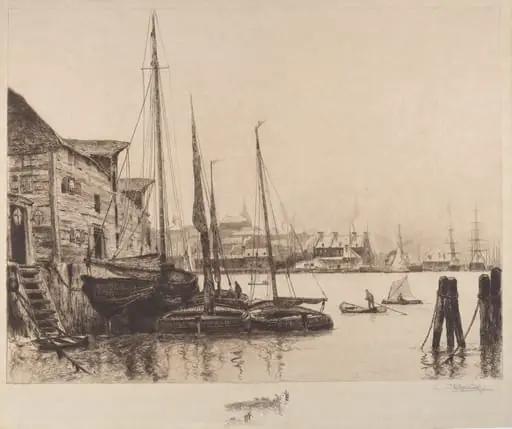 Quebec
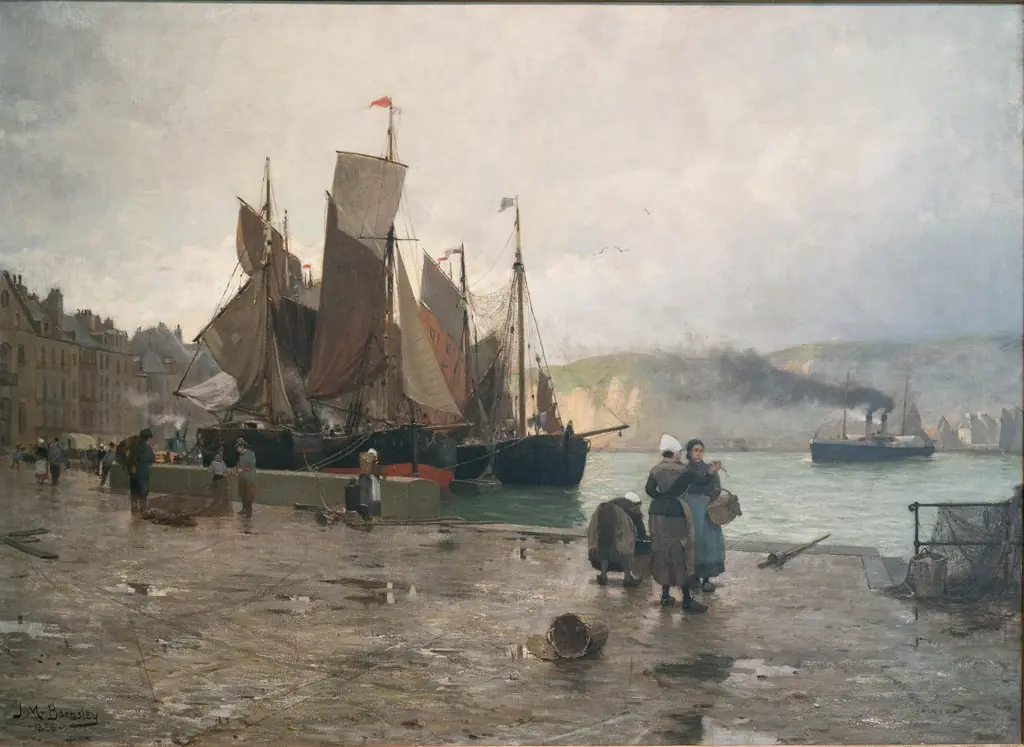 High Tide at Dieppe
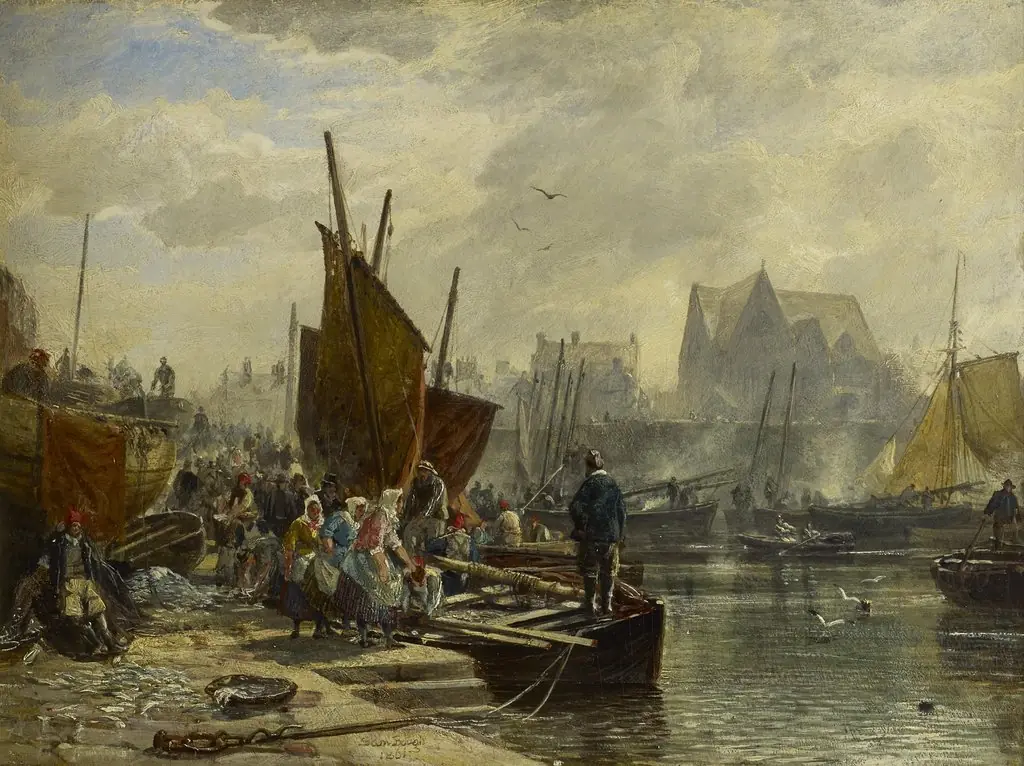 Unloading the Catch, Newhaven
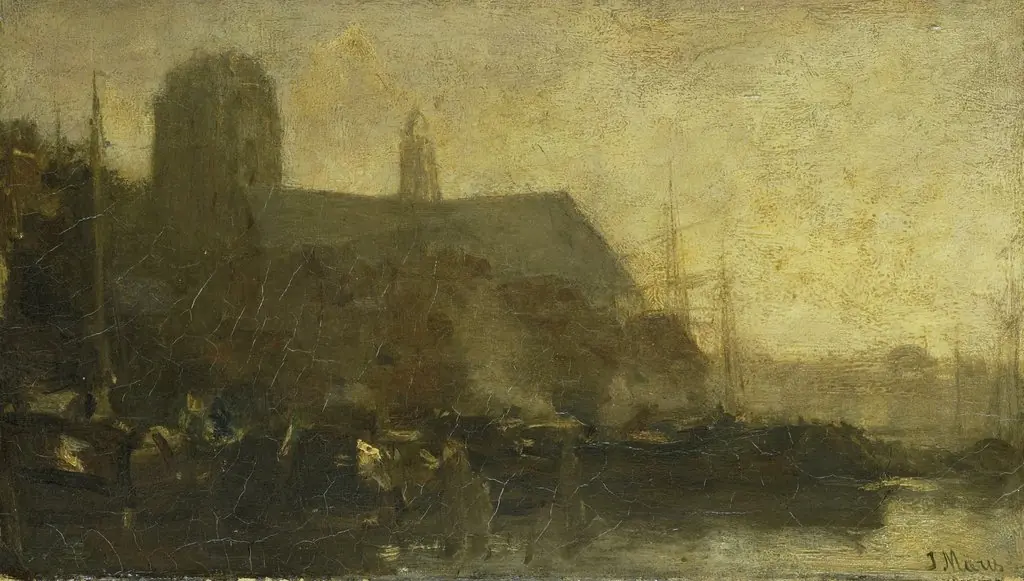 Schepen in de haven van Dordrecht
 Grey and Silver: Old Battersea Reach
 View of the Strada Nuova against the Giardini Pubblici in Venice
 Nautilus Fleet
 Calm
Calm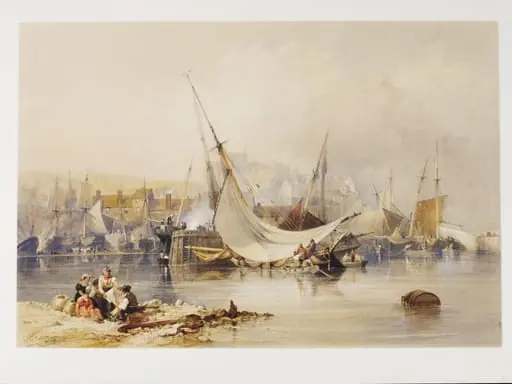 Whitby
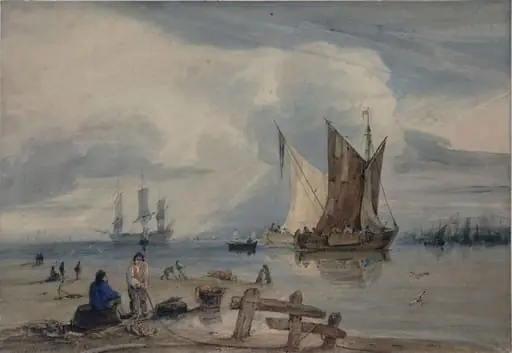 Shipping in a calm, with fishermen on the beach