Artwork
The Lamentation
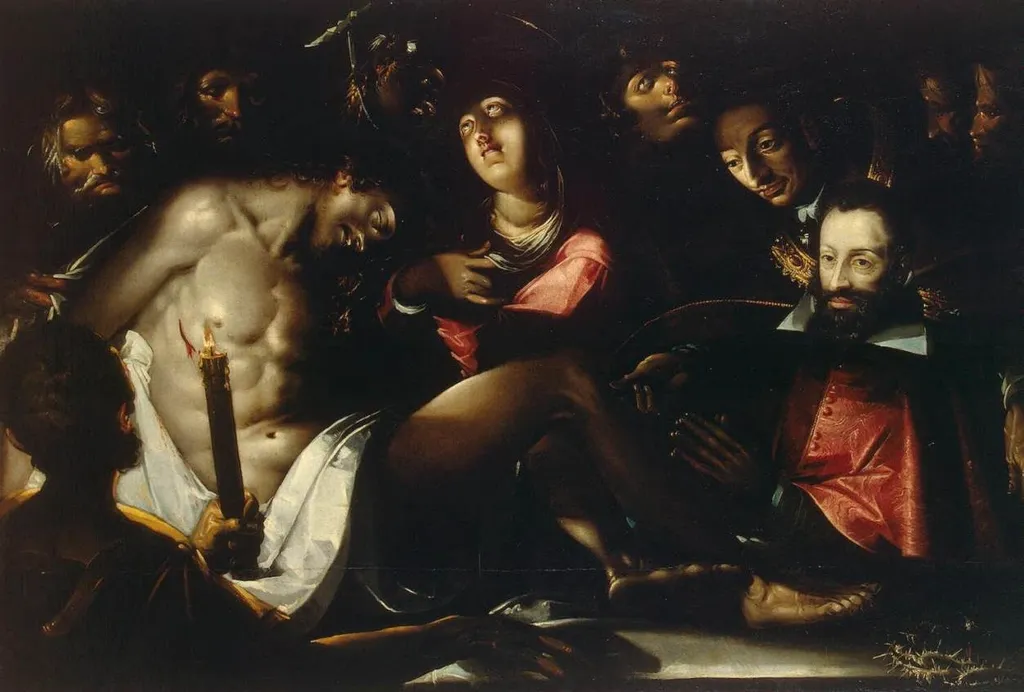
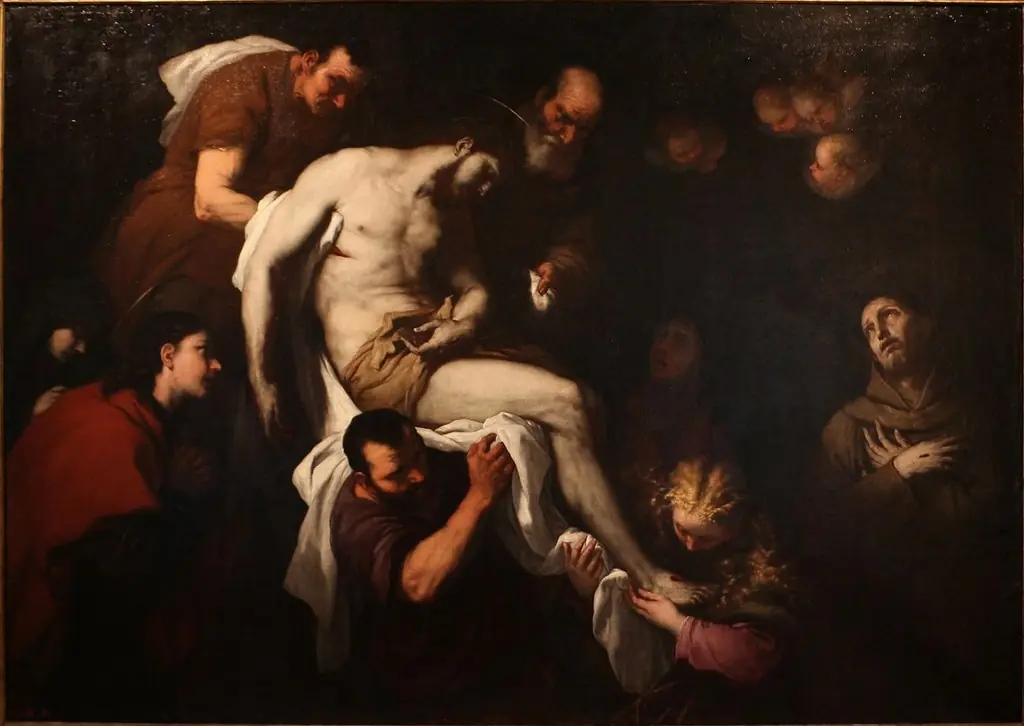
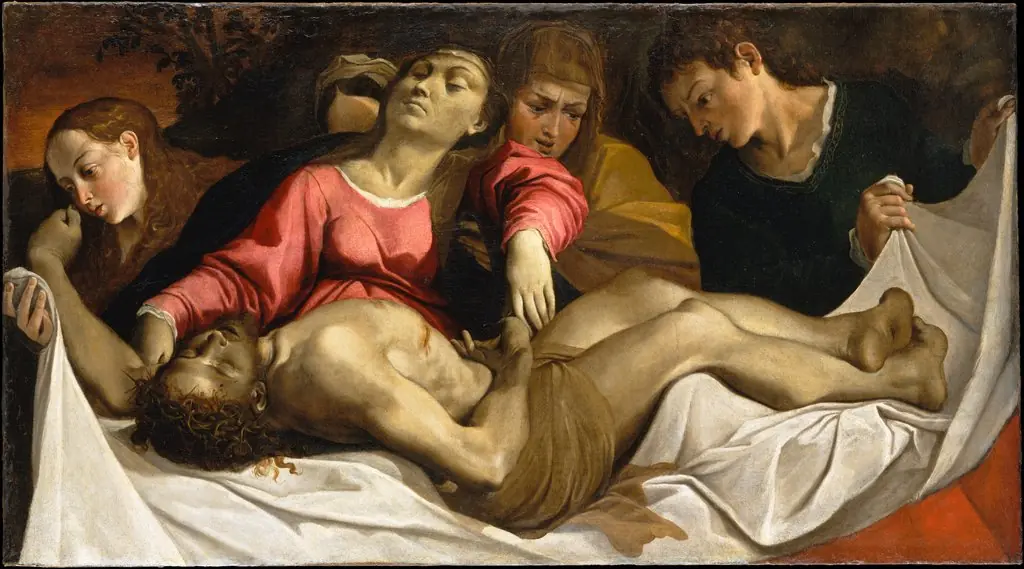
The Lamentation is an oil painting by the Early Baroque Italian artist Jacques Bellange. It dates from 1615 and is held in the collection of the Hermitage Museum.
About this work
Overview
The Lamentation is an oil-on-canvas painting by the French artist Jacques Bellange, dated to approximately 1615-1617 and now held in the Hermitage Museum in Saint Petersburg. Measuring 115 by 175 cm, the work depicts the mourning of Christ's body after the Crucifixion, a subject that allowed Bellange to demonstrate his sophisticated handling of dramatic lighting and emotional intensity. The painting is considered a significant example of Caravaggesque influence in French art of the early seventeenth century, combining the stark naturalism of the Italian Baroque with a distinctly Northern European sensibility in its compressed, nocturnal composition.
Subject & Meaning
The painting represents the Lamentation of Christ, the moment when Christ's body is mourned by his followers after being removed from the cross.
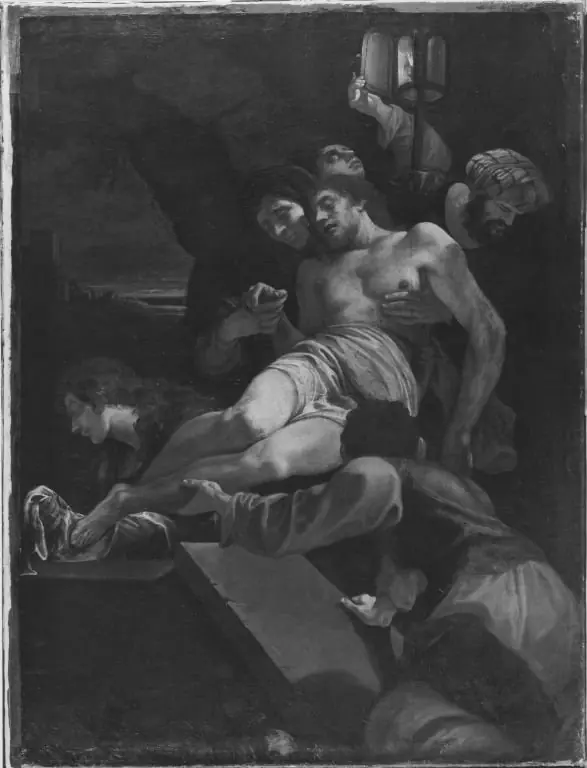
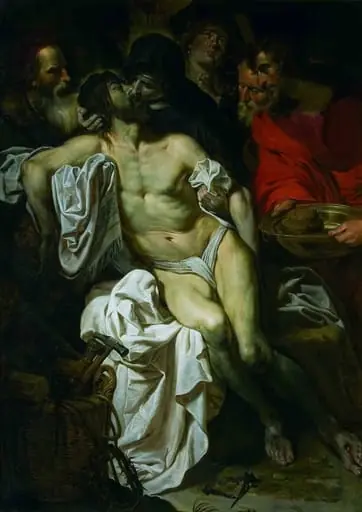
The painting represents the Lamentation of Christ, the moment when Christ's body is mourned by his followers after being removed from the cross. At the center lies the pale, muscular corpse of Jesus, partially draped in white cloth, with a small wound visible on his torso. A woman in pink and dark garments, likely the Virgin Mary or Mary Magdalene, supports the upper body, her face tilted upward in grief. Multiple figures peer from the shadows, some gazing upward, others observing directly, creating a sense of intimate, shared sorrow. A crown of thorns rests in the lower right corner, a poignant reminder of the Passion. In the lower left, a figure holds a tall lit candle near the corpse, the flame serving both as a practical light source within the narrative and as a traditional symbol of divine presence and the light of Christ. The figure in red and black with a white collar, kneeling at the right with hands extended, may represent a donor or a participant in the sacred drama, a device common in contemporary religious painting. The overall effect is one of intense, theatrical grief, compressed into a dark, claustrophobic space that forces the viewer into close proximity with the dead Christ.
Technique & Style
Bellange executed the work in oil on canvas, a medium that allowed for the rich color saturation and subtle tonal transitions evident in the painting. The palette is dominated by deep browns and blacks, punctuated by the white drapery of Christ's shroud, the pink and red garments of the mourners, and the warm glow of candlelight. Strong chiaroscuro models the figures, with light concentrated on the corpse's chest and the woman's face, creating a dramatic focal point that recalls the tenebrist techniques pioneered by Caravaggio and his followers. The brushwork appears smooth on flesh, suggesting a refined, almost enamel-like surface, while thicker texture in the fabrics adds material presence and visual interest. The background is nearly black and undefined, a void that eliminates any sense of specific location and heightens the psychological intensity of the scene. This handling of paint and light demonstrates Bellange's absorption of Italian Baroque innovations, filtered through the aesthetic priorities of the French court tradition.
History & Provenance
The painting was created in France between 1615 and 1617, a period when Bellange was active as a court artist in Lorraine. The work later entered the collection of the Hermitage Museum in Saint Petersburg, Russia, where it remains today. While the exact provenance chain before its acquisition by the Hermitage is not fully documented in the available sources, the painting's presence in one of the world's major encyclopedic museums has ensured its visibility and importance in the study of French Baroque art. The canvas has been reproduced and distributed through major image licensing agencies, indicating its established place in the canon of Western painting.
Context
Jacques Bellange was a French artist active in the early seventeenth century, primarily associated with the court of Lorraine, and his work reflects the complex interchange between French, Flemish, and Italian artistic traditions during this period. The Lamentation exemplifies the spread of Caravaggesque naturalism beyond Italy, as French artists encountered and adapted the dramatic lighting and emotional directness of Caravaggio's style. The painting's nocturnal setting, candlelit illumination, and compressed, intimate composition align it with the broader European phenomenon of tenebrist religious painting, while its particular refinement in the handling of flesh and fabric suggests the influence of Northern European traditions. The work's attribution to Bellange has been established through stylistic analysis, and it is catalogued under his name in major institutional databases. The painting's presence in the Hermitage, a museum with particularly strong holdings in Italian and Northern European Baroque art, situates it within a context of comparative study that illuminates both its distinctive qualities and its broader art historical significance.
Legacy
The Lamentation has become one of Bellange's most widely reproduced and recognized works, serving as a key document for understanding the reception of Caravaggesque style in France. The painting's dramatic composition and emotional intensity have made it a staple of art historical illustration and commercial reproduction, with licensed images distributed by Bridgeman Images and other agencies for educational and decorative purposes. The work's designation as 'caravaggesque' in commercial databases reflects its continued use as an exemplar of Baroque naturalism and dramatic lighting. Its presence in the Hermitage ensures ongoing scholarly attention and public access, while its reproduction in print and digital formats extends its reach beyond the museum walls. The painting endures as a significant monument of early seventeenth-century French painting, demonstrating how Italian innovations were transformed by Northern artists into distinctive regional expressions.
Artist & collection
Artist
Jacques Bellange (c. 1575–1616) was an artist and printmaker from the Duchy of Lorraine (then independent but now part of France) whose etchings and some drawings are his only securely identified works today. They are…