Artwork
Maharana Jagat Singh Attending the Raslila
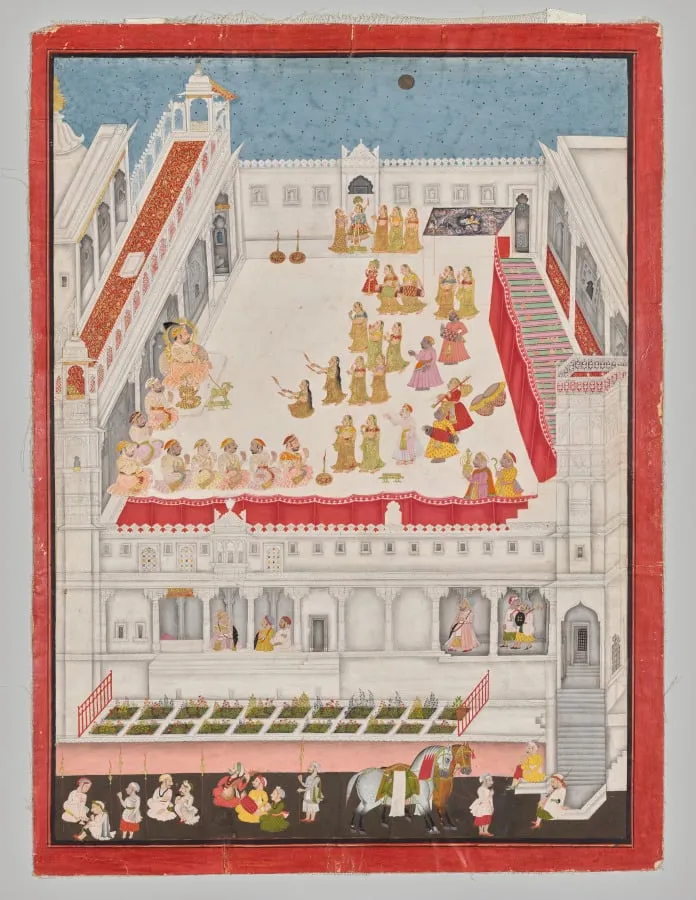
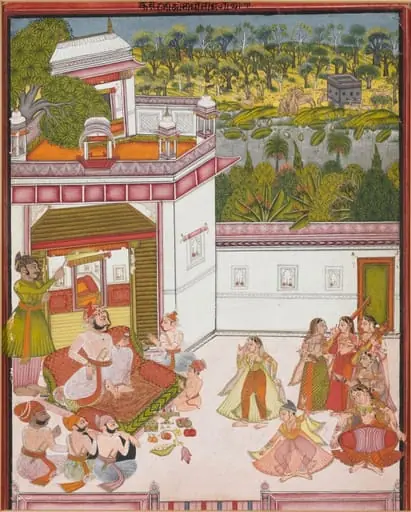
Maharana Jagat Singh Attending the Raslila is an unspecified painting by the Baroque artist Jai Ram. It dates from 1736 and is held in the collection of the Cleveland Museum of Art.
- Accession no.
- 2011.141
- Credit line
- Gift of Maxeen and John Flower in honor of Dr. Stanislaw Czuma
About this work
The king sits on a terrace, smoking from a golden hookah shaped like a goat, while his young son watches beside him.
You see a nighttime courtyard lit by candles and moonlight, where dancers in bright costumes act out a Hindu story. The king sits on a terrace, smoking from a golden hookah shaped like a goat, while his young son watches beside him.
This painting was made to celebrate Diwali, the festival of lights. The dancer in blue with a peacock-feather crown plays Krishna, a beloved god. The king’s halo shows he rules with divine approval, a quiet way to remind everyone of his power.
To see more paintings like this, look up northwestern india, rajasthan, mewar, udaipur, 18th century.
Overview
Maharana Jagat Singh Attending the Raslila is an 18th-century Indian painting depicting a nighttime Diwali celebration in a palace courtyard. The scene blends religious narrative with royal portraiture, set against the backdrop of a geometrically designed garden under moonlight.
Subject & Meaning
The painting illustrates the Raslila, a theatrical reenactment of Krishna’s life, with a dancer portraying Krishna under a celestial canopy. Maharana Jagat Singh, a Mughal vassal, is prominently seated with a halo, symbolizing divine legitimacy for his rule, accompanied by his heir.
Technique & Style
The work exhibits a blend of Mughal influences, evident in its formal gardens, playful perspective, and detailed portraiture. The nighttime setting is illuminated by candlelight and moon, contrasting with the vibrant colors of the dancers’ costumes.
History & Provenance
Created in the 18th century for Diwali celebrations, this painting is part of a large-format series from the region of Mewar (Udaipur), Rajasthan, in northwestern India, reflecting the selective adoption of imperial Mughal artistic sensibilities by regional courts.
Artist & collection

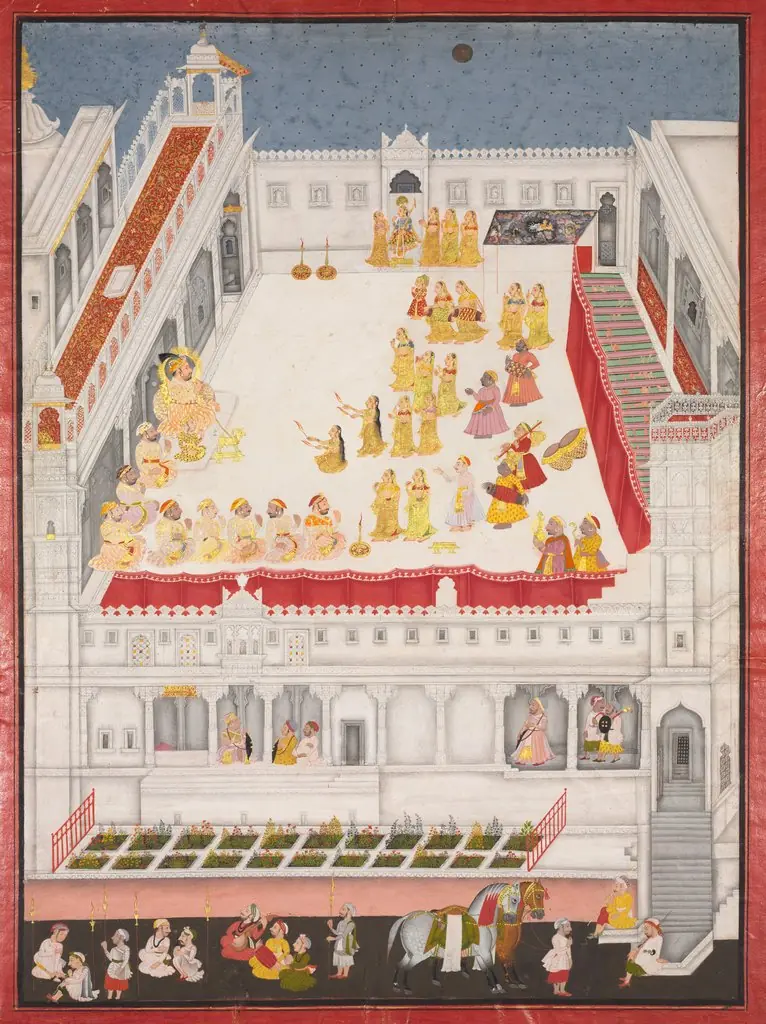
- Maharana Jagat Singh Attending the Raslila
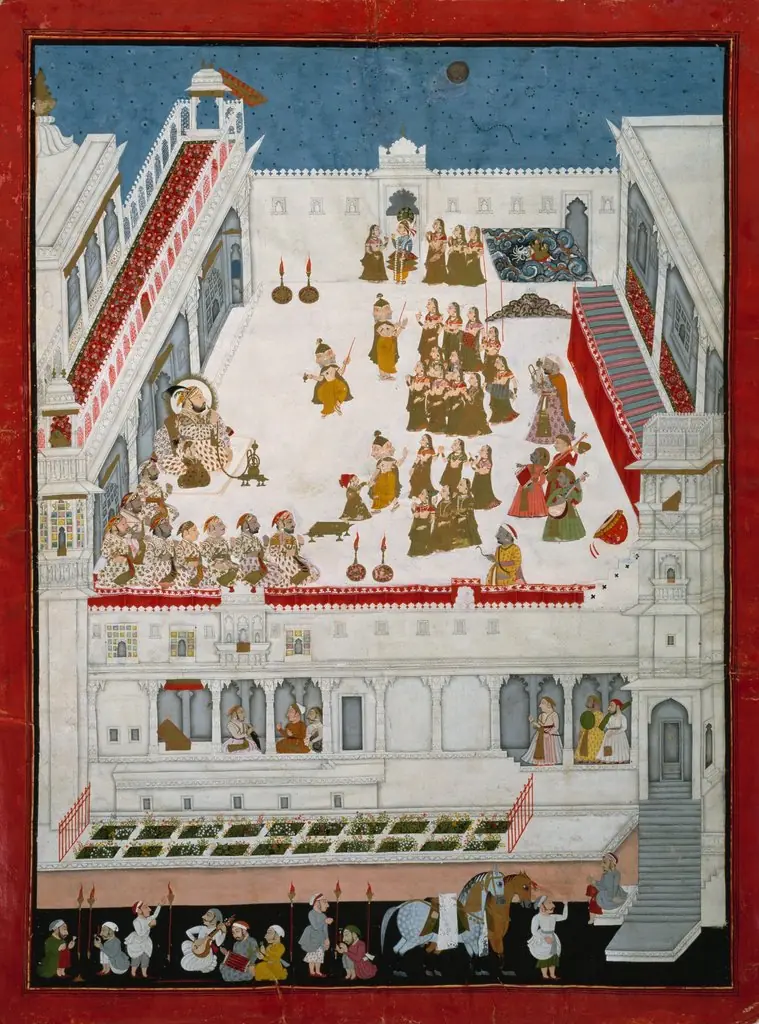 Maharana Jagat Singh II and Nobles Watching the Raslila Dance Dramas
 Untitled
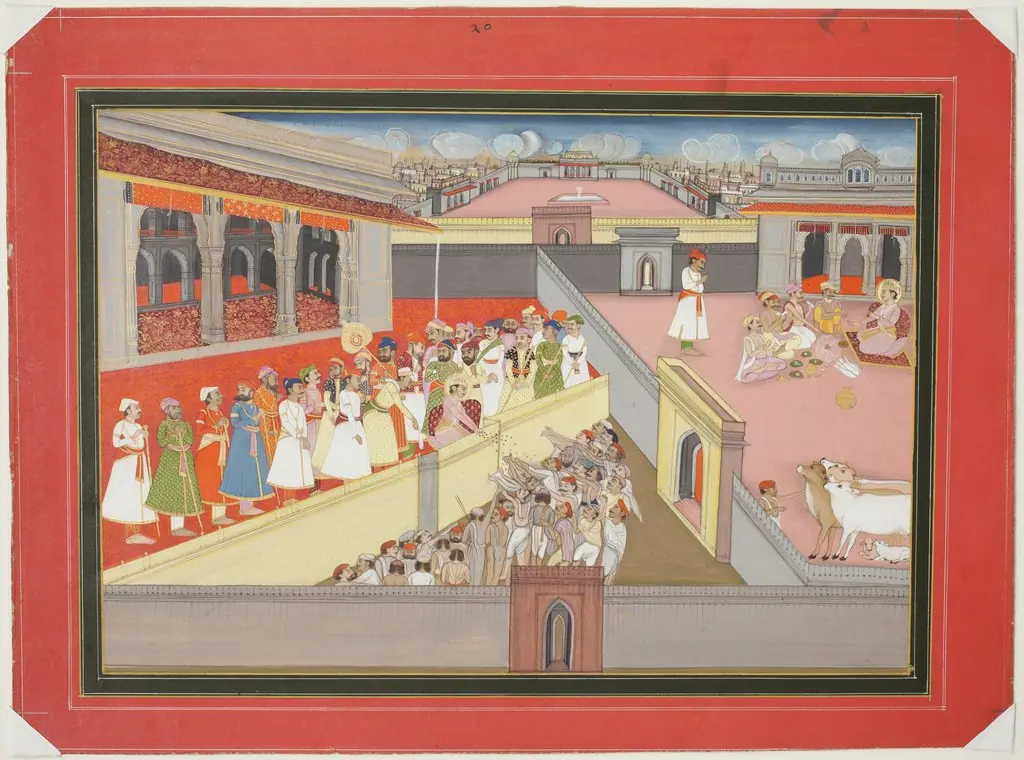 Court Scene
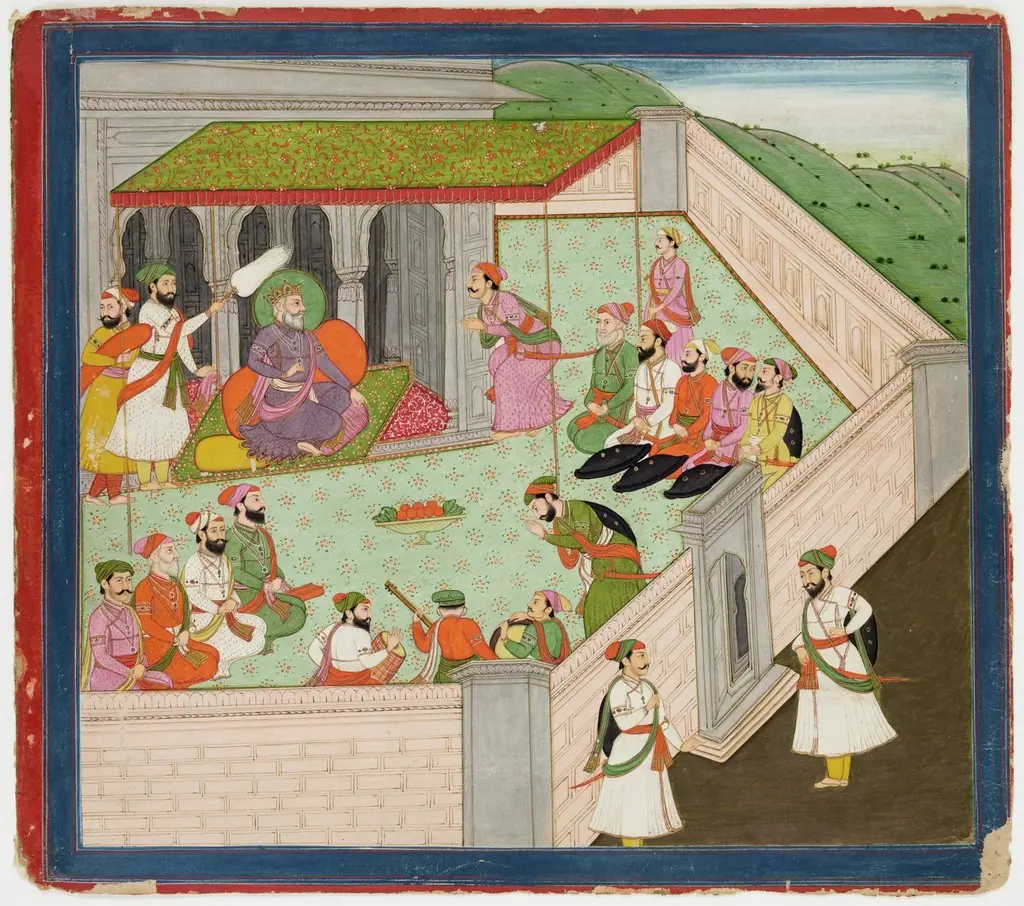 Illustrations to Life of Dhurva Maharaj: #1 Durbar of King Uttan Pad
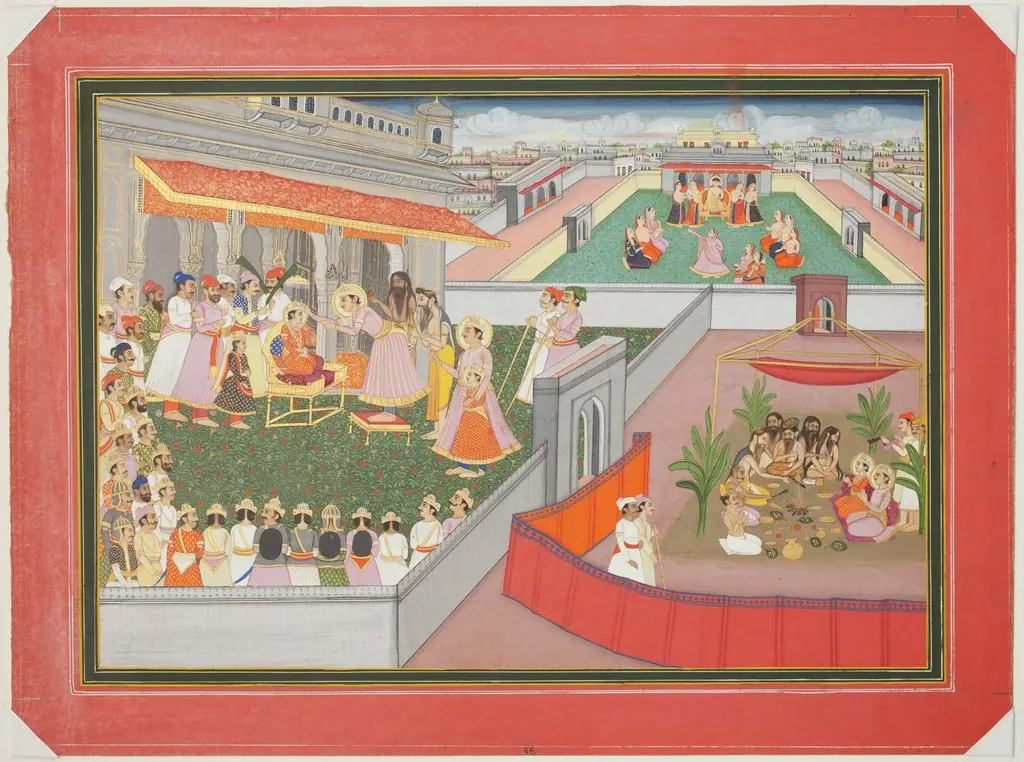 Court Scene
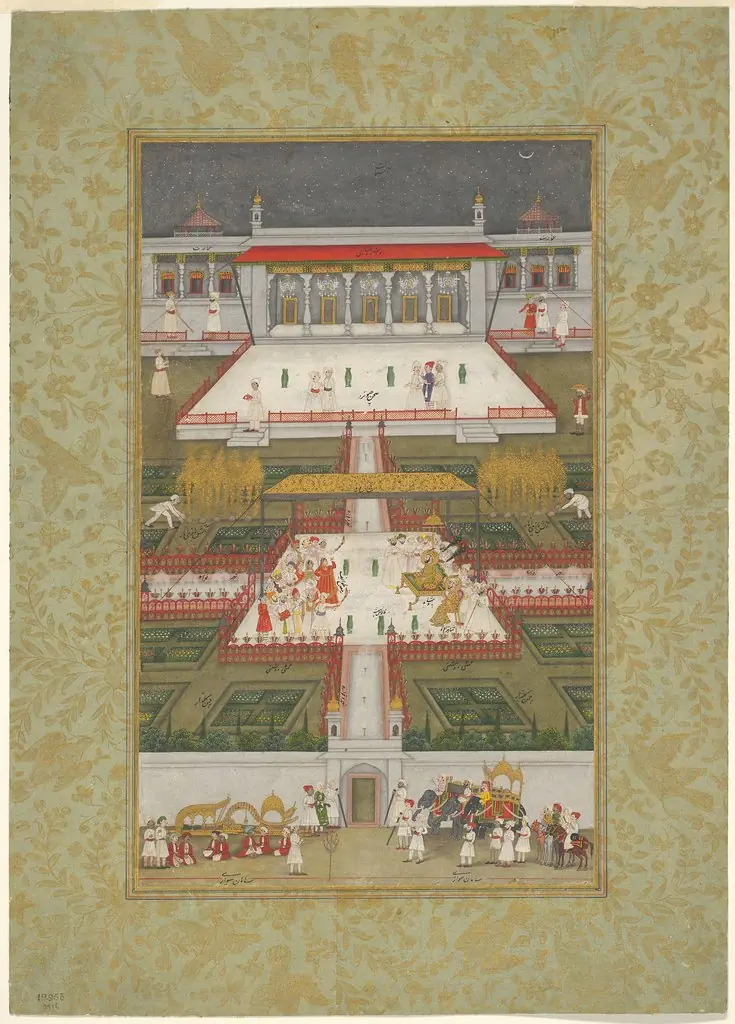 Ruler Entertained by Dancers in a Paradise Garden
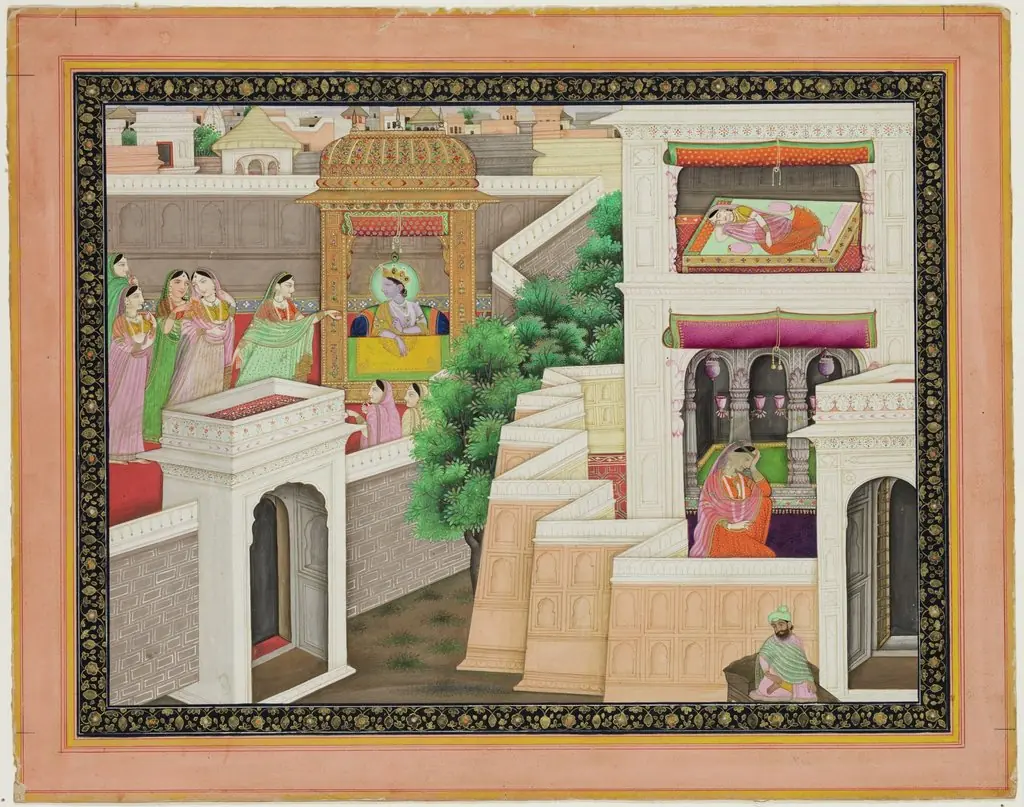 Story of Krishna and Radha
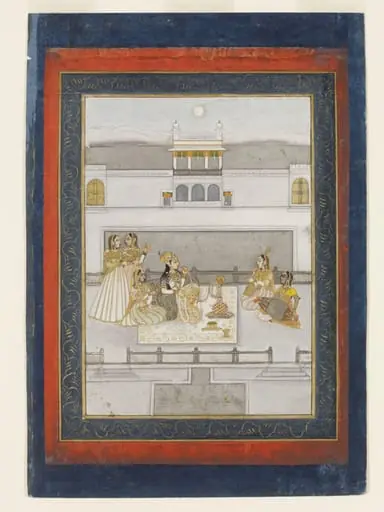 Untitled
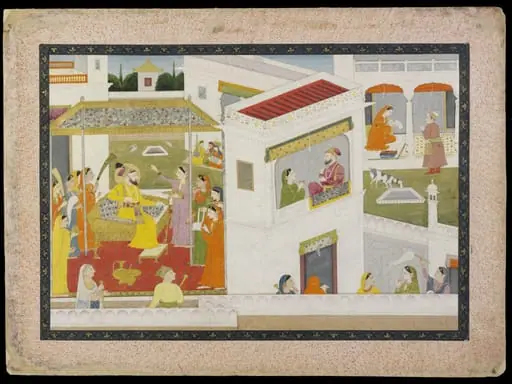 Ala-ud-din
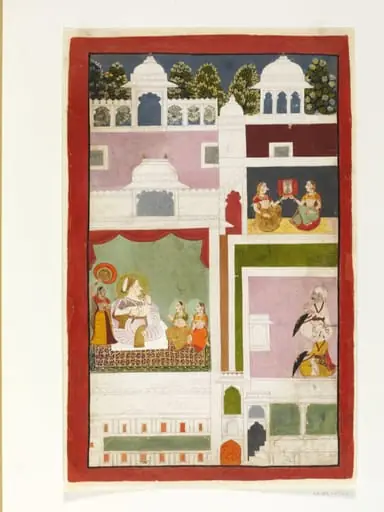 Maharaja Ajit Singh of Jodhpur
 Maharaja of Kotah Listening to Music and Watching Dancers