Artwork
Untitled
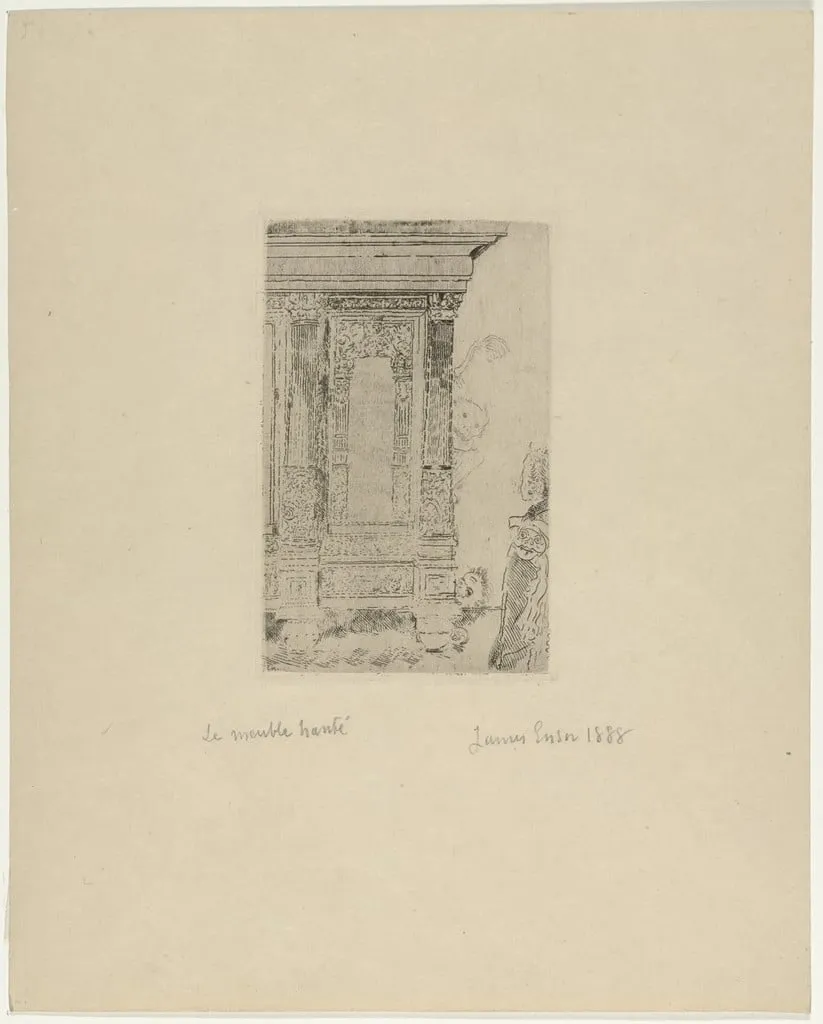
Untitled is an ink print by the Impressionist artist James Ensor. It dates from 1888 and is held in the collection of the Museum of Modern Art.
About this work
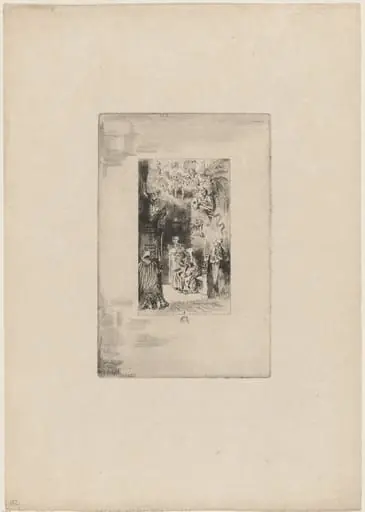
To the right, a person in a long coat stands half-hidden, looking toward the door.
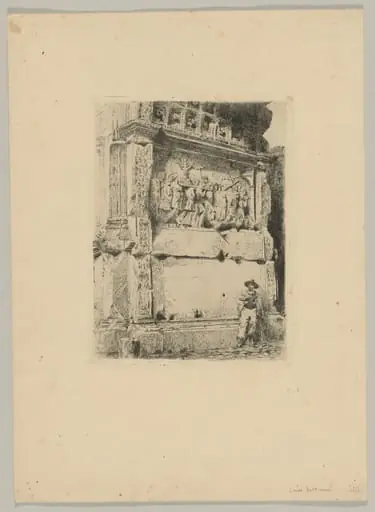
This sketch shows a dark, ornate doorway with carvings and a heavy frame. To the right, a person in a long coat stands half-hidden, looking toward the door. The scene feels dim and quiet, with rough lines and no clear colors.
The title written below—*"le marbre hanté"*—means "the haunted marble." The artist signed it in 1888, and this is an etching, a printmaking method.
Next, check out etching to see how artists like Ensor create these detailed lines.
Overview
James Ensor produced this etching in 1888 during a period of intense experimentation in printmaking. A Belgian artist based in Ostend, he was known for his distinctive graphic style and association with the avant-garde group Les XX. The work is part of The Museum of Modern Art’s collection, reflecting its significance in the development of modern graphic art. Its quiet, enigmatic tone distinguishes it from Ensor’s more overtly grotesque paintings.
Subject & Meaning
The image depicts a dark, intricately carved doorway, its surface suggesting architectural decay or ritual significance. A figure in a long coat stands partially concealed to the right, gazing toward the threshold. The French title, 'le marbre hanté'—'the haunted marble'—hints at an atmosphere of lingering presence or memory. The scene evokes psychological unease rather than literal horror, inviting contemplation of absence and the unseen.
Technique & Style
Executed as an etching, the work relies on incised lines and controlled acid biting to achieve fine, textured detail. Ensor used rough, expressive strokes to suggest shadow and depth without color, emphasizing tone over clarity. The absence of bright contrasts and the muted, almost monochromatic surface enhance the sense of stillness. The technique allows for both precision and spontaneity, characteristic of Ensor’s printmaking approach.
History & Provenance
Created in 1888, the etching emerged during Ensor’s most productive years in printmaking, when he was actively engaged with the experimental circles of Les XX. It remained in private hands until acquired by The Museum of Modern Art, where it now resides as part of its permanent collection. The work’s survival and institutional recognition reflect its quiet but persistent influence on modern graphic art.
Context
In late 19th-century Belgium, Ensor stood apart from academic traditions, embracing themes of alienation, satire, and the uncanny. His etchings often served as intimate counterpoints to his flamboyant paintings. This piece aligns with broader European interests in psychological atmosphere and Gothic symbolism, yet its restraint sets it apart from the theatricality of his contemporaries.
Legacy
Though less celebrated than Ensor’s paintings, this etching exemplifies his ability to convey unease through minimal means. Its influence can be traced in later expressionist and surrealist printmakers who valued mood over narrative. The work remains a quiet testament to his skill in transforming ordinary scenes into spaces charged with latent tension, shaping how modern artists approached psychological depth in print.
Artist & collection
Artist
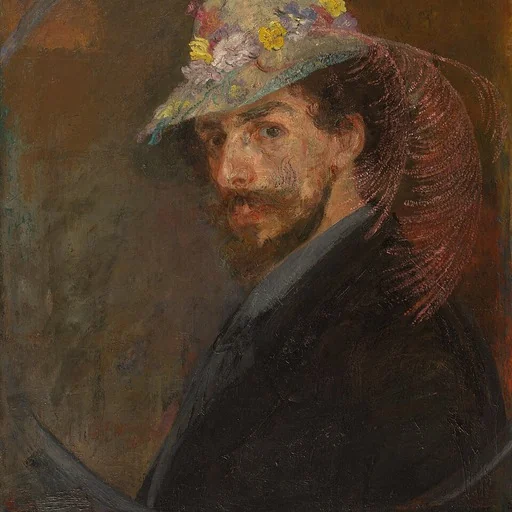
James Sidney Edouard, Baron Ensor (13 April 1860 – 19 November 1949) was a Belgian painter and printmaker, an important influence on expressionism and surrealism who lived in Ostend for most of his life.