Artwork
Man of Sorrows
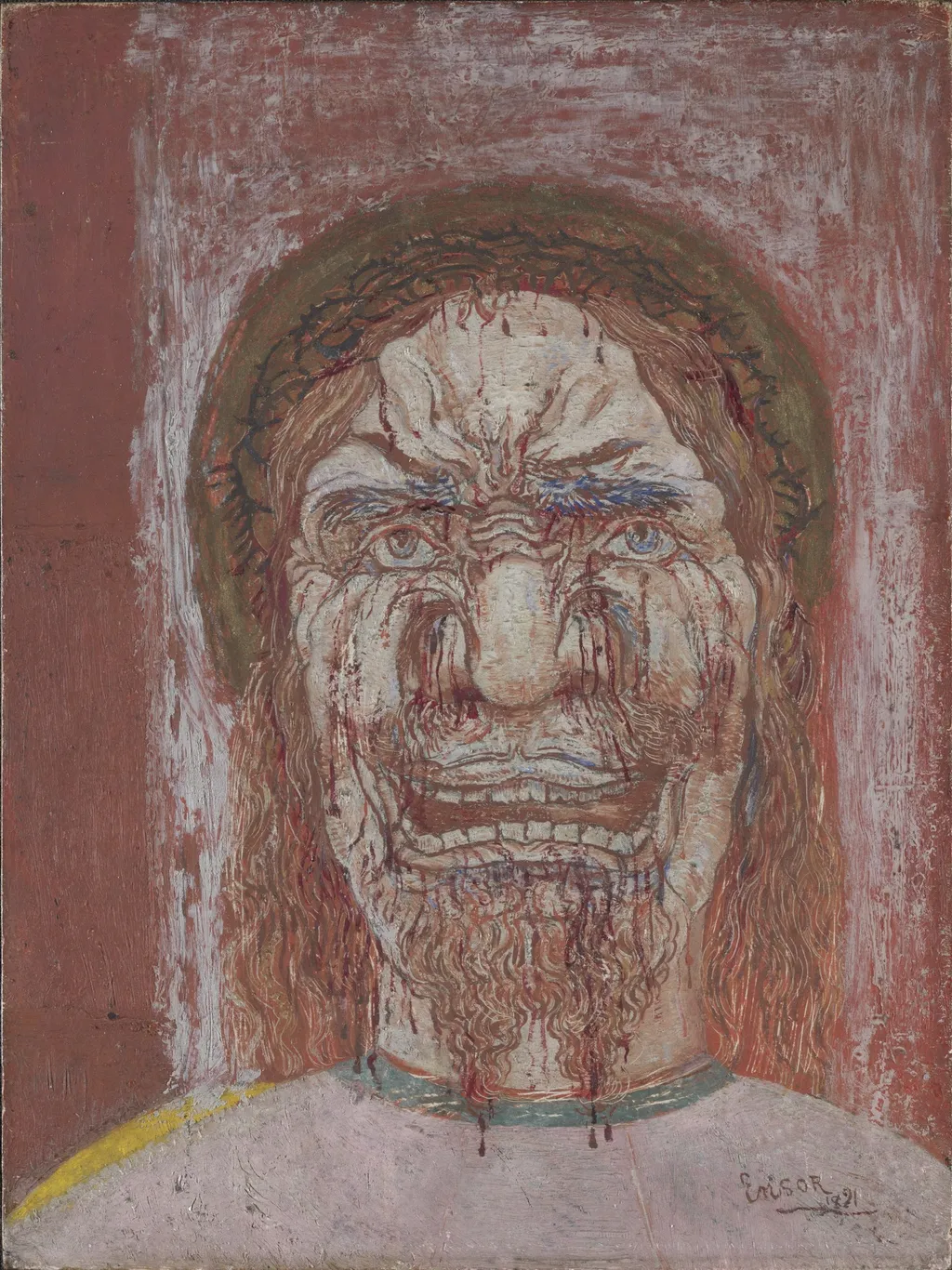
Man of Sorrows is an oil painting by the Post-Impressionist artist James Ensor. It dates from 1896 and is held in the collection of the Royal Museum of Fine Arts Antwerp.
About this work
The Man of Sorrows is a painting by James Ensor. It's an oil painting made in 1891.
This painting is part of the collection at the Royal Museum of Fine Arts Antwerp. It's based on a fifteenth-century painting by Albert Bouts with the same title, which is an interesting connection to the past.
You can learn more about the artist who created this work, James Ensor.
Subject & Meaning
The tortured expression reflects Ensor's own existential crisis and depression during the 1890s, when he even attempted to sell his studio and its contents.
The painting depicts Christ as the Man of Sorrows, a traditional devotional subject showing the suffering Christ. Ensor's interpretation merges the bleeding face of Christ with a devil's mask from Japanese Noh theatre, creating a horrifying, grotesque effect intensified by sharp colours. The iconography carries deeply personal symbolism. The tortured expression reflects Ensor's own existential crisis and depression during the 1890s, when he even attempted to sell his studio and its contents. By representing himself as deformed and in pain, the artist identifies with Christ as a marginal, misunderstood figure, his own suffering transposed onto the religious image. The work also encodes social resistance. Created in 1891, it manifests Ensor's anger against the conformist society of his time and marks a turning point in his career. His fascination with "the extraordinary and the abnormal", inspired by Bruegel and primitive art, finds expression in this deliberately shocking reinterpretation of a fifteenth-century composition by Albert Bouts.
Technique & Style
James Ensor's 1891 *Man of Sorrows* is an oil painting executed on panel, measuring 20 × 15.5 cm. The work combines a depiction of Christ's bleeding face with a devil's mask drawn from Japanese Noh theatre, producing a deliberately horrifying juxtaposition. Ensor employs sharp, intense colours that heighten the grotesque atmosphere. The handling merges religious iconography, derived from a fifteenth-century painting by Albert Bouts, with expressionist distortion, marking an early example of Ensor's move toward the extraordinary and abnormal in his art.
History & Provenance
The painting Man of Sorrows was created by James Ensor in 1891 as an oil on canvas. The work is listed among the official inventories of Flemish masterpieces and has been part of the collection of the Royal Museum of Fine Arts Antwerp since its creation. Ensor’s composition draws directly on a fifteenth-century painting of the same subject by Albrecht Bouts, reinterpreting the traditional iconography through a grotesque fusion of Christ’s bleeding face and a Japanese Noh theatre demon mask.
James Ensor's 1891 painting *Man of Sorrows* is held by the Royal Museum of Fine Arts Antwerp (KMSKA). The work is included in the museum's collection of great masters and is officially enlisted on the inventories of Flemish masterpieces. The piece is also part of the Vlaamse Kunstcollectie. No specific accession number or detailed exhibition history is provided in the available sources.
Context
The painting is widely regarded as a pivotal moment in James Ensor's oeuvre, marking his transition toward expressionist intensity and thematic preoccupations with suffering and alienation. Scholarship emphasizes its embodiment of Ensor's personal anguish during a depressive period in the early 1890s, with the distorted, bleeding visage of Christ reflecting both his identification with Christ's marginalization and his own existential crisis; this interpretation is supported by analyses of his correspondence and contemporary accounts of his desire to sell his studio and works. Ensor's engagement with historical sources, particularly a 15th-century work by Albrecht Bouts, and his fascination with the grotesque, drawing on motifs from Japanese Noh theatre and the visual language of the devil, are consistently documented in scholarly literature and museum records, situating the work within broader discussions of religious art and modernist innovation. The painting's significance is further contextualized by its inclusion in major collections, including the Royal Museum of Fine Arts Antwerp, where it remains on public display as part of their Flemish masterpieces collection, affirming its recognized status in art historical narratives.
Legacy
The Man of Sorrows is recognized as one of the earliest examples of Expressionism and stands as a pivotal turning point in James Ensor's career. The work is officially listed among Flemish masterpieces and remains a cornerstone of the great masters collection at the Royal Museum of Fine Arts Antwerp. Its legacy is defined by its synthesis of religious iconography with grotesque elements, such as the Japanese Noh theatre devil mask, which established a visual language of horror and resistance against conformist society. The painting's reputation is further cemented by its enduring association with Ensor's existential crisis and his identification with the marginalized figure of Christ, marking a significant shift in his artistic output during the 1890s.
Own this work as a print
Artist & collection
Artist
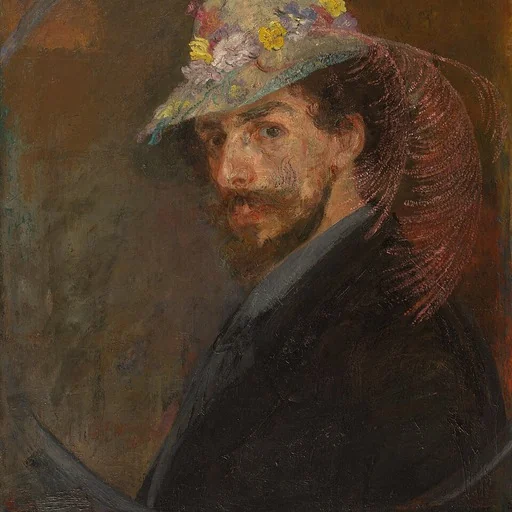
James Sidney Edouard, Baron Ensor (13 April 1860 – 19 November 1949) was a Belgian painter and printmaker, an important influence on expressionism and surrealism who lived in Ostend for most of his life.