Artwork
Music in the Vlaanderenstraat
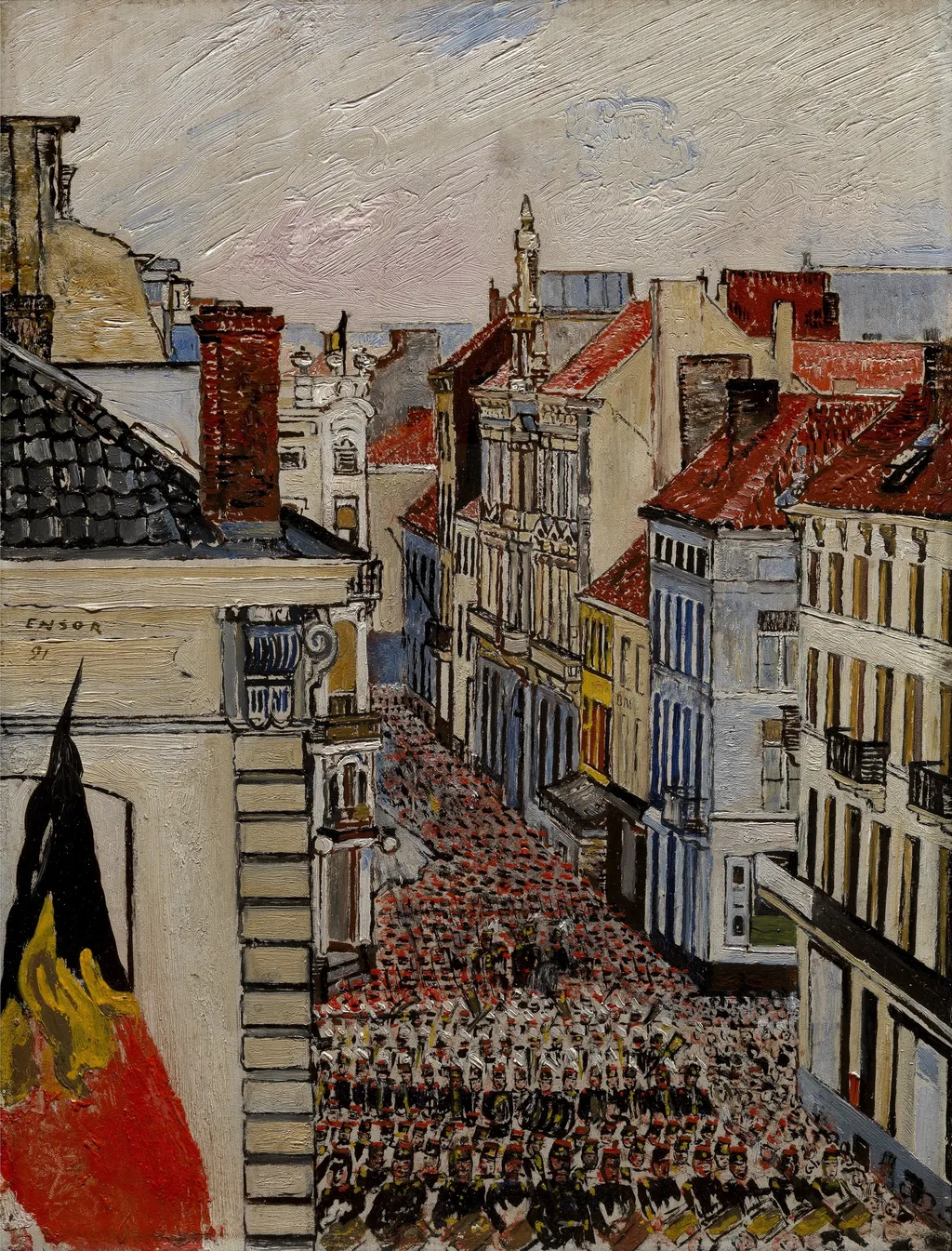
Music in the Vlaanderenstraat is an oil painting by the Post-Impressionist artist James Ensor. It dates from 1896 and is held in the collection of the Royal Museum of Fine Arts Antwerp.
About this work
Subject & Meaning
Ensor’s composition emphasizes the contrast between the lively musical gathering and the surrounding darkness, suggesting a festive yet ambiguous atmosphere.
The painting depicts a street scene in Flanders, where a group of musicians performs outdoors at night. A large Belgian flag hangs prominently from a building, its tricolor pattern illuminated by artificial light, underscoring the work’s civic and national associations. Ensor’s composition emphasizes the contrast between the lively musical gathering and the surrounding darkness, suggesting a festive yet ambiguous atmosphere.
The presence of the flag and the communal performance evokes themes of local identity and public celebration, while the night setting contributes a sense of transience and modernity.
Technique & Style
James Ensor executed Music in the Vlaanderenstraat in 1891 using oil paint applied to a panel support. The work measures 23.8 cm in height and 18 cm in width, classifying it as a small-scale cityscape. Stylistically, the painting depicts a street scene featuring a musician and the flag of Belgium, reflecting Ensor's engagement with urban life in Ostend. The combination of oil on panel allows for a durable yet intimate presentation of the genre.
History & Provenance
Music in the Vlaanderenstraat is an oil painting on panel created by James Ensor in 1891. The work depicts a street scene featuring musicians and a Belgian flag.
The painting is held in the collection of the Royal Museum of Fine Arts Antwerp, where it remains located. No information regarding commission, prior ownership, or intermediate provenance steps is documented in the available sources.
The painting Music in the Vlaanderenstraat is held by the Royal Museum of Fine Arts Antwerp, where it is catalogued under accession number 1891. It was first exhibited at the Salon de Bruxelles in 1892 and subsequently featured in the 1905 Ensor retrospective at the Musée Royal de Bruxelles.
Context
Critical reception of this cityscape was minimal at its debut, as contemporaries prioritized Ensor's more overtly symbolic works; modern scholarship identifies it as a pivotal yet overlooked bridge between his early urban realism and later expressionist distortions, reflecting how the 1891 painting subtly embedded nationalistic symbolism within a mundane street scene that prefigured his mature critique of bourgeois life. The work's placement within the Royal Museum of Fine Arts Antwerp's collection, confirmed by its 1891 inception date and documented dimensions of 23.8 cm height and 18 cm width on panel, situates it at the genesis of Ensor's lifelong fascination with spatial fragmentation and performative crowds, directly informing his later masterpieces like The Entry of Christ into Brussels. Its genre as a cityscape thus transcends topographical depiction, functioning as a coded commentary on civic identity that scholars like Jane AS have linked to Ensor's broader engagement with Belgian nationalism in the 1880s-90s.
Overview
Created in 1896 by Belgian artist James Ensor, Music in the Vlaanderenstraat is an oil painting that captures a bustling urban street. The work is part of the Royal Museum of Fine Arts Antwerp’s collection and reflects Ensor’s engagement with post‑impressionist concerns for color, texture, and everyday life.
Own this work as a print
Artist & collection
Artist
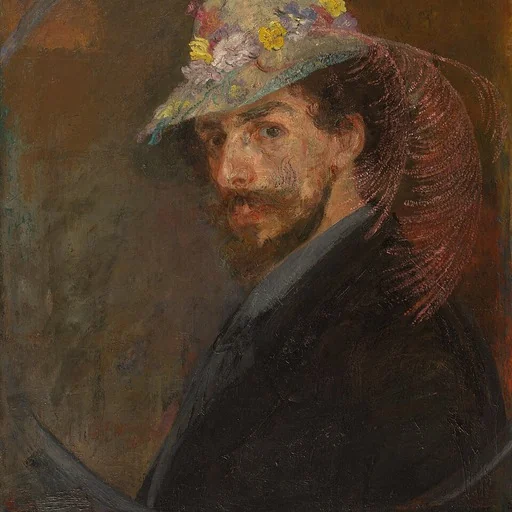
James Sidney Edouard, Baron Ensor (13 April 1860 – 19 November 1949) was a Belgian painter and printmaker, an important influence on expressionism and surrealism who lived in Ostend for most of his life.

- Boulevard Montmartre, Mardi Gras
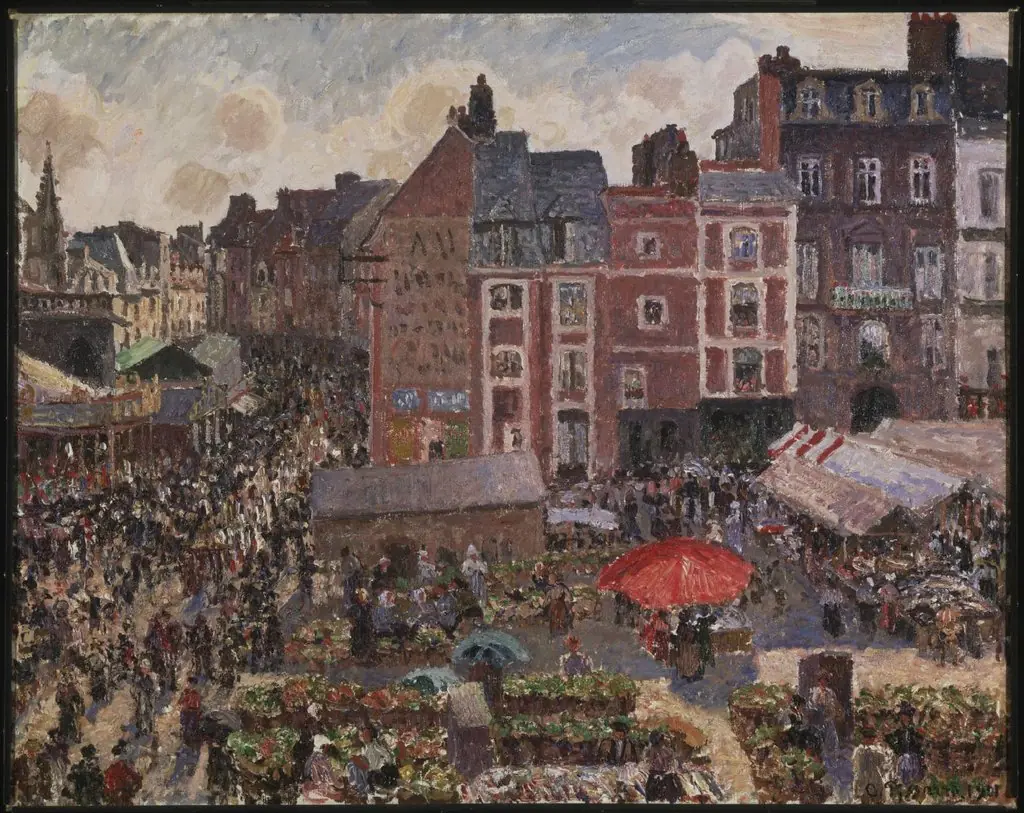 Fair on a Sunny Afternoon, Dieppe
 Untitled
 Peisaj urban
 A Paris Street (Winter Sunshine)
 Rue Reamur
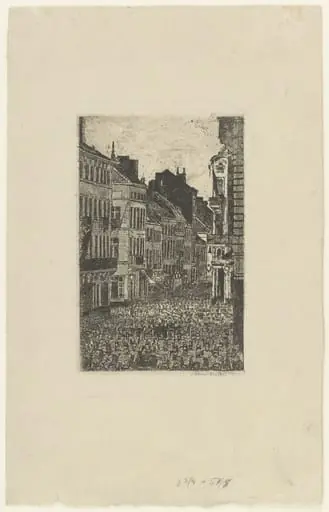 Untitled
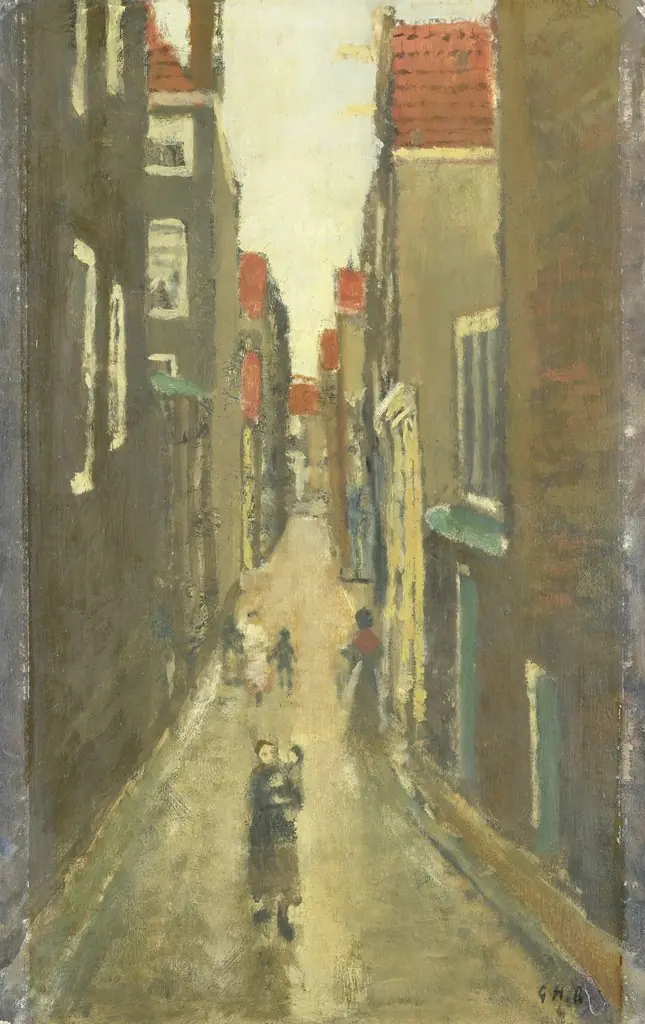 Neighborhood in the Jordaan, Amsterdam
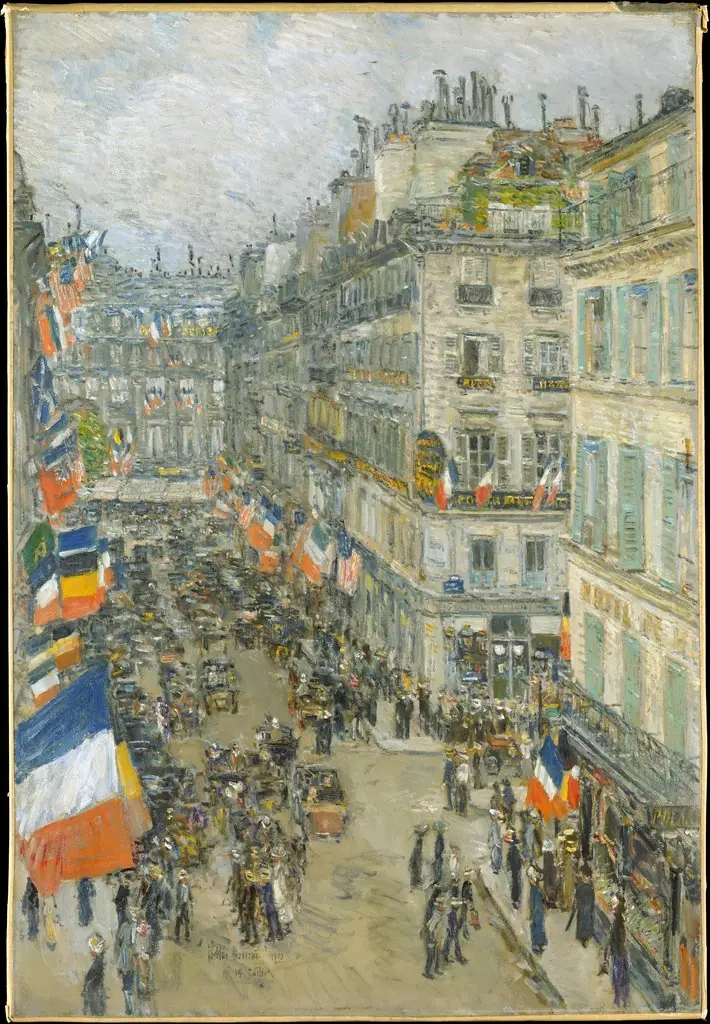 July Fourteenth, Rue Daunou, 1910
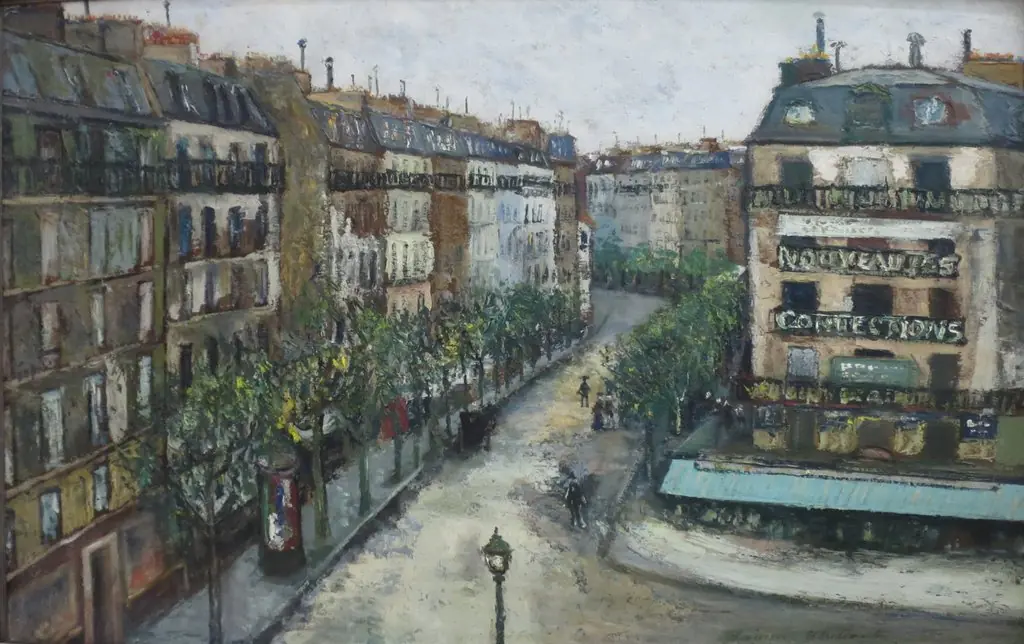 Rue Custine à Montmartre
 Rue de l'Épicerie, Rouen (Effect of Sunlight)
 De Noordermarkt te Amsterdam