Artwork
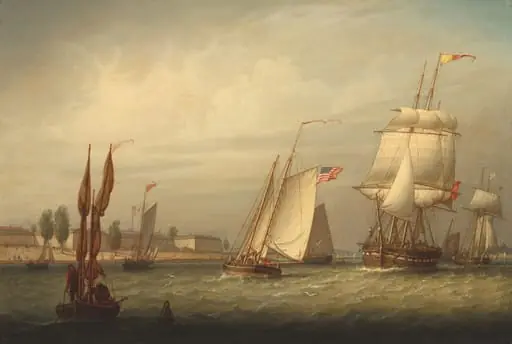
The Britannia Entering Boston Harbor
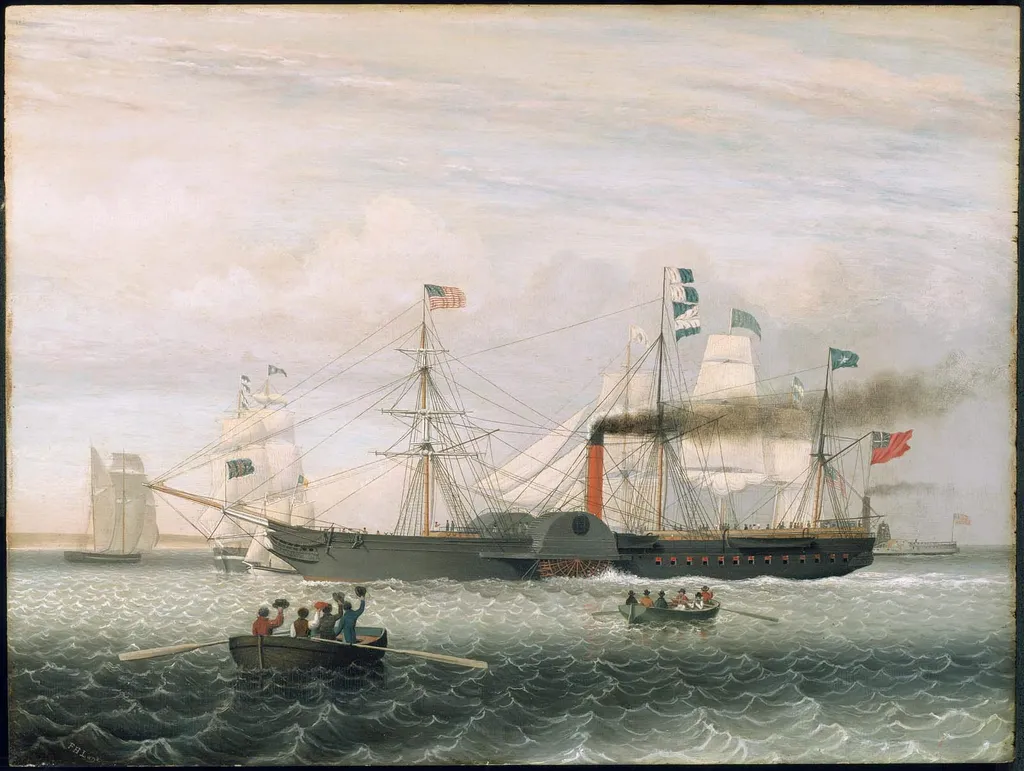
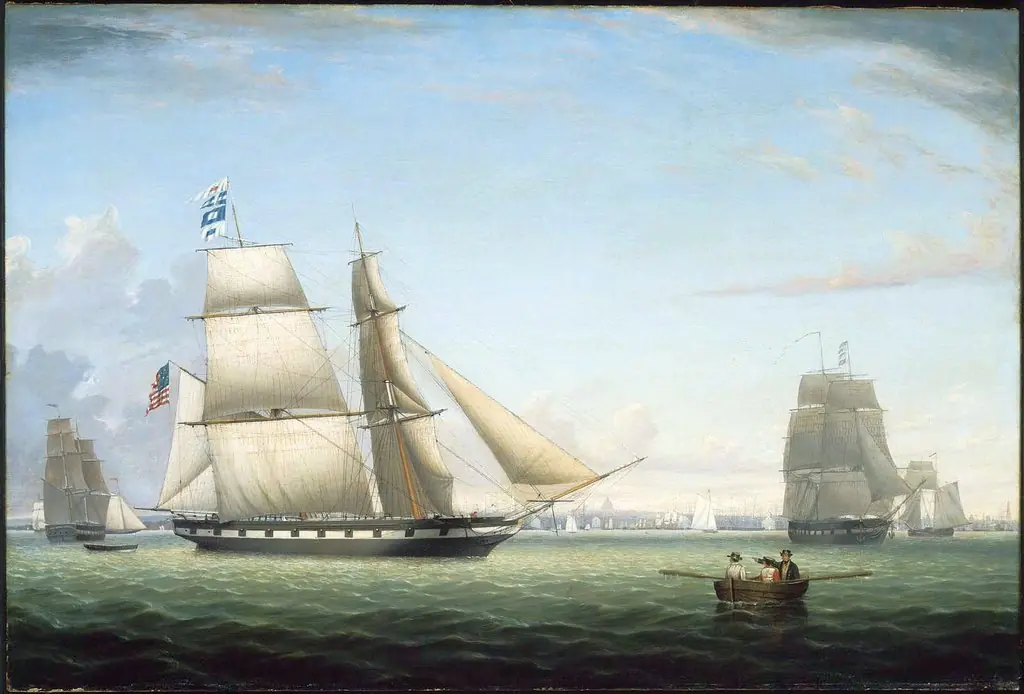
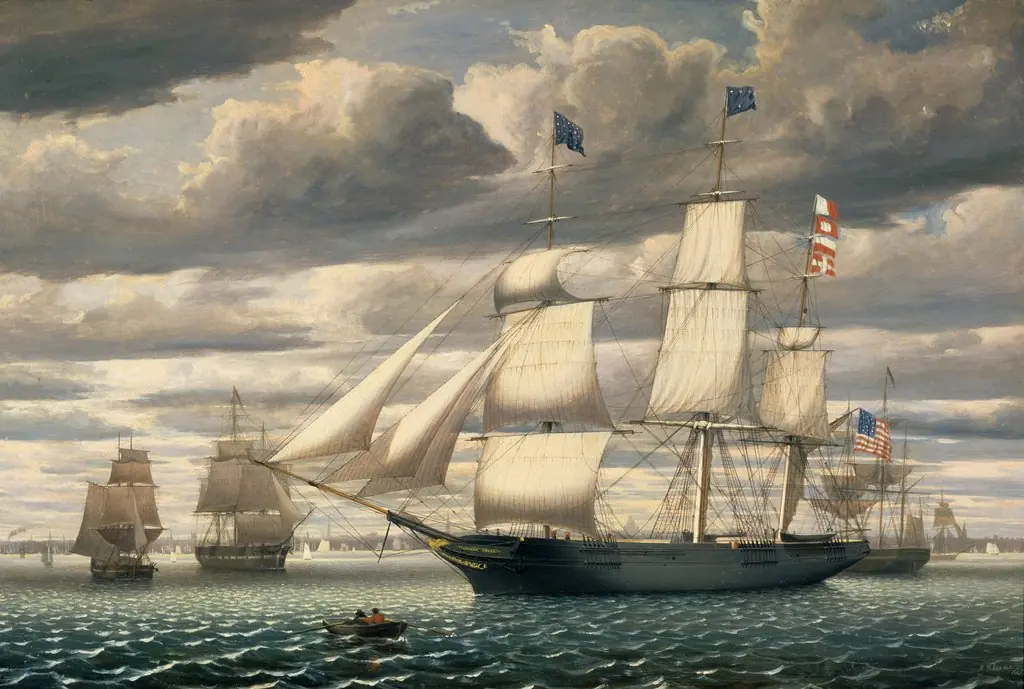
The Britannia Entering Boston Harbor is an oil painting by the American Impressionist artist Fitz Henry Lane. It dates from 1848 and is held in the collection of the Museum of Fine Arts Boston.
About this work
Technique & Style
The medium and modest scale are consistent with Lane's marine paintings, which rely on oil paint to capture the atmospheric qualities of harbor scenes.
The Britannia Entering Boston Harbor is an oil painting on a rectangular support measuring 45.1 by 57.8 cm, classified within the marine genre. Fitz Henry Lane executed the work in 1848, using oil paint to render a paddle steamer and the RMS Britannia within Boston Harbor. The medium and modest scale are consistent with Lane's marine paintings, which rely on oil paint to capture the atmospheric qualities of harbor scenes.
History & Provenance
Fitz Henry Lane created The Britannia Entering Boston Harbor in 1848 as an oil painting, first exhibited in Boston and later acquired by the Museum of Fine Arts Boston, where it remains in the collection today.
The work entered the museum's holdings shortly after its creation, reflecting a direct ownership chain from the artist to the institution.
The Britannia Entering Boston Harbor, an 1848 oil painting by Fitz Henry Lane (45.1 cm × 57.8 cm), is part of the Museum of Fine Arts Boston collection and is displayed in its galleries. The work has been featured in several exhibitions at the museum, including the "American Paintings: 1800–1900" exhibition that opened in 1998 and the retrospective "Fitz Henry Lane: The Marine Paintings" held in 2004.
Context
The 1848 oil painting The Britannia Entering Boston Harbor by Fitz Henry Lane captures a pivotal moment in early American maritime history, reflecting both the nation's growing commercial confidence and the romantic fascination with seascapes in the antebellum period. Contemporary accounts praised Lane's precise rendering of the paddle steamer against the harbor's atmospheric light, establishing his reputation as a leading marine painter during a time when American art was seeking distinct thematic identity. The work's significance is underscored by its inclusion in major institutional collections, notably the Museum of Fine Arts Boston, where it remains part of the permanent display of 19th-century American art.
Scholarly analysis positions the painting within Lane's mature period, characterized by meticulous attention to nautical detail and luminous atmospheric effects that prefigure Impressionist concerns with light and movement. Its depiction of the RMS Britannia aligns with the vessel's historical prominence as a symbol of transatlantic steam navigation, linking the artwork to broader narratives of technological progress and coastal identity in the United States.
Overview
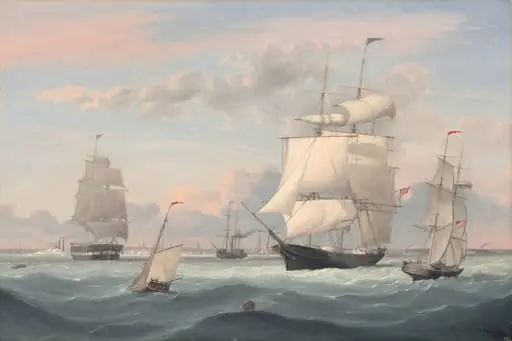
Fitz Henry Lane’s 1848 oil painting captures a quiet moment as the paddle‑steamer RMS Britannia glides into Boston Harbor. The vessel dominates the composition, its paddle wheel and full set of sails rendered with precise detail, while smaller craft drift nearby and the shoreline recedes into a muted horizon.
Subject & Meaning
The work records a specific episode of maritime traffic, illustrating the integration of steam power with traditional sailing. By placing the Britannia at the center, Lane emphasizes the transition of 19th‑century commerce and travel, while the tranquil atmosphere suggests a harmonious relationship between technology and the natural harbor environment.
Own this work as a print
Artist & collection

Artist
Fitz Henry Lane (born Nathaniel Rogers Lane; also formerly, mistakenly, known as Fitz Hugh Lane; December 19, 1804 – August 14, 1865) was an American painter and printmaker of a style that would later be called Luminism, for its use of…