Artwork
Mary Kellogg
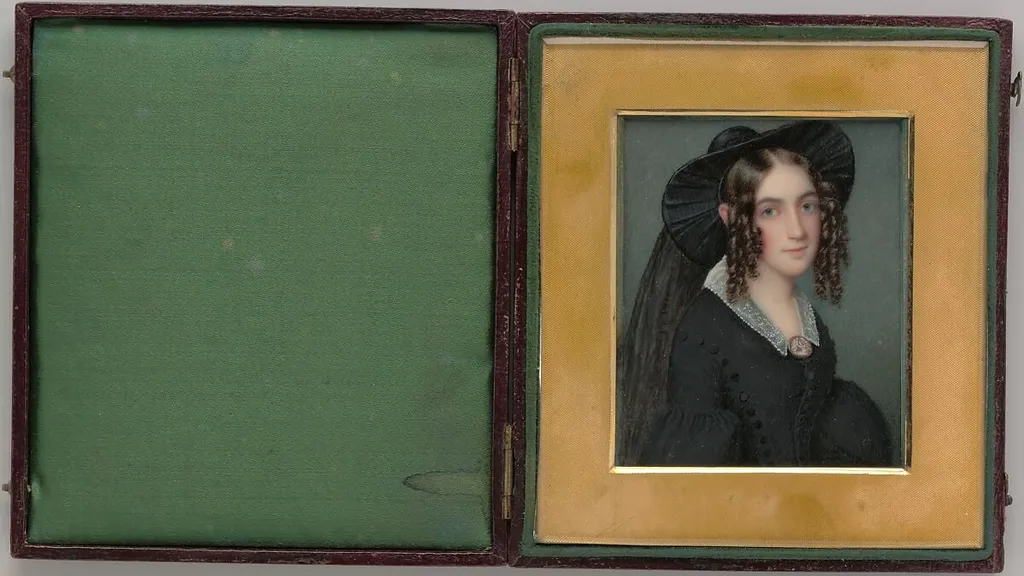
Mary Kellogg is a watercolor painting by the American Folk Art artist James Whitehorne. It dates from 1838 and is held in the collection of the Metropolitan Museum of Art.
About this work
Technique & Style
This medium choice aligns with the miniature portrait tradition, utilizing the smooth, translucent quality of ivory to achieve delicate tonal gradations.
Created in 1838 by James Whitehorne, the artwork Mary Kellogg is executed as a watercolor on an ivory support. This medium choice aligns with the miniature portrait tradition, utilizing the smooth, translucent quality of ivory to achieve delicate tonal gradations. The physical dimensions of the piece measure 7.7 centimeters in height and 6.4 centimeters in width, indicating a small-scale format typical for intimate portraiture of the period.
Classified within the American Wing genre of portraiture, the work depicts a woman, focusing on formal representation through the specific handling of watercolor pigments on this organic ground.
History & Provenance
Mary Kellogg is a watercolor on ivory portrait painted by James Whitehorne in 1838. The work is classified within The American Wing of the Metropolitan Museum of Art, where it is listed in the museum’s collection; however, the specific accession or inventory number is not provided in the available documentation. The painting depicts a woman and is categorized as a portrait.
Its presence in the Met’s holdings is documented through catalog entries that record its creation date and dimensions, but no exhibition record is cited in the sources. Consequently, the provenance details are limited to its acquisition by the museum and its current display context.
Overview
This watercolor on ivory, titled Mary Kellogg, was created by James Whitehorne around 1838. The intimate portrait depicts a woman and is housed within The American Wing. It exemplifies the practice of miniature painting, a popular art form for personal keepsakes in the mid-19th century, offering a glimpse into the visual culture of the period.
Subject & Meaning
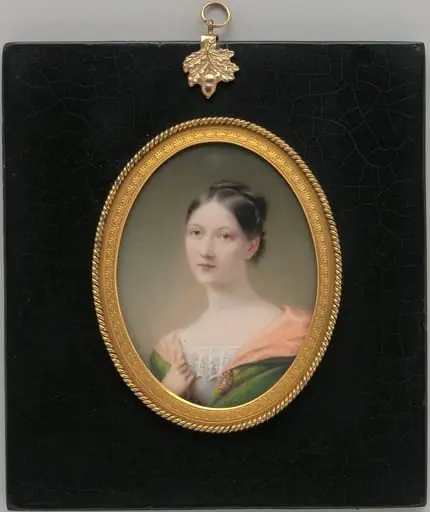
The portrait features Mary Kellogg, whose calm expression meets the viewer's gaze directly. She is depicted wearing a dark dress, which provides a strong contrast to the bright lace collar adorning her neck. Her hair is neatly styled and pulled back, framing a composed face.
Such direct and unadorned presentations were common in personal portraits of this era, emphasizing the sitter's individual presence.
Context
In the decades preceding the widespread adoption of photography, miniature portraits served as significant personal artifacts. These small-scale images enabled individuals to keep visual representations of loved ones close at hand. Their compact dimensions made them suitable for private viewing, carrying as mementos, or even incorporating into jewelry, reflecting a common social practice for preserving personal connections during the early to mid-19th century.
Artist & collection


 Portrait of a Lady
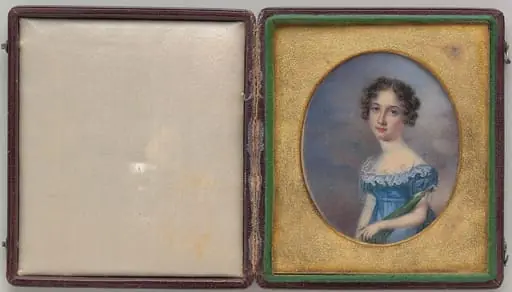 Sarah Ann Beck
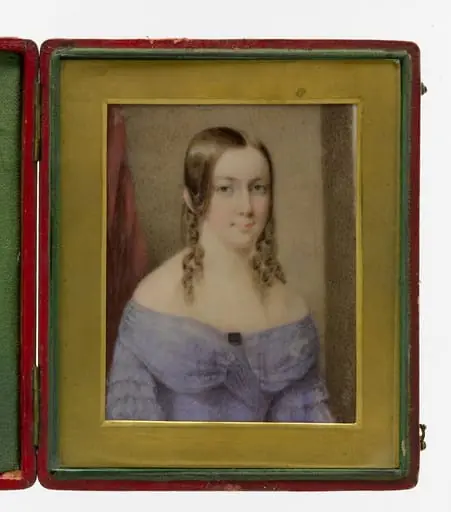 Portrait of a Lady
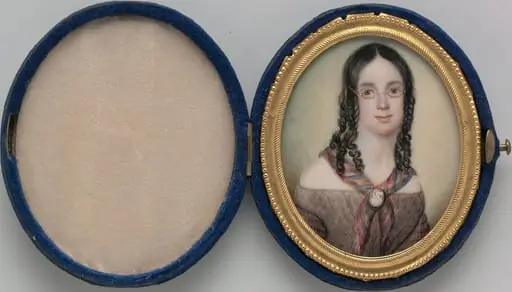 Portrait of a Lady
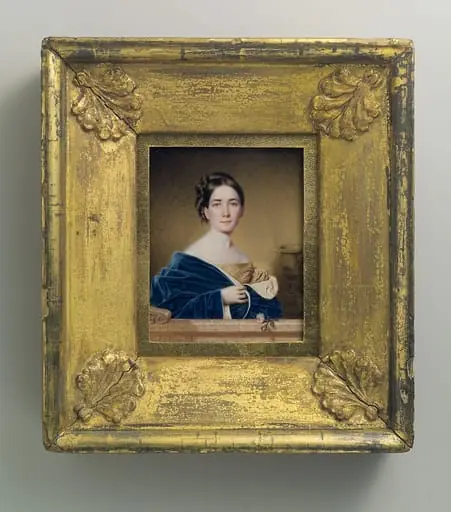 Mrs. John Wood Dodge (Mary Louise Dodge)
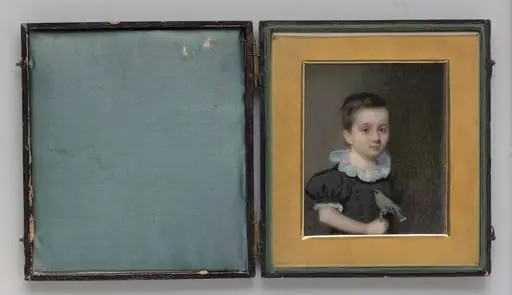 Henry Larcom Abbot
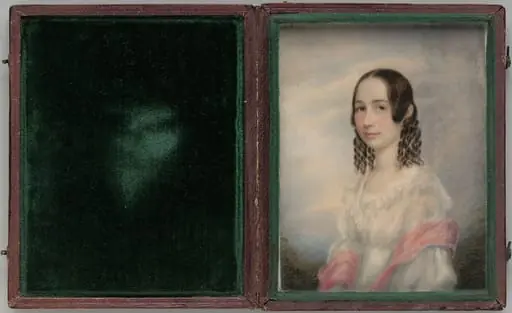 Mrs. Christopher Grant Perry (Frances Sargeant)
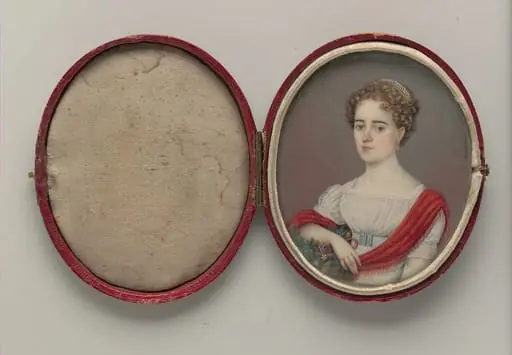 Mrs. Daniel Parkman (Mary George McDonough)
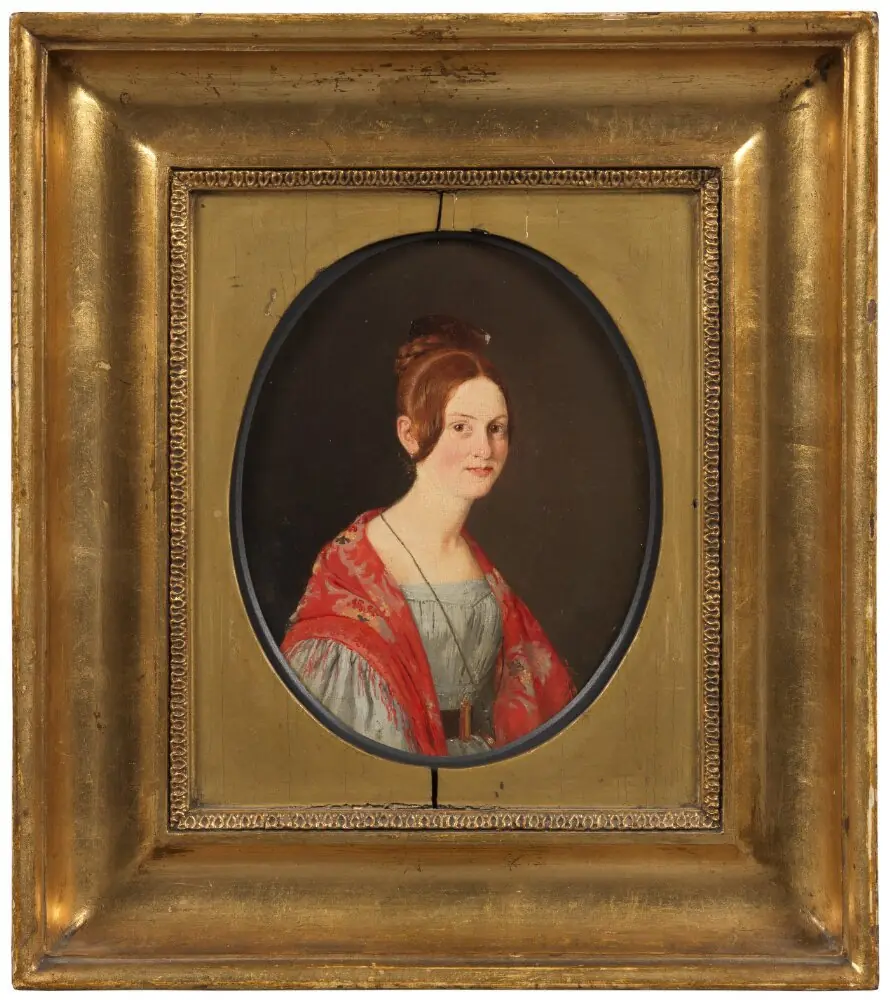 Portrait of Ane Elisabeth (Elise) Gurlitt, né Saxild (1817-39)
 Portrait of a Lady
 Mrs. Thomas Dillard (Matilda Kuhl)