Artwork
Henry Larcom Abbot
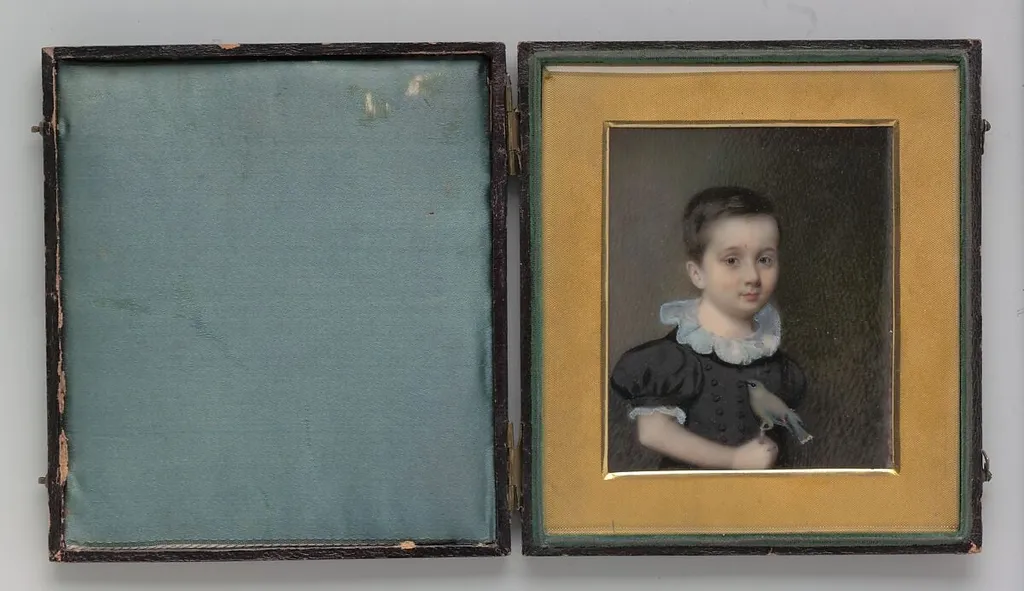
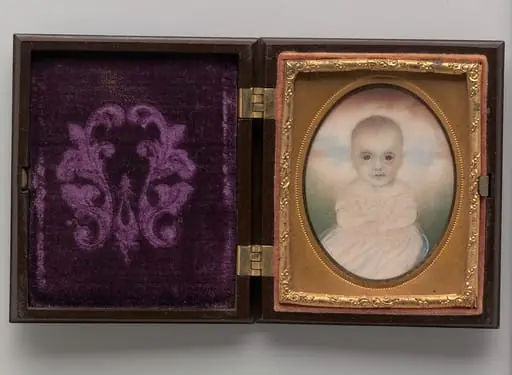
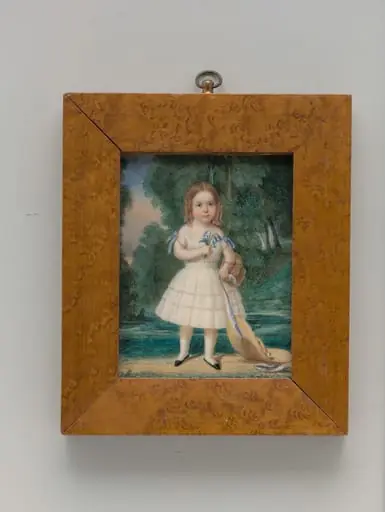
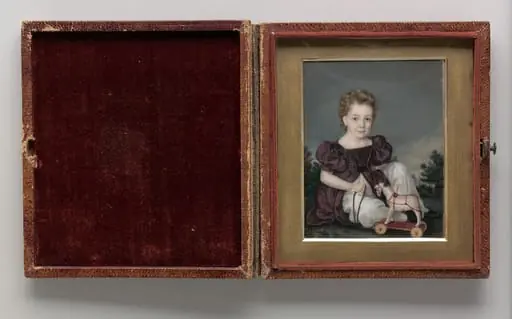
Henry Larcom Abbot is a watercolor painting by the American Folk Art artist Washington Blanchard. It dates from 1835 and is held in the collection of the Metropolitan Museum of Art.
About this work
Subject & Meaning
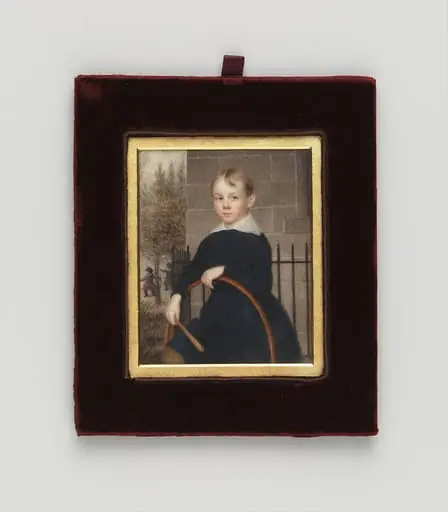
Created in 1835 by Washington Blanchard, the watercolor on ivory titled Henry Larcom Abbot functions as a portrait of its namesake, a young boy.
Created in 1835 by Washington Blanchard, the watercolor on ivory titled Henry Larcom Abbot functions as a portrait of its namesake, a young boy. The composition incorporates specific iconographic elements, notably the inclusion of a bird alongside the sitter. While the work is classified strictly as a portrait within the collection, the presence of the avian figure alongside the child suggests a deliberate symbolic pairing common in early nineteenth-century American portraiture, often used to convey themes of youth, innocence, or the natural world.
The subject is identified as Henry Larcom Abbot, and the depiction remains focused on his likeness and this accompanying animal motif, without additional narrative scenes or complex allegorical figures described in the available records.
Technique & Style
Created in 1835 by Washington Blanchard, the portrait of Henry Larcom Abbot is executed as a watercolor on ivory, a medium characteristic of miniature portraiture from this period. The work measures 9.2 cm in height and 7 cm in width, forming a compact, intimate format. Stylistically, it functions as a formal portrait that integrates the main subject, a young boy, with a bird, reflecting the genre conventions of the American Wing collection.
The handling of the watercolor on the ivory support allows for the delicate rendering typical of Blanchard's approach to capturing youthful likenesses and natural elements within a small-scale composition.
History & Provenance
Washington Blanchard painted Henry Larcom Abbot in 1835 as a watercolor on ivory portrait, classified within The American Wing of the Metropolitan Museum of Art. The work portrays the young subject alongside a bird and is recorded in the museum’s collection with an inception date of 1835. It remains in the Met’s custody, displayed as part of the museum’s American portrait holdings.
The painting’s creation is tied to Blanchard’s early 19th‑century practice of miniature portraiture, and its provenance follows a direct trajectory from the artist to the museum’s acquisition.
Overview
This watercolor portrait, titled Henry Larcom Abbot, was created by Washington Blanchard in 1835. Rendered on a thin piece of ivory, the miniature depicts a young boy with a serious demeanor, holding a small, deceased bird and a stick. The artwork exemplifies a common practice of the era for creating personal keepsakes, yet it distinguishes itself through its subtle portrayal and a sense of quiet realism.
Context
During the 19th century, watercolor miniatures on ivory served as popular and intimate forms of portraiture, often commissioned as personal keepsakes. Their small scale made them suitable for private display or carrying. This particular example, created in 1835, reflects the prevailing demand for such mementos, offering a glimpse into the visual culture of American families seeking to preserve the likenesses of their loved ones.
Artist & collection