Artwork
Muleteers beside an Italian Ruin
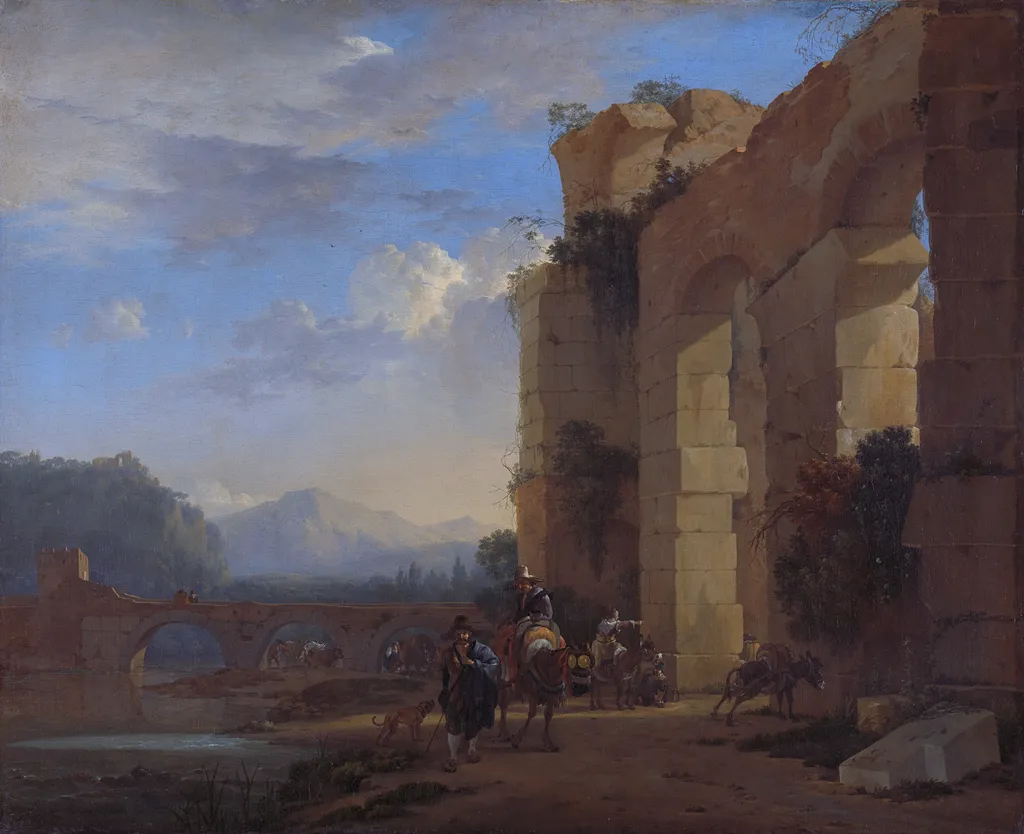
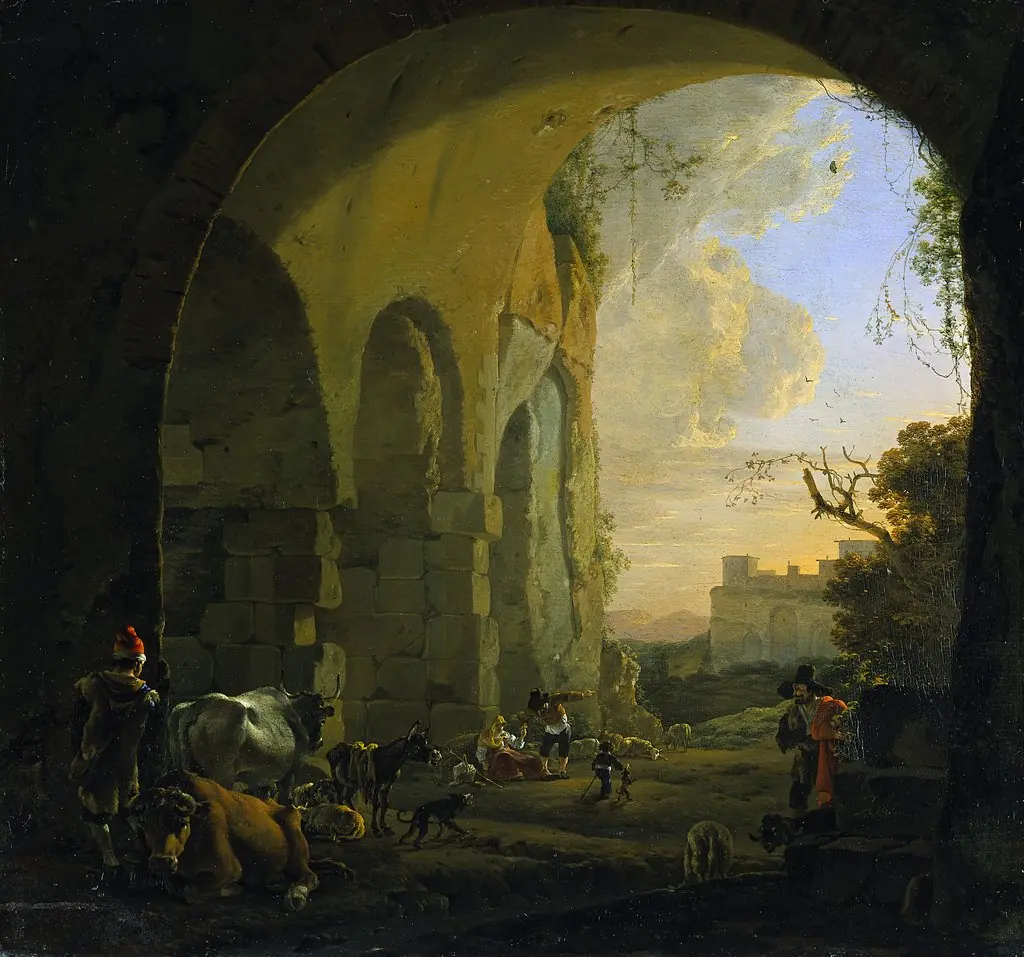
Muleteers beside an Italian Ruin is an oil painting by the Dutch Golden Age artist Jan Asselijn. It dates from 1650 and is held in the collection of the Rijksmuseum.
About this work
Subject & Meaning
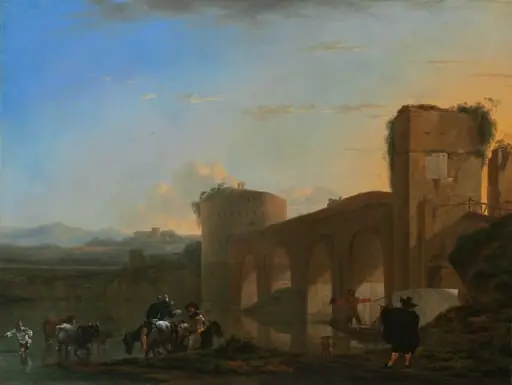
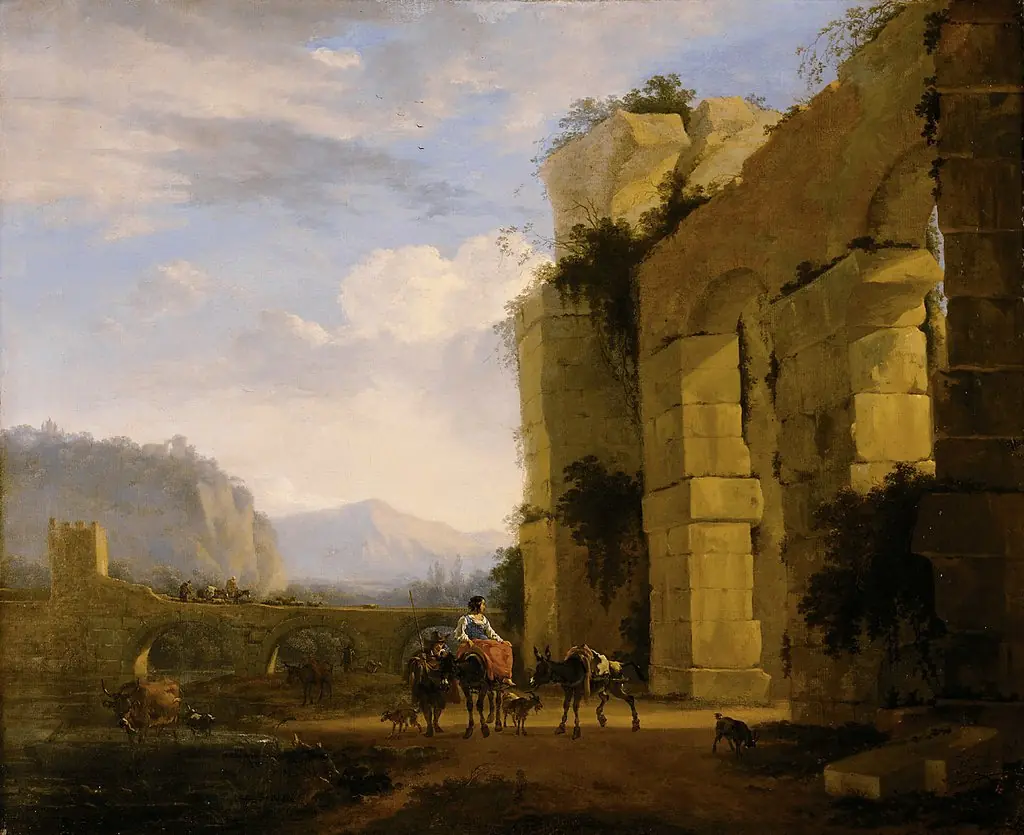
The painting shows a muleteer accompanied by a pack mule in front of an Italianate ruin, a subject that merges everyday labor with antiquarian scenery.
The painting shows a muleteer accompanied by a pack mule in front of an Italianate ruin, a subject that merges everyday labor with antiquarian scenery. The composition places the ruin as a backdrop to the modest figures, emphasizing the contrast between ancient decay and contemporary activity. This arrangement reflects the mid‑17th‑century Dutch fascination with idealised Italian landscapes and the use of ruins as a setting for daily life. The work is classified as a landscape and was painted in oil on canvas in 1650.
Technique & Style
Jan Asselijn's Muleteers beside an Italian Ruin is an oil painting executed on canvas, created in 1650. The work belongs to the landscape genre and depicts a scene featuring muleteers, a mule train, and architectural ruins. Measuring 67 cm in height and 82 cm in width, the piece is held within the collection of the Rijksmuseum in Amsterdam.
The composition focuses on the interaction between the figures and the ruined setting, characteristic of the artist's approach to landscape subjects during this period.
History & Provenance
The painting Muleteers beside an Italian Ruin is dated to 1650 based on its internal documentation and catalogue entries.
It entered the public collection through the Rijksmuseum, Amsterdam, having previously formed part of the holdings of Adriaan van der Hoop. The painting was later owned by Pieter de Smeth before becoming part of the museum’s holdings. It has been exhibited as part of major presentations of Dutch Golden Age masterpieces from the Rijksmuseum, including The Golden Age of Dutch Painting: masterpieces from the Rijksmuseum Amsterdam and The Bentvueghels. A Notorious Art Society in Rome.
The painting is held in the collection of the Rijksmuseum, Amsterdam, accessioned from the former collection of Adriaan van der Hoop before entering the museum’s holdings (Van der Hoop Bequest).
It has been exhibited twice: first as part of The Golden Age of Dutch Painting: masterpieces from the Rijksmuseum Amsterdam and later in The Bentvueghels. A Notorious Art Society in Rome, both organized by the Rijksmuseum.
Overview
Muleteers beside an Italian Ruin, painted by Jan Asselijn in 1650, is an oil-on-canvas landscape that exemplifies the Dutch fascination with Italianate scenery during the seventeenth century. The composition centers on a group of muleteers guiding their beasts along a path adjacent to monumental classical ruins, characterized by broken columns and crumbling masonry. These architectural fragments serve as a focal point, contrasting the enduring weight of stone with the transient movement of the travelers.
A bridge spans a body of water in the mid-ground, leading the eye toward a soft, clouded sky that bathes the scene in a warm, late-afternoon light. Asselijn, who traveled to Italy in the 1630s, frequently incorporated such Roman motifs to evoke a sense of the sublime and the passage of time. This work reflects his mature style, where the integration of human figures within a vast, atmospheric landscape demonstrates his skill in balancing narrative detail with the grandeur of the natural and built environment.
The painting stands as a significant example of the Italianate landscape genre within the Dutch Golden Age, showcasing the artist's ability to synthesize observed Italian topography with the compositional clarity typical of his Dutch contemporaries.

Own this work as a print
Artist & collection