Artwork
A Coastal Ruin in Italy
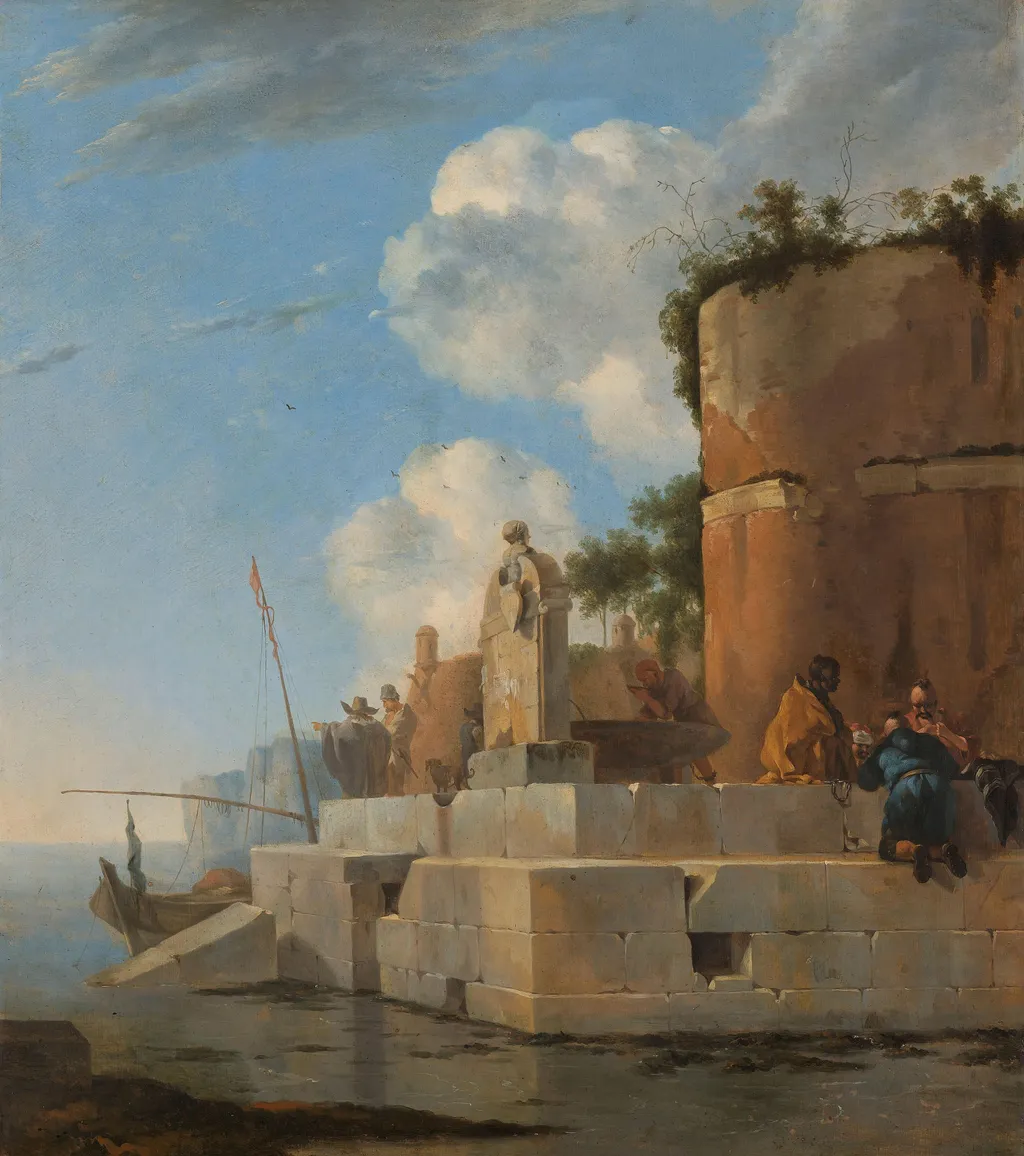
A Coastal Ruin in Italy is an oil painting by the Dutch Golden Age artist Jan Asselijn. It dates from 1650 and is held in the collection of the Rijksmuseum.
About this work
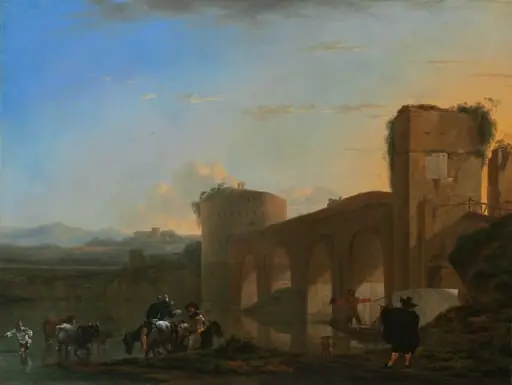
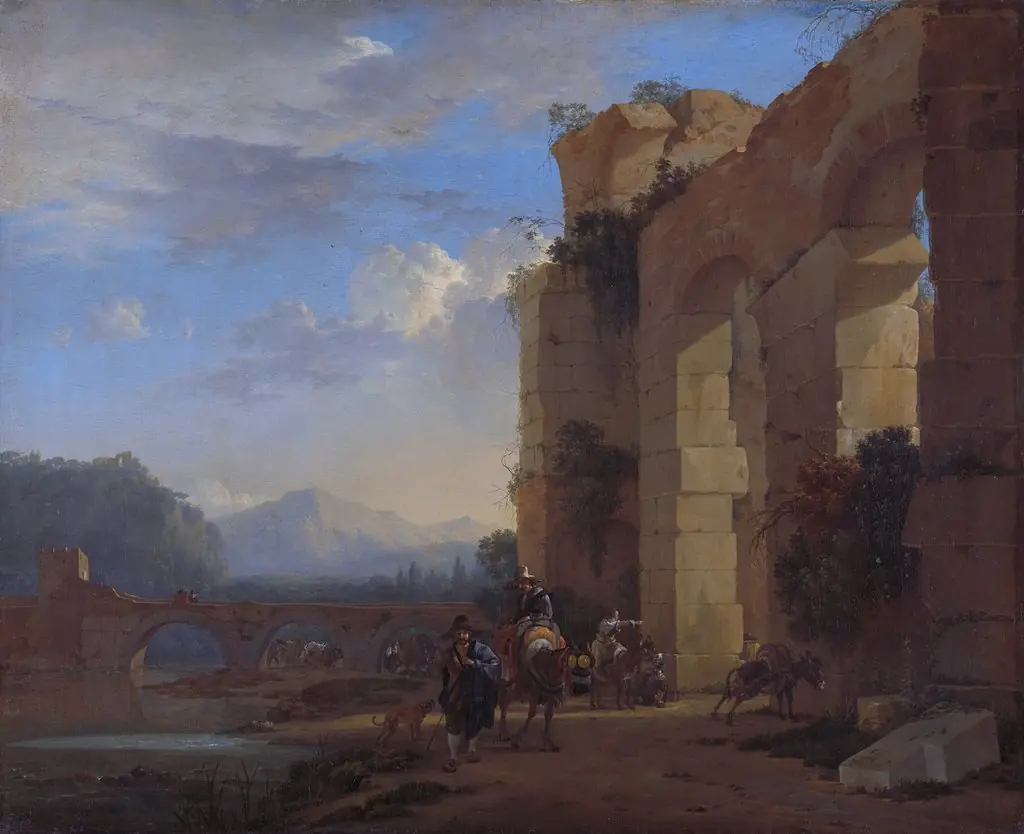
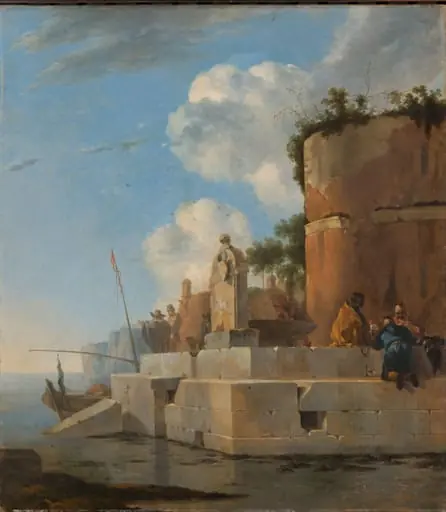
The stone structure is depicted in shades of brown and gray, while the sky is a bright blue.
This painting shows a scenic coastal ruin in Italy. In the foreground, a large stone structure with a round tower dominates the right side. On the left, a small boat is moored near the shore.
Several people are gathered around the ruin, some sitting and others standing. The sky above is blue with white clouds.
The artist has used a range of colors to bring the scene to life. The stone structure is depicted in shades of brown and gray, while the sky is a bright blue. The people in the scene are dressed in clothing typical of the 17th century.
The use of chiaroscuro in this painting creates a sense of depth and atmosphere. The contrast between light and dark adds to the overall mood of the scene. If you're interested in learning more about this technique, look up chiaroscuro.
Subject & Meaning
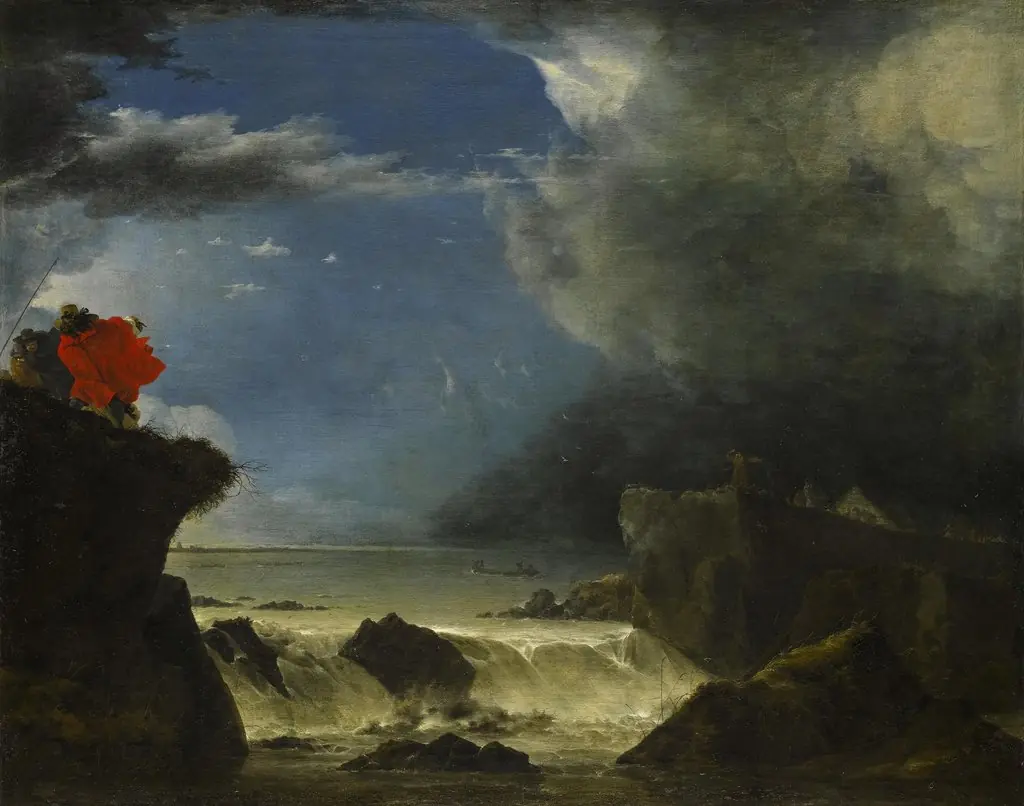
The painting portrays a coastal ruin beside the sea, with a small boat and a solitary tree forming the principal motifs. It belongs to the Dutch 17th-century tradition of architectural and marine landscapes, combining elements of ruin, water, and nature to create a compact coastal vista. The work's subject reflects contemporary interest in antiquarian scenery and the interplay of built structures with the surrounding maritime environment.
Executed in oil on panel in 1650, it was later owned by several Dutch patricians before entering the Rijksmuseum collection.
Technique & Style
Jan Asselijn's A Coastal Ruin in Italy, created in 1650, is executed in oil paint on a wooden panel support. The work measures 54.5 cm in height and 48 cm in width. Stylistically, the painting synthesizes elements of landscape, architectural, and marine art genres.
The formal composition depicts a coastal scene featuring specific motifs such as ruins, trees, boats, and the sea. As a product of the Dutch Golden Age, the handling of the medium reflects the artist's approach to rendering light and texture within these combined architectural and natural settings.
History & Provenance
A Coastal Ruin in Italy was created by Jan Asselijn in 1650, executed in oil paint on panel. The work measures 54.5 by 48 centimeters and is classified as a landscape painting, with its subject matter combining architectural ruins, marine elements, boats, and trees.
Documented ownership of the painting traces through several Dutch collectors. Lucretia Johanna van Winter is recorded as an early owner, followed by Hendrik Six van Hillegom. The work subsequently passed to Jan Pieter Six VI, then to Pieter Hendrik Six van Vromade, and later to Jan Six van Vromade. The painting is now held in the collection of the Rijksmuseum, where it remains on view.
Overview
Painted in 1650, Jan Asselijn's 'A Coastal Ruin in Italy' is a quintessential example of Dutch Italianate landscape painting. The composition centers on a massive stone ruin featuring a prominent round tower that anchors the right foreground, creating a sense of architectural grandeur against the natural setting. To the left, a small boat rests near the shoreline, balancing the visual weight of the structure.
Several figures are scattered throughout the scene, some seated and others standing near the ruins, providing a sense of scale and human presence within the historic environment. The sky is rendered in clear blue tones with soft white clouds, typical of the atmospheric clarity Asselijn sought to capture. Created during the height of the artist's career, shortly before his death in 1652, this work reflects the 17th-century Dutch fascination with the Italian countryside and classical antiquity.
Asselijn, who traveled to Italy in the 1630s, synthesized his direct observations of Roman landscapes with the dramatic lighting and compositional structures favored by his contemporaries. The painting exemplifies the genre's focus on the romantic interplay between nature and decay, serving as a testament to the artist's ability to evoke the timeless atmosphere of the Italian coast.
Own this work as a print
Artist & collection