Artwork
Calm Sea
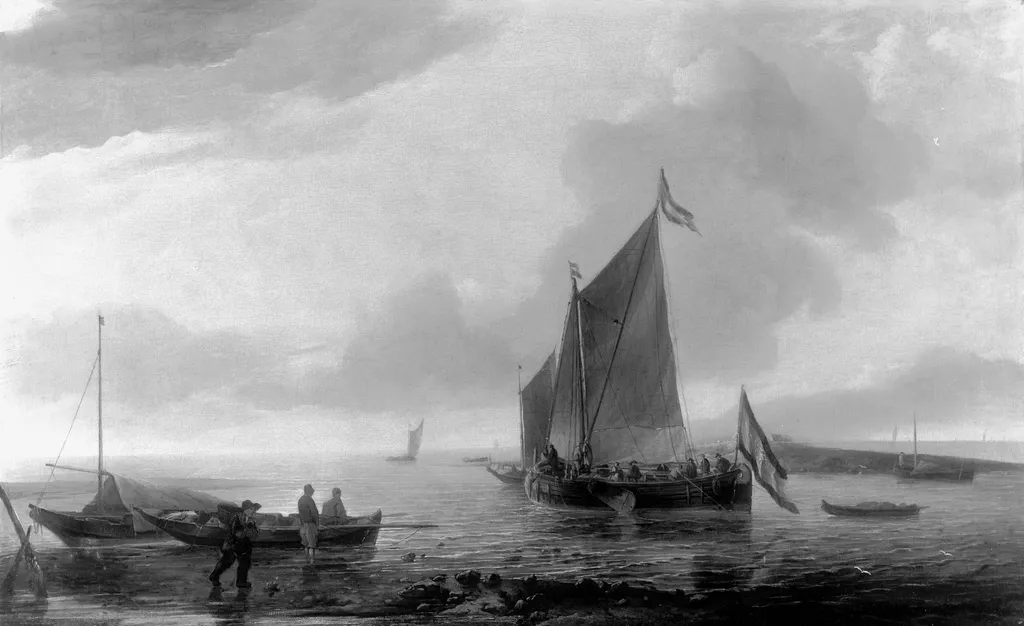
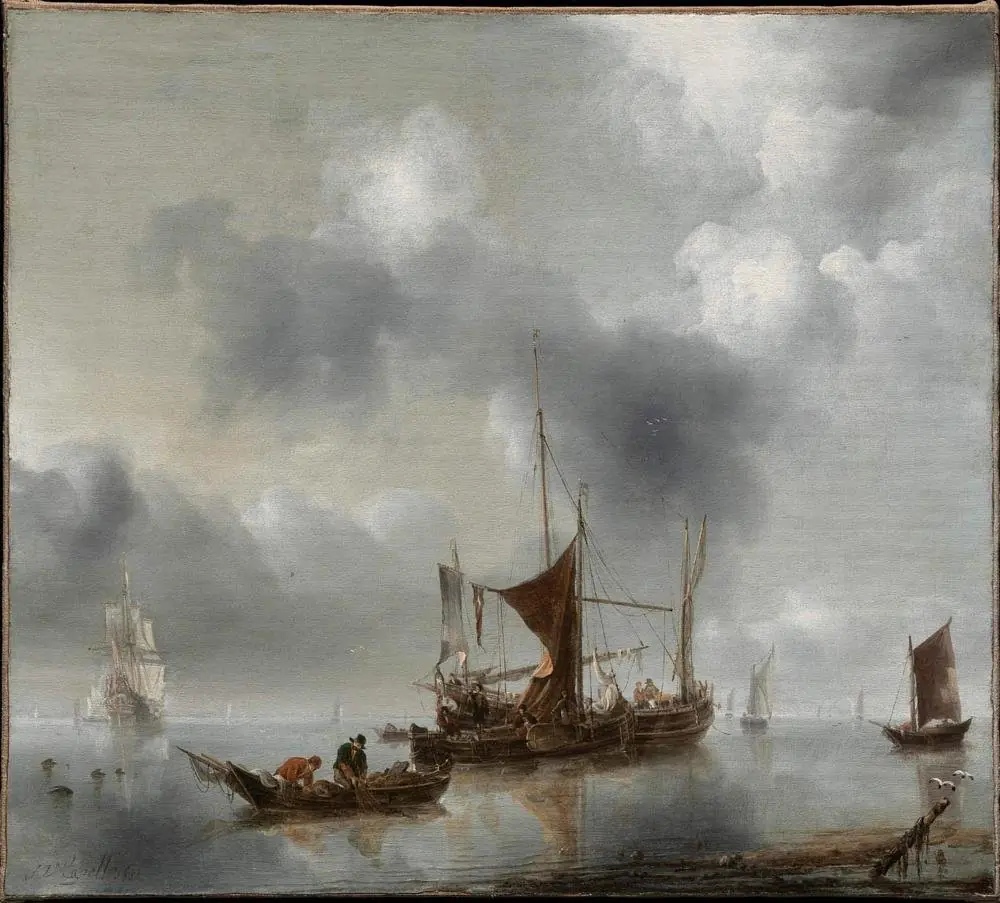
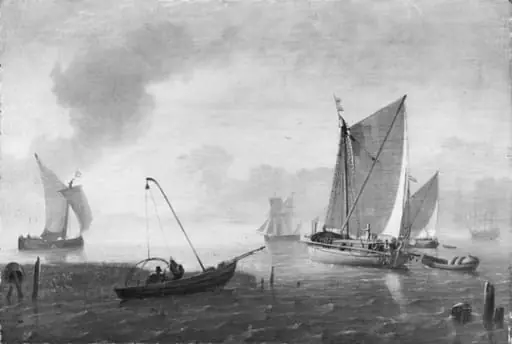
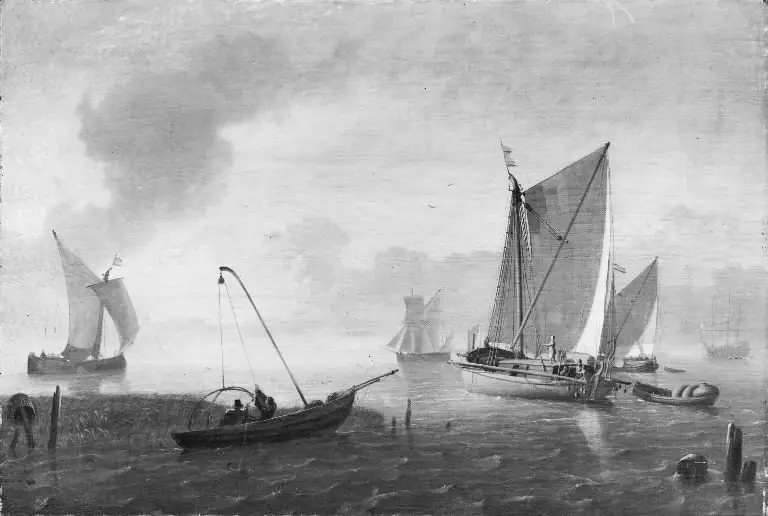
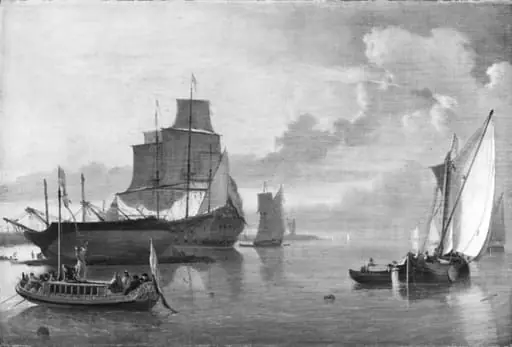
Calm Sea is an oil painting by the Dutch Golden Age artist Jan van de Cappelle. It dates from 1655 and is held in the collection of the Bode Museum.
About this work
Overview
Calm Sea is a marine painting by the Dutch Golden Age artist Jan van de Cappelle, dated to 1655.
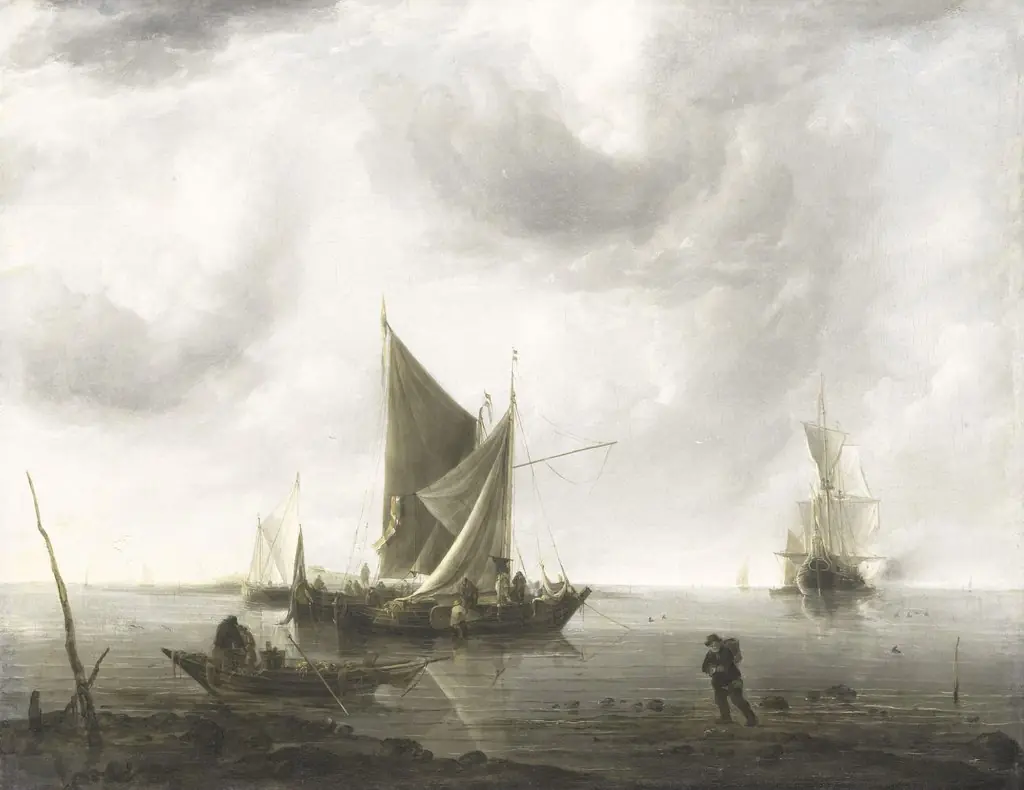
Calm Sea is a marine painting by the Dutch Golden Age artist Jan van de Cappelle, dated to 1655. Executed in oil paint on a canvas support, the artwork measures 45 by 71 centimeters. The painting currently resides in the Gemäldegalerie Berlin. As a quintessential example of van de Cappelle's specialty in depicting estuary and river scenes, the work captures a nearly windless day on the Netherlandish coast. It exemplifies the artist's mastery of atmospheric light and still water, securing his reputation as one of the leading marine painters of seventeenth century Holland.
Subject & Meaning
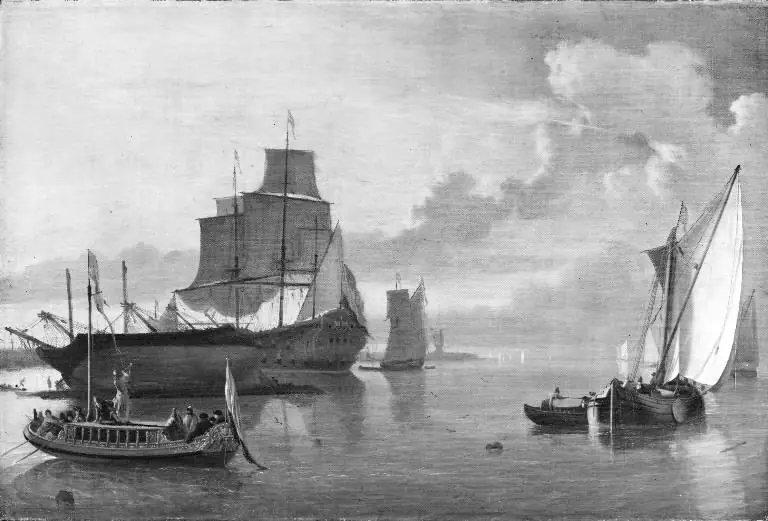
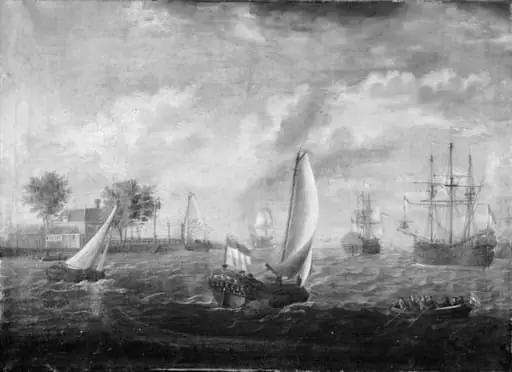
The composition centers on a large sailing vessel with raised sails and a mast flag, surrounded by several smaller boats on a tranquil sea. In the foreground left, two men stand in shallow water near a small rowboat, engaging in daily routines while an empty small boat floats to the right of the central vessel. A low shoreline is visible on the right horizon. The sky dominates the composition, filled with layered clouds that are brighter toward the left horizon and darker toward the right. This vast, still sky acts as the true protagonist of the scene, establishing an all-pervading luminous atmosphere that softens all outlines and unifies the forms. The calm water serves as a mirror, reflecting the cloud formations and vessels above, a hallmark of van de Cappelle's iconography that emphasizes the quiet harmony and atmospheric breadth of the Dutch coast rather than narrative drama.
Technique & Style
Van de Cappelle rendered this scene using a monochromatic palette of grays, ranging from near white to deep black, characteristic of the early Dutch tonal school. The paint surface displays fine craquelure throughout, with brushwork that is smooth and blended in the sky and water, providing slightly more definition in the ships and figures. The water surface shows gentle horizontal ripples with soft reflections. The artist captures atmospheric recession from foreground to background, creating a polished overall finish. In his broader oeuvre, van de Cappelle began refining his palette around 1650, moving toward a warmer golden tonality and employing broader, more painterly brushwork. His exceptional originality lies in his treatment of water, mirroring the colors and contours of the ships on a glass-like surface, leading scholars to describe him as a painter of light comparable only to Rembrandt.
History & Provenance
Created in 1655, Calm Sea entered the collection of the Gemäldegalerie Berlin, where it is held in the Bode Museum. The broader market history of van de Cappelle's calms demonstrates their high valuation among collectors. A closely related work, A Calm Sea, painted on an oak panel and signed with the artist's IVC monogram, passed through the hands of Sir Joseph Robinson Bt in the early twentieth century. Robinson acquired it by 1923 and kept it despite an attempt to sell it at Christie's that year, subsequently lending it to institutions including the Royal Academy in London in 1958 and the National Gallery of South Africa in Cape Town in 1959. The painting later sold at Sotheby's in 2018 for 2,050,000 pounds. Another shipping scene on a calm sea, attributed to the manner of van de Cappelle and also signed IVC, was offered at Sotheby's in 2019 with an estimate of 4,000,000 to 6,000,000 USD, having previously belonged to the collection of Arndt Krupp von Bohlen und Halbach.
Context
Jan van de Cappelle lived his entire life in Amsterdam, born in 1626 to a wealthy dyer and buried in 1679. Largely self-taught, he was heavily influenced by the marine painter Simon de Vlieger. Because he inherited his father's lucrative dyeworks in 1674, van de Cappelle never relied on painting for his livelihood, resulting in a relatively small surviving output of fewer than 150 works. He was also a prominent art collector, amassing a large and important collection that included sixteen paintings by Jan Porcellis, nine by de Vlieger, and numerous drawings by Rembrandt. His financial independence allowed him to refine his technique at his own pace, focusing on parade marine subjects and calms. By the 1650s, he had established the compositional format seen in Calm Sea, concentrating on central marine vessels flanked by open vistas, a structure that defined his most successful period.
Legacy
Van de Cappelle is now considered the outstanding marine painter of seventeenth century Holland. His ability to capture the unity of a luminous atmosphere, where sky is reflected on water, became the defining feature of his legacy, influencing contemporaries like Willem van de Velde. His calms, characterized by an all-pervading luminous atmosphere that softens all outlines, represent a high point of the Dutch tonal school and its transition into a warmer, golden palette. The enduring high market value of his works, reaching into the millions of dollars and pounds at major auctions, reflects his continued significance. His paintings, which once hung in the magnificent picture gallery of Dudley House and later entered major museums worldwide, remain benchmarks for the depiction of light and water in European art.
Own this work as a print
Artist & collection
Artist
Jan van de Cappelle (or Joannes / van der / Capelle in various combinations; 25 January 1626 (baptized) – 22 December 1679 (buried)) was a Dutch Golden Age painter of seascapes and winter landscapes, also notable as an industrialist and…