Artwork
Place de la Trinité, Paris
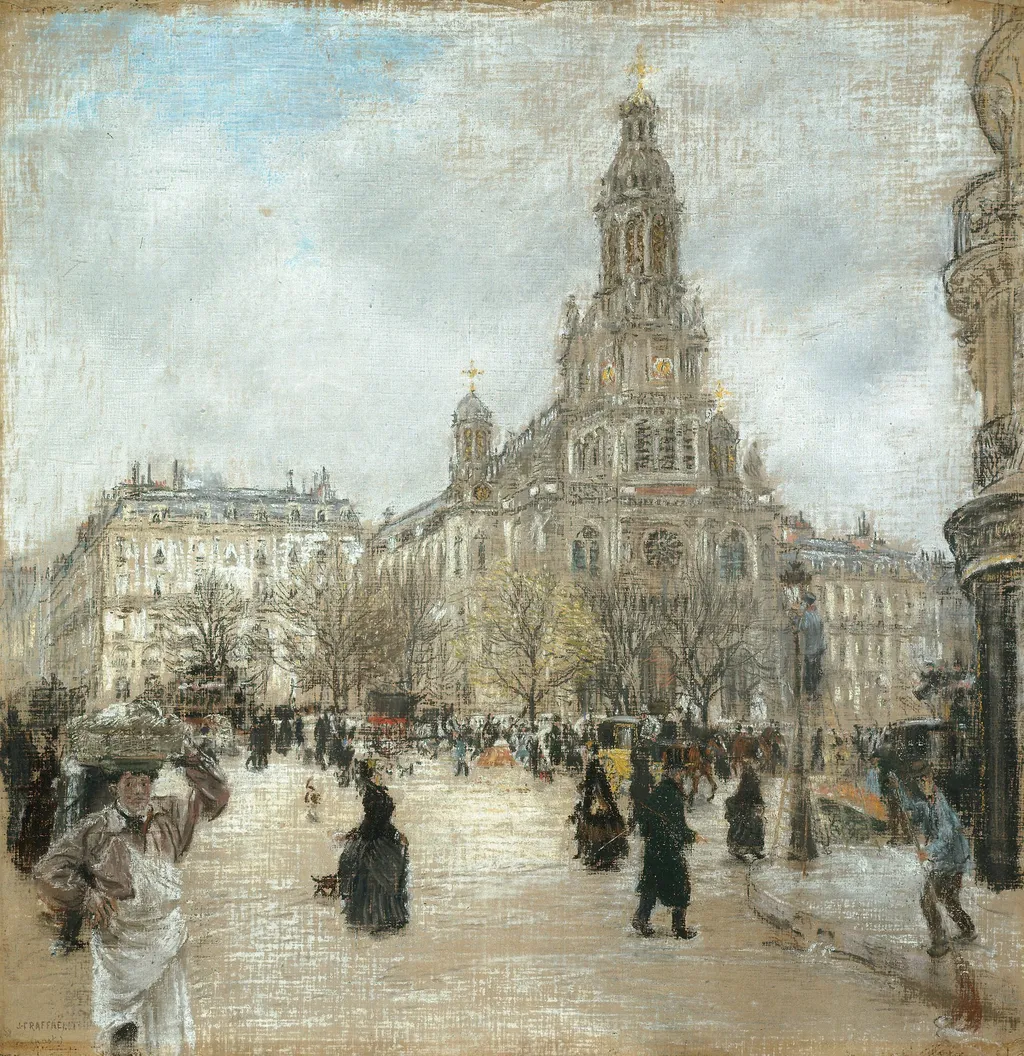
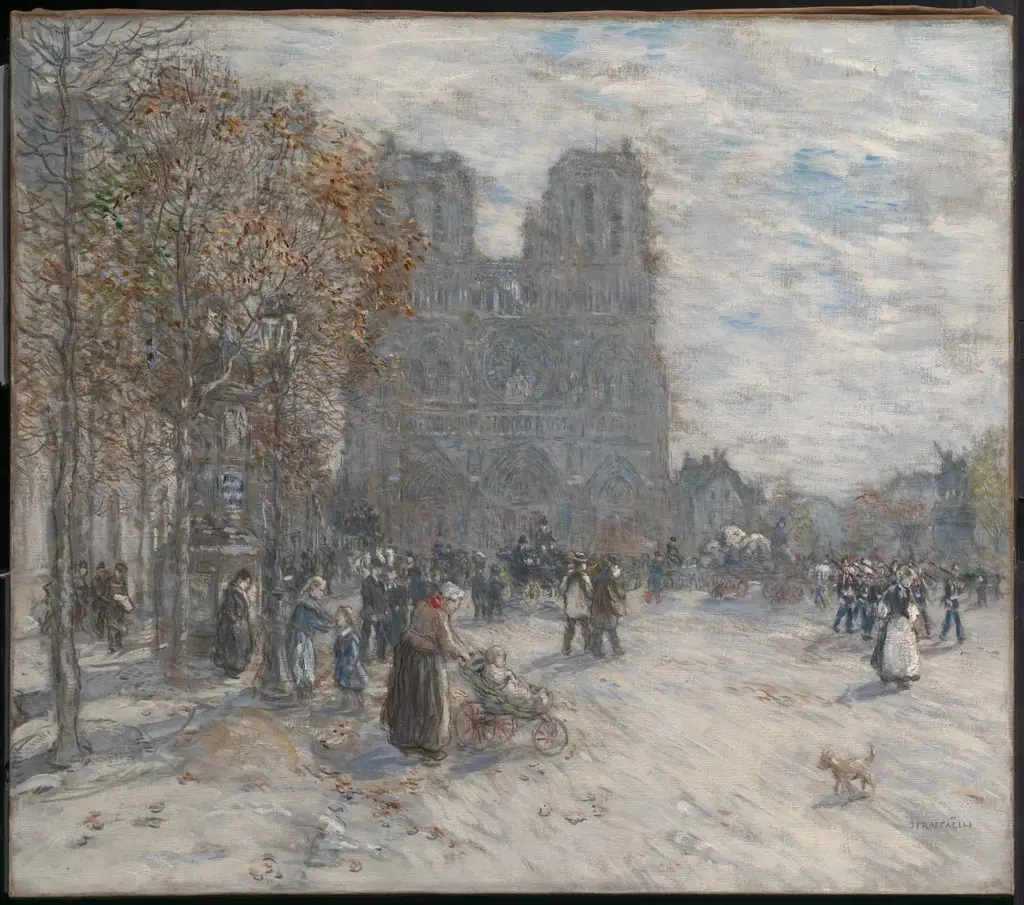
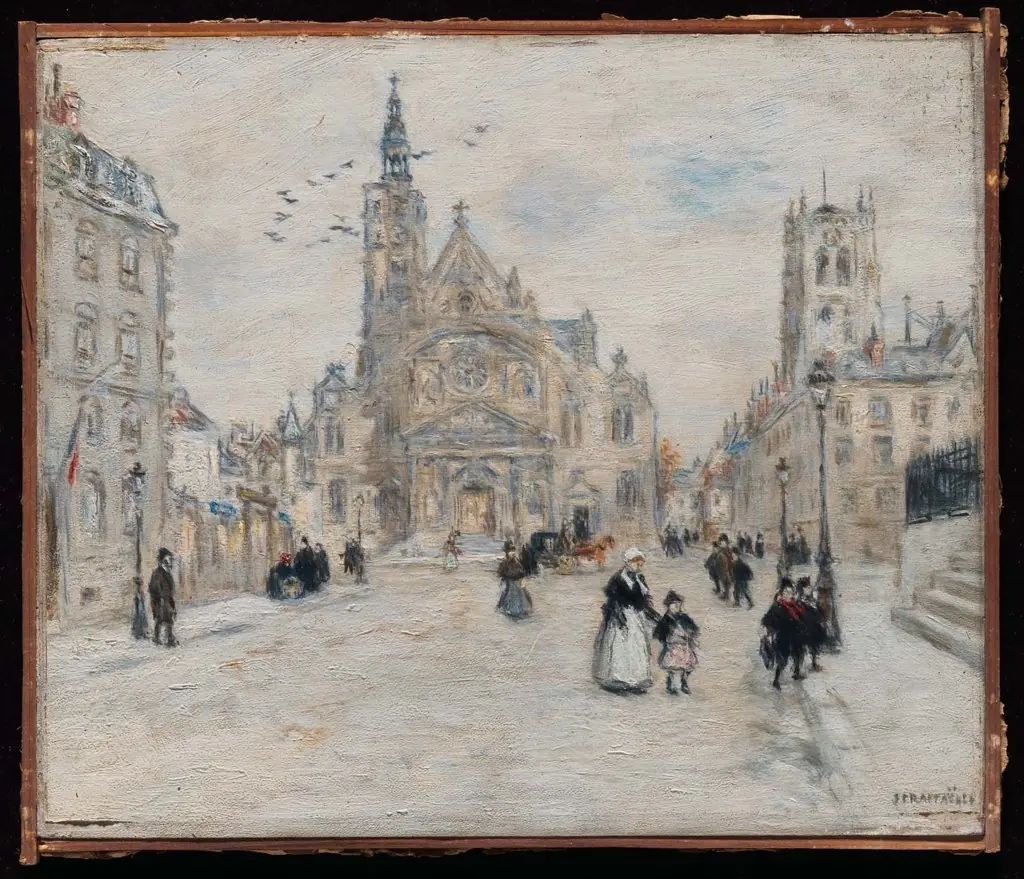
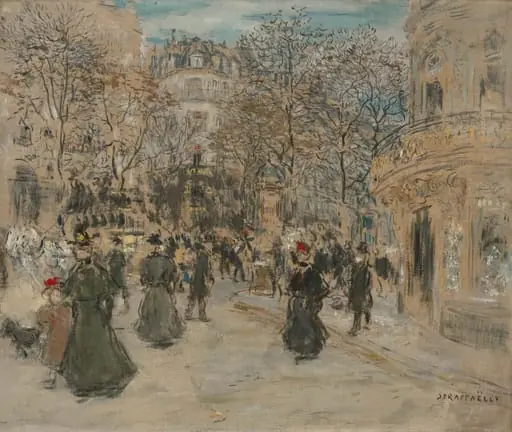
Place de la Trinité, Paris is an oil painting by the Impressionist artist Jean-François Raffaëlli. It dates from 1894 and is held in the collection of the Art Institute of Chicago.
About this work
Subject & Meaning
The painting shows the Place de la Trinité in Paris, dominated by the Église de la Sainte-Trinité and surrounding buildings on rue d'Anjou and rue de la Paix.
The painting shows the Place de la Trinité in Paris, dominated by the Église de la Sainte-Trinité and surrounding buildings on rue d'Anjou and rue de la Paix. Raffaëlli captures the urban atmosphere of late‑19th‑century Paris, emphasizing the church’s façade and the activity of the square. The work reflects the artist’s interest in contemporary cityscapes and the everyday life of Parisian neighborhoods.
Technique & Style
Jean-François Raffaëlli executed Place de la Trinité, Paris in 1886 using oil paint applied to a canvas support. The work is classified as a painting that depicts the Église de la Sainte-Trinité and the surrounding buildings at the place d'Estienne-d'Orves in Paris. As a canvas-based oil painting, the medium allows for the specific rendering of the architectural and urban elements characteristic of the artist's style during this period.
History & Provenance
Jean-François Raffaëlli's 1886 oil painting Place de la Trinité, Paris is held in the collection of the Art Institute of Chicago. The work depicts the Église de la Sainte-Trinité and the surrounding buildings near the place d'Estienne-d'Orves. While the painting's inception is recorded as 1886, the provided sources do not specify an inventory or accession number for the piece. Additionally, no exhibition history is documented in the available records.
Legacy
Place de la Trinité, Paris (1886) by Jean-François Raffaëlli has been recognized for its nuanced portrayal of urban Parisian life, influencing later realist and impressionist approaches to cityscapes. The work's depiction of everyday activity near the Église de la Sainte-Trinité contributed to shifting artistic interest toward ordinary street scenes in the late 19th century. Its inclusion in major collections such as the Art Institute of Chicago has ensured continued visibility and scholarly attention to Raffaëlli's oeuvre.
Overview
Jean‑François Raffaëlli’s 1894 oil painting Place de la Trinité, Paris captures a bustling urban scene in the late nineteenth‑century capital. Executed in a style linked to Impressionism, the canvas records the streetscape surrounding the Church of the Holy Trinity, presenting a moment of everyday life in a rapidly modernizing city.
Context
Raffaëlli, a French realist who also produced prints, worked at a time when Impressionist techniques were being adopted by artists interested in contemporary life. Place de la Trinité illustrates his engagement with the movement’s focus on light, atmosphere, and the immediacy of modern urban scenes.
Own this work as a print
Artist & collection
Artist
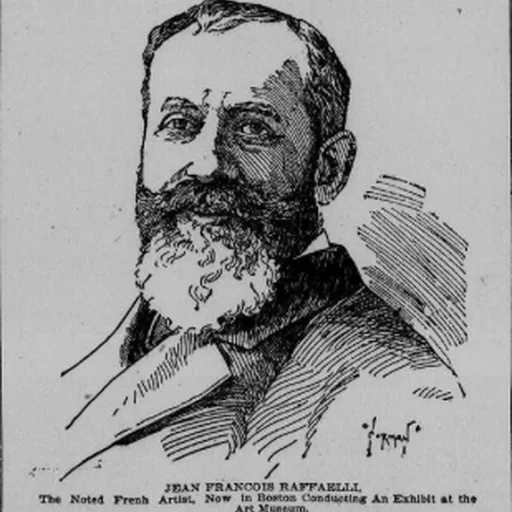
Jean-François Raffaëlli (April 20, 1850 – February 11, 1924) was a French realist painter, sculptor, and printmaker who exhibited with the Impressionists. He was also active as an actor and writer.