Artwork
The Boulevard
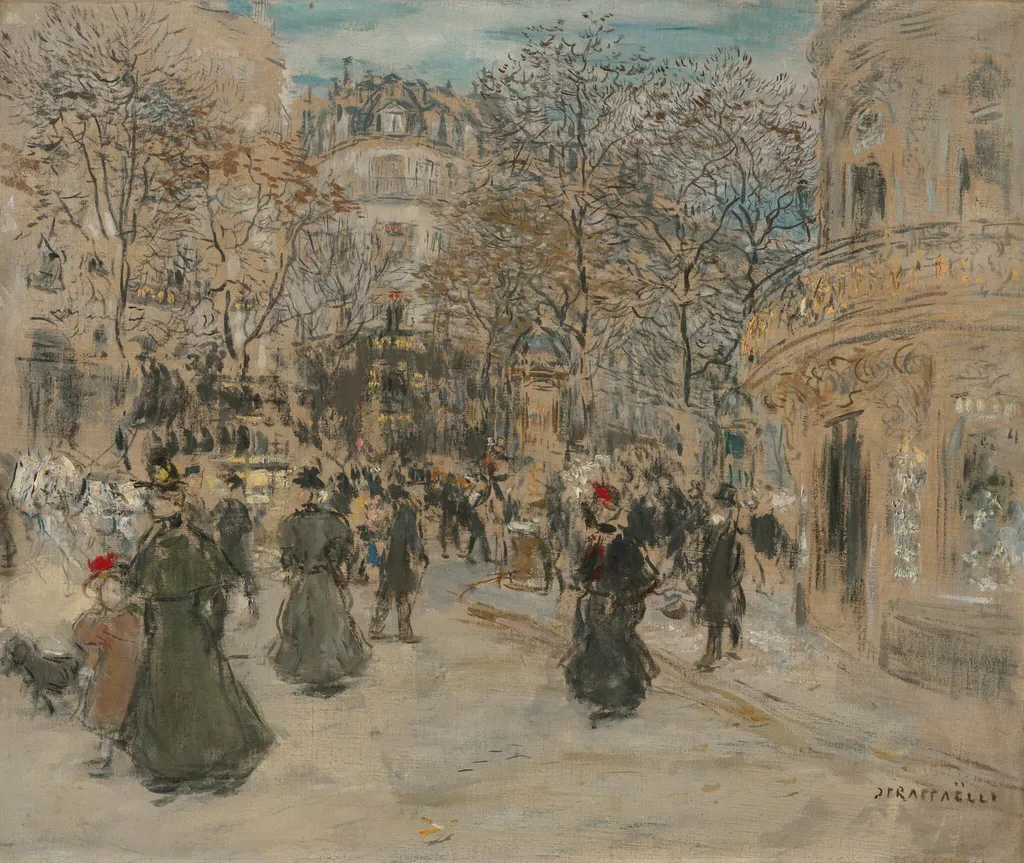
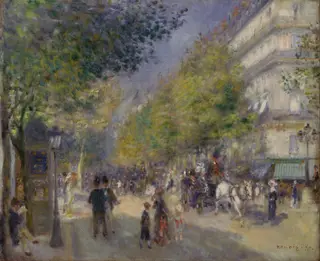
The Boulevard is an oil painting by the Post-Impressionist artist Jean François Raffaëlli. It dates from 1902 and is held in the collection of the National Gallery of Art.
- Inscription
- Inscribed:lower right: J F Raffaëlli
About this work
Technique & Style
Jean-François Raffaëlli painted The Boulevard in 1902 using oil on canvas, a medium typical for his urban realist scenes.
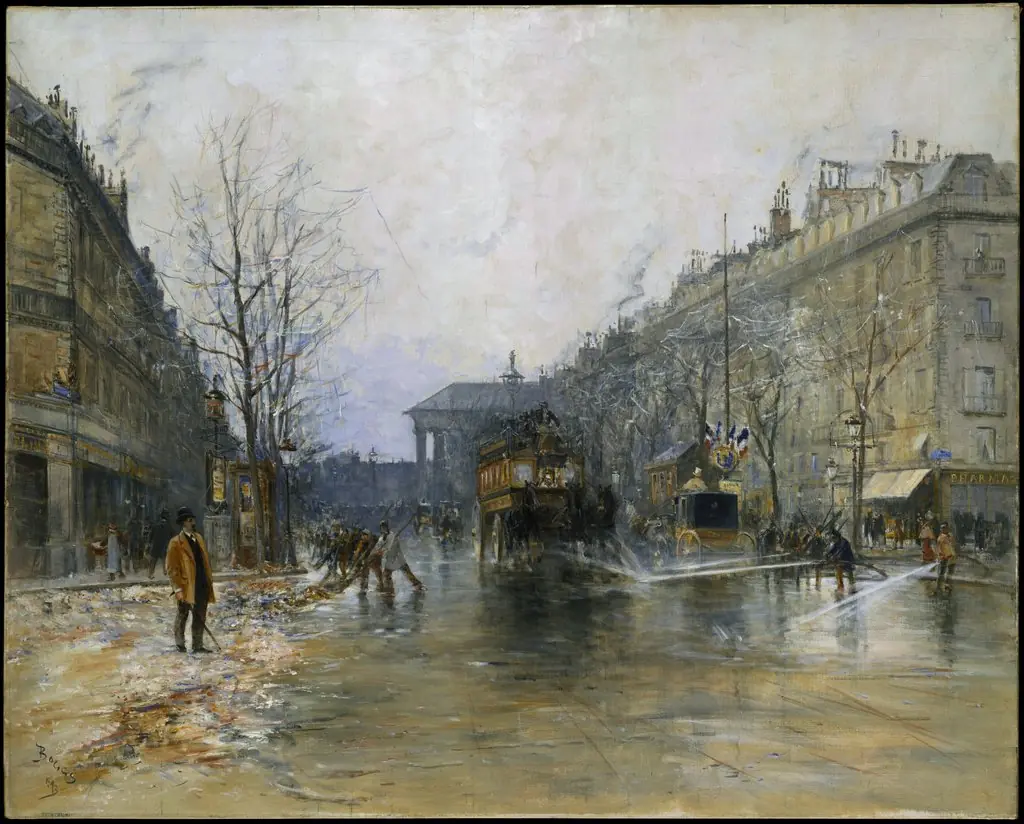
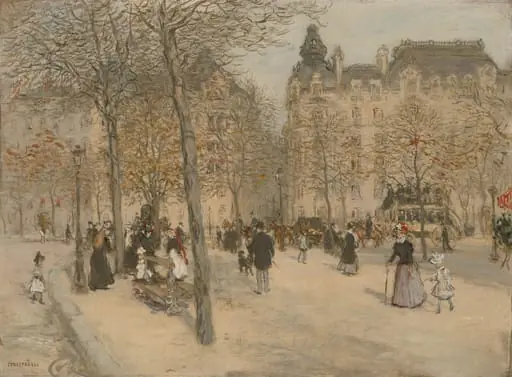
Jean-François Raffaëlli painted The Boulevard in 1902 using oil on canvas, a medium typical for his urban realist scenes. The work measures 67.31 cm in height by 81.28 cm in width, reflecting the scale suited for intimate yet detailed compositions. Rendered in a naturalistic style, the painting captures a quiet Parisian street with loose brushwork and careful attention to atmospheric effects, characteristic of Raffaëlli’s approach to contemporary cityscapes.
The painting’s surface remains intact, with the oil medium applied thickly in some areas to suggest texture and depth. Its condition is documented as well-preserved, retaining original pigments without significant degradation. The Boulevard is currently held in the collection of the National Gallery of Art in Washington, D.C., following its acquisition in 2015 from the Corcoran Gallery of Art’s bequest.
Raffaëlli’s technique emphasizes precise draftsmanship beneath layered washes of oil paint, producing a balanced interplay of light and shadow that defines the street’s spatial depth and temporal mood.
History & Provenance
The Boulevard was painted by Jean-François Raffaëlli in 1902, executed in oil on canvas. Its early provenance passes through the Paris dealer Boussod et Valadon, after which the work entered the collection of William A. Clark (1839–1925) in New York. Clark bequeathed the painting in 1926 to the Corcoran Gallery of Art in Washington.
The Corcoran subsequently transferred the work in 2015 to the National Gallery of Art, where it remains held today.
The Boulevard entered the collection of William A. Clark in New York after being handled by the Parisian firm Boussod et Valadon. Upon Clark's death, the painting was bequeathed in 1926 to the Corcoran Gallery of Art in Washington. In 2015, the work was acquired by the National Gallery of Art, also located in Washington, D.C., where it is currently held. No specific exhibition history or inventory numbers are provided in the available records.
Context
Jean-François Raffaëlli painted The Boulevard in 1902, depicting a Parisian street scene with characteristic Impressionist-era urban detail. The work entered the Corcoran Gallery of Art collection through the bequest of William A. Clark in 1926 and remained there until its acquisition by the National Gallery of Art in 2015, reflecting a century-long trajectory of institutional stewardship. Scholarship on Raffaëlli emphasizes his role in bridging academic realism and Impressionist sensibilities, particularly through his focus on everyday modern life rather than traditional historical subjects.
The Boulevard thus occupies a nuanced position within early 20th-century French painting, illustrating evolving artistic approaches to urban modernity while maintaining ties to academic traditions.
Legacy
The Boulevard's legacy is defined by its institutional journey and continued presence in major collections. The painting remained in the Clark family until 1926, when it was bequeathed to the Corcoran Gallery of Art in Washington, D.C. It later entered the National Gallery of Art's holdings in 2015 following the Corcoran's dissolution and transfer of its collection. Today, it resides in the National Gallery of Art's collection in Washington, D.C., maintaining its visibility within a prominent national institution.
Overview
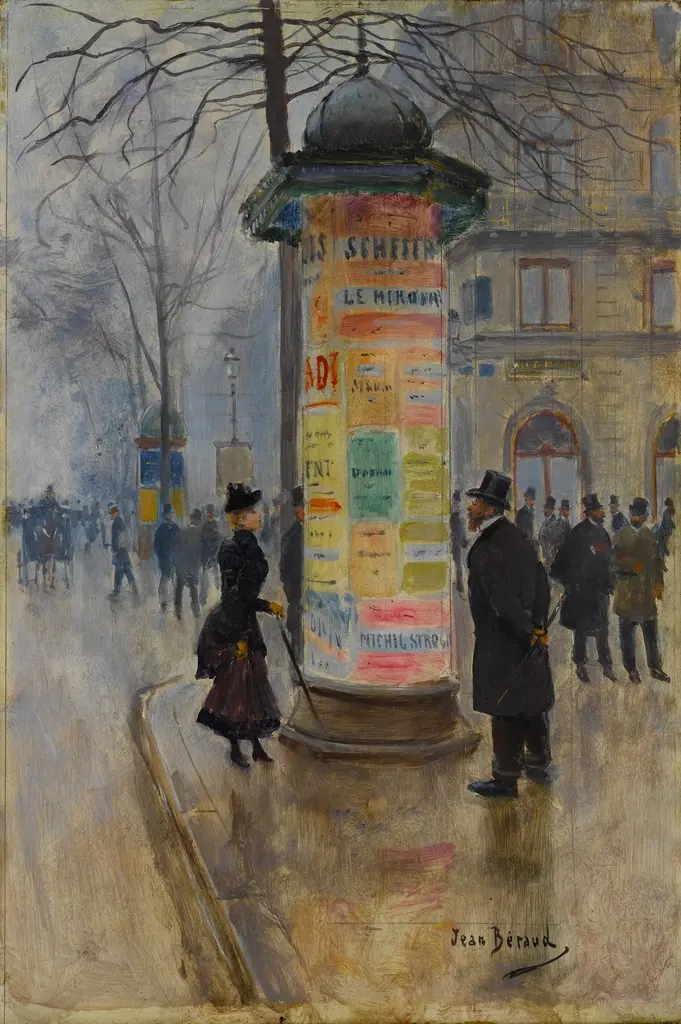
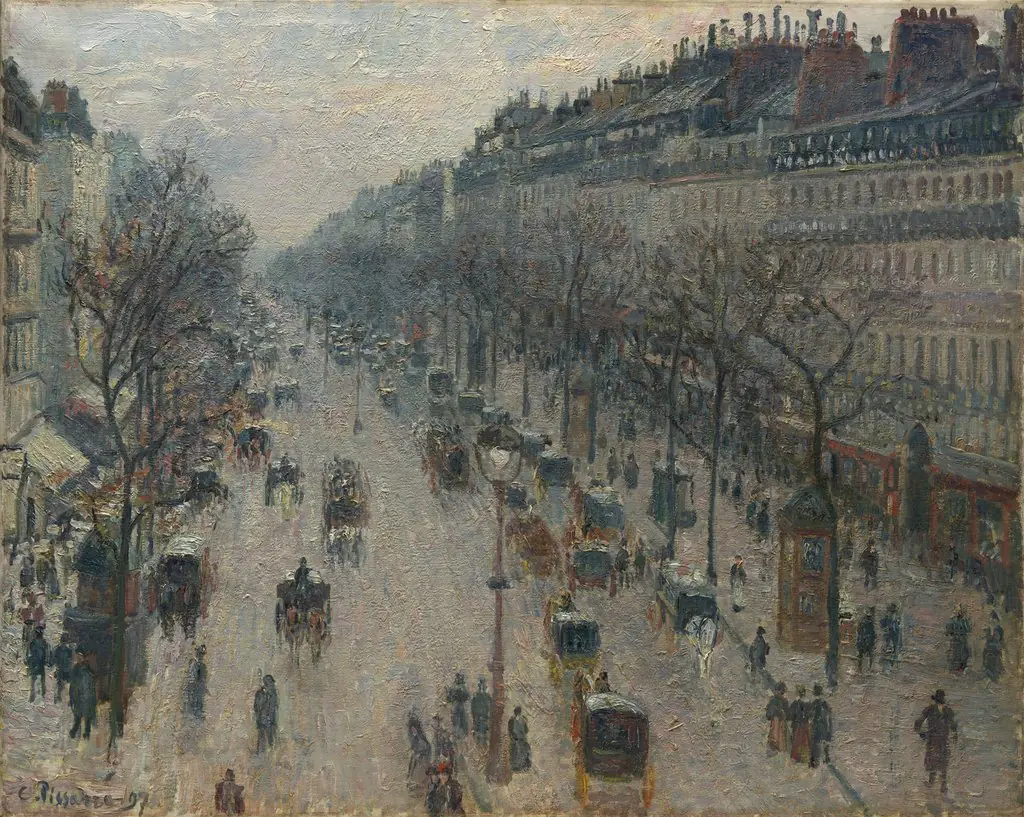
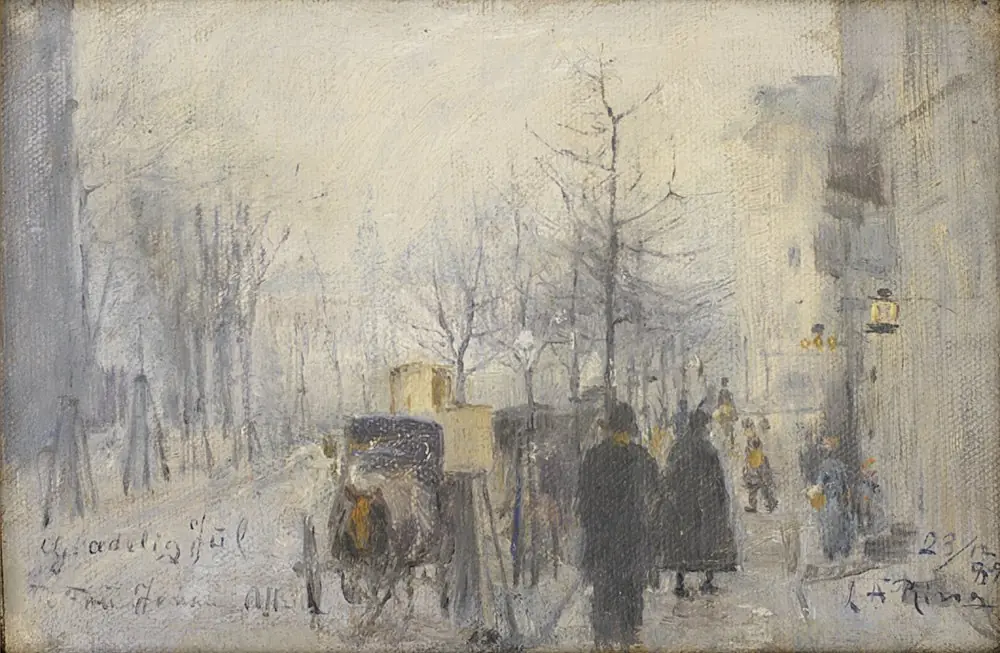
Jean‑François Raffaëlli’s oil on canvas, entitled The Boulevard, dates from around 1902. The work depicts a wintertime urban thoroughfare, its atmosphere rendered in a palette of subdued grays, browns and a faint sky blue. The composition captures a moment of everyday movement, with pedestrians bundled against the cold and the architecture receding into the distance.
Subject & Meaning
The scene presents a bustling city street lined with leaf‑less trees and flanked by multi‑storey buildings. Figures in long coats and hats navigate the sidewalk, some shielding themselves with umbrellas, suggesting the chill of the season. The painting conveys the rhythm of modern life, emphasizing both the anonymity of the crowd and the quiet endurance of the urban environment.
Artist & collection