Artwork
Henriette-Anne of England, Duchess of Orleans, known as Madame (1644-1670)
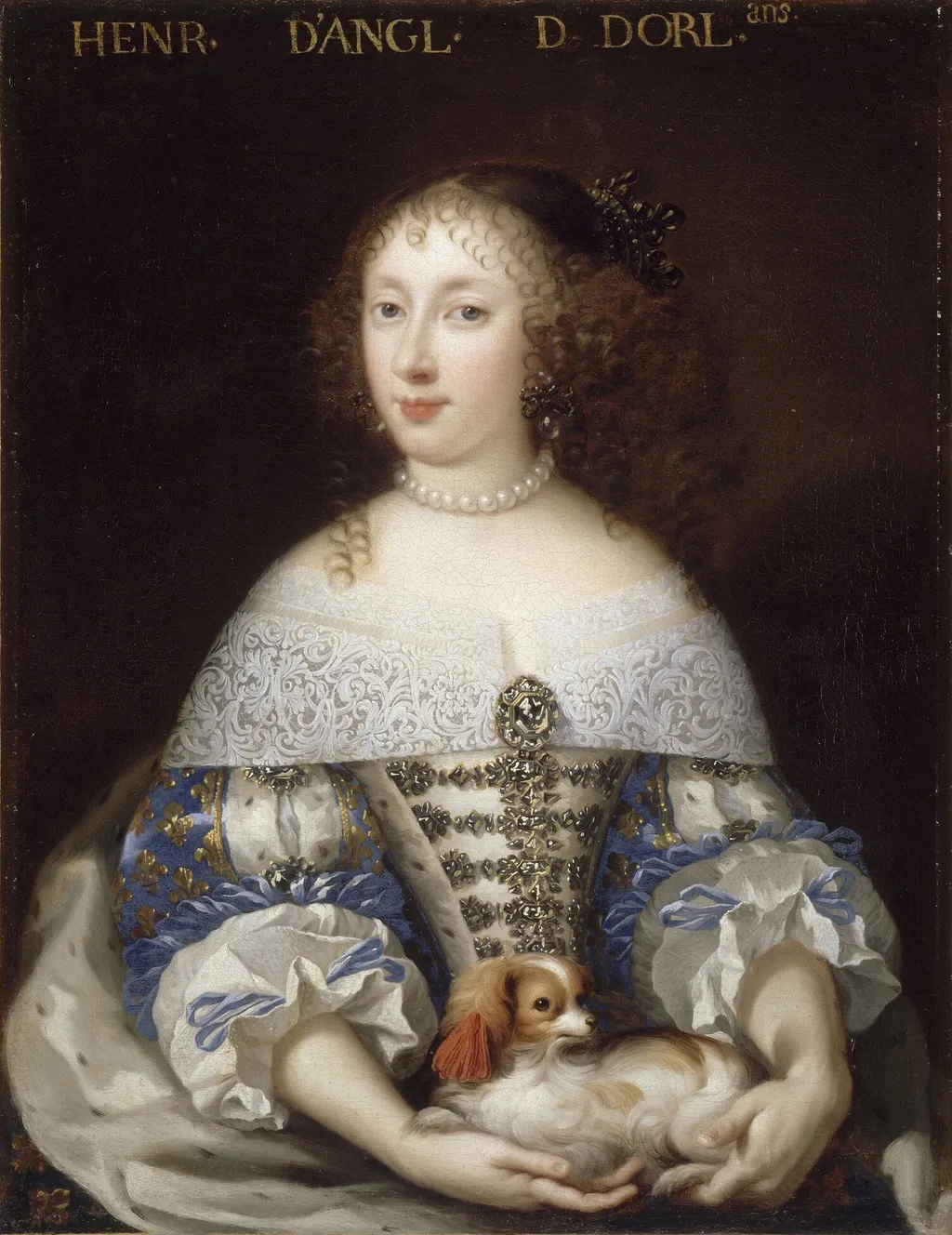
Henriette-Anne of England, Duchess of Orleans, known as Madame (1644-1670) is an oil painting by the French Classical Baroque artist Jean Nocret. It dates from 1650 and is held in the collection of the Palace of Versailles.
About this work
Subject & Meaning
The dog functions as a traditional emblem of fidelity and domestic virtue, reinforcing the sitter's role as a virtuous consort within the royal household.
The painting portrays Henriette-Anne of England, Duchess of Orleans, known as Madame, accompanied by a small dog and rendered in lace and fine dress, symbolizing aristocratic femininity and courtly refinement in 17th-century France.
The dog functions as a traditional emblem of fidelity and domestic virtue, reinforcing the sitter's role as a virtuous consort within the royal household.
Attributed to Jean Nocret and housed in the Museum of the History of France at Versailles, the work was displayed in the decorative cycle known as La galerie des beautés de Louis XIV, linking the subject to the curated visual narrative of royal magnificence.
Technique & Style
The portrait of Henriette-Anne of England, Duchess of Orleans, known as Madame, painted by Jean Nocret in 1650, is executed in oil paint on canvas. The work measures 79 cm in height and 63 cm in width, depicting the subject in formal attire with intricate lace and a dog, rendered with precise brushwork characteristic of French Baroque portraiture. It belongs to the portrait genre and was created within the artistic milieu of the French court, as evidenced by its inclusion in the Galerie des Beautés de Louis XIV exhibition.
The painting’s surface handling reflects careful preservation typical of museum-held works, with no noted alterations to its original condition. Formal stylistic elements include naturalistic rendering of facial features and drapery, balanced composition, and adherence to the decorative conventions of 17th-century French portraiture.
The artwork is part of the collections of the Museum of the History of France at the Palace of Versailles, where it is cataloged under inventory numbers MV 3502, INV 6698, and AC 1903.
History & Provenance
The portrait was painted by Jean Nocret in 1650, as indicated by both institutional and Wikidata records.
The work entered the collection of the Museum of the History of France at the Palace of Versailles, where it remains today. Its inventory number at Versailles is MV 3502 (also listed as INV 6698 and AC 1903), confirming its presence in the national collection. The painting was later included in the exhibition La galerie des beautés de Louis XIV, further situating it within the French royal portrait tradition.
The portrait is held at the Palace of Versailles in the Museum of the History of France, accessioned as MV 3502 (INV 6698; AC 1903).
It was included in the exhibition La galerie des beautés de Louis XIV, where the work’s date of 1650 and its depiction of Henrietta of England were noted.
Overview
This oil portrait, executed circa 1650 by French court painter Jean Nocret, presents Henriette‑Anne of England, who later became Duchess of Orléans. The sitter is rendered in a formal pose, gazing directly at the viewer while a small dog rests at her side. A dark, subdued backdrop accentuates the luminous white gown with blue and gold accents, as well as the delicate pearl necklace she wears.
Context
Created during a period of diplomatic marriage alliances between England and France, the portrait reflects the political significance of Henriette‑Anne’s union with the Duke of Orléans. The work aligns with the broader trend of court portraiture that served both as personal commemoration and as visual reinforcement of dynastic connections across European monarchies.
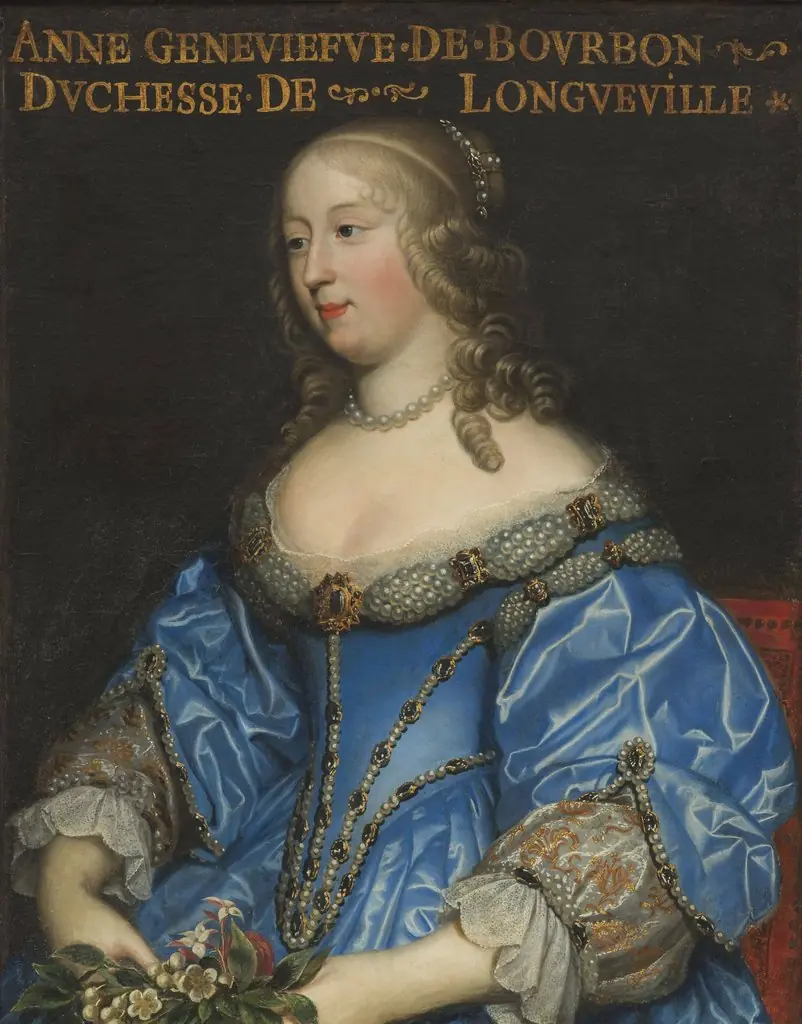
Own this work as a print
Artist & collection
Artist
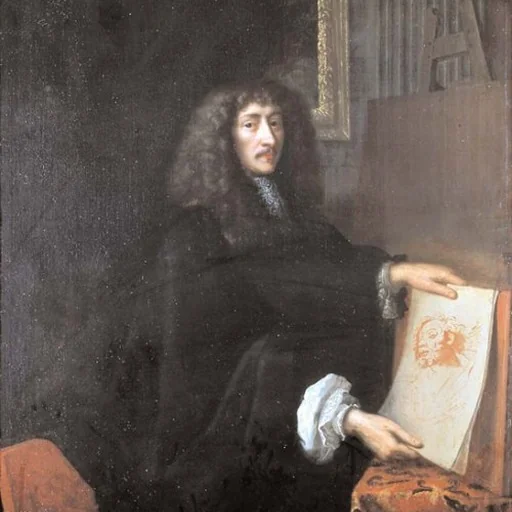
Jean Nocret (December 1615/17, Nancy – November 1672, Paris) was a French painter, known for his portraits of the French royal family. Many portraits of uncertain origin have been attributed to him.

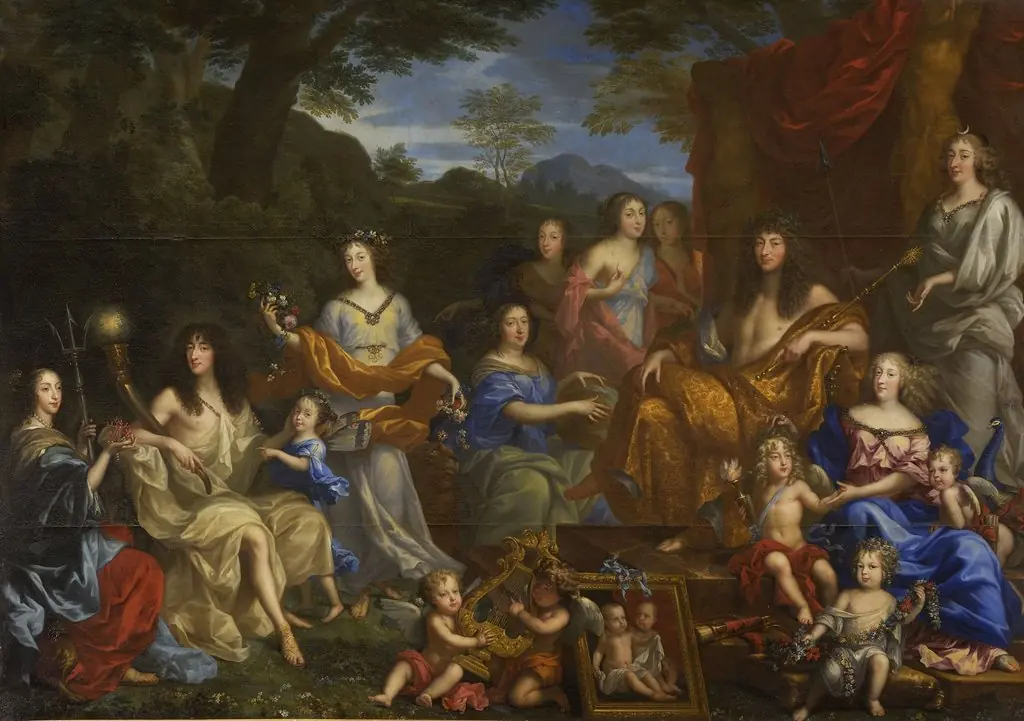
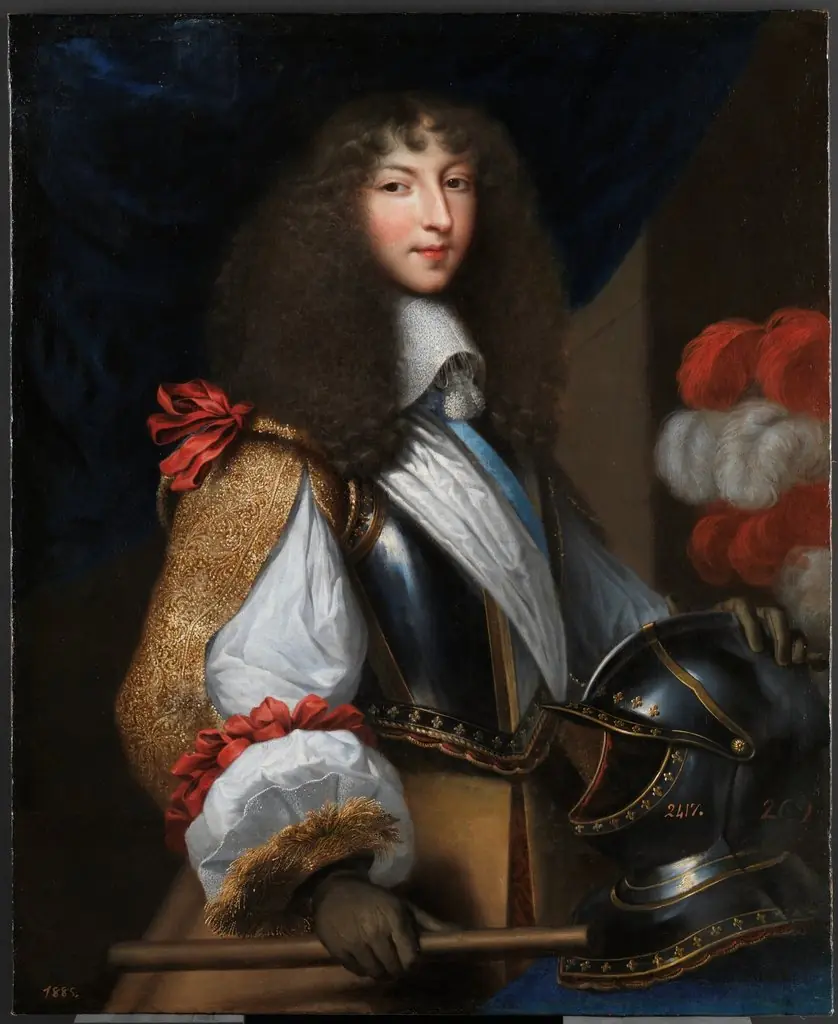
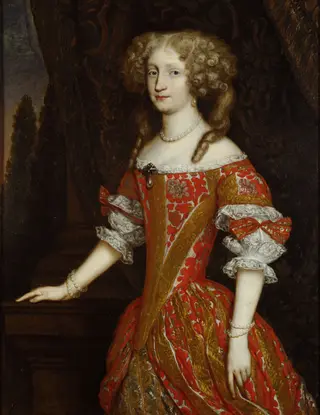 Eleonore Magdalena (1655-1720) von Pfalz - Neuburg, Kaiserin, Kniestück
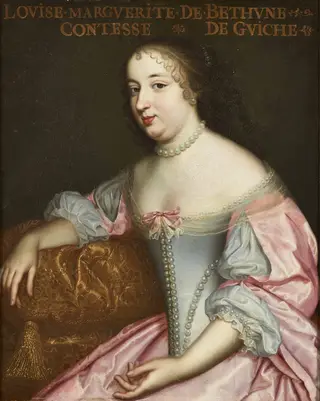 Portrait of Marguerite-Louise-Suzanne de Bethune Sully, Duchess of Lude
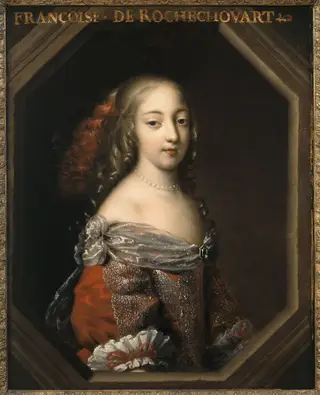 Françoise de Rochechouart
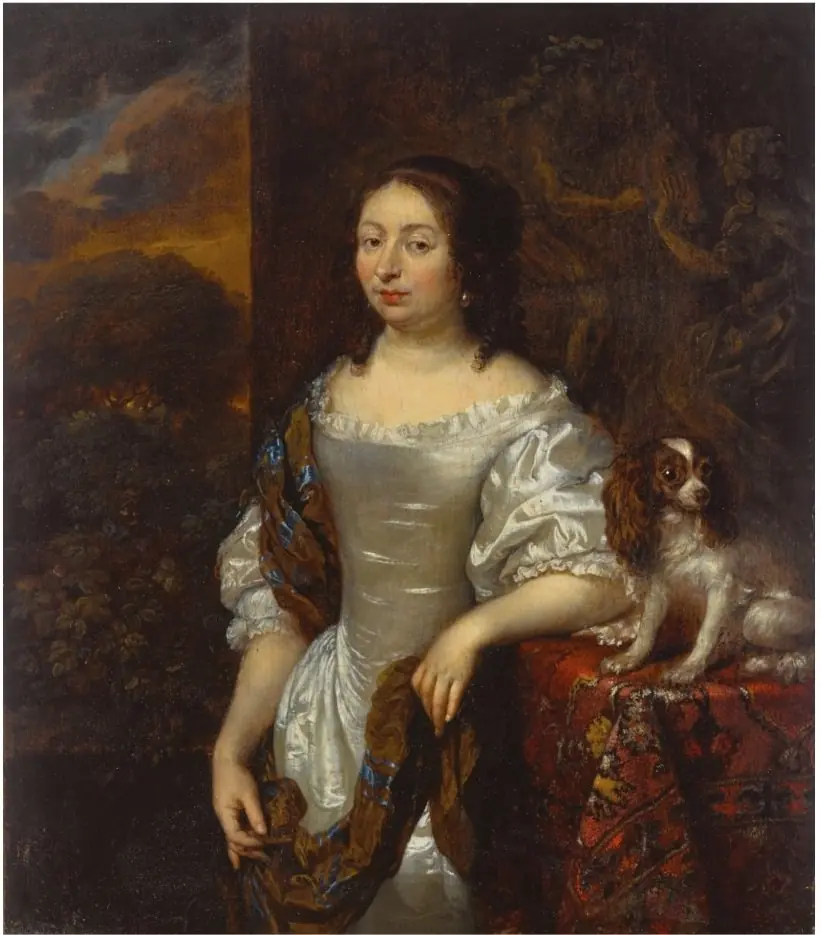 Portrait of a Lady with a Dog on a Table
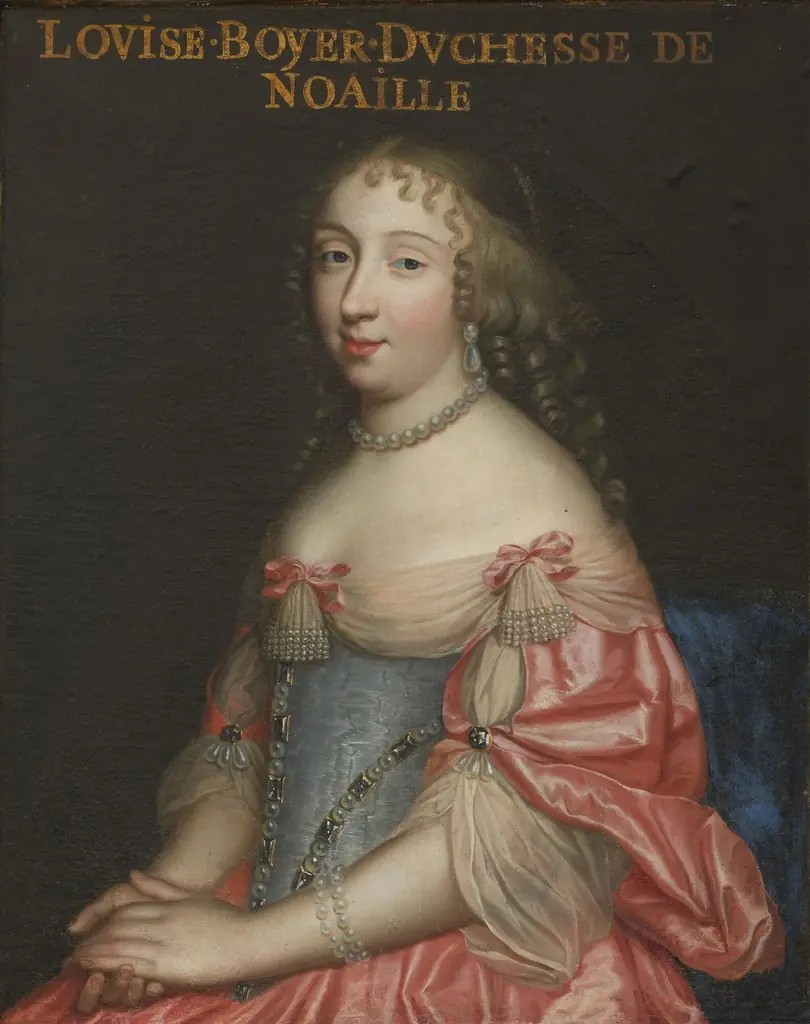 Louise Boyer, Duchess of Noailles (1632-1697)
 Françoise-Marie Mignot, maréchale de l'Hôpital (1624-1711)
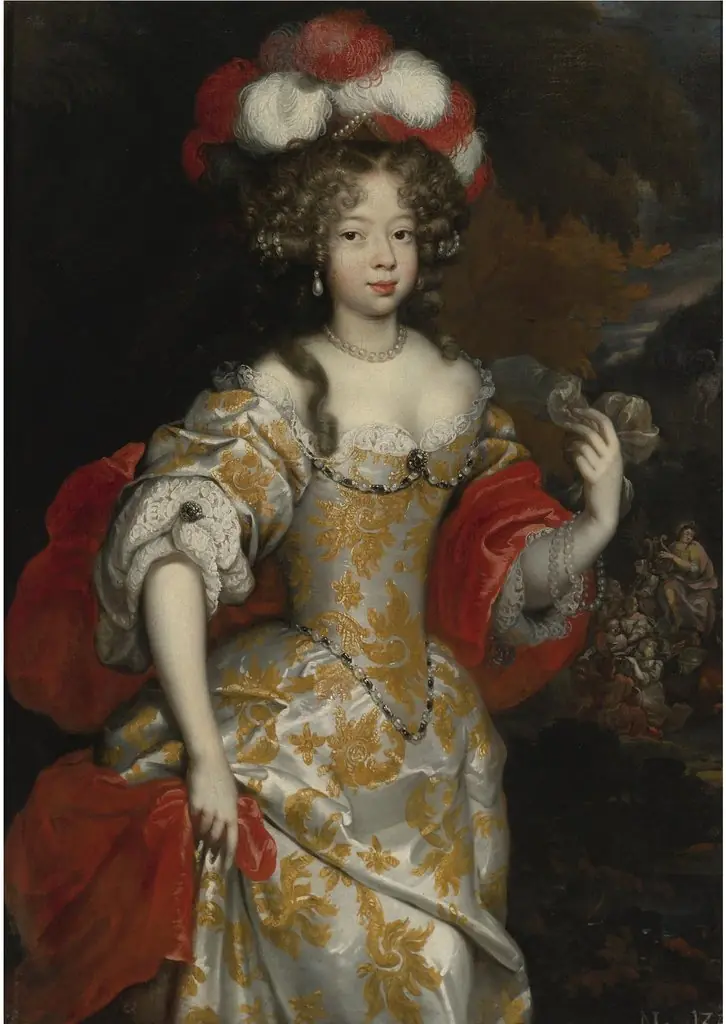 Portrait of Hortense Mancini
 Portrait of a Woman (previously identified as Queen Elizabeth I)
 Portretul Marchizei de Crequi