Artwork
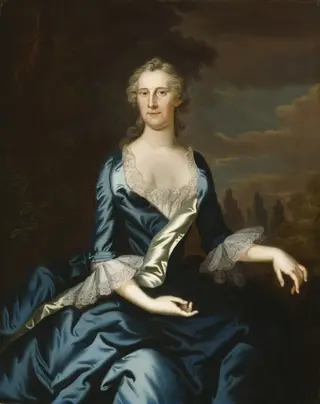
Mrs. Gabriel Manigault
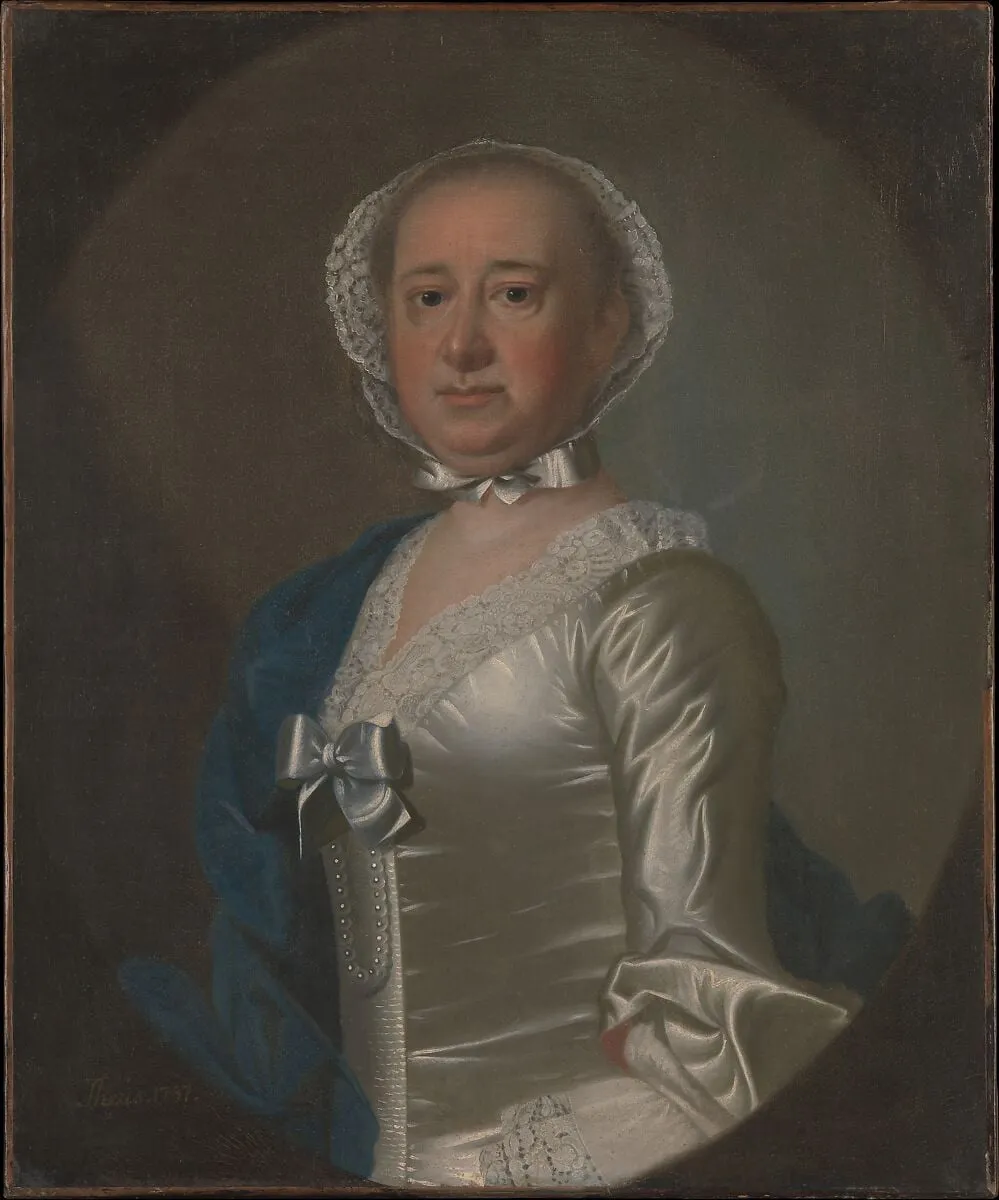
Mrs. Gabriel Manigault is an oil painting by the Rococo painting artist Jeremiah Theus. It dates from 1757 and is held in the collection of the Metropolitan Museum of Art.
- Accession no.
- 28.126.2
- Credit line
- Fletcher Fund, 1928
About this work
In 1757 the Charleston painter Jeremiah Theus portrayed Ann Ashby Manigault, matriarch of colonial South Carolina's wealthiest family. The oil hangs at the Met, signed and dated at lower left. Its companion portrait of her husband Gabriel, a Huguenot merchant whose rice fortune relied on nearly 300 enslaved people, entered the collection alongside it in 1928.
Overview
Theus, who became Charleston's leading portraitist, signed and dated the canvas, which measures thirty by twenty-four and three-quarter inches.
This 1757 oil portrait by Swiss-born artist Jeremiah Theus depicts Ann Ashby Manigault, a prominent figure in colonial South Carolina. As a companion piece to her husband Gabriel's likeness, it serves as a visual document of the region's affluent planter class. Theus, who became Charleston's leading portraitist, signed and dated the canvas, which measures thirty by twenty-four and three-quarter inches. The work offers insight into the social fabric of the period.
Subject & Meaning
Ann Ashby Manigault, born into a prosperous planter family, married Gabriel Manigault, whose vast fortune derived from merchant banking and extensive rice plantations. This wealth was built upon the labor of nearly 300 enslaved individuals. Her personal journal, kept from 1754 to 1781, offers a rare firsthand account of elite Charleston society, even mentioning the creation of this very portrait. The painting thus represents a woman at the apex of colonial power and privilege.
History & Provenance
The portrait of Mrs. Gabriel Manigault, along with its companion piece, remained within the Manigault family for many generations before entering The Metropolitan Museum of Art's collection in 1928 through the Fletcher Fund. A significant event in its history occurred in 1867, when a descendant, Charles Izard Manigault, recorded that both canvases had been intentionally defaced. This damage took place at the family's Silk Hope plantation, where the artworks had been moved for protection during the Civil War.
Context
Jeremiah Theus, a Swiss immigrant who established himself in Charleston, became the foremost portrait painter in colonial South Carolina. His commissions, including this work, provided visual documentation for the region's elite planter aristocracy. The Manigault family, spearheaded by Gabriel Manigault, a French Huguenot immigrant's son, amassed what was considered the largest fortune in the Carolinas through merchant banking and extensive rice cultivation, a system entirely dependent on enslaved labor.
Legacy
Contemporary scholarship reinterprets the defacement of the Manigault portraits. Rather than random vandalism, these acts are now understood as iconoclasm, likely perpetrated by formerly enslaved individuals who had endured the Manigault family's regime. This perspective transforms the canvases from mere family heirlooms into potent artifacts of resistance, reflecting the profound social and political upheavals of the post-Civil War era and offering a complex layer to their historical narrative.
Artist & collection

Artist
Jeremiah Theus (né Theüs; April 5, 1716 – May 17, 1774) was a Swiss-born American painter, primarily of portraits.

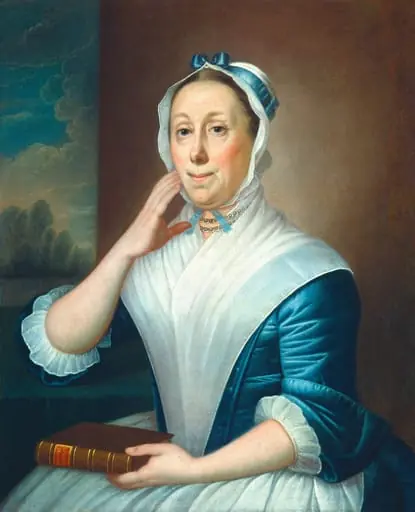
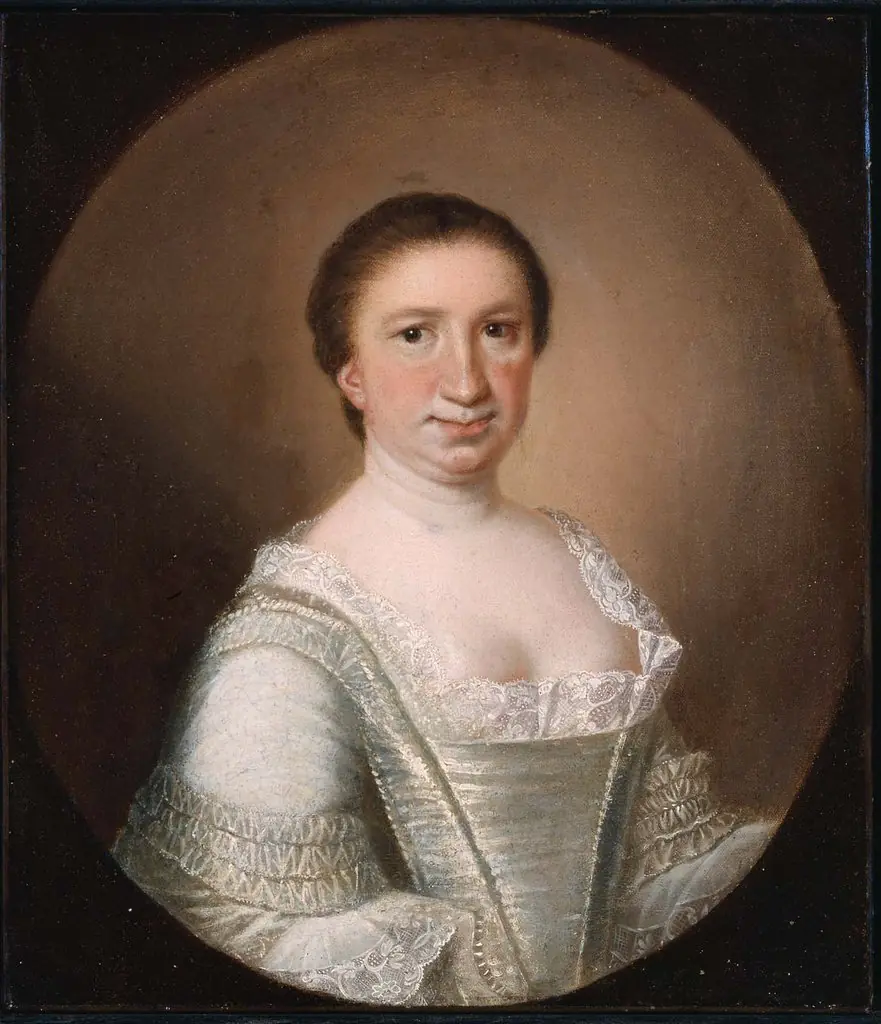 Mrs. Lionel Chalmers (Martha Logan)
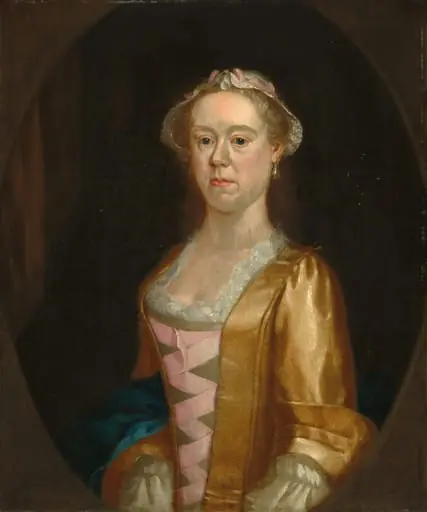 Portrait of a Lady
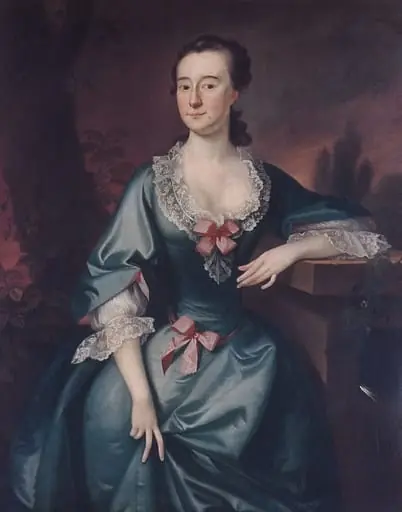 Mrs. David Chesebrough
 Portret van Maria de Hondt
 Hannah Wentworth Atkinson
 Portrait of Mrs. Samuel McCall, Sr. (Anne McCall, 1720–1785)
 Possible Portrait of Hester Vanhomrigh ('Vanessa') (1690-1723)
 Mrs. Charles Carroll of Annapolis
 Mrs. Henry Hill (Anna Barrett)