Artwork
Rosalia
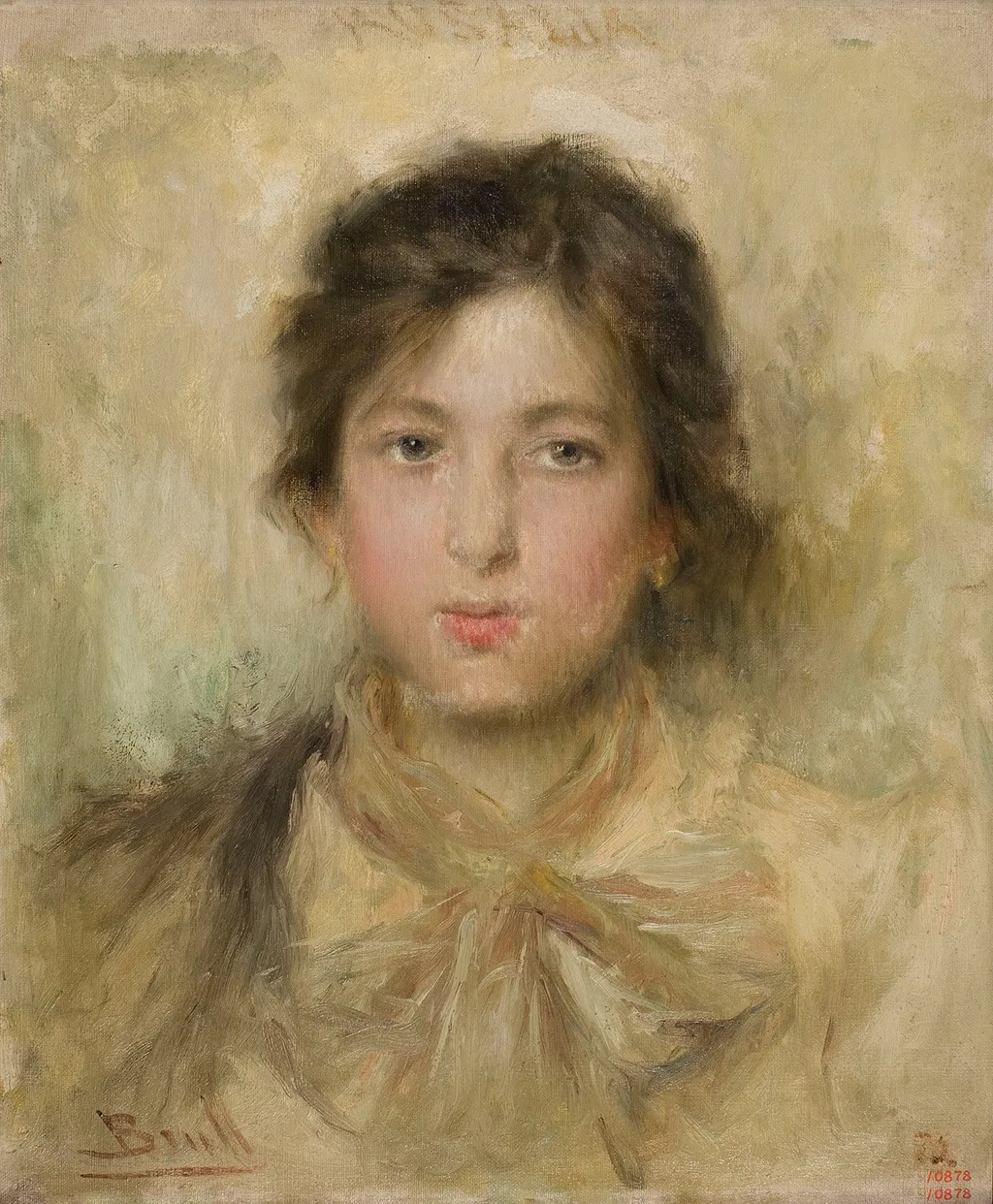
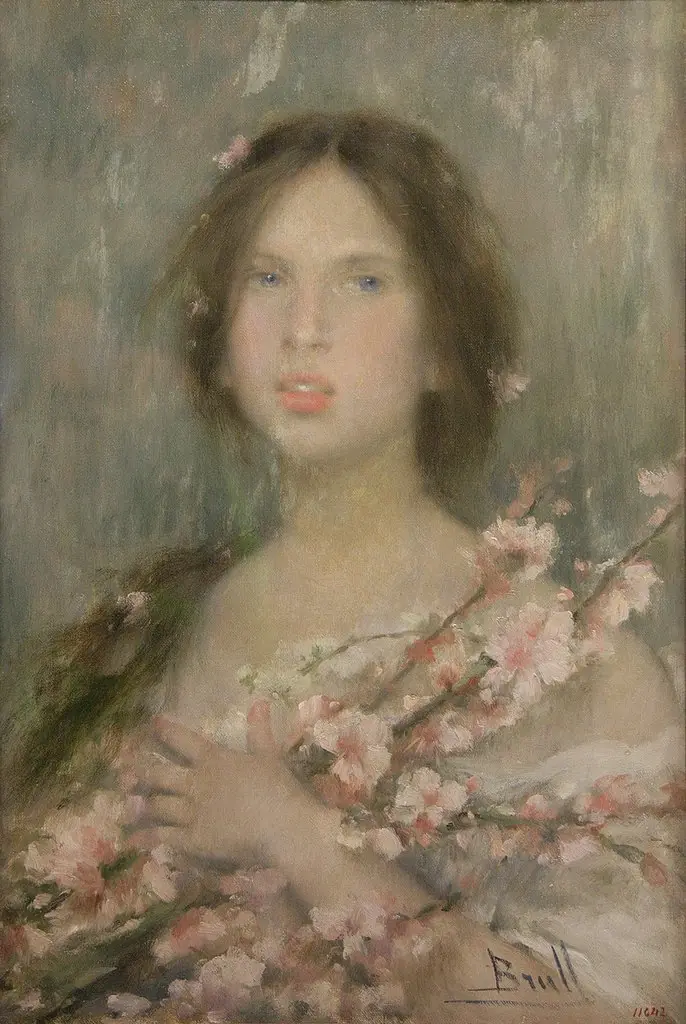
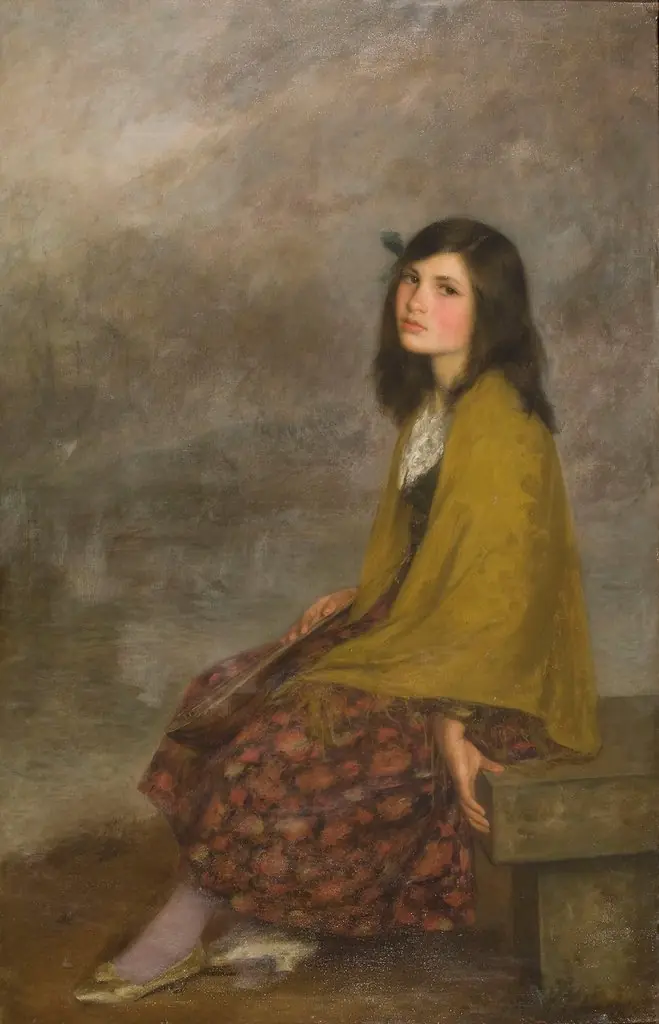
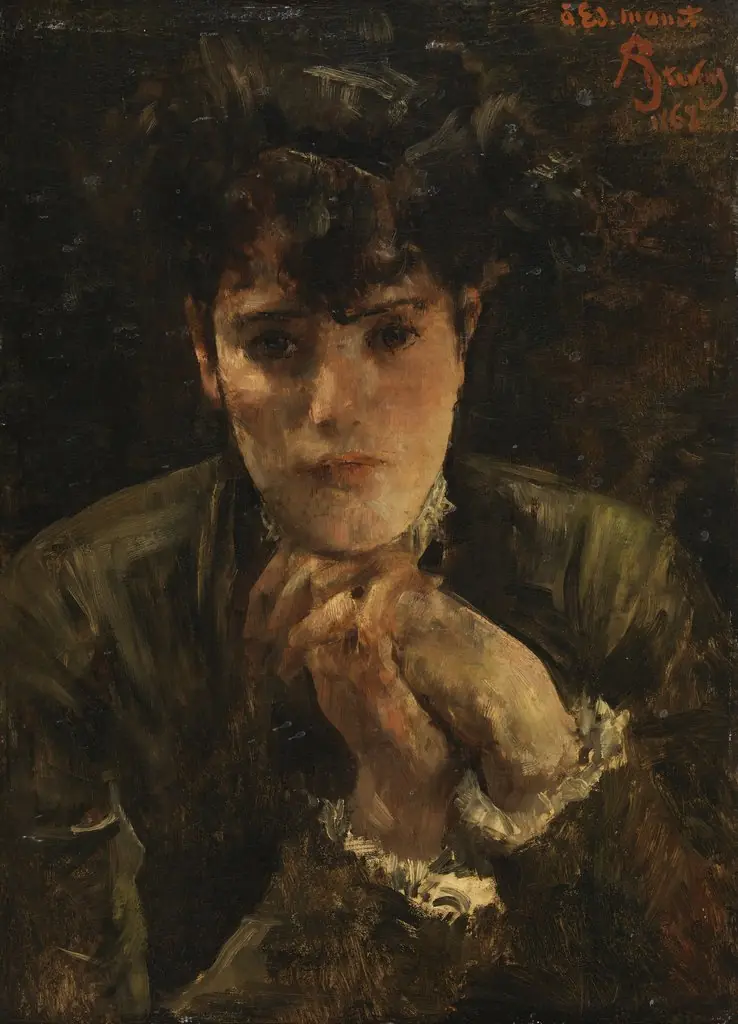
Rosalia is an oil painting by the Art Nouveau artist Joan Brull Vinyoles. It dates from 1898 and is held in the collection of the Museu Nacional d'Art de Catalunya.
About this work
Overview
Though associated with the broader Art Nouveau movement, the work leans toward introspective realism rather than ornamental decoration.
Painted in 1898 by Joan Brull i Vinyoles, Rosalia is an oil-on-canvas portrait that reflects the symbolic and aesthetic concerns of late 19th-century Catalan art. Though associated with the broader Art Nouveau movement, the work leans toward introspective realism rather than ornamental decoration. It resides in the Museu Nacional d'Art de Catalunya, where it stands as a quiet example of regional portraiture from the period.
Subject & Meaning
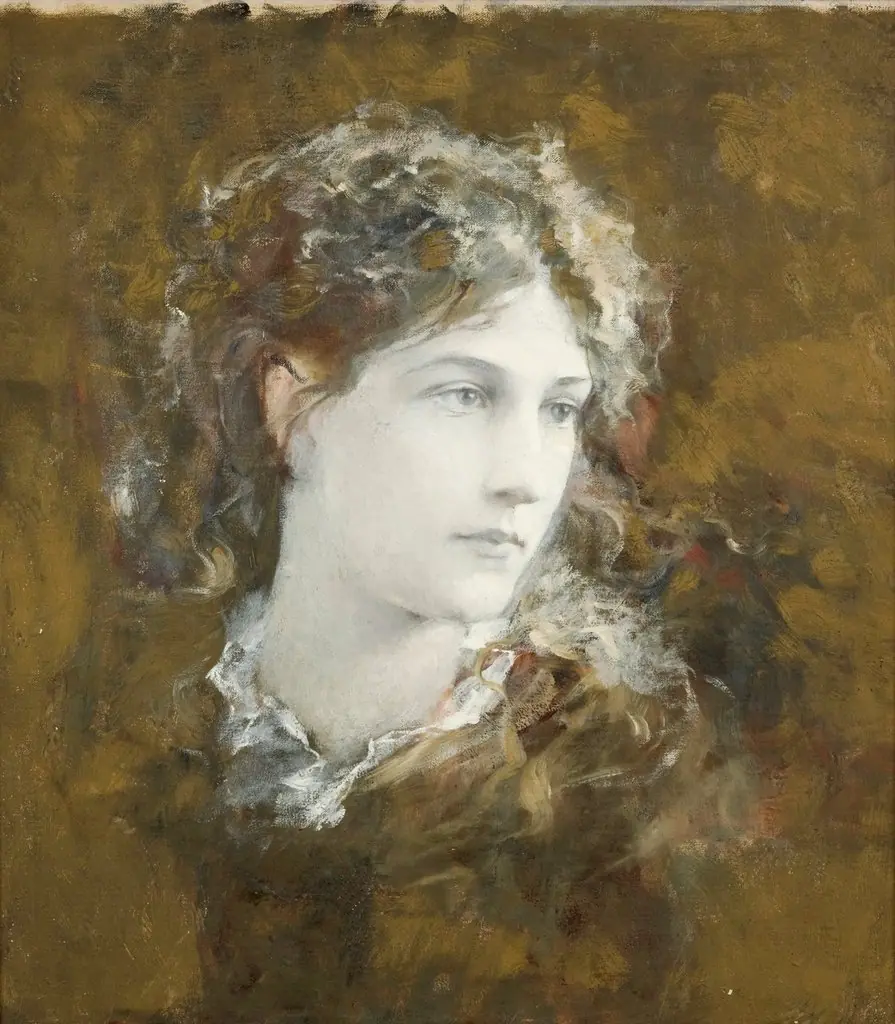
The painting portrays a young girl with dark hair, dressed in a pale, high-necked garment, her gaze fixed directly on the viewer. Her expression is still and unsmiling, suggesting inward reflection rather than narrative action. The absence of contextual details, no background, no props, focuses attention on her presence, inviting contemplation of her inner state without imposing external meaning.
Technique & Style
Brull employs chiaroscuro to model the girl’s face and hands, drawing them softly from shadow into muted light. The contrast enhances volume without dramatic intensity, aligning with a restrained, poetic sensibility. Brushwork is smooth and deliberate, avoiding overt texture or flourish. The palette is subdued, dominated by earth tones and pale hues, reinforcing the painting’s meditative tone.
History & Provenance
Created in 1898, Rosalia entered the collection of the Museu Nacional d'Art de Catalunya in the early 20th century, likely through institutional acquisition or donation. Its preservation within the museum reflects its recognition as a representative work of Catalan Symbolism. No significant changes in ownership or restoration are documented, suggesting stable conservation since its acquisition.
Context
Brull worked alongside other Catalan artists who sought to express emotional and spiritual themes through figurative art, distancing themselves from academic traditions. While Art Nouveau influenced decorative trends in Catalonia, Rosalia exemplifies a quieter, more psychological branch of the movement, focused on individual presence rather than ornamental design or floral motifs.
Legacy
Though not widely known outside Catalonia, Rosalia remains a touchstone for understanding the region’s late 19th-century portraiture. Its emphasis on psychological depth over spectacle influenced later generations of Catalan painters interested in intimate, non-narrative subjects. The work continues to be studied for its subtle handling of light and emotional restraint.
Own this work as a print
Artist & collection

Artist
Joan Brull i Vinyoles (25 January 1863 – 3 February 1912) was a Catalan painter active in the late 19th century.