Artwork
Selene and Endymion
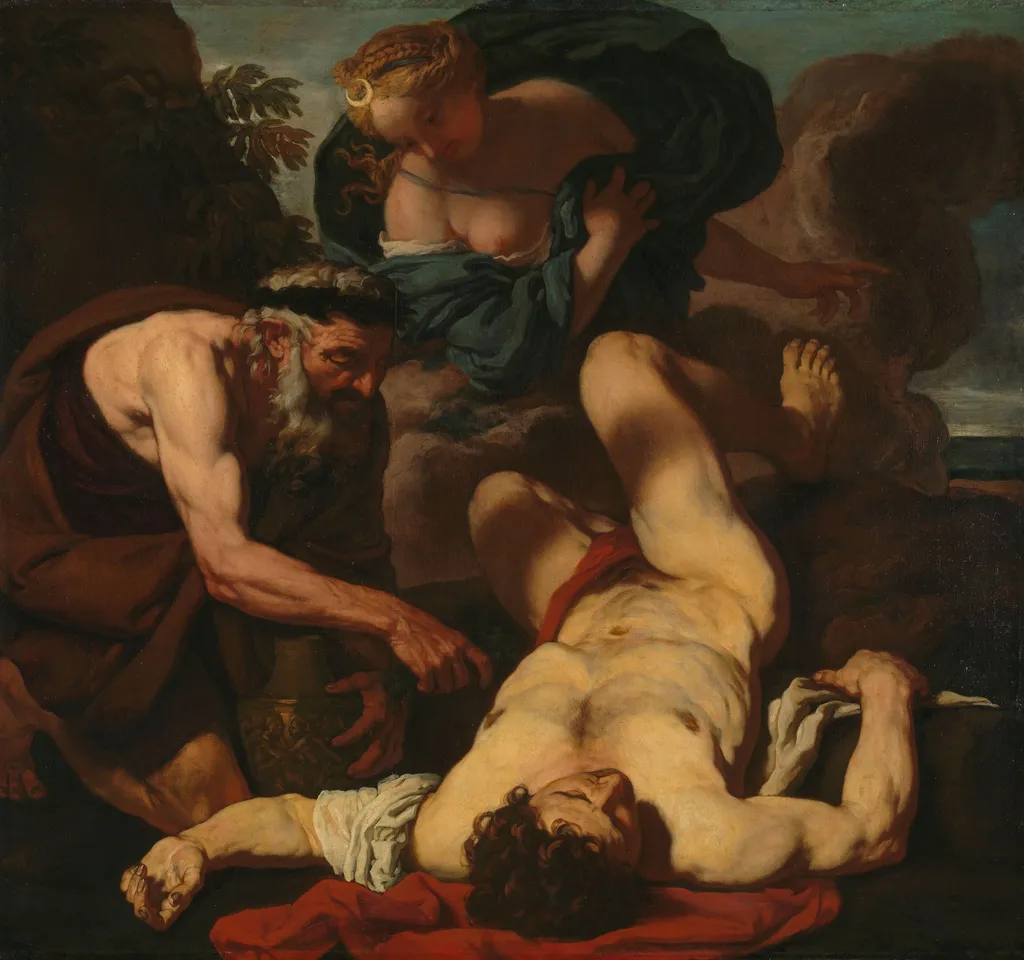
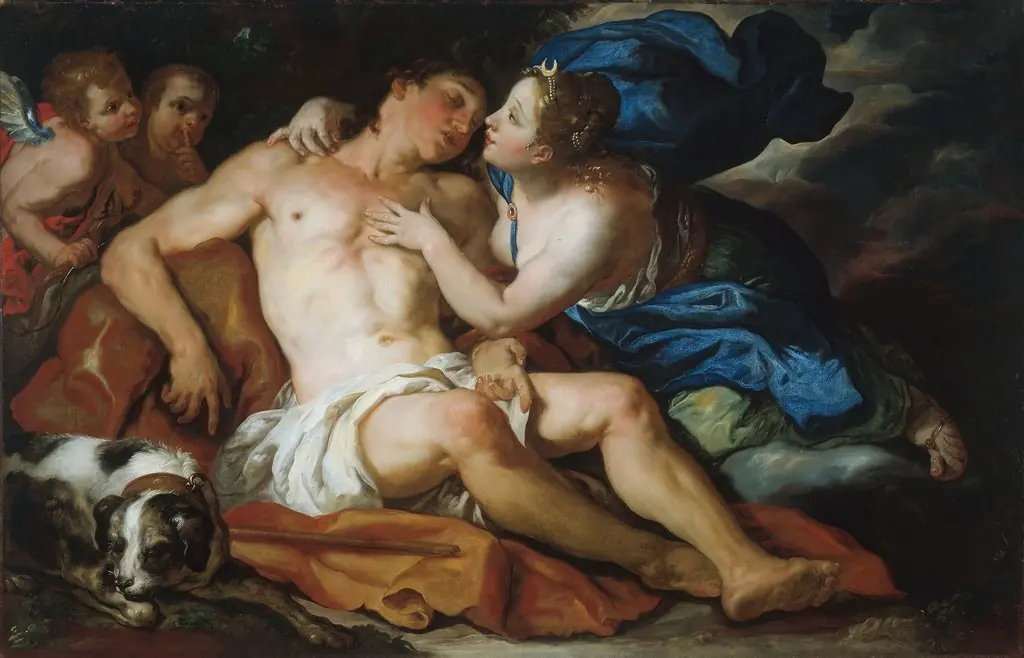
Selene and Endymion is an oil painting by the Barbizon school artist Johann Carl Loth. It dates from 1670 and is held in the collection of the Rijksmuseum.
About this work
Subject & Meaning
The subject reflects a popular Baroque theme drawn from classical antiquity, treating desire, sleep, and the intrusion of the divine into the human realm.
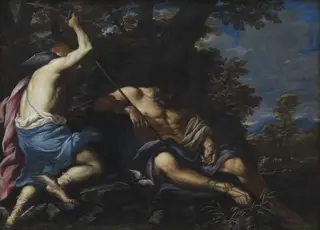
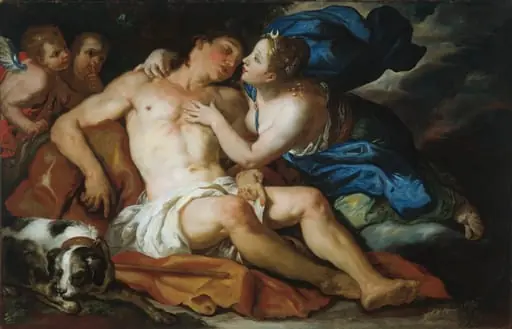
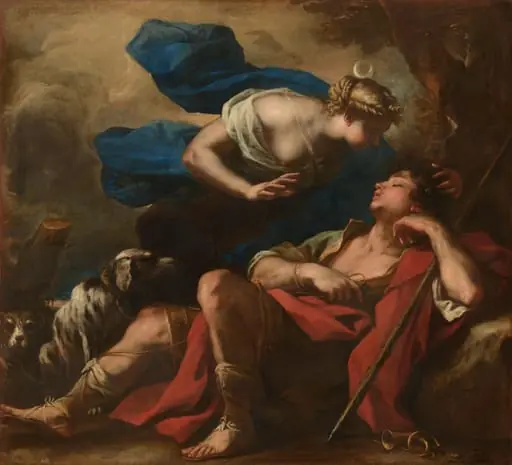
The painting depicts the mythological encounter between Selene, the moon goddess, and Endymion, the mortal shepherd whom she loved. According to the myth, Selene visited the sleeping Endymion, and the scene captures this nocturnal, dreamlike union of divine and mortal figures. The work is classified as a mythological painting, with Endymion identified as the main subject.
Beyond the central pair, the composition includes additional celestial figures: Jupiter and Orion, reinforcing the cosmic setting of the encounter. The presence of Orion, the hunter constellation, alongside Jupiter situates the lovers within a broader sky filled with divine personifications, transforming the intimate myth into a tableau of the heavens themselves.
The subject reflects a popular Baroque theme drawn from classical antiquity, treating desire, sleep, and the intrusion of the divine into the human realm. By gathering lunar, planetary, and stellar deities around the sleeping shepherd, the painting elevates a private mythological moment into a meditation on cosmic order and the power of love to bridge mortal and immortal spheres.
Technique & Style
Executed in 1670, this mythological painting by Johann Carl Loth utilizes oil paint applied to a canvas support. The work measures 151 cm in height and 165 cm in width. Stylistically, the composition depicts the figures of Selene, Endymion, Jupiter, and Orion within a narrative framework characteristic of the genre. The attribution of the piece recognizes Loth as the primary creator.
History & Provenance
The painting Selene and Endymion by Johann Carl Loth is dated to 1670, as recorded in the artist's chronology and confirmed by the Rijksmuseum's records.
It entered the collection of the Rijksmuseum, Amsterdam, where it remains held today. The work is catalogued as part of the museum's holdings of Loth's mythological paintings, with dimensions recorded at 151 cm in height and 165 cm in width.
Context
Created in 1670 by Johann Carl Loth, Selene and Endymion is a mythological painting that reflects the artist's engagement with the dramatic chiaroscuro and emotional intensity of the Caravaggesque tradition. The work depicts the celestial union of Selene and the sleeping Endymion, alongside figures such as Jupiter and Orion, illustrating Loth's mastery of Baroque narrative composition. Currently housed in the Rijksmuseum, the canvas measures 151 by 165 cm and stands as a significant example of late 17th-century German-Italianate painting.
Its inclusion in major collections underscores its historical importance within the tradition of mythological subjects during the Baroque period.
Overview
Johann Carl Loth’s oil painting Selene and Endymone, executed in 1670, presents a nocturnal tableau drawn from classical mythology. The work is part of the Rijksmuseum’s collection and measures a modest size typical of Loth’s late‑Baroque output. It brings together the moon goddess Selene, the shepherd Endymion, and the deity Jupiter in a single, intimate scene.
Own this work as a print
Artist & collection