Artwork
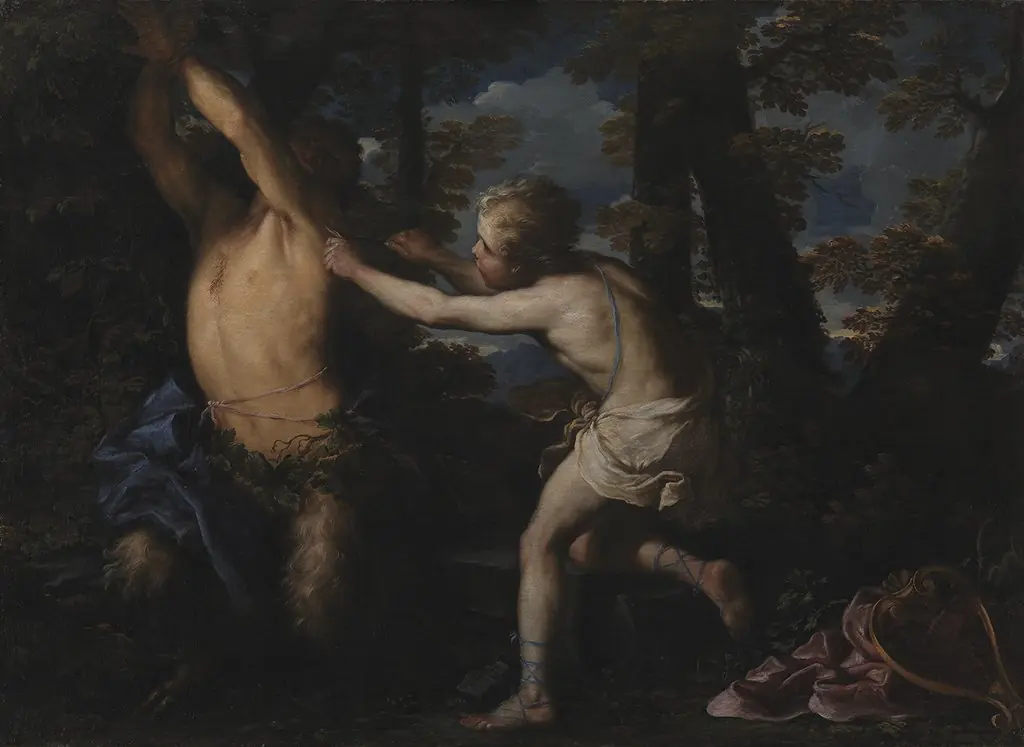
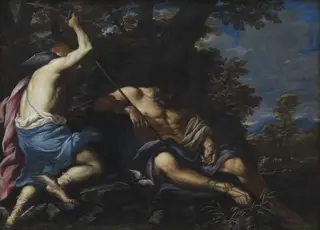
Mercury Killing Argus
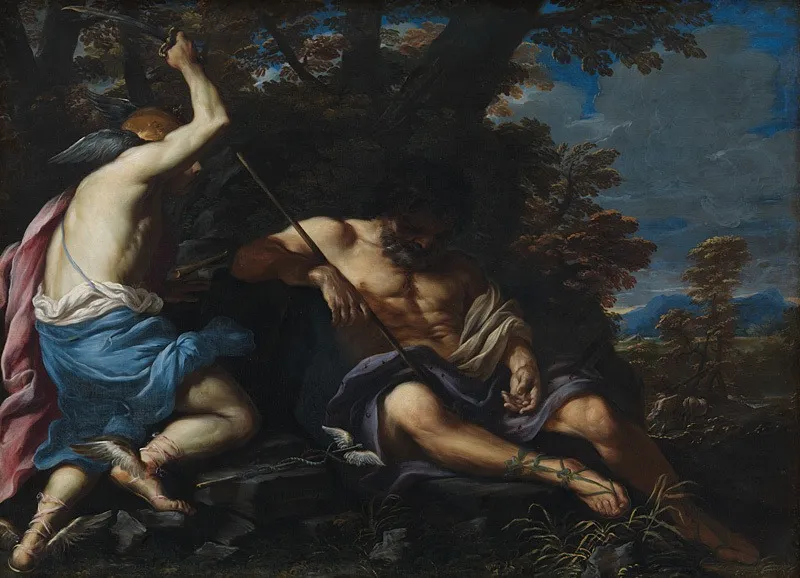
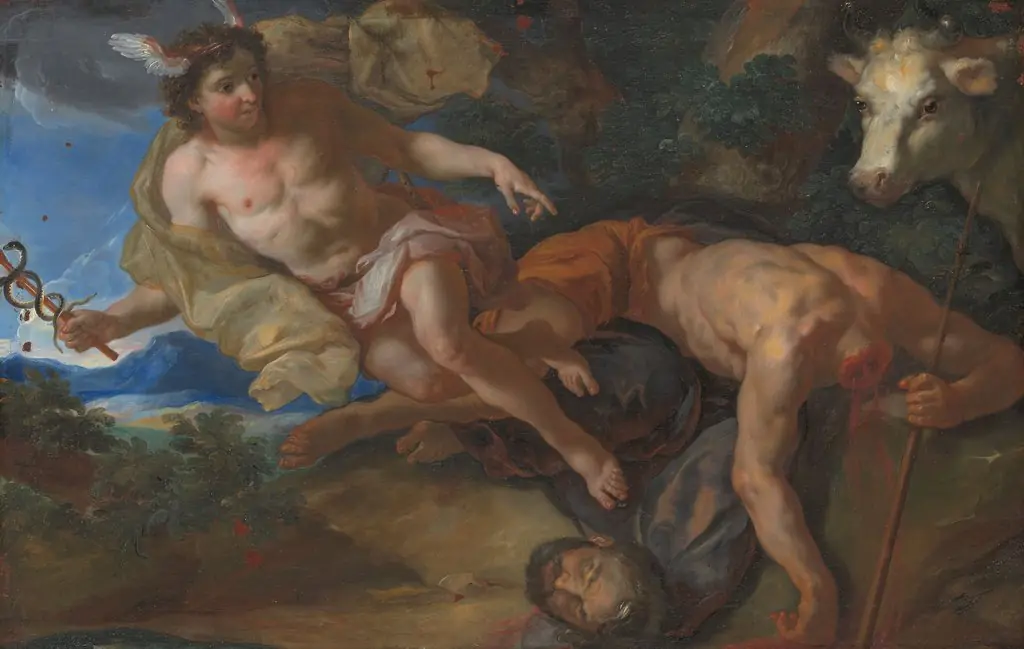
Mercury Killing Argus is an oil painting by the Early Baroque Italian artist Girolamo Troppa. It dates from 1690 and is held in the collection of the Statens Museum for Kunst.
About this work
Subject & Meaning
The scene captures the moment the messenger god confronts the hundred-eyed giant, a figure from Greek mythology tasked with guarding Io.
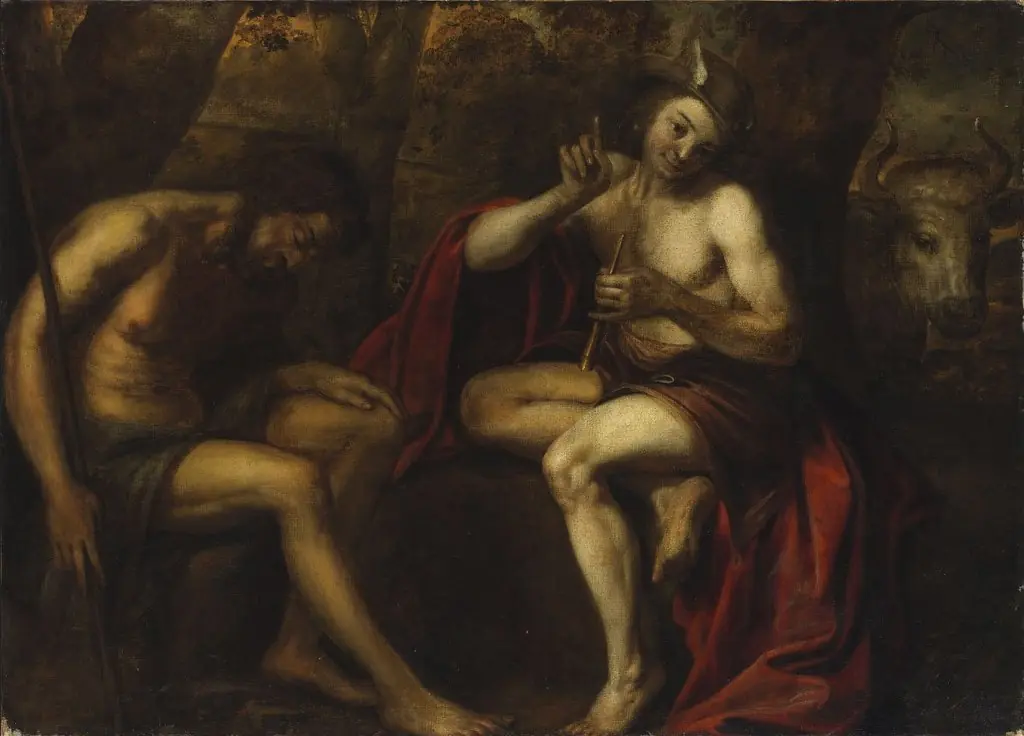
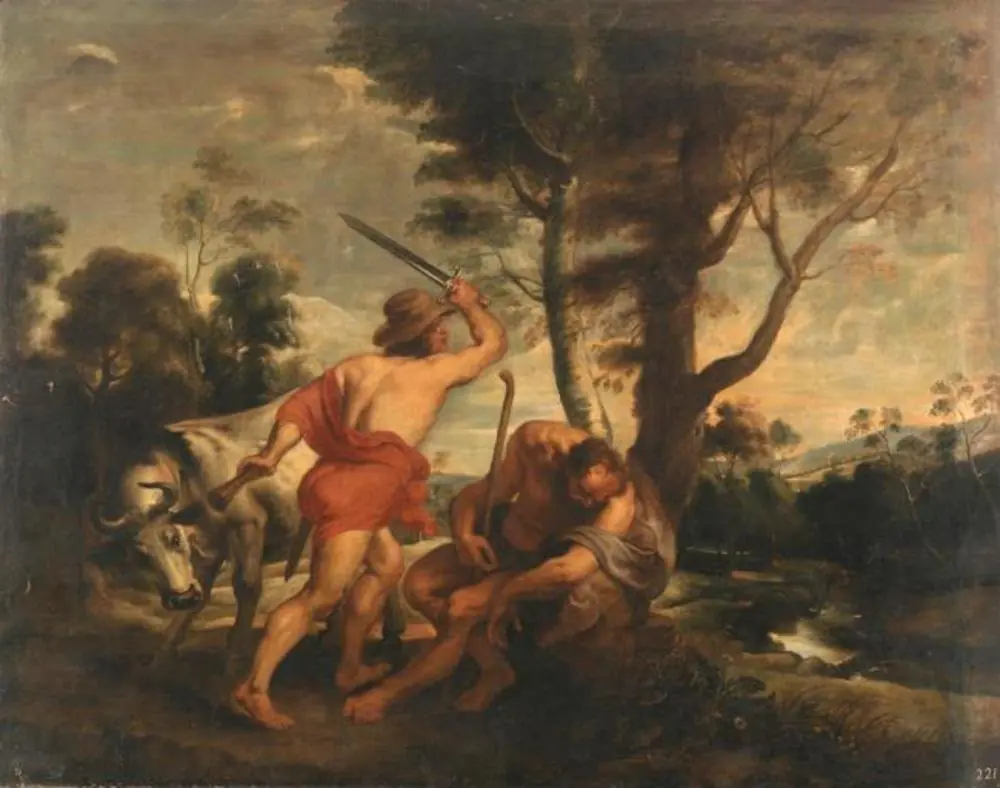
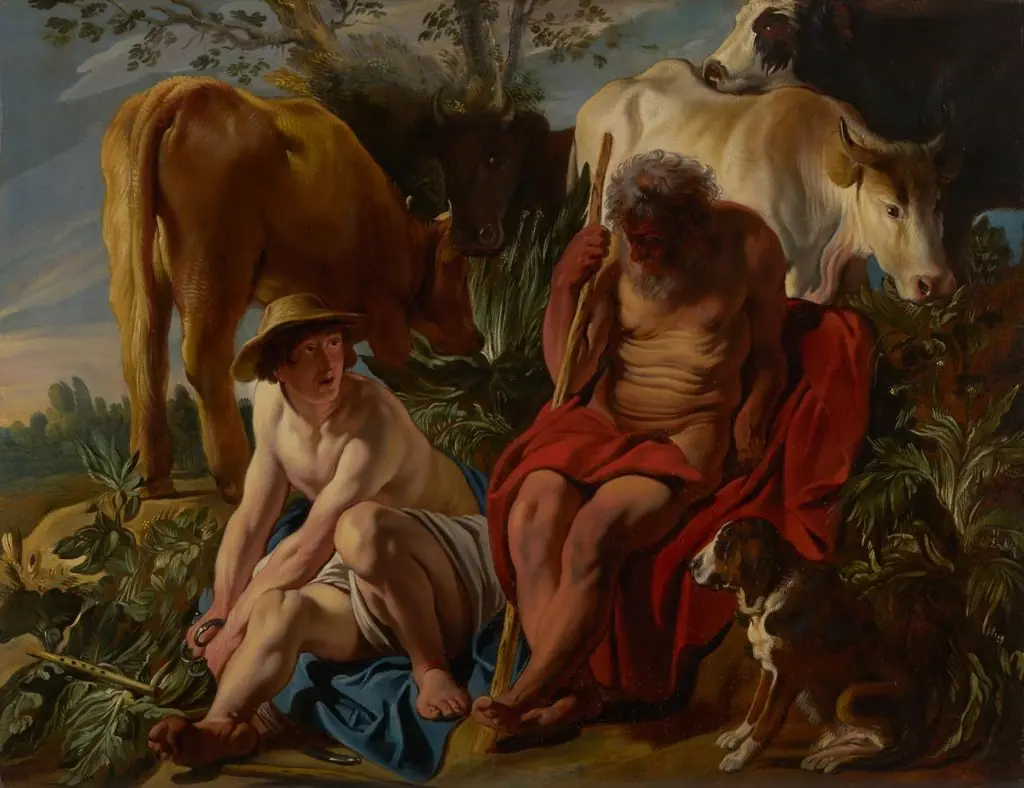
Girolamo Troppa's 1690 oil painting depicts the mythological narrative of Mercury killing Argus. The scene captures the moment the messenger god confronts the hundred-eyed giant, a figure from Greek mythology tasked with guarding Io. The composition includes iconographic elements such as Mercury, Argus, a sword, and a tree, which serve to identify the characters and their setting within the classical story.
As a work of mythological painting, the piece represents the triumph of divine cunning over vigilant surveillance, illustrating the episode in which Mercury lulls Argus to sleep before killing him.
Technique & Style
Executed in 1690, this mythological painting by Girolamo Troppa uses oil paint applied to a canvas support. Visually, the composition depicts the figures of Mercury and Argus, incorporating narrative elements such as a sword and a tree within the scene.
History & Provenance
Mercury Killing Argus is an oil on canvas mythological painting executed in 1690 by Girolamo Troppa. It depicts the god Mercury in the act of slaying the giant Argus and belongs to the mythological genre, created as a standalone canvas. The painting entered the collection of the Statens Museum for Kunst in Copenhagen.
No documentary evidence records a specific commission or patron, and the museum’s catalogue does not disclose a specific inventory or accession number for the work. Available sources do not document any prior public exhibition history.
Overview
Girolamo Troppa's 1690 oil painting, Mercury Killing Argus, depicts a dramatic scene from classical mythology. This work showcases the Roman Baroque painter's engagement with narrative subjects, despite his usual focus on sacred themes. The canvas captures a pivotal moment of conflict between the winged god Mercury and the multi-eyed giant Argus, set within a natural landscape. It is currently housed in the Statens Museum for Kunst.
Artist & collection
Artist
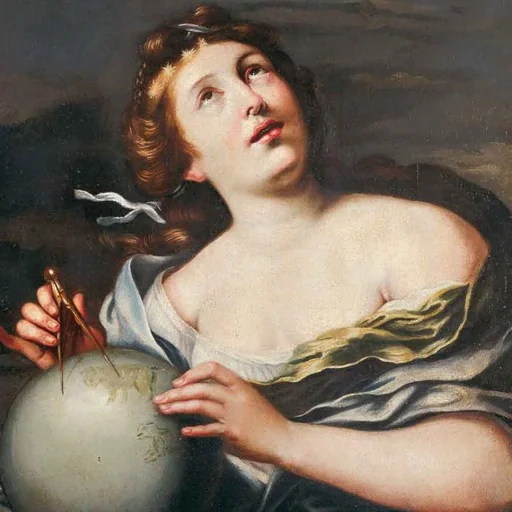
Girolamo Troppa (2 October 1636 – October 1711) was an Italian painter of the Baroque period, depicting mainly sacred subjects. A follower of Carlo Maratta, he was active in Rome and Umbria.