Artwork
Landscape with a Waterfall
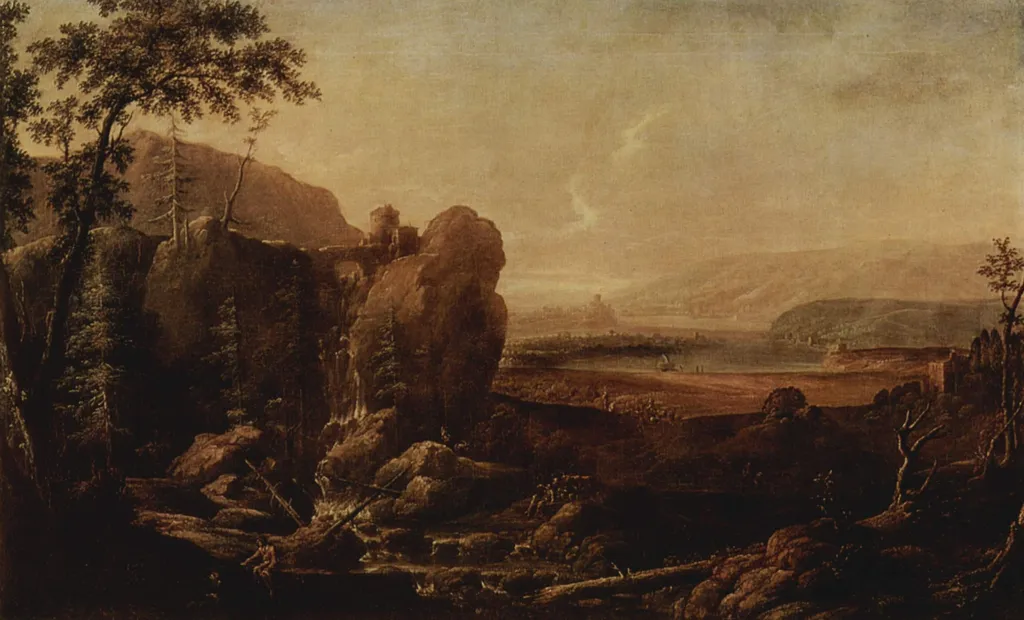
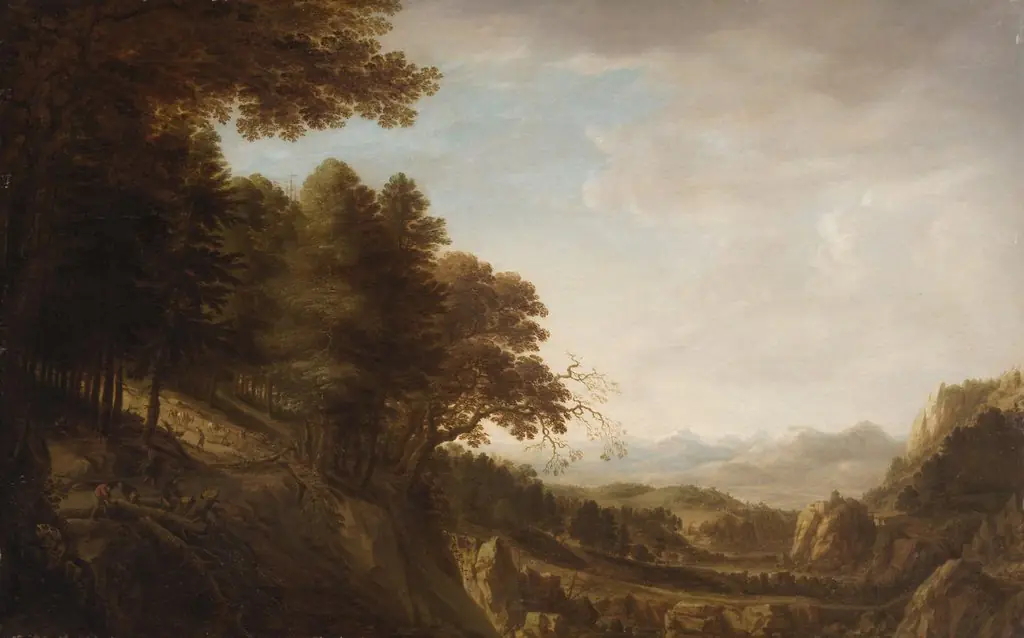
Landscape with a Waterfall is an oil painting by the Rococo painting artist Johann Friedrich Alexander Thiele. It dates from 1725 and is held in the collection of the Hermitage Museum.
About this work
Overview
Measuring 65 by 105 centimetres, the work is held in the collection of the Hermitage Museum in Saint Petersburg.
Landscape with a Waterfall is an oil painting on canvas by Johann Friedrich Alexander Thiele, dated 1725. Measuring 65 by 105 centimetres, the work is held in the collection of the Hermitage Museum in Saint Petersburg. The painting represents a significant example of early eighteenth-century German landscape painting, produced during a period when the Thiele family played a formative role in developing the Saxon landscape tradition. Its polished finish and dramatic spatial construction demonstrate the technical ambitions of German Baroque landscape at a moment when the genre was gaining prestige in Central European courts.
Technique & Style
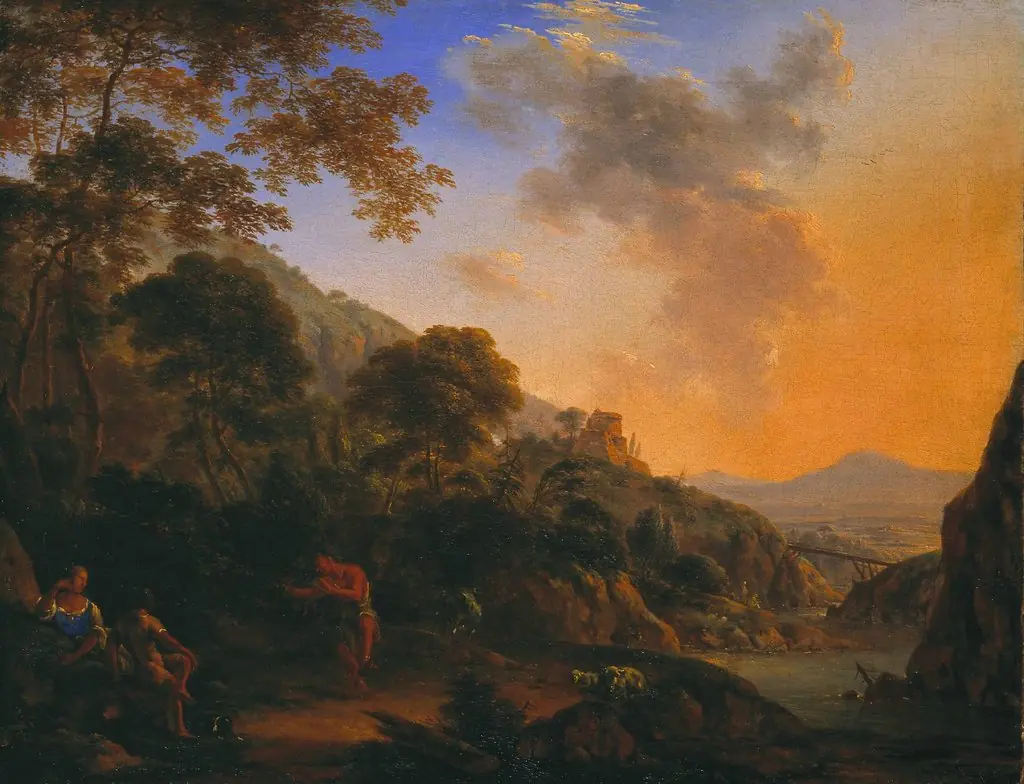
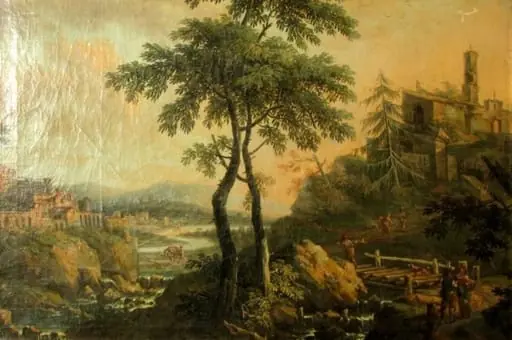
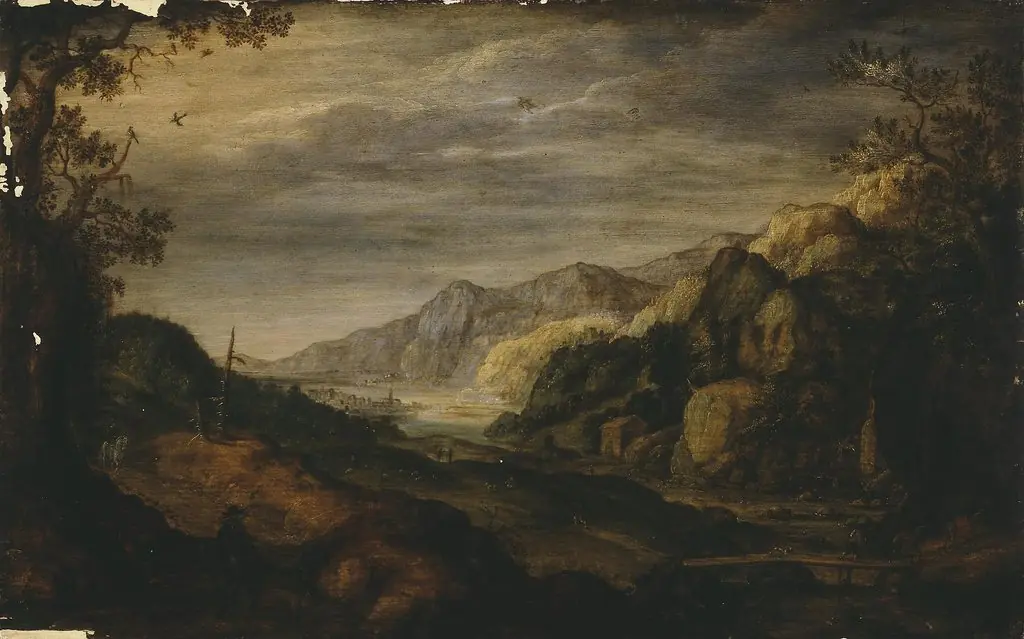
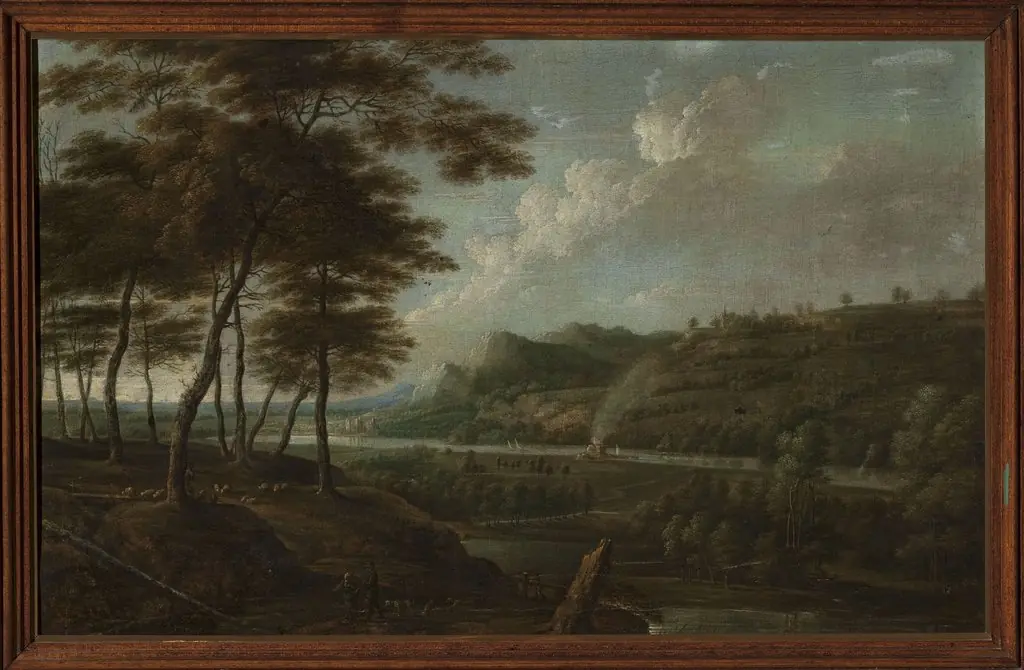
The work is executed in oil on canvas with a polished finish and subtle gradations of tone that create convincing spatial depth. The palette is dominated by warm browns, muted golds, and deep greens, with the sky shifting from pale yellow near the horizon to grayish tones above. Light enters from the left and centre, illuminating the middle ground valley while casting the foreground into deep shadow. The brushwork shows careful detail in the foliage and rock faces, with smoother, more atmospheric treatment of the distant mountains and sky. This handling demonstrates the influence of Dutch and Flemish seventeenth-century landscape traditions, filtered through a Central European sensibility. The dramatic chiaroscuro and layered recession from dark foreground to luminous distance are characteristic of Baroque landscape painting, while the meticulous observation of natural detail points toward the emerging documentary impulse in German art of this period.
History & Provenance
The painting was created in 1725 in Germany, during the early phase of Johann Friedrich Alexander Thiele's career. Its subsequent provenance before entering the Hermitage collection is not documented in the available sources. The work is now held by the Hermitage Museum in Saint Petersburg, where it is accessioned as part of the museum's collection of Western European painting. The specific circumstances of its acquisition by the museum remain unrecorded in the provided materials. No exhibition history is attested in the sources.
Context
Johann Friedrich Alexander Thiele was the son of Johann Alexander Thiele (1685-1752), a pivotal figure in German landscape painting who earned the title "Father of Saxon Landscape Painting." The elder Thiele's career was unconventional: after serving as a soldier, he trained as a printer in Erfurt before turning to painting, moving to Dresden in 1715 where he studied with Christoph Ludwig Agricola and worked briefly with Adam Manyoki, though he remained largely self-taught. He presented his paintings publicly for the first time in 1722 at a carnival held at the Zwinger Palace. His works were purchased by Jacob Heinrich von Flemming, the former Saxon Minister of War, and later he served as court painter to Günther XLIII, Prince of Schwarzburg-Sondershausen, from 1729, and from 1738 as court painter to King Augustus III of Poland. The younger Thiele's Landscape with a Waterfall of 1725 thus emerges from a family workshop deeply embedded in the Saxon court culture and its patronage networks. The painting reflects the broader German landscape tradition that bridged late Baroque sensibilities and the burgeoning Romantic movement, with meticulous observation of local terrain combined with idealised composition.
Legacy
The legacy of Landscape with a Waterfall is inseparable from the reputation of the Thiele family in German art history. Johann Alexander Thiele's foundational role in Saxon landscape painting established a tradition that influenced subsequent generations of artists documenting the German countryside. The Hermitage's holding of this work by his son testifies to the international recognition of the family's achievement. While specific later influence of this particular painting cannot be documented from the available sources, its preservation in a major museum collection ensures its continued availability for study as an example of early eighteenth-century German Baroque landscape. The work stands as a representative instance of the polished, atmospheric landscape style that characterised Central European painting in this period, before the more dramatic innovations of the later eighteenth century.
Artist & collection
Artist
Johann Friedrich Alexander Thiele
Johann Friedrich Alexander Thiele (1747–1803) was an artist, born in Dresden.