Artwork
Gipsy Camp in Ancient Ruins
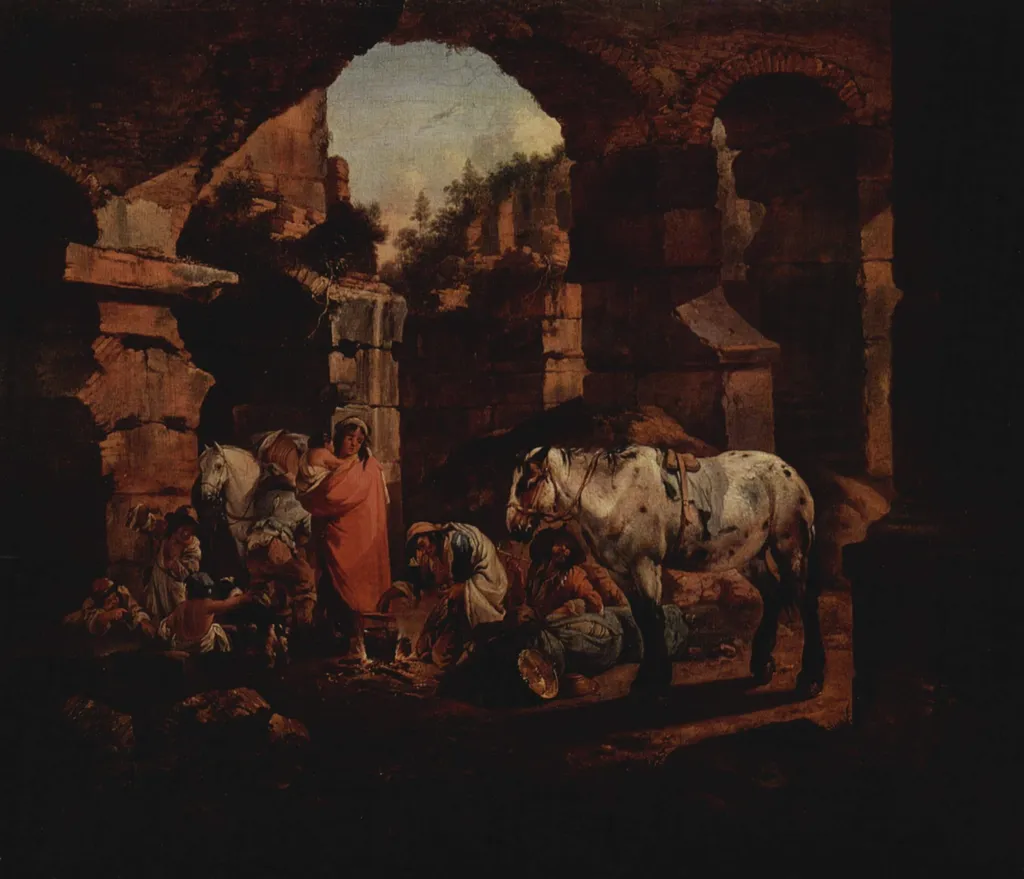
Gipsy Camp in Ancient Ruins is an oil painting by the Barbizon school artist Johann Heinrich Roos. It dates from 1675 and is held in the collection of the Hermitage Museum.
About this work
Subject & Meaning
Johann Heinrich Roos's 1675 oil painting, Gipsy Camp in Ancient Ruins, belongs to the genre of genre art and depicts a specific scene of nomadic life.
Johann Heinrich Roos's 1675 oil painting, Gipsy Camp in Ancient Ruins, belongs to the genre of genre art and depicts a specific scene of nomadic life. The composition centers on a group of nomads situated within the setting of ancient ruins. This juxtaposition of transient human habitation against the backdrop of decaying architectural structures defines the work's primary subject matter.
The painting captures a moment of daily existence for these travelers, set within a historical landscape that emphasizes the contrast between the enduring stone of the past and the temporary nature of the camp.
Technique & Style
Gipsy Camp in Ancient Ruins is an oil painting executed on canvas, a standard support for European easel painting in the seventeenth century. The work measures 51.5 cm in height by 59 cm in width, a modest horizontal format suited to its intimate genre subject. Stylistically, it belongs to the genre painting tradition, depicting nomads amid ancient ruins, a pastoral-romantic theme characteristic of Johann Heinrich Roos's repertoire.
The combination of oil medium with canvas support and the relatively small scale is consistent with cabinet pictures of the period, designed for close viewing rather than large-scale display.
History & Provenance
Johann Heinrich Roos created the oil painting Gipsy Camp in Ancient Ruins in 1675. Produced in Germany, the work depicts a genre scene featuring nomads situated among ancient ruins. The artwork is currently held in the collection of the Hermitage Museum.
Gipsy Camp in Ancient Ruins is held in the collection of the Hermitage Museum. The work, created in 1675 by Johann Heinrich Roos, is an oil painting on canvas measuring 51.5 cm in height and 59 cm in width. The available sources confirm its location within the museum but do not provide a specific inventory or accession number. Furthermore, no records regarding the exhibition history of this painting are present in the provided documentation.
Overview
Painted in 1675, Gipsy Camp in Ancient Ruins is an oil on canvas work by the German artist Johann Heinrich Roos. The composition depicts a group of Romani figures gathered within the skeletal remains of classical architecture. A central fire illuminates the scene, around which individuals in tattered garments sit or crouch, engaging in daily activities.
A woman distinguished by a bright red cloak stands prominently near a horse, creating a focal point against the muted tones of the stone surroundings. The background features broken columns and a dim, atmospheric sky that enhances the sense of decay and isolation. Roos, known for his expertise in animal painting and landscapes, integrates these figures into a setting that reflects the 17th-century European fascination with the picturesque and the exotic.
This work exemplifies his ability to combine genre scenes with architectural ruins, a theme popular among Dutch and German artists of the period who sought to evoke a sense of historical depth and melancholy. The painting demonstrates Roos's skill in rendering textures, from the rough stone to the soft fabrics, while maintaining a cohesive narrative within a confined, intimate space.
Own this work as a print
Artist & collection

 Italian Landscape with Horses and Herdsmen
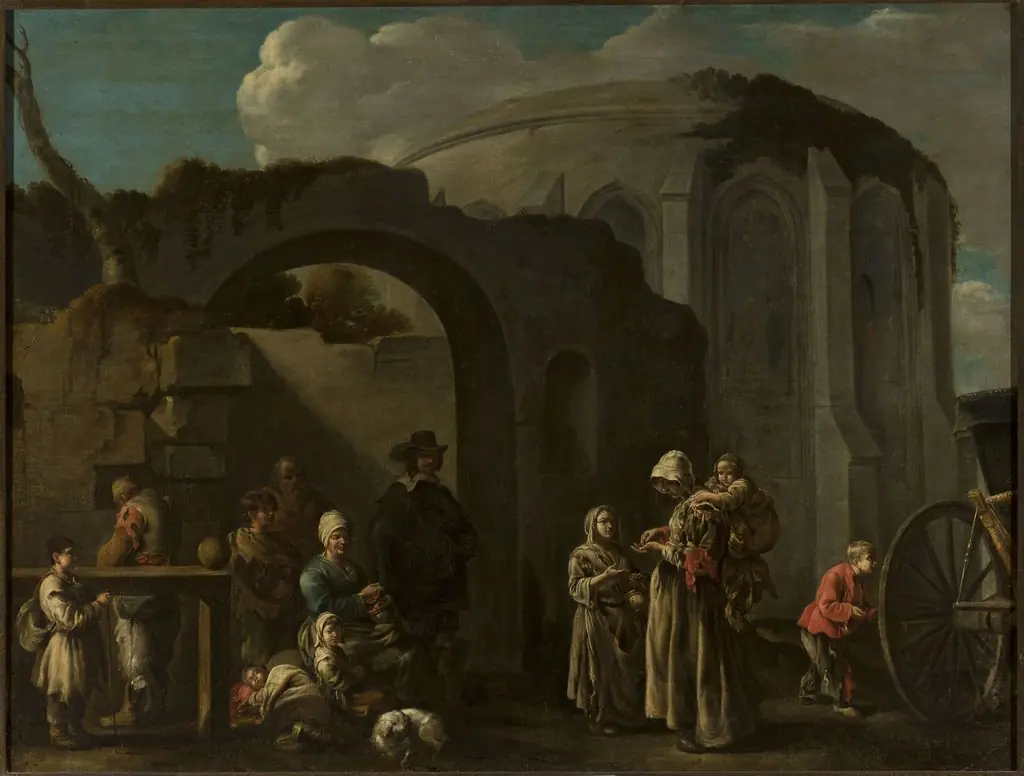 Family of beggars among ruins
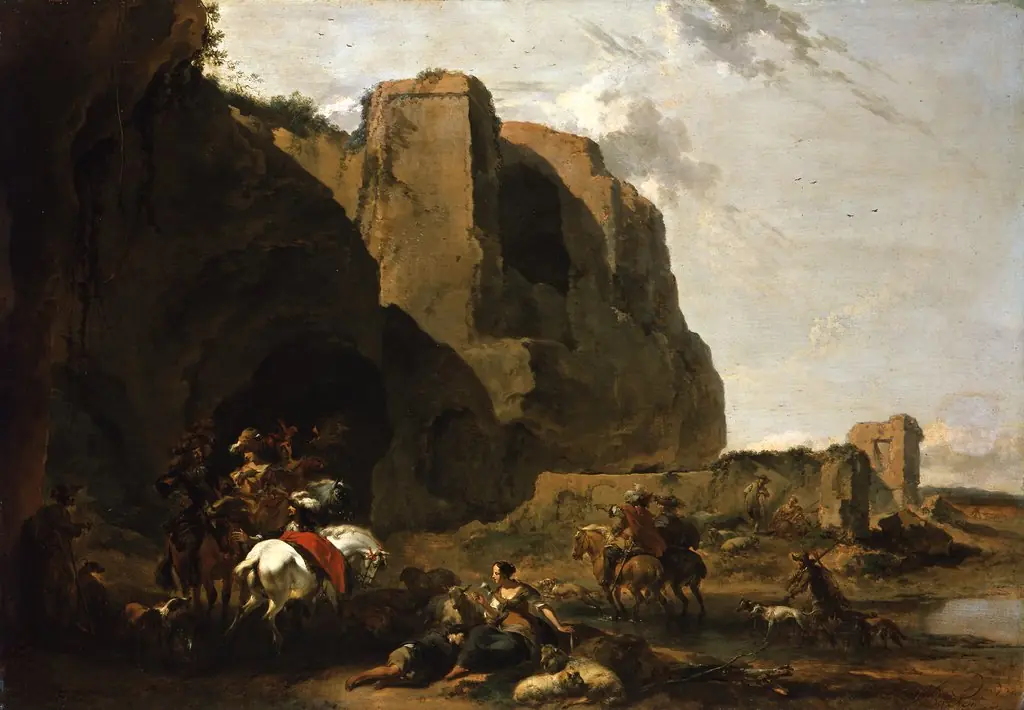 Return from the Falcon Hunt
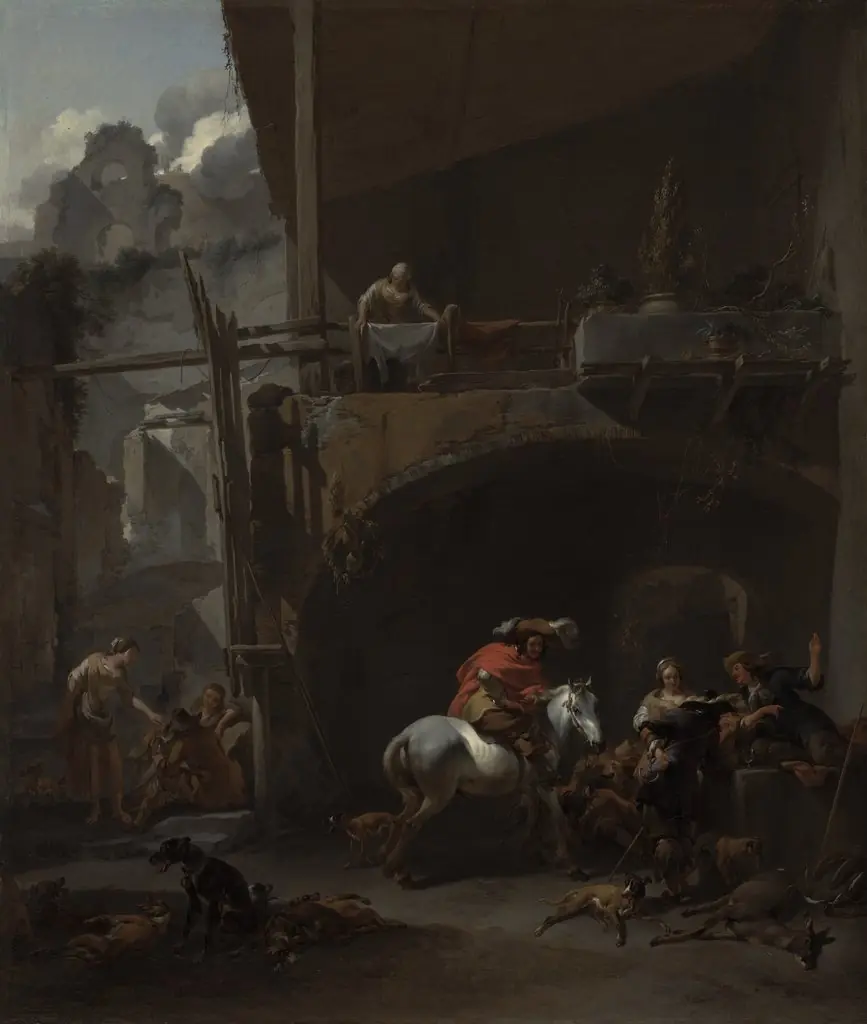 The Return from the Hunt
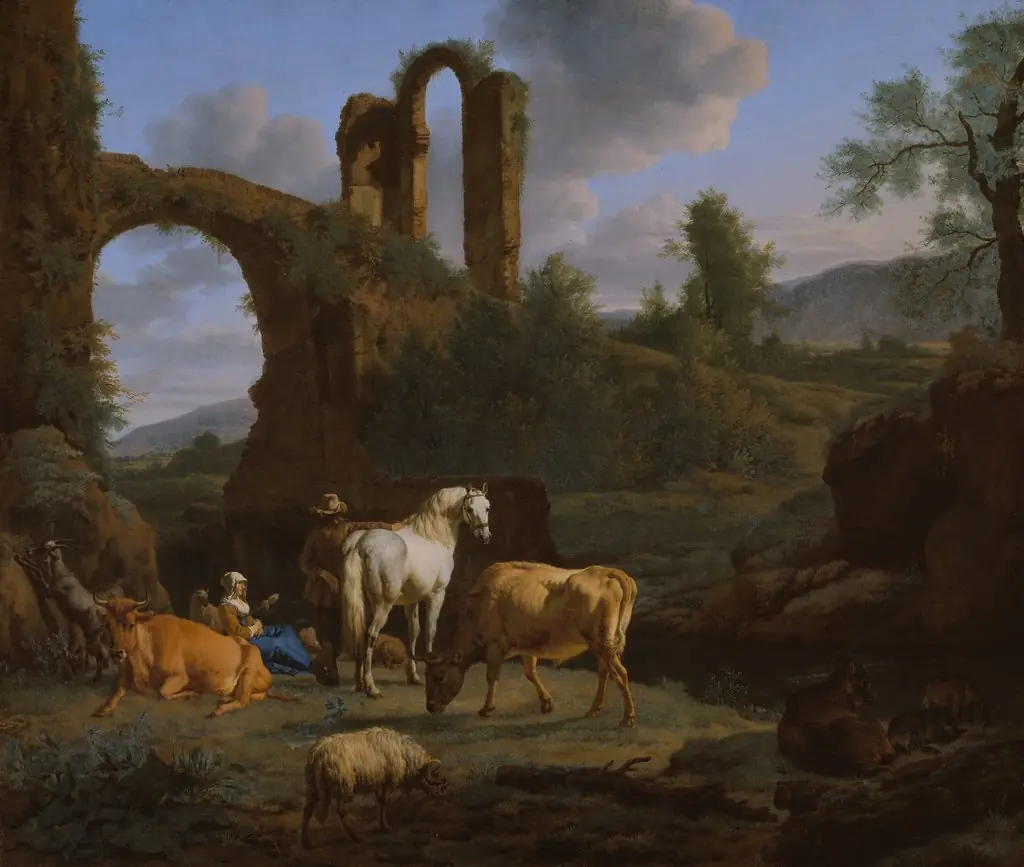 Pastoral Landscape with Ruins
 Discovery of the Joseph's Silver Cup in Benjamin's Sack
 Departure from the Inn
 Inn
Inn View of a Dilapidated Building with a Fountain
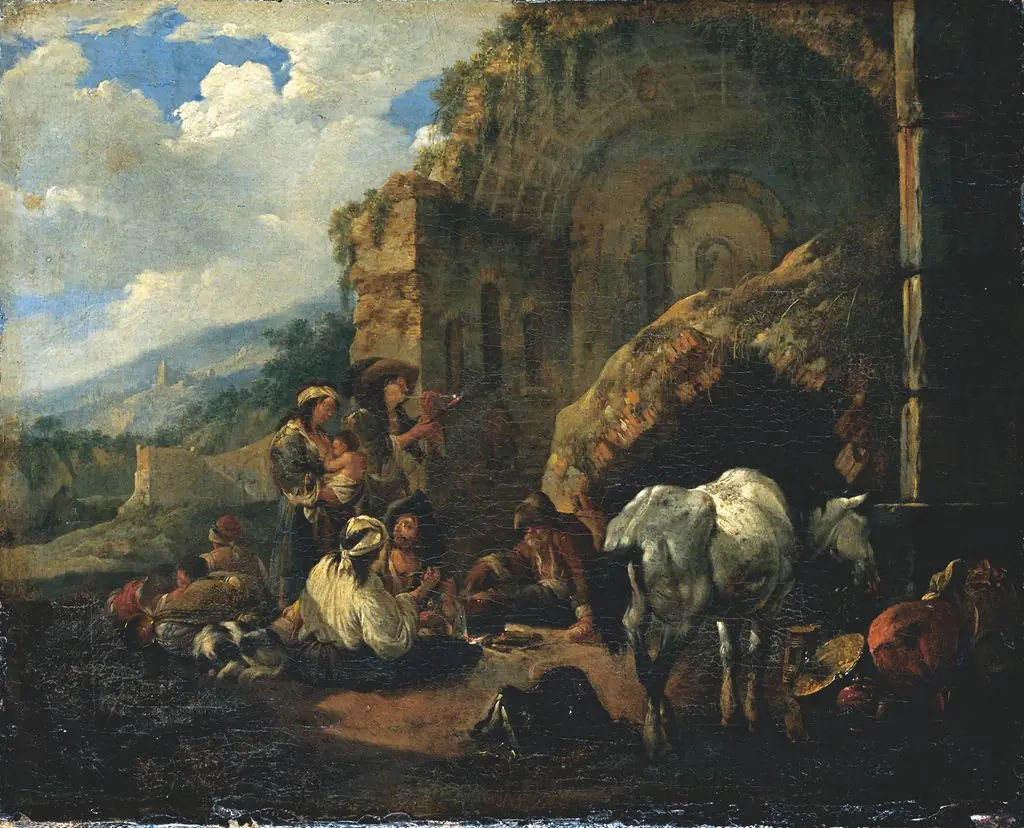
- Gypsy Camp in a Roman Ruin