Artwork
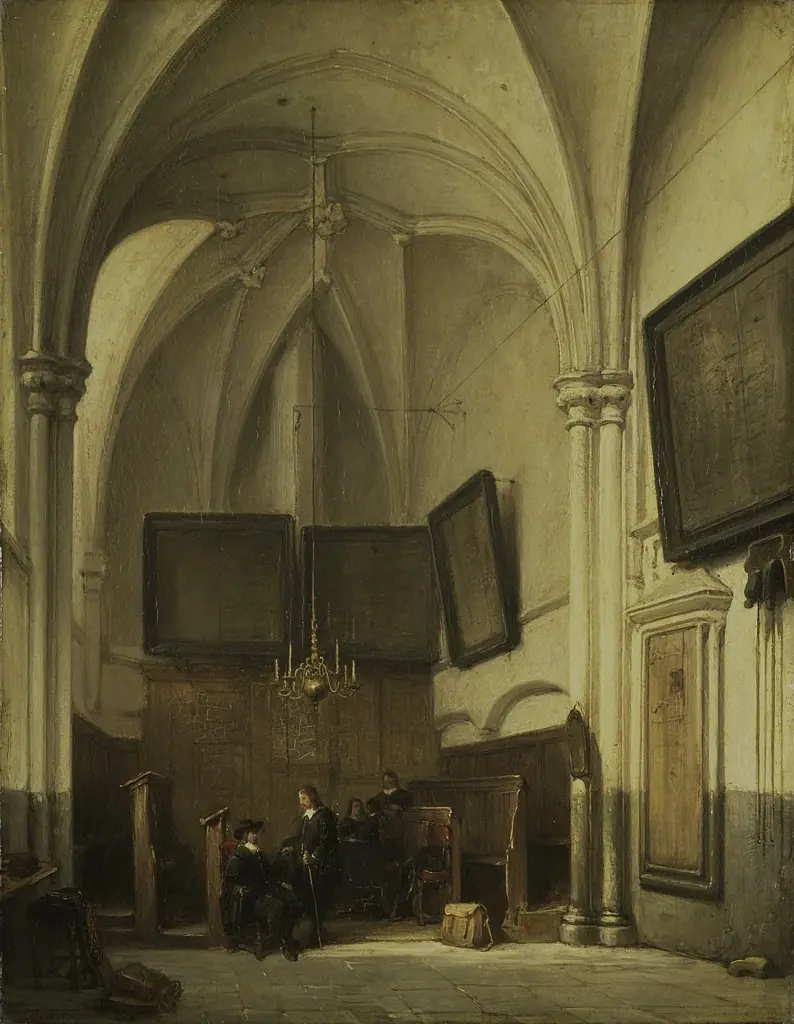
Interior of the 'Hooglandse' Church, Leiden
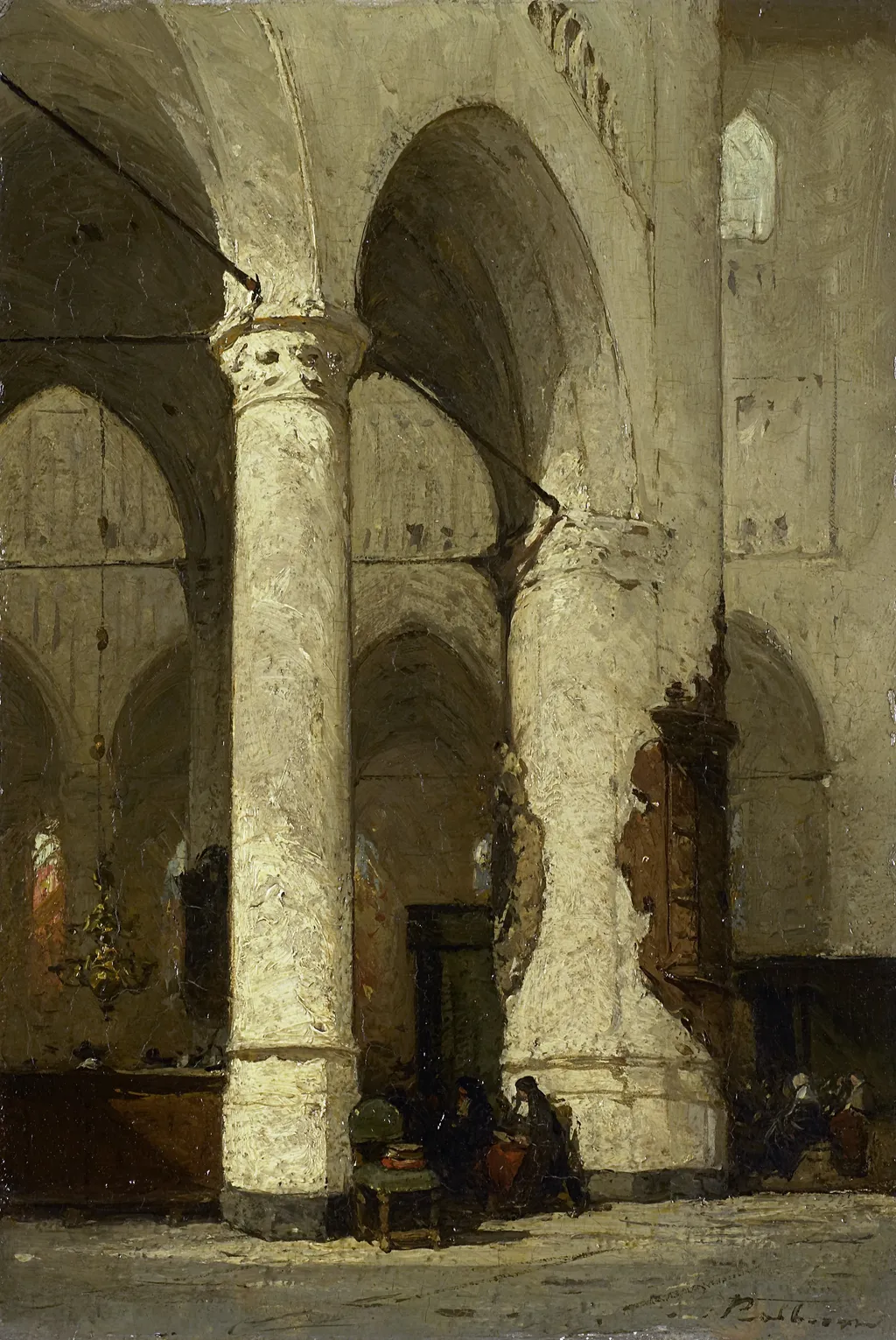
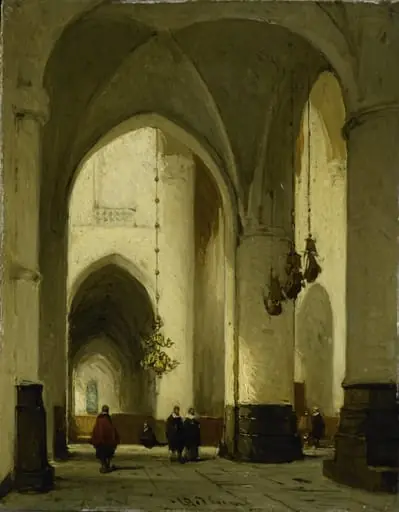
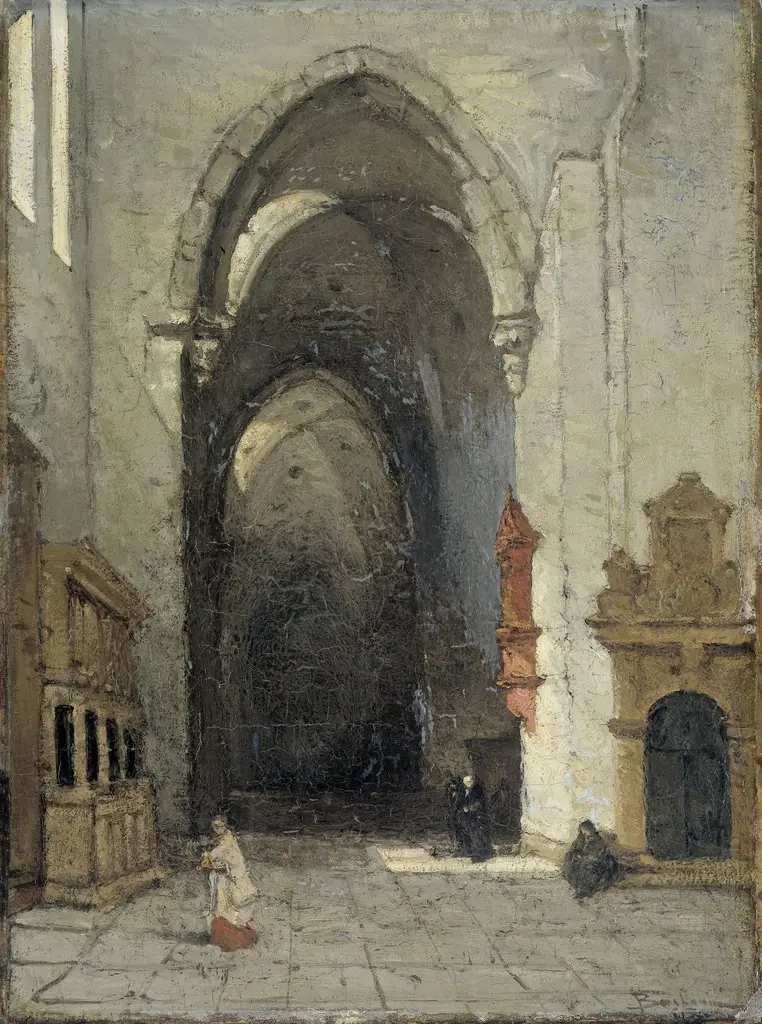
Interior of the 'Hooglandse' Church, Leiden is an oil painting by Johannes Bosboom. It dates from 1850 and is held in the collection of the Rijksmuseum.
About this work
Subject & Meaning
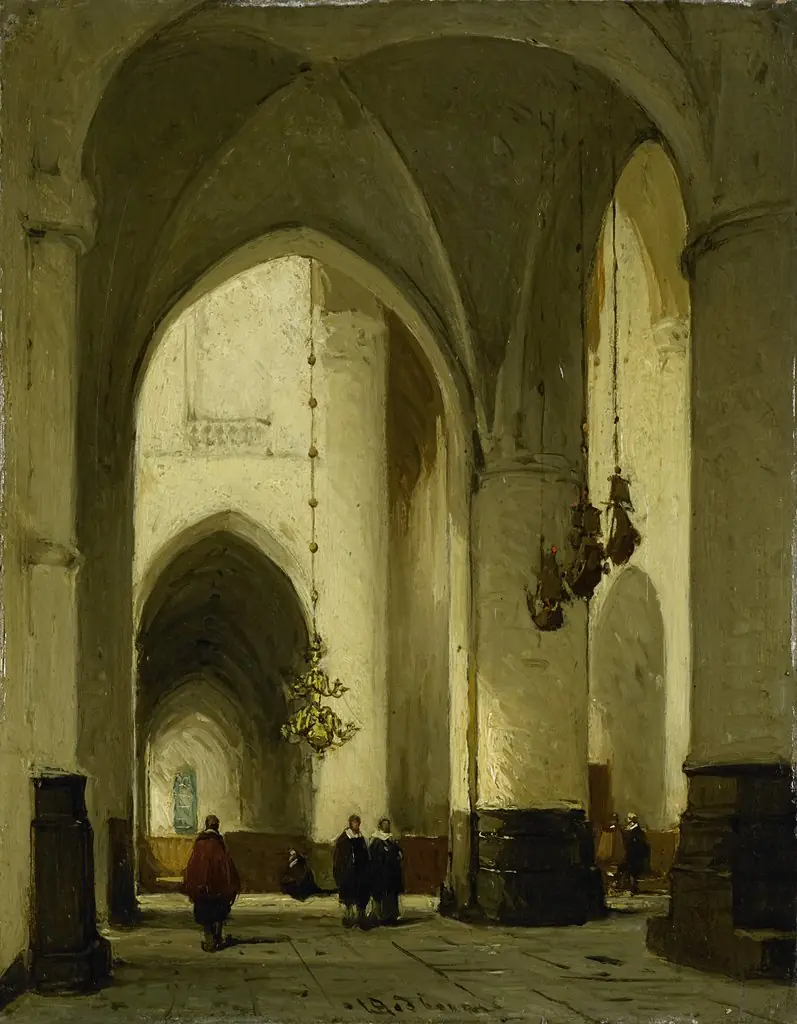
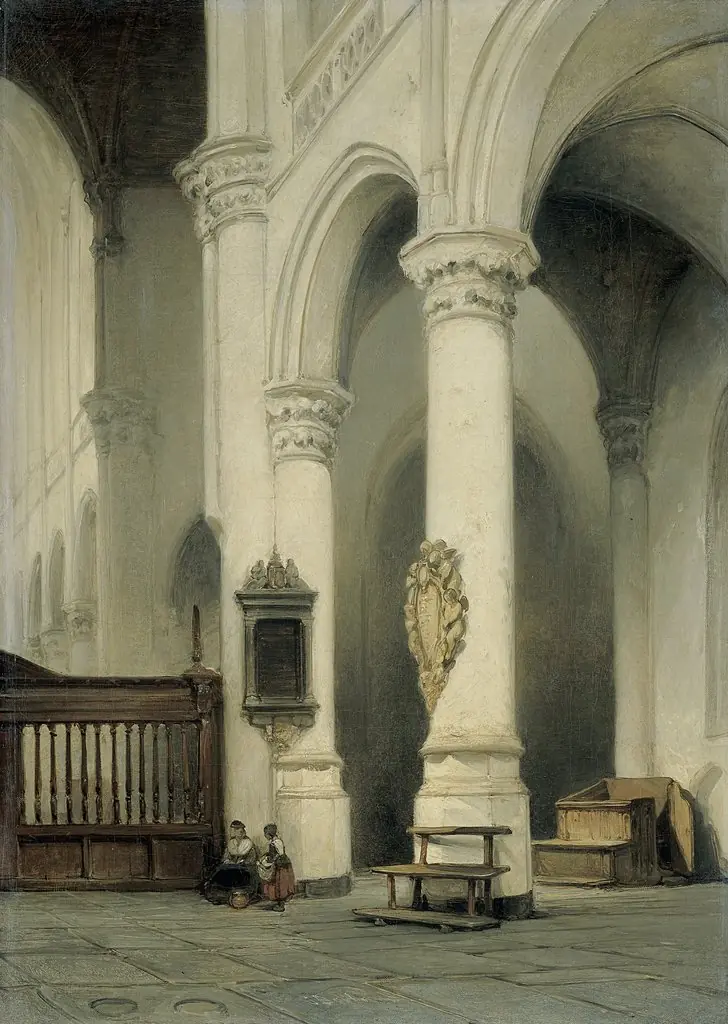
Bosboom emphasizes the play of light through tall windows, highlighting the austere architecture and the contemplative atmosphere of the church interior.
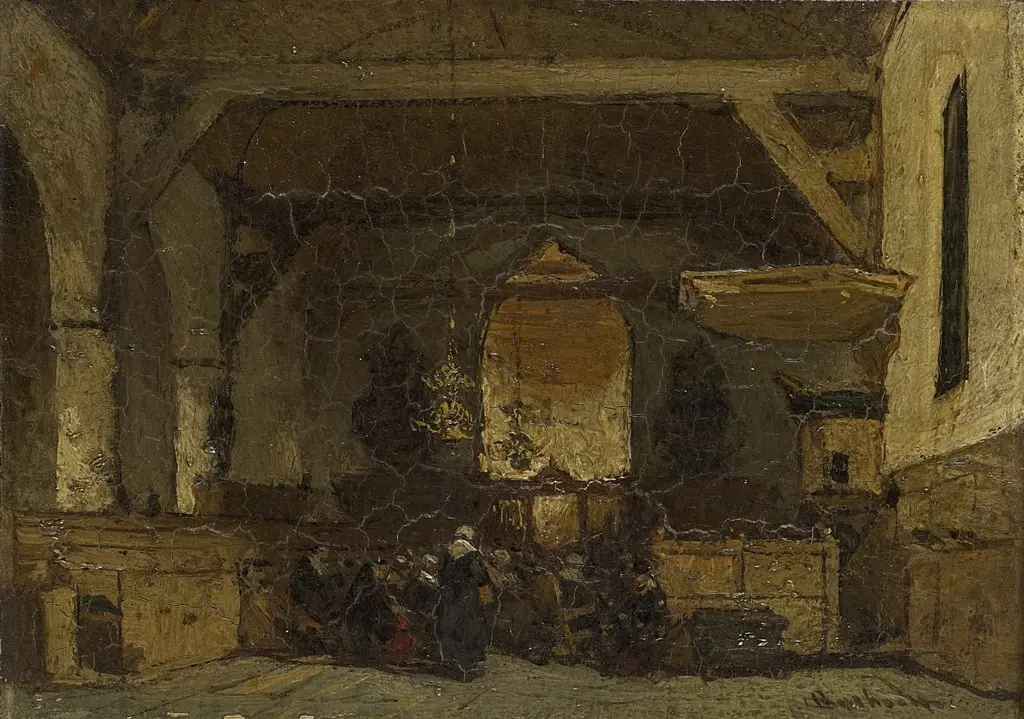
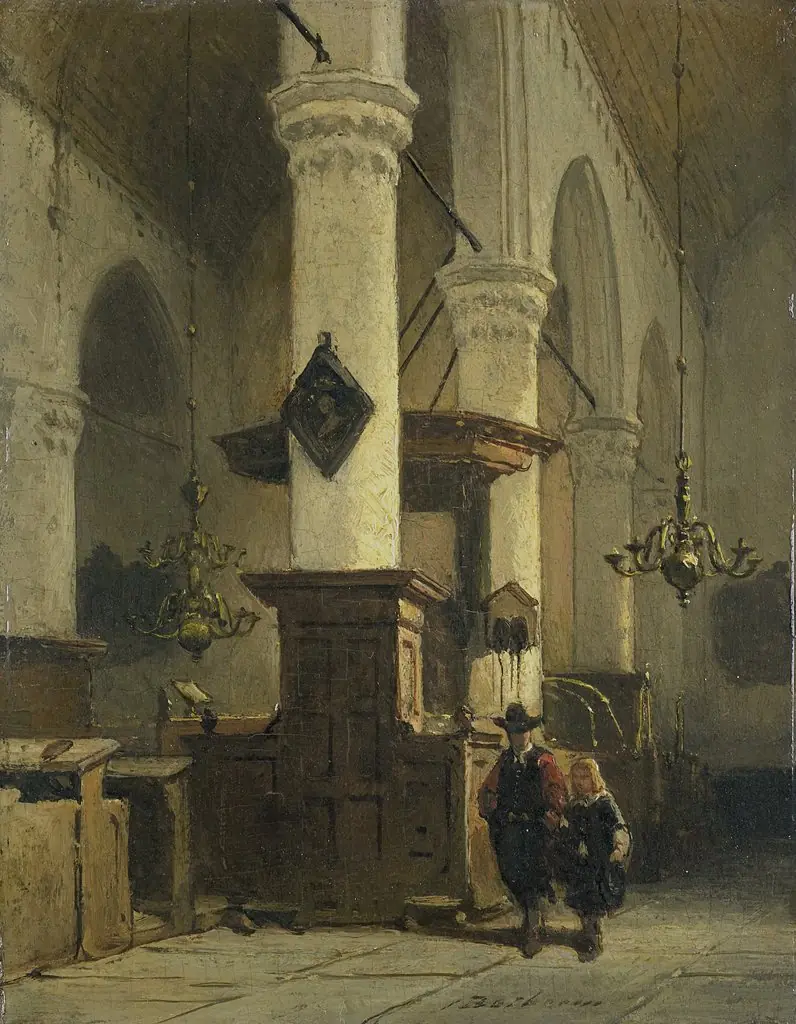
The work presents a quiet interior of the Hooglandse Church in Leiden, where a solitary woman occupies a pew, embodying devotional presence within a sacred space. Bosboom emphasizes the play of light through tall windows, highlighting the austere architecture and the contemplative atmosphere of the church interior. The scene reflects the 19th‑century Dutch fascination with ecclesiastical settings, portraying religious observance through subtle narrative detail rather than overt symbolism.
The painting thus serves as both a topographical record and an intimate meditation on faith, rendered in oil on panel.
Technique & Style
The work is an oil painting executed on panel, measuring 33 cm in height and 22 cm in width. It depicts the interior of the Hooglandse Church in Leiden, featuring a woman engaged in Christian worship. The painting was created in 1850 and is part of the Rijksmuseum's collection.
History & Provenance
Interior of the 'Hooglandse' Church, Leiden was created by Johannes Bosboom in 1850, executed in oil paint on panel. The painting is held in the collection of the Rijksmuseum, where it is currently located. No information about a commission, prior ownership, or earlier provenance chain is documented in the available sources.
Legacy
Bosboom's Interior of the Hooglandse Church, Leiden, exerted quiet influence on 19th-century Dutch church interior painting, particularly in its atmospheric handling of restrained light and precise architectural detail. This approach resonated within the broader Hague School tradition, shaping contemporaries' treatment of sacred space and domesticating ecclesiastical subjects with a focus on material authenticity over narrative drama. The work's restrained palette and emphasis on structural clarity contributed to the evolving perception of church interiors as sites of contemplative realism rather than religious spectacle, a legacy noted in early 20th-century Dutch art historical assessments of Bosboom's role in bridging Romantic and modernist sensibilities.
Its presence in the Rijksmuseum collection cemented its status as a representative example of the period's artistic engagement with Dutch Reformed spatiality.
Overview
Johannes Bosboom, a Dutch painter linked to the Hague School, executed the oil painting Interior of the ‘Hooglandse’ Church, Leiden around 1850. The canvas records a quiet Christian service inside Leiden’s historic Hooglandse Kerk, focusing on the architectural space rather than narrative action.
Context
The painting belongs to a broader 19th‑century Dutch interest in documenting historic ecclesiastical architecture. Within the Hague School, Bosboom’s focus on light and spatial atmosphere aligns with contemporaries who sought to capture the mood of everyday settings through careful observation of natural illumination.
Own this work as a print
Artist & collection

Artist
Johannes Bosboom (18 February 1817 – 14 September 1891) was a Dutch painter and watercolorist of the Hague School, known especially for his paintings of church interiors.