Artwork
Emblematic Still Life with Flagon, Glass, Jug and Bridle
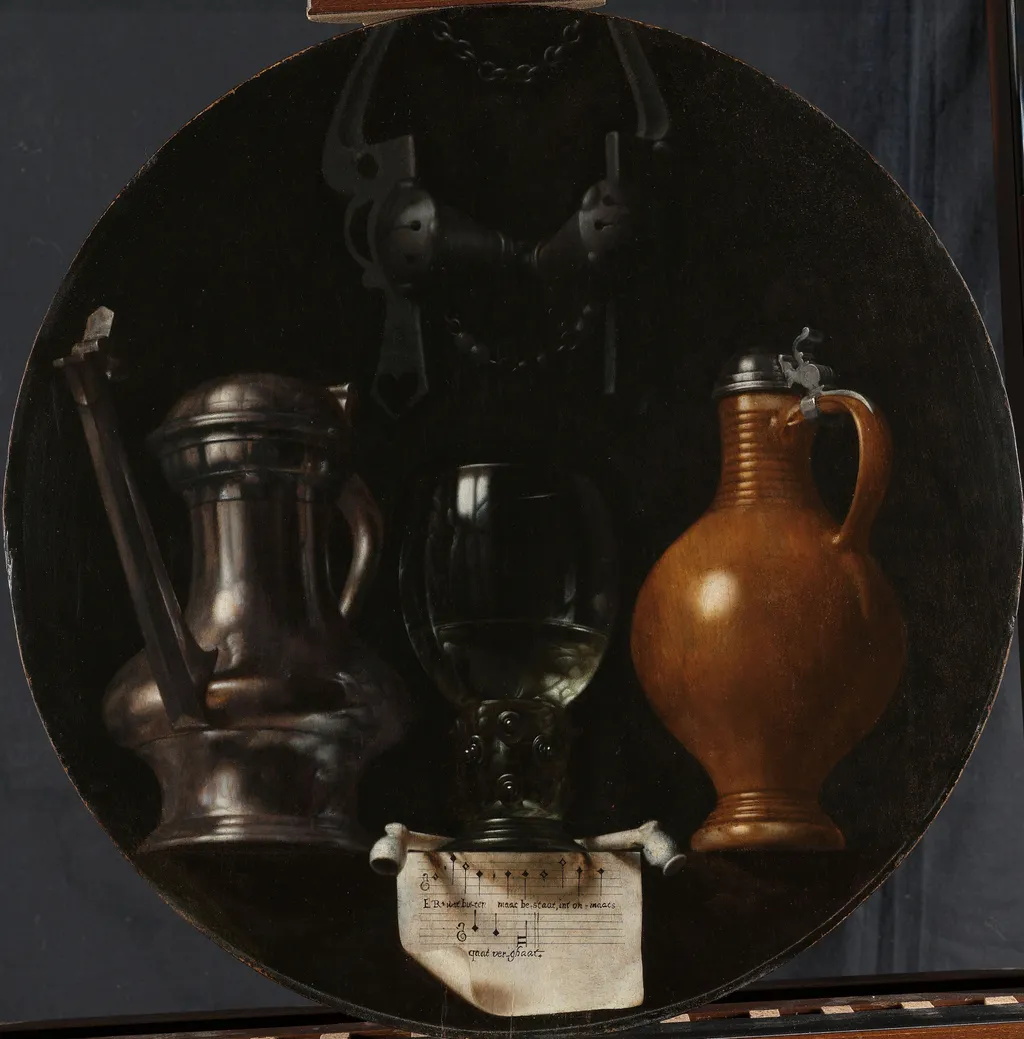
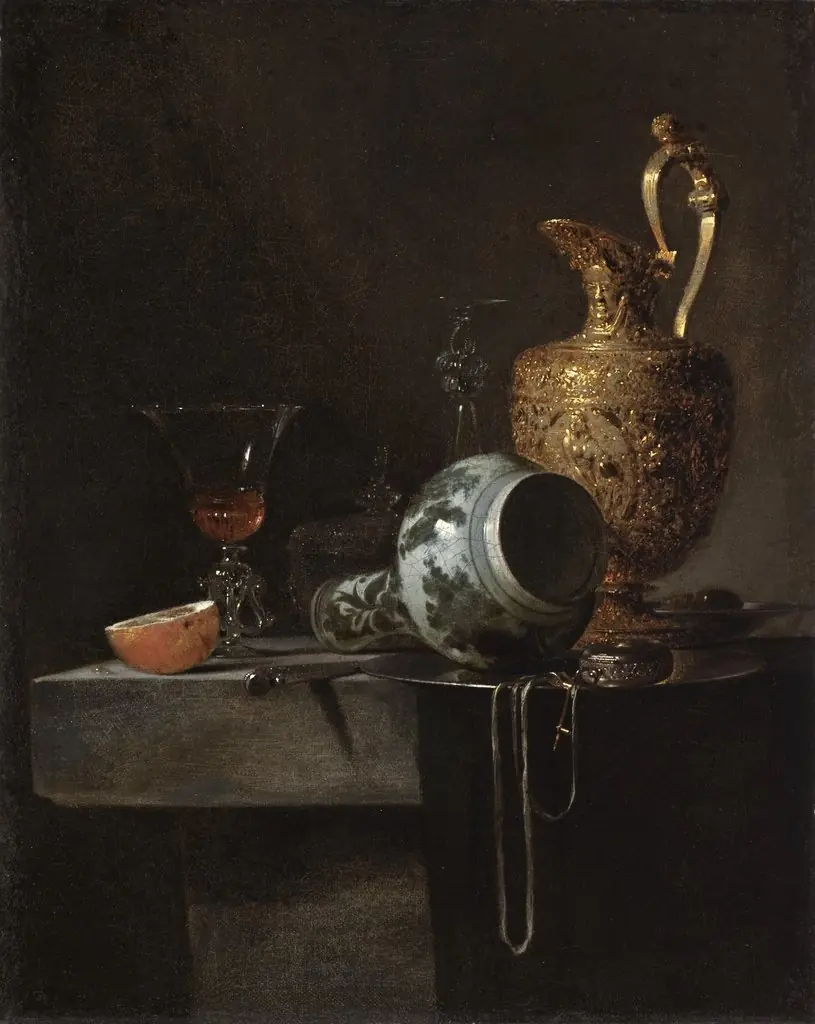
Emblematic Still Life with Flagon, Glass, Jug and Bridle is an oil painting by the Dutch Golden Age artist Johannes Torrentius. It dates from 1614 and is held in the collection of the Rijksmuseum.
About this work
Technique & Style
The handling of oil paint allows for detailed rendering of varied textures, from reflective glass and metal to earthenware and leather.
The painting is executed in oil on panel, measuring 52 by 50.5 cm. Its medium and support place it within the Northern European tradition of panel painting prevalent in the early seventeenth century. The work belongs to the still-life genre and is characterized by its emblematic approach, assembling symbolic objects, a flagon, glass, jug, and bridle, into a composed arrangement that invites moral or allegorical reading. The handling of oil paint allows for detailed rendering of varied textures, from reflective glass and metal to earthenware and leather.
History & Provenance
The work titled Emblematic Still Life with Flagon, Glass, Jug and Bridle was created in 1614 by the artist Johannes van der Beeck, who is also known as Johannes Torrentius. Executed in oil paint on a panel support, the painting measures 52 cm in height and 50.5 cm in width. The piece is currently held in the collection of the Rijksmuseum, where it remains located.
While the specific circumstances of its original commission and the detailed chain of ownership prior to its museum acquisition are not provided in the available records, the date of inception is firmly established as 1614.
Context
The work is a still life attributed to Johannes van der Beeck, painted in 1614 and housed in the Rijksmuseum collection. It exemplifies early Dutch painting's focus on everyday objects, featuring a flagon, glass, jug, and bridle arranged with meticulous detail. The composition reflects the genre's significance in capturing domestic and material culture of the period, aligning with broader trends in 17th-century art.
Scholarship emphasizes its role within van der Beeck's oeuvre and its contribution to understanding the evolution of still life painting in the Netherlands, particularly through its precise rendering of textures and reflective surfaces.
Overview
Created in 1614, Emblematic Still Life with Flagon, Glass, Jug and Bridle is an oil painting by the Dutch artist Johannes van der Beeck, who signed his works as Johannes Torrentius. Executed during the height of the Dutch Golden Age, the work presents a compact arrangement of metal vessels and a bridle against a deep, unlit background, emphasizing the objects’ material qualities.
Subject & Meaning
The composition gathers three metallic containers, a tall flagon, a handled glass, and a capped jug, alongside a horse bridle and a sheet of paper bearing faint Dutch script. The juxtaposition of drinking vessels with equestrian equipment suggests a symbolic contrast between consumption and control, a common motif in emblematic still lifes that invite moral reflection on excess and restraint.
Own this work as a print
Artist & collection

Artist
Johannes (Jan) Symonsz van der Beeck (1589 – buried 17 February 1644) was a Dutch painter also known by his alias Johannes Torrentius.

- Emblematic Still Life with Flagon, Glass, Jug and Bridle
 Still life with wineglass, beer glass and pipe
 Still Life with Stoneware Jug and Pipe
 Still life with pewter jug
 Still life with fallen pewter jug and roemer
 Still Life with a Roemer, a Covered Flagon, and a Beaker
 Breakfast Still Life with Glass and Metalwork
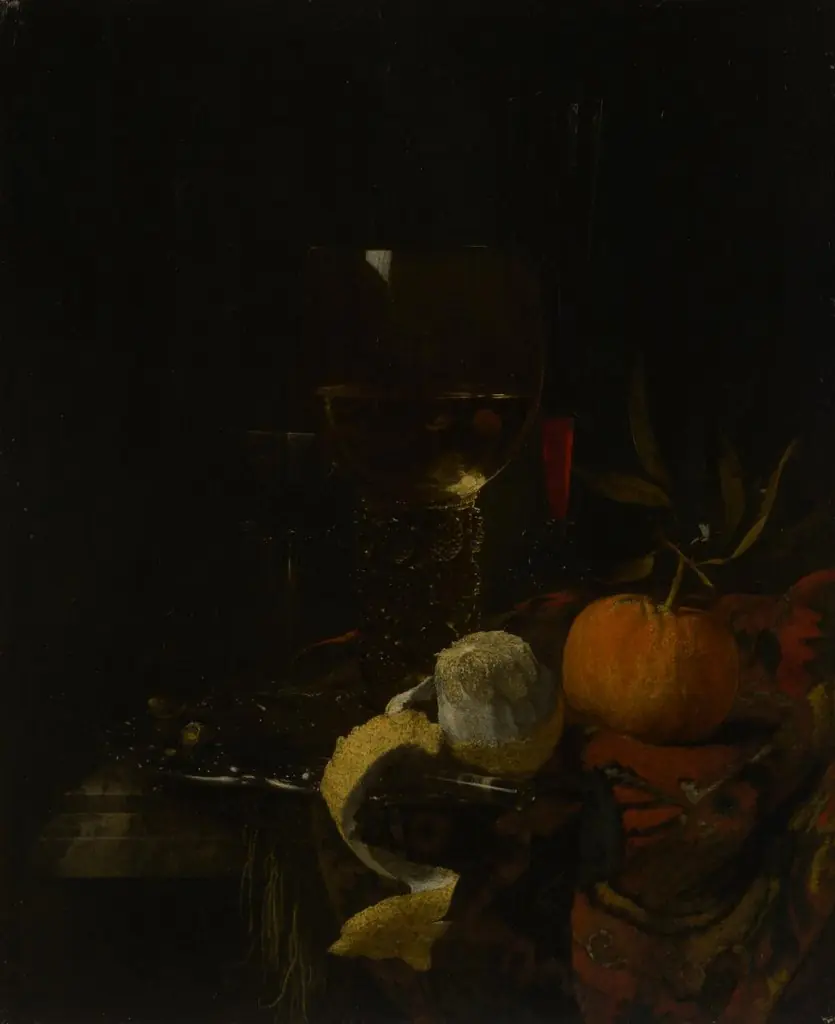 Still life with glasses and fruit
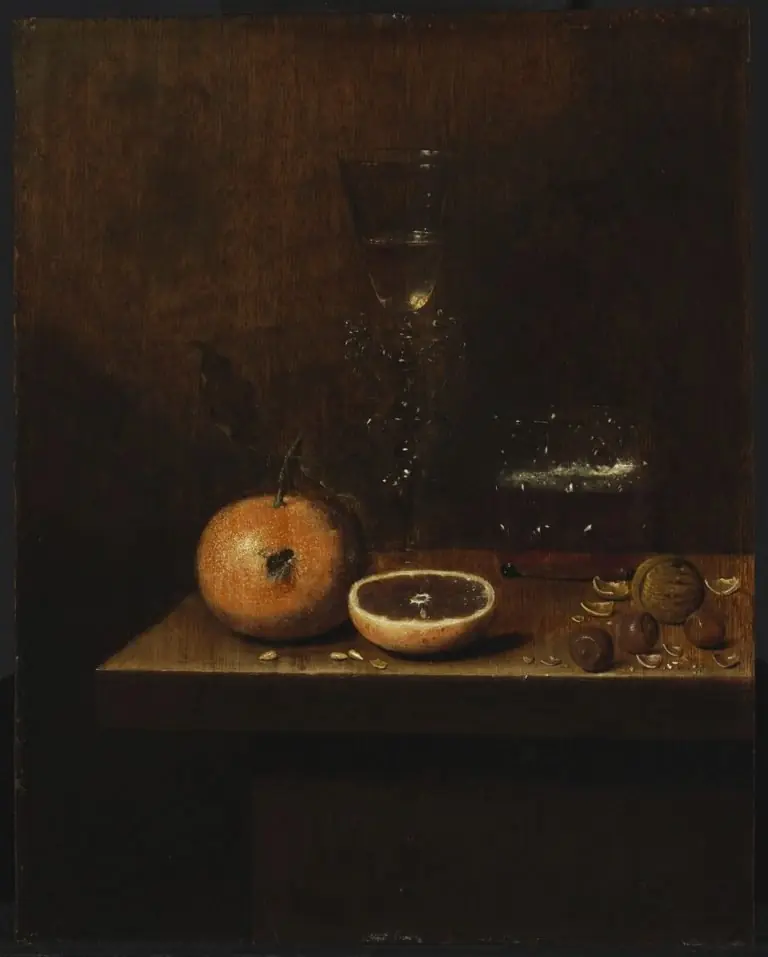 Still Life with Orange and Venetian Glass
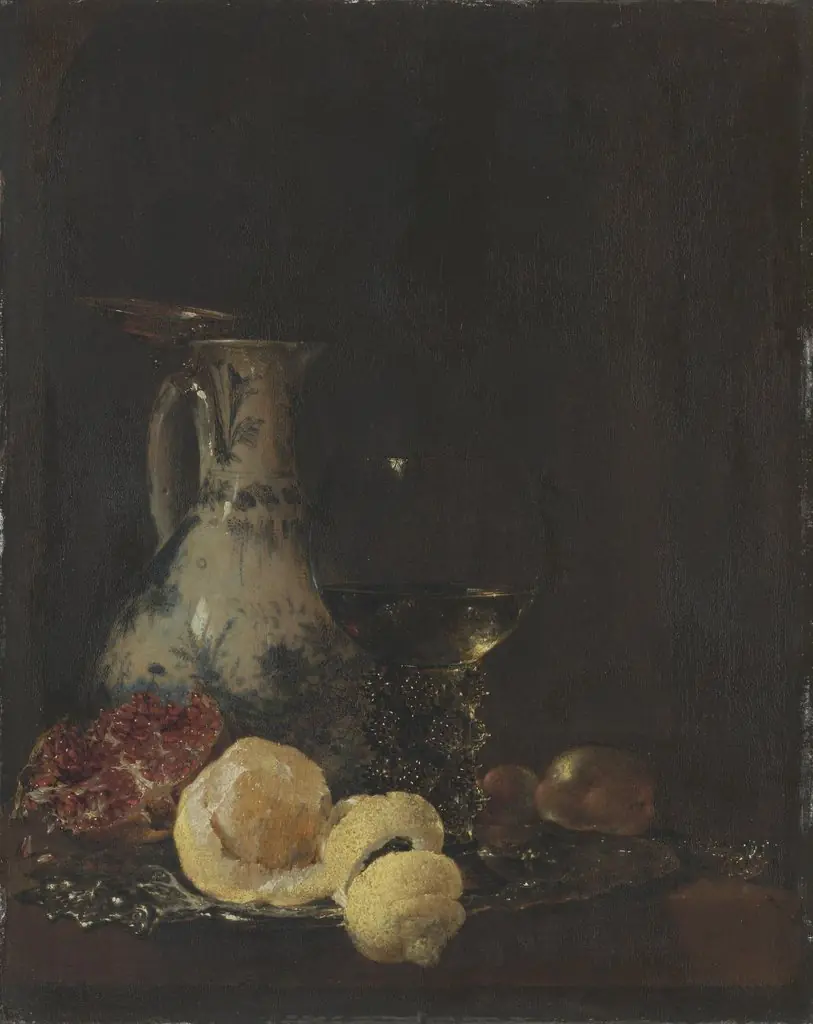 Still Life with a Ming Jug